
Nicky Singer (1956–2023)
Author of Feather Boy
About the Author
Works by Nicky Singer
The Museum Journal : March 1922 2 copies
Tagged
Common Knowledge
- Birthdate
- 1956-07-22
- Date of death
- 2023-06-17
- Gender
- female
- Education
- Queen Anne's school, Caversham
Bristol University (English|graduated in 1978) - Occupations
- children's book author
young adult writer
fiction writer
playwright
nonprofit director - Organizations
- Institute of Contemporary Arts (talks department)
Channel 4 (chat show researcher|early 1980s)
Performing Arts Lab (cofounder|co-director|until 1996) - Agent
- Clare Conville
- Cause of death
- stroke
- Nationality
- UK
- Birthplace
- Chalfont-St.-Peter, Buckinghamshire, England, UK
- Places of residence
- Brighton, Sussex, England, UK
London, England, UK - Place of death
- Brighton, Sussex, England, UK
- Associated Place (for map)
- England, UK
Members
Reviews
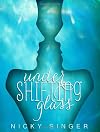
{ I received an ARC for free through Early Reviewers on LibraryThing. Review originally posted on my blog, PidginPea's Book Nook. }
Wow. This book was beautiful. I wasn't expecting it to really touch my heart like it did. I kind of thought it would be a book about Jess's family troubles with a paranormal twist in the form of the flask. But it was so, so much more than that. I really am just in shock with how fantastic this book was.
Under Shifting Glass does deal with Jess's family - her show more mother (pregnant with twins), her stepfather, and her grandmother. But it also deals with Jess's beloved Aunt Edie, who has recently passed away, and throughout the book we see Jess progress through her grief over her aunt's death towards acceptance and peace. As if this wasn't enough for a young girl to deal with, her father has also passed away, and she's struggling with her relationship with her stepfather now that he'll have children of his own when the twins are born. Her friendship with her closest friend Zoe seems to be falling apart, and Jess doesn't know how to fix it. And then her twin brothers are born conjoined, and the outlook is grim.
It's hard to classify this book. Is it realistic fiction? Fantasy? Magical realism? Even when you reach the end of the book, you're not quite sure (more on that in a bit). Under Shifting Glass is labeled as Young Adult on Goodreads and Barnes & Noble, but I can see where a Middle Grade label would fit too. Jess is 12 years old, and at times I felt like her thoughts and actions might appeal more to younger readers. But then again, she is facing some very grown-up problems as well, and she does show some incredible maturity which brings her story right back to the YA level. I finally had to force myself to stop trying to label the book and just read.
Singer has a stunning way with words. Jess is a sweet narrator who wraps you up in her world; I felt her pain over the loss of her Aunt Edie, her joy at seeing her brothers for the first time, her hopelessness when her problems seem to stack up endlessly. She is dealing with so much and she's handling it as best she can, but she's looking for a reason behind it all, or a way to fix it all. As she learns more about the flask, she realizes that perhaps the flask itself the solution. There is a beautiful mix of something mysterious, something supernatural, a bit of desperate superstition on Jess's part, and a touch of religion. After everything is resolved, Singer leaves it up to the reader to decide what really happened... Was it a miracle? Was it the flask? Was it nothing special at all - just the way of things? I thought this was wonderful, as each reader can take away whatever they wish from the story.
In the middle of the book, Jess and her friends learn about Buddhism for a class assignment. To be honest, as I was reading that part, I was wondering where Singer was going to go with it or why exactly she chose to include it in the story. But I thought the way Singer tied it in at the end was quite nice, with Jess's gift of eucalyptus to her Aunt Edie. The Buddhism aspect may be a little much for some readers ("much" being perhaps a little too heavy on the religious/spiritual side for those who prefer not to read about religion, or being perhaps a little too complicated for younger readers), but it hit me just right.
I can see where this book wouldn't appeal to everyone, but in the hands of some readers it will become a new favorite. It certainly became an instant favorite for me, and I'll be on the lookout for other books by Singer. show less
Wow. This book was beautiful. I wasn't expecting it to really touch my heart like it did. I kind of thought it would be a book about Jess's family troubles with a paranormal twist in the form of the flask. But it was so, so much more than that. I really am just in shock with how fantastic this book was.
Under Shifting Glass does deal with Jess's family - her show more mother (pregnant with twins), her stepfather, and her grandmother. But it also deals with Jess's beloved Aunt Edie, who has recently passed away, and throughout the book we see Jess progress through her grief over her aunt's death towards acceptance and peace. As if this wasn't enough for a young girl to deal with, her father has also passed away, and she's struggling with her relationship with her stepfather now that he'll have children of his own when the twins are born. Her friendship with her closest friend Zoe seems to be falling apart, and Jess doesn't know how to fix it. And then her twin brothers are born conjoined, and the outlook is grim.
It's hard to classify this book. Is it realistic fiction? Fantasy? Magical realism? Even when you reach the end of the book, you're not quite sure (more on that in a bit). Under Shifting Glass is labeled as Young Adult on Goodreads and Barnes & Noble, but I can see where a Middle Grade label would fit too. Jess is 12 years old, and at times I felt like her thoughts and actions might appeal more to younger readers. But then again, she is facing some very grown-up problems as well, and she does show some incredible maturity which brings her story right back to the YA level. I finally had to force myself to stop trying to label the book and just read.
Singer has a stunning way with words. Jess is a sweet narrator who wraps you up in her world; I felt her pain over the loss of her Aunt Edie, her joy at seeing her brothers for the first time, her hopelessness when her problems seem to stack up endlessly. She is dealing with so much and she's handling it as best she can, but she's looking for a reason behind it all, or a way to fix it all. As she learns more about the flask, she realizes that perhaps the flask itself the solution. There is a beautiful mix of something mysterious, something supernatural, a bit of desperate superstition on Jess's part, and a touch of religion. After everything is resolved, Singer leaves it up to the reader to decide what really happened... Was it a miracle? Was it the flask? Was it nothing special at all - just the way of things? I thought this was wonderful, as each reader can take away whatever they wish from the story.
In the middle of the book, Jess and her friends learn about Buddhism for a class assignment. To be honest, as I was reading that part, I was wondering where Singer was going to go with it or why exactly she chose to include it in the story. But I thought the way Singer tied it in at the end was quite nice, with Jess's gift of eucalyptus to her Aunt Edie. The Buddhism aspect may be a little much for some readers ("much" being perhaps a little too heavy on the religious/spiritual side for those who prefer not to read about religion, or being perhaps a little too complicated for younger readers), but it hit me just right.
I can see where this book wouldn't appeal to everyone, but in the hands of some readers it will become a new favorite. It certainly became an instant favorite for me, and I'll be on the lookout for other books by Singer. show less
 This review was written for LibraryThing Early Reviewers.
I read this book with my 10-year-old daughter, or rather, I read it, and then she read it, and then we discussed it. It was like having my own incredibly small YA focus group. So, Bella says that it is excellent, and that she wants to read all of Nicky Singer's other books now, and that it reminds her a little of Sorta Like a Rockstar by Matthew Quick, because of the way that the character is a little offbeat, and thoughtful.
This was a very character-driven book. It's about a girl, about show more 14, I think, who is dealing with the birth of new siblings who just happen to be conjoined twins, and also dealing with the death of her aunt, and trying to figure out shifting relationships with her family, her grandmother and her best friend. As she goes through this process, she finds a bottle that may or may not have a sort of spiritual power (I don't want to reveal too much - you'll just have to read the book!).
It's definitely a coming of age story with a mystical touch. It reminded me of something Madeleine L'Engle would have written too, where the character has a problem that involves some sort of fantastic situation that turns out to help them relate to their real life in an adult way. That makes it sound boring, or like something only school librarians and teachers could love, but it isn't. Just ask my daughter. show less
This was a very character-driven book. It's about a girl, about show more 14, I think, who is dealing with the birth of new siblings who just happen to be conjoined twins, and also dealing with the death of her aunt, and trying to figure out shifting relationships with her family, her grandmother and her best friend. As she goes through this process, she finds a bottle that may or may not have a sort of spiritual power (I don't want to reveal too much - you'll just have to read the book!).
It's definitely a coming of age story with a mystical touch. It reminded me of something Madeleine L'Engle would have written too, where the character has a problem that involves some sort of fantastic situation that turns out to help them relate to their real life in an adult way. That makes it sound boring, or like something only school librarians and teachers could love, but it isn't. Just ask my daughter. show less
This review was written for LibraryThing Early Reviewers.This is a subtle little book that sneaks up on you and knocks you over the head. At first, it feels disorganized, and a little - what is this-ish. If you read the jacket copy, it sounds like it's a fantasy - magic bottle - but it isn't. Instead it's an artful blend of mysticism, superstition and skepticism.
Jess is going through a crisis. Her favorite great-aunt has recently died and her mother has given birth to conjoined twins. Her step-father is very scientific minded, and has given her show more too many statistics. She knows that the twins aren't likely to survive the first 24 hours, and if they do they will be operated on and statistics indicate that only one will live. Trouble is she's emotionally attached to both, and she starts to see the joining of the twins as a symbol for that which binds friends and relatives together.
Jess sees things in a different way than other people. Hence, the magic bottle that isn't magic. She sees it as having spirit. It makes sense to her. It gives her something to focus on while the twins are struggling to live. Perhaps the bottle does touch the "bardo," the place where souls wait for new bodies as she is told by a Buddhist practitioner.
While she's coping with the twins, she's also struggling with her relationship to her grandmother, who is so not her favorite aunt. She's struggling with her best friend who hangs out with people that say tacky things about "Siamese Twins." She struggles with her step-father, who she has seen as a father until now, but now he has real sons.
Somehow all these messy problems and emotions come together in the end, whether it was through magic or not. Why only 4 1/2 stars? She kept calling the bottle a "flask" and at one point, oh my, there's one scene where Jess and Zoe are passing the flask around and it's hard not to think of the whiskey that was once in it. Not a connection the author intended. This was an ARC from an uncorrected proof, so hopefully that will be fixed before publication. If it is not, this book is still definitely a worthwhile read. show less
Jess is going through a crisis. Her favorite great-aunt has recently died and her mother has given birth to conjoined twins. Her step-father is very scientific minded, and has given her show more too many statistics. She knows that the twins aren't likely to survive the first 24 hours, and if they do they will be operated on and statistics indicate that only one will live. Trouble is she's emotionally attached to both, and she starts to see the joining of the twins as a symbol for that which binds friends and relatives together.
Jess sees things in a different way than other people. Hence, the magic bottle that isn't magic. She sees it as having spirit. It makes sense to her. It gives her something to focus on while the twins are struggling to live. Perhaps the bottle does touch the "bardo," the place where souls wait for new bodies as she is told by a Buddhist practitioner.
While she's coping with the twins, she's also struggling with her relationship to her grandmother, who is so not her favorite aunt. She's struggling with her best friend who hangs out with people that say tacky things about "Siamese Twins." She struggles with her step-father, who she has seen as a father until now, but now he has real sons.
Somehow all these messy problems and emotions come together in the end, whether it was through magic or not. Why only 4 1/2 stars? She kept calling the bottle a "flask" and at one point, oh my, there's one scene where Jess and Zoe are passing the flask around and it's hard not to think of the whiskey that was once in it. Not a connection the author intended. This was an ARC from an uncorrected proof, so hopefully that will be fixed before publication. If it is not, this book is still definitely a worthwhile read. show less
This review was written for LibraryThing Early Reviewers.Doll by Nicky Singer
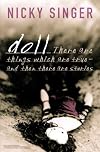
A book that tricks you into thinking that Tilly's Mother has committed suicide and that Tilly found the body and this mentally unbalances her. (She thinks the doll her mother made is speaking to her.) Then the introduction of the character Jan starts to tip the reader back into the world of reality, as Jan seldom speaks but watches and knows what is really going on. Tilly's mother is an alcoholic and Tilly lives with her and her grandmother, who is always spouting how wonderful HER husband show more was, with Tilly's father living in the neighbourhood. After Tilly's mother is sent off to rehab once again, Tilly clutches the doll (Gerda) her mother supposedly made (Tilly made it herself out of her mother's biker leathers), pretends her mother is dead and starts doing very foolish things like playing "chicken" on the train track. It is while doing this that she meets Jan, an adopted Chilean boy, who is forever wondering what became of his real mother. Jan is fascinated by Tilly and her doll because he himself keeps some Guatemalan "worry" dolls and pretends they were given to him by his real mother. The book alternates each chapter between each of these characters. We witness Tilly being bullied by the local "it" girl and her cronies; a girl who also throws herself at Jan but then suffers at Tilly's hands at her father's restaurant. ( Tilly puts a spice she is allergic to into her dish!) This book gets better the more you read as family secrets are revealed. show less
Awards


You May Also Like


Associated Authors
Statistics
- Works
- 19
- Members
- 637
- Popularity
- #39,574
- Rating
- 3.6
- Reviews
- 37
- ISBNs
- 75
- Languages
- 9
