
Melvin Burgess
Author of Smack
About the Author
Image credit: © 2013 Emma Farrer
Series
Works by Melvin Burgess
Saast 2 copies
Associated Works
War Girls: A Collection of First World War Stories Through the Eyes of Young Women (2014) — Contributor — 62 copies, 2 reviews
Children's Literature: Classic Texts and Contemporary Trends (2009) — Contributor — 31 copies, 1 review
Tagged
Common Knowledge
- Birthdate
- 1954-04-25
- Gender
- male
- Occupations
- children's book author
young adult writer - Awards and honors
- Guardian Children's Fiction Prize
Carnegie Medal - Agent
- Caradoc King (AP Watt)
- Nationality
- UK
UK - Birthplace
- Sussex, England, UK
- Places of residence
- Manchester, Lancashire, England, UK
- Associated Place (for map)
- England, UK
Members
Reviews
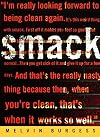
I was up a goodly portion of the night reading this book. I didn't mean to be. It's that kind of book, though.
Stark, brilliant and uncompromising, this is the story of a couple of kids who find a life less ordinary in the squats of early 1980s England. They also find heroin and love, though they have a hard time telling the two apart.
The way Burgess moves his reader from the head of one kid into the head of the next is a perfect vehicle to show how their interdependent rationalizations show more function. The slippery slope from self-serving narcissistic adolescence to self-serving narcissistic drug addiction is delineated in letters of fire here. The adults on the fringes are nicely drawn as well. The way people wander in and out of the circle is so well done as to be almost invisible.
This is a searing portrait of addiction and ruin that rings so true it's painful to read. The characters are not particularly sympathetic, but that also seems right.
Extremely minor quibble: there's a perfectly unnecessary glossary in the back- all the British slang is completely obvious in context. show less
Stark, brilliant and uncompromising, this is the story of a couple of kids who find a life less ordinary in the squats of early 1980s England. They also find heroin and love, though they have a hard time telling the two apart.
The way Burgess moves his reader from the head of one kid into the head of the next is a perfect vehicle to show how their interdependent rationalizations show more function. The slippery slope from self-serving narcissistic adolescence to self-serving narcissistic drug addiction is delineated in letters of fire here. The adults on the fringes are nicely drawn as well. The way people wander in and out of the circle is so well done as to be almost invisible.
This is a searing portrait of addiction and ruin that rings so true it's painful to read. The characters are not particularly sympathetic, but that also seems right.
Extremely minor quibble: there's a perfectly unnecessary glossary in the back- all the British slang is completely obvious in context. show less
This book honestly deals with the struggles that young teens go through in trying to navigate their sexual desires. Seen mostly through the eyes of three boys, and occasionally though their love interests eyes, this book gives an honest depiction of what it is like to be a teen and want to follow through on one's sexual urges- without completely taking away the vulnerable human feelings that each character feels.
While controversial for some due to its depictions of sexual acts and thoughts, show more this book is a great showcase for other teens who might not know who to talk to about their feelings on the subject or who need help understanding why sex can be so complicated. And for those who do find it controversial- maybe they have just forgotten what its like to be a teen and how hard it can be to deal with the ranging hormones, yet not have complete self-control over ones own thoughts, feelings and actions. show less
While controversial for some due to its depictions of sexual acts and thoughts, show more this book is a great showcase for other teens who might not know who to talk to about their feelings on the subject or who need help understanding why sex can be so complicated. And for those who do find it controversial- maybe they have just forgotten what its like to be a teen and how hard it can be to deal with the ranging hormones, yet not have complete self-control over ones own thoughts, feelings and actions. show less

This book tells the stories of three troubled teens, the sort of kids a lot of society just dismiss and look down on, and gives them a voice to tell their side of the story. Burgess doesn’t try to excuse the things they do but instead offers an explanation for their behaviour and shows that people aren’t simply good or bad. The teenagers feel very authentic, I could relate their behaviour to a couple of teens I know. This book is funny, poignant and thought provoking and a real page show more turner, I will be certainly be reading more by Burgess. show less
Loki: WICKED, VISCERAL, TRANSGRESSIVE: Norse gods as you've never seen them before by Melvin Burgess
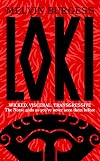
Loki tried to convince us that he is a misunderstood genius, the saviour and supporter of mankind. Although he is trapped for all eternity he has been wrongly accused of all that he has done. However one would do well to remember that Loki is the inventor of lying and falsehood!
This is a wonderful reimagining of many of the myths of the Norse. Written in first person, Loki offers a different perspective on the old tales. Burgess has written a terrific book here, it's informal and irreverent, show more yet is meticulously researched and the stories ring out. A great read. show less
This is a wonderful reimagining of many of the myths of the Norse. Written in first person, Loki offers a different perspective on the old tales. Burgess has written a terrific book here, it's informal and irreverent, show more yet is meticulously researched and the stories ring out. A great read. show less
Lists
Awards


You May Also Like


Associated Authors
Statistics
- Works
- 48
- Also by
- 8
- Members
- 4,553
- Popularity
- #5,521
- Rating
- 3.7
- Reviews
- 159
- ISBNs
- 414
- Languages
- 19
- Favorited
- 3

