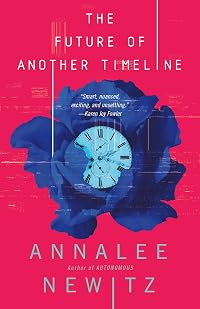
The Future of Another Timeline
by Annalee Newitz
On This Page
Description
"1992: After a confrontation at a riot grrl concert, seventeen-year-old Beth finds herself in a car with her friend's abusive boyfriend dead in the backseat, agreeing to help her friends hide the body. This murder sets Beth and her friends on a path of escalating violence and vengeance as they realize many other young women in the world need protecting too. 2022: Determined to use time travel to create a safer future, Tess has dedicated her life to visiting key moments in history and show more fighting for change. But rewriting the timeline isn't as simple as editing one person or event. And just when Tess believes she's found a way to make an edit that actually sticks, she encounters a group of dangerous travelers bent on stopping her at any cost. Tess and Beth's lives intertwine as war breaks out across the timeline - a war that threatens to destroy time travel and leave only a small group of elites with the power to shape the past, present, and future. Against the vast and intricate forces of history and humanity, is it possible for a single person's actions to echo throughout the timeline?"--Publisher description. show lessTags
Recommendations




















Member Recommendations

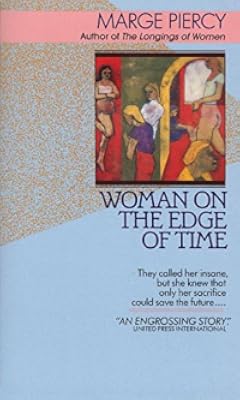
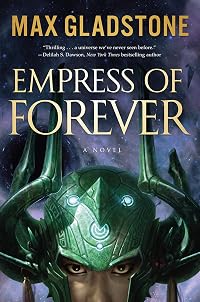
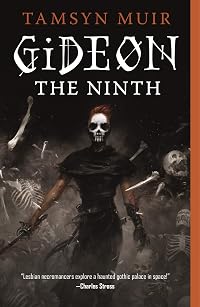
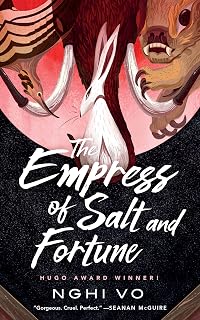
espertus The Future of Another Timeline and the Clandestine Magic trilogy both deal with many of the same issues (such as feminism, social change, abuse, and questionable friends) in very different ways. The former is nominally science fiction and the latter is nominally fantasy, but the main difference is stylistic.
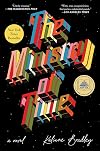
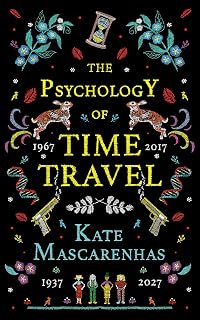
vwinsloe Time travel as a force to correct history.
Member Reviews
I was intrigued by the idea of a time-travel book with a somewhat unusual focus on women's history, the punk subculture, and the power of collective action to affect change. Annalee Newitz writes about the Daughters of Harriet (Tubman), a collective of women and nonbinary people who are working to stop the Comstockers, a group determined to force women into submissive and victimized roles in society by destroying the advances in women and minority rights that have happened throughout history. Meanwhile, Tess, one of the Daughters, is making changes both in the timeline of 1892, when Comstock attempted to close down several women-led businesses at the Chicago World's Fair, and in 1992, when a teenager named Beth finds that her best show more friend is influencing her to follow a dark path.
There was a lot of plot in this book -- time travel gives a writer a lot of potential settings to work with -- and the author mostly handled it well. I thought her world of 1892 was not as well-written as the other sections, however, particularly the story of Beth and her friends, which took a while to intersect with the theme of the book. I liked the focus on the morality and potential affect of making changes to past timelines, as detailed when the Daughters would recount the things only they now remembered from the past. the time-travel mechanism was odd and never quite fully explained, but it functioned fairly well for purposes of the story. It's refreshing, in a genre that often relies on dystopia and great-man hero characters, to find a narrative speaking for the power of women, LGBTQ people, and their allies to work collectively to make the world a better place. show less
There was a lot of plot in this book -- time travel gives a writer a lot of potential settings to work with -- and the author mostly handled it well. I thought her world of 1892 was not as well-written as the other sections, however, particularly the story of Beth and her friends, which took a while to intersect with the theme of the book. I liked the focus on the morality and potential affect of making changes to past timelines, as detailed when the Daughters would recount the things only they now remembered from the past. the time-travel mechanism was odd and never quite fully explained, but it functioned fairly well for purposes of the story. It's refreshing, in a genre that often relies on dystopia and great-man hero characters, to find a narrative speaking for the power of women, LGBTQ people, and their allies to work collectively to make the world a better place. show less
In 2022, Tess and her friends, the Daughters of Harriet, are going back in time trying to make edits to history so that women have more autonomy. They've pinpointed Anthony Comstock as a person who's affected their timeline, and are using collective action to attempt to make a change for the better in the 1890s. In 1992, high schooler Beth and her friends go to a punk concert and, that night, in an act of self defense, her friend Lizzy takes a life. All she can dream about is leaving her abusive father and going to college.
This alternate history was written in 2019 but still hits pretty hard in 2025 when women's rights are being debated as much as ever, with Roe v. Wade being overturned and politicians making comments about women being show more able to prevent pregnancy if it was "legitimate rape". Abortion is very much at the center of this story, and there is a (not graphic, but still tough to read) description of an abortion in the text. I enjoyed the conceit that time travel has always been and always existed, and that the folks who go back in time end up with memories of other timelines after their edits take place. The world building is well done and thorough without taking over. Tess's and Beth's stories are both compelling - and, of course, eventually intersect - and I rooted for them both in their journeys. show less
This alternate history was written in 2019 but still hits pretty hard in 2025 when women's rights are being debated as much as ever, with Roe v. Wade being overturned and politicians making comments about women being show more able to prevent pregnancy if it was "legitimate rape". Abortion is very much at the center of this story, and there is a (not graphic, but still tough to read) description of an abortion in the text. I enjoyed the conceit that time travel has always been and always existed, and that the folks who go back in time end up with memories of other timelines after their edits take place. The world building is well done and thorough without taking over. Tess's and Beth's stories are both compelling - and, of course, eventually intersect - and I rooted for them both in their journeys. show less
In an alternate version of our world, time machines are discovered embedded into various spots in the earth's crust. Time-traveling scholars use them to study history. But bad actors have used time travel in "edit wars" to change history. One of the novel's protagonists, Tess, is a scientist from 2022 who is a member of the Daughters of Harriet, a feminist organization determined to protect women through history. Their antagonists are a group of misogynist "men's rights activists" who've rallied behind 19th century anti-vice activist Anthony Comstock to create a world hostile to women, and then lock it by destroying the machines.
In a parallel story set in 1992, a teenager named Beth who enjoys the riot grrl scene of Southern California. show more Things take a dark turn when her best friend Lizzy begins killing sexually abusive men. Beth wants no part of murder while still desiring to maintain their friendship. Tess travels back to the Chicago world's fair in 1893 where she joins "hoochie coochie" dancers and a pioneering woman reporter to organize against Comstock and his followers. But she also visits 1992's punk festivals and attempts to keep an eye on Beth for reasons that are made clear over the course of the novel.
This is an interesting take on the time travel story with strong feminist and LGBTQ themes. In this version of the world the advances of women and queer people are literally erased by the Comstockers, representing how these voices are erased in history. The book also takes the debate over "the great man" versus "collective action" in history as a central theme. Beyond that it's a fascinating (and confusing) adventure! show less
In a parallel story set in 1992, a teenager named Beth who enjoys the riot grrl scene of Southern California. show more Things take a dark turn when her best friend Lizzy begins killing sexually abusive men. Beth wants no part of murder while still desiring to maintain their friendship. Tess travels back to the Chicago world's fair in 1893 where she joins "hoochie coochie" dancers and a pioneering woman reporter to organize against Comstock and his followers. But she also visits 1992's punk festivals and attempts to keep an eye on Beth for reasons that are made clear over the course of the novel.
This is an interesting take on the time travel story with strong feminist and LGBTQ themes. In this version of the world the advances of women and queer people are literally erased by the Comstockers, representing how these voices are erased in history. The book also takes the debate over "the great man" versus "collective action" in history as a central theme. Beyond that it's a fascinating (and confusing) adventure! show less
Stalin’s Russia is not the only example of wicked men manipulating history, but it’s probably best known in terms of literally disappearing people from photographs. (Yezhov who?) Authoritarians always want to control the present and secure the future by editing the past. If you purge the record thoroughly enough, the truth will exist only in the memories of those who were there when it happened.
In Annalee Newitz’s novel of time travel and fourth-wave feminism, remembrance is key to the mission of the Daughters of Harriet. Named in honor of Senator Harriet Tubman, the Daughters use approved academic travel down the timeline to cover their off-the-books purpose: to nip the past here, tuck it there, and return to a future where the show more rights of women — cis, trans, and non-binary — are that much stronger. Only by pooling memories of nipped and tucked timelines can they confirm whether history is moving toward them or toward a cabal of men trying to tip the balance of time to a totalitarian patriarchy.
As a work of sci-fi, this book offers a fresh twist with its premise that time travel is vectored through a handful of machines wired organically into Earth’s prehistoric rock. No one knows who made them, if anyone made them, or even quite how they do what they do — but in the best tradition of humanity, none of that is a barrier to using them. The result is a time-spanning network of priests, bureaucrats, and technicians clustered around each transit point, all conversant with developments elsewhen, leading to amusing moments such as a priestess of ancient Raqmu (Petra) apologizing in a Southern American accent for only knowing Atomic Era English.
As a work of social commentary, the novel grapples with the question of whether or not violence is justified in a righteous cause. For Tess, a Daughter of Harriet and the novel’s protagonist, this question is personal. She carries memories of blood and murder from her teenage years, memories so traumatic the temptation is strong to attempt an edit of her own past, an unthinkable transgression. Tess clings to one principle as a life preserver: “We cannot do good with evil means.” But what if you could unlock a wealth of good by killing one evil person? Does that change the calculus?
The question at least partly turns on whether history moves through great men or collective social forces. This is a common enough trope in sci-fi. The Terminator franchise, for example, plays both sides. On one hand, the machines seek to kill John Connor to prevent human resistance from ever coalescing. On the other hand, no matter what the Connors do to prevent the robot apocalypse, the machines always rise by a different path. Newitz’s novel, though, is the first time I’ve seen these theories used to explore the moral question of whether targeted violence is either effective or, contingently, justifiable.
As a work of fourth-wave feminism, this will push some comfort levels. Abortion is a key plot point as a right on which all others turn, and one scene of sexual exploration is frank enough to delight devotees of sex positivity while inspiring other readers to skip hastily to the next page. For myself, as a male reader, I found the portrayal of men disappointing. The few sympathetic male characters are those like Solomon, who, as a 19th-century Chicago Jew, exists at an intersection of privilege and oppression. I don’t need guys to be leading characters, but it would be nice to feel that white men like myself aren’t automatically sus.
That said, I read this while watching the baseless firing of the U.S. Navy’s first and highly-qualified female CNO; a push to discharge transgender members of the U.S. military who served with skill and honor; and the erasure of Black and female accomplishments from U.S. military websites. I’m thus more sympathetic to Newitz’s concerns than I might otherwise have been. Regardless of anyone’s feelings about any-wave feminism, Newitz’s voice is necessary so long as there are those who would edit Newitz and those like them out of society for being not just different but—even worse—uppity. show less
In Annalee Newitz’s novel of time travel and fourth-wave feminism, remembrance is key to the mission of the Daughters of Harriet. Named in honor of Senator Harriet Tubman, the Daughters use approved academic travel down the timeline to cover their off-the-books purpose: to nip the past here, tuck it there, and return to a future where the show more rights of women — cis, trans, and non-binary — are that much stronger. Only by pooling memories of nipped and tucked timelines can they confirm whether history is moving toward them or toward a cabal of men trying to tip the balance of time to a totalitarian patriarchy.
As a work of sci-fi, this book offers a fresh twist with its premise that time travel is vectored through a handful of machines wired organically into Earth’s prehistoric rock. No one knows who made them, if anyone made them, or even quite how they do what they do — but in the best tradition of humanity, none of that is a barrier to using them. The result is a time-spanning network of priests, bureaucrats, and technicians clustered around each transit point, all conversant with developments elsewhen, leading to amusing moments such as a priestess of ancient Raqmu (Petra) apologizing in a Southern American accent for only knowing Atomic Era English.
As a work of social commentary, the novel grapples with the question of whether or not violence is justified in a righteous cause. For Tess, a Daughter of Harriet and the novel’s protagonist, this question is personal. She carries memories of blood and murder from her teenage years, memories so traumatic the temptation is strong to attempt an edit of her own past, an unthinkable transgression. Tess clings to one principle as a life preserver: “We cannot do good with evil means.” But what if you could unlock a wealth of good by killing one evil person? Does that change the calculus?
The question at least partly turns on whether history moves through great men or collective social forces. This is a common enough trope in sci-fi. The Terminator franchise, for example, plays both sides. On one hand, the machines seek to kill John Connor to prevent human resistance from ever coalescing. On the other hand, no matter what the Connors do to prevent the robot apocalypse, the machines always rise by a different path. Newitz’s novel, though, is the first time I’ve seen these theories used to explore the moral question of whether targeted violence is either effective or, contingently, justifiable.
As a work of fourth-wave feminism, this will push some comfort levels. Abortion is a key plot point as a right on which all others turn, and one scene of sexual exploration is frank enough to delight devotees of sex positivity while inspiring other readers to skip hastily to the next page. For myself, as a male reader, I found the portrayal of men disappointing. The few sympathetic male characters are those like Solomon, who, as a 19th-century Chicago Jew, exists at an intersection of privilege and oppression. I don’t need guys to be leading characters, but it would be nice to feel that white men like myself aren’t automatically sus.
That said, I read this while watching the baseless firing of the U.S. Navy’s first and highly-qualified female CNO; a push to discharge transgender members of the U.S. military who served with skill and honor; and the erasure of Black and female accomplishments from U.S. military websites. I’m thus more sympathetic to Newitz’s concerns than I might otherwise have been. Regardless of anyone’s feelings about any-wave feminism, Newitz’s voice is necessary so long as there are those who would edit Newitz and those like them out of society for being not just different but—even worse—uppity. show less
I really wanted to like this, especially based on a reading I heard Newitz do from one chapter. That chapter still rocks, but on the whole I found myself intensely frustrated by this book. I love the core premise—feminist time-travels combating MRA types in what's basically a wiki-style edit-war, BUT WITH MURDERS SOMETIMES, and the World's Fair Chicago setting was fun and clearly well-researched. However, the actual time-travel mechanics here, as well as how the characters think about the ethics of timeline manipulation, are a serious mess. Distractingly so, and pretty much ruined this for me. Grape Ape sounds pretty rad, though.
This book is amazing. It's full of smart women and non-binary people working together to make the world a better place. The time-travel mechanism is well-integrated into the worldbuilding; the relationship with academia feels believable. I loved the emphasis on collective action to achieve social change for oppressed people, especially since the time-travel subgenre is usually fixated on famous people and wars. Plus, for a book focused on "women's issues", it never forgets that trans people exist. Finally, the ending was satisfying and well-earned.
I really wanted to love this book. Great concept and a well-defined world, where time travel has been available for thousands of years thanks to a series of eons-old time machines. Only able to travel into their own pasts, a group of women try to edit the world into something more equal. (Interesting that something similar to our present timeline, and not something better, was the winning one.)
Where the book fell down for me was the dialogue. Characters are constantly speaking unnaturally, sometimes for expository purposes, sometimes to make a Very Important Point, and sometimes for no particular reason. Upon entering a college dorm room for the first time: “Hi, roomie! I’m Rosa Sanchez, from Salinas. Do you care whether you get top show more or bottom? Because I don’t care.”
Despite the dialogue concerns, I’d still happily recommend it. show less
Where the book fell down for me was the dialogue. Characters are constantly speaking unnaturally, sometimes for expository purposes, sometimes to make a Very Important Point, and sometimes for no particular reason. Upon entering a college dorm room for the first time: “Hi, roomie! I’m Rosa Sanchez, from Salinas. Do you care whether you get top show more or bottom? Because I don’t care.”
Despite the dialogue concerns, I’d still happily recommend it. show less
Members
- Recently Added By
Lists

Favorite Science Fiction by Women Authors
737 works; 202 members

Best Time Travel Novels
165 works; 125 members

2020 Hugo Eligible Novels
71 works; 12 members

Top Five Books of 2020
982 works; 350 members
LGBTQ+ Speculative Fiction
821 works; 51 members

Kirkus Starred Fiction Reviews of Books Published in 2019
411 works; 12 members

KayStJ's to-read list
1,616 works; 11 members

ALA The Reading List
490 works; 28 members

Books Read in 2020
4,379 works; 124 members

9 Mind-Bending Books About Parallel Universes
9 works; 1 member
Literary SF/F
19 works; 1 member
Author Information

23+ Works 6,066 Members
Annalee Newitz, who writes for the New York Times and New Scientist, is the founder of io9 and the former editor-in-chief of Gizmodo. They are the author of Scatter, Adapt, and Remember and the novels Autonomous and The Future of Another Timeline. They live in San Francisco.
Some Editions
Awards and Honors
Awards
Distinctions
Work Relationships
Is abridged in
Common Knowledge
- Original publication date
- 2019-09-24
- Important places
- Flin Flon, Manitoba, Canada; Los Angeles area, Alta California; Chicago, Illinois, USA; Raqmu, Jordan; Irvine, California, USA
- Epigraph
- Up to this point, travelers have merely observed history.
The point is to change it.
-Sen. Harriet Tubman (R-MS) (1883)
He never saw the streets of Cairo
On the Midway he was never glad
He never saw the hoochie coochie
Poor little country lad
-Lady Asenath (1893)
I like to see the tall girls
I like to see the short girls
I like to see the fat girls
I like to see the thin girls
I like to see the trans girls
I like to see the cis girls
I like to see the brown girls
... (show all)I like to see the blondies
I like to see the sweet girls
I like to see the bitches
the bitches the bitches I like to see the bitches
-Grape Ape (1992) - Dedication
- For Charlie Jane—rebel girl,
I know I want to take you home - First words
- Drums beat in the distance like an amplified pulse.
- Last words
- (Click to show. Warning: May contain spoilers.)"Let's schedule your sacrifice."
- Publisher's editor
- Hall, Lindsey; Gorinsky, Liz; Pillai, Devi
- Blurbers
- Fowler, Karen Joy; Wheaton, Wil; Acker, Amy; Griffith, Nicola; Liu, Ken; Sinker, Dan (show all 7); Penny, Laurie
- Canonical DDC/MDS
- 813.6
- Canonical LCC
- PS3614.E588
Classifications
Statistics
- Members
- 1,051
- Popularity
- 24,488
- Reviews
- 37
- Rating
- (3.82)
- Languages
- English, Italian
- Media
- Paper, Audiobook, Ebook
- ISBNs
- 9
- ASINs
- 3