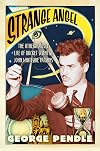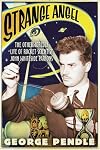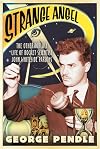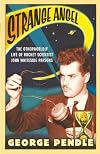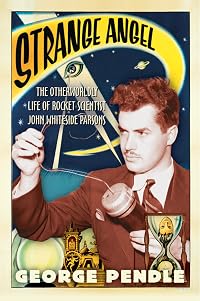
Strange Angel: The Otherworldly Life of Rocket Scientist John Whiteside Parsons
by George Pendle
On This Page
Description
Now a CBS All Access series: "A riveting tale of rocketry, the occult, and boom-and-bust 1920s and 1930s Los Angeles" ( Booklist ). The Los Angeles Times headline screamed: ROCKET SCIENTIST KILLED IN PASADENA EXPLOSION. The man known as Jack Parsons, a maverick rocketeer who helped transform a derided sci-fi plotline into actuality, was at first mourned as a scientific prodigy. But reporters soon uncovered a more shocking story: Parsons had been a devotee of the city's occult scene. Fueled show more by childhood dreams of space flight, Parsons was a leader of the motley band of enthusiastic young men who founded the Jet Propulsion Laboratory, a cornerstone of the American space program. But Parsons's wild imagination also led him into a world of incantations and orgiastic rituals-if he could make rocketry a reality, why not black magic? George Pendle re-creates the world of John Parsons in this dazzling portrait of prewar superstition, cold war paranoia, and futuristic possibility. Peopled with such formidable real-life figures as Howard Hughes, Aleister Crowley, L. Ron Hubbard, and Robert Heinlein, Strange Angel explores the unruly consequences of genius. The basis for a new miniseries created by Mark Heyman and produced by Ridley Scott, this biography "vividly tells the story of a mysterious and forgotten man who embodied the contradictions of his time... when science fiction crashed into science fact.... [It] would make a compelling work of fiction if it weren't so astonishingly true" ( Publishers Weekly ). show lessTags
Recommendations
















Member Recommendations
Member Reviews
This book has to be history, because nobody could make up something so bizarre.
Scion of a wealthy Pasadena family, Parsons was one of the founding fathers of modern rocketry (JATO, Jet Propulsion Laboratory, castable fuels), despite a lack of formal training or credentials. At the same time as he was turning rocketry from a pursuit for cranks into a pillar of the Military-Industrial Complex, Parsons was deeply involved in black magic, and was the high priest of the a Crowleyite Satanic lodge, where wife-swapping and sex magic were performed with an every changing crew of Hollywood types, leftist radicals, and science-fiction freaks, including L. Ron Hubbard (yes, that L. Ron Hubbard).
Pendle charts Parsons' rise through the mirrored show more worlds of rocketry and magic, and then his tragic and sudden decline as his bizarre lifestyle proved incompatible with top secret research in the paranoid political climate of the late 40s, and a series of bad decisions (most involving L. Ron Hubbard) shattered his social circles and finances. Parsons' death in a mysterious explosive accident seems the only fitting end for this forgotten figure of spaceflight, and the 'occult Che Guevara'. show less
Scion of a wealthy Pasadena family, Parsons was one of the founding fathers of modern rocketry (JATO, Jet Propulsion Laboratory, castable fuels), despite a lack of formal training or credentials. At the same time as he was turning rocketry from a pursuit for cranks into a pillar of the Military-Industrial Complex, Parsons was deeply involved in black magic, and was the high priest of the a Crowleyite Satanic lodge, where wife-swapping and sex magic were performed with an every changing crew of Hollywood types, leftist radicals, and science-fiction freaks, including L. Ron Hubbard (yes, that L. Ron Hubbard).
Pendle charts Parsons' rise through the mirrored show more worlds of rocketry and magic, and then his tragic and sudden decline as his bizarre lifestyle proved incompatible with top secret research in the paranoid political climate of the late 40s, and a series of bad decisions (most involving L. Ron Hubbard) shattered his social circles and finances. Parsons' death in a mysterious explosive accident seems the only fitting end for this forgotten figure of spaceflight, and the 'occult Che Guevara'. show less
Strange Angel is the second full-length biography of Jack Parsons I have read. The first, Sex and Rockets, was a book about an occultist who happened to be a rocket scientist. George Pendle's "angel" is instead a rocket scientist who happens to be an occultist. To be fair, both accounts discuss the congruence of Parsons's various passions, rooted in a lust for exploration and experiment. But Sex and Rockets is looking to be shelved with occultism, and Strange Angel with history of science.
Author Pendle is clearly no occultist himself, and he occasionally errs in attributing idiosyncrasy to Parsons in his embrace of received Thelemic doctrines, which is not to say that Parsons wasn't idiosyncratic. But Pendle's treatment of religious show more organizing by the followers of Aleister Crowley is on the whole fair and accurate, and benefits from consulting key repositories of primary sources, including O.T.O. (i.e. the Crowley estate, a continuing religious body). In no way does he marginalize Parsons's occult activities within the general scope of the biography. Perhaps the most vivid anecdote of the whole book is Parsons declaiming Crowley's "Hymn to Pan" at Aerojet social functions, urged on by his boss Andrew Haley.
But, as I observed at the outset, Strange Angel is really about the science, chiefly the inception of practical rocket science in the US during the 1930s and 40s. Pendle gives an exciting and detailed narrative of the Pasadena rocketry crew (the "Suicide Squad"), the GALCIT rocketry project at Caltech, the founding of Jet Propulsion Laboratories and Aerojet Corporation, and the effects of war and commerce on the progress of rocketry from science-fiction pipe dream to common technology. I had never really paused to consider it before, but it turns out that the word "jet" is nothing more than a euphemism for the word "rocket." Scientific consensus was hardened against the idea of using rockets in transport, and Frank Malina and Theodore von Kármán hit on the idea of coining a new word to smuggle the technology into practicable research (157).
Another valuable feature of the book, and one which attracted me to it, is the responsible way that it details the intersection of technological experiment and science fiction, within the frontier field of rocketry. Pendle describes a variety of fascinating milieus and their development: the scientific scenes mentioned above, the Los Angeles Science Fiction Society and early SF fandom, Agape Lodge O.T.O., and the "Parsonage" at 1003 Orange Grove that Parsons established to be an O.T.O. Profess House, but which evolved on its own bohemian trajectory.
The first chapter of the book details Parsons's untimely death in the explosion of his home laboratory in Pasadena, starting with the phenomenon of the explosion itself as it would have been perceived in the moment by locals. After returning Parsons to childhood and working through a full biography, Pendle's account strongly supports the most pedestrian explanation of the tragedy: it was an accident due to haste and awkward circumstance.
Parsons was a notable figure who has been unduly neglected, as Pendle observes. So there's no reason to consider this biography the final word on this fascinating man, but it is a significant contribution and a pleasure to read. show less
Author Pendle is clearly no occultist himself, and he occasionally errs in attributing idiosyncrasy to Parsons in his embrace of received Thelemic doctrines, which is not to say that Parsons wasn't idiosyncratic. But Pendle's treatment of religious show more organizing by the followers of Aleister Crowley is on the whole fair and accurate, and benefits from consulting key repositories of primary sources, including O.T.O. (i.e. the Crowley estate, a continuing religious body). In no way does he marginalize Parsons's occult activities within the general scope of the biography. Perhaps the most vivid anecdote of the whole book is Parsons declaiming Crowley's "Hymn to Pan" at Aerojet social functions, urged on by his boss Andrew Haley.
But, as I observed at the outset, Strange Angel is really about the science, chiefly the inception of practical rocket science in the US during the 1930s and 40s. Pendle gives an exciting and detailed narrative of the Pasadena rocketry crew (the "Suicide Squad"), the GALCIT rocketry project at Caltech, the founding of Jet Propulsion Laboratories and Aerojet Corporation, and the effects of war and commerce on the progress of rocketry from science-fiction pipe dream to common technology. I had never really paused to consider it before, but it turns out that the word "jet" is nothing more than a euphemism for the word "rocket." Scientific consensus was hardened against the idea of using rockets in transport, and Frank Malina and Theodore von Kármán hit on the idea of coining a new word to smuggle the technology into practicable research (157).
Another valuable feature of the book, and one which attracted me to it, is the responsible way that it details the intersection of technological experiment and science fiction, within the frontier field of rocketry. Pendle describes a variety of fascinating milieus and their development: the scientific scenes mentioned above, the Los Angeles Science Fiction Society and early SF fandom, Agape Lodge O.T.O., and the "Parsonage" at 1003 Orange Grove that Parsons established to be an O.T.O. Profess House, but which evolved on its own bohemian trajectory.
The first chapter of the book details Parsons's untimely death in the explosion of his home laboratory in Pasadena, starting with the phenomenon of the explosion itself as it would have been perceived in the moment by locals. After returning Parsons to childhood and working through a full biography, Pendle's account strongly supports the most pedestrian explanation of the tragedy: it was an accident due to haste and awkward circumstance.
Parsons was a notable figure who has been unduly neglected, as Pendle observes. So there's no reason to consider this biography the final word on this fascinating man, but it is a significant contribution and a pleasure to read. show less
Having come across Jack Parsons several years ago, I have wanted to read about him in more depth for some time. So, recently I purchased both 1999's Sex and Rockets: The Occult World of Jack Parsons by John Carter and 2005's Strange Angel: The Otherworldly Life of Rocket Scientist John Whiteside Parsons by George Pendle. I then read them back-to-back, starting with Pendle's and finishing with Carter's. It's instructive to read multiple biographies of a subject, not only to compare the bios, but compare the interpretation of the subject.
Pendle's Strange Angel: The Otherworldly Life of Rocket Scientist John Whiteside Parsons is the superior of the two biographies. Pendle's writing is tight and focused, with no chronological jumping back show more and forth. He deftly introduces background material (on California, rocketry, CalTech, Crowley, and the like) into the text. He did his research capably and thoroughly. Where Carter often wonders and says "perhaps" and "maybe," Pendle definitively proves and states authoritatively.
Pendle tells a good tale, explaining Parson's psychology, education, rocketry, friendships, loves, lusts, science fiction fandom, magick, and life. Parson's life was interesting and in ways he was important and accomplished; in other ways he was a naïve, hedonistic failure. He could have done so much more if he had discipline and ethics.
Oh, and L. Ron Hubbard makes an appearance. Look it up.
Pendle has some nice images, but there could have and should have been many more. There are citations, he did his research, but I didn't think a citation format could get worse than the new-fangled "page number-quote snippet-source citation" style. Here there is just a "quote snippet-source citation." At least they're separated by chapter, otherwise, without page numbers, there is no real way to find a citation other than brute force reading the whole chapter's list of citations. It's stupid. No separate bibliography.
Buy Pendle's book first, it's definitive, and only buy Carter's if you are a completist or like reading loads of thelemic magickal doggerel. show less
Pendle's Strange Angel: The Otherworldly Life of Rocket Scientist John Whiteside Parsons is the superior of the two biographies. Pendle's writing is tight and focused, with no chronological jumping back show more and forth. He deftly introduces background material (on California, rocketry, CalTech, Crowley, and the like) into the text. He did his research capably and thoroughly. Where Carter often wonders and says "perhaps" and "maybe," Pendle definitively proves and states authoritatively.
Pendle tells a good tale, explaining Parson's psychology, education, rocketry, friendships, loves, lusts, science fiction fandom, magick, and life. Parson's life was interesting and in ways he was important and accomplished; in other ways he was a naïve, hedonistic failure. He could have done so much more if he had discipline and ethics.
Oh, and L. Ron Hubbard makes an appearance. Look it up.
Pendle has some nice images, but there could have and should have been many more. There are citations, he did his research, but I didn't think a citation format could get worse than the new-fangled "page number-quote snippet-source citation" style. Here there is just a "quote snippet-source citation." At least they're separated by chapter, otherwise, without page numbers, there is no real way to find a citation other than brute force reading the whole chapter's list of citations. It's stupid. No separate bibliography.
Buy Pendle's book first, it's definitive, and only buy Carter's if you are a completist or like reading loads of thelemic magickal doggerel. show less
Wow. I thought I was weird. John Whiteside Parsons was simultaneously:
* A pioneering rocket scientist, who testified at a trial as an expert witness on explosives at age 23; invented JATO units and castable solid rocket fuel; was one of the founders of both Aerojet General Corporation and the Jet Propulsion Laboratory; and has a crater on the moon named for him;
* High priest of Ordo Temple Orientalis, the organization founded by Alistair Crowley, where he engaged in copious amounts of sex, alcohol, drugs, and magic (if rock-and-roll had been invented, I’m sure Parsons would have done that, too, but as it was he was a fan of classical music). The sex included essentially trading his first wife to another man so he could take up with show more her 16-year-old stepsister; losing this second girl to none other than L. Ron Hubbard; and “summoning” a third female companion by an elaborate ritual including hours of standing in a pentagram chanting in Enochian and engaging in “focused masturbation”. (If only I had known about Enochian and pentagrams when I was a teenager; I was so close). Drugs apparently included peyote, marijuana, morphine, cocaine, amphetamines, and whatever else accomplished chemist Parsons could cook up.
* An early member of the Los Angeles Science Fiction Society, where he hobnobbed with Ray Bradbury, Forest Ackerman, Jack Williamson, Anthony Boucher, L. Sprague DeCamp, Robert Heinlein, and the previously mentioned L. Ron Hubbard. Parsons’ didn’t write any science fiction himself; his literary output included a number of not terribly good poems and Crowleyesque tracts, but he appears as a character in some of the other author’s works, including Boucher’s Rocket to the Morgue and De Camp’s A Gun for Dinosaur.
And he was dead at age 37, in an apparent accident involving a batch of mercury fulminate he was preparing in his laundry room. (One of his O.T.O. associates suggested the actual cause was a fire elemental Parsons had summoned and failed to control).
Author George Pendle does a pretty good job. Naturally, the sex and magic makes up most of the story, since that’s what sells books, but Pendle does a pretty decent job of explaining the science and engineering. I didn’t realize that JATO units, Aerojet, and JPL all had “jet” rather than “rocket” in their names because the military considered rockets to be “Buck Rogers stuff”; Pendle quotes the famous New York Times editorial in which Robert Goddard is dissed because he didn’t realize (according to the editorial writer) that a “rocket wouldn’t work in a vacuum because it would have nothing to push against”. I also found out about the history of JATO. Parson’s original JATO units were black powder rockets, with the powder compressed into the rocket casing with a hydraulic ram; trials showed that these worked if freshly prepared but exploded if they were allowed to sit overnight. Parsons found that the mix was sensitive to temperature change, and if the charge shrank enough to crack or move away from the chamber walls the surface area would increase and the rocket would explode. His insight came while watching a street paving crew; he made a mix of potassium perchlorate and asphalt that could be poured directly into the rocket chamber when hot and which was flexible enough when cool to avoid cracking or detachment.
After the heady excitement of the early days of rocketry, Parson’s life fell apart. He never had a college degree (he was allowed to work at CalTech on the sufferance of Theodore von Kármán, who was apparently a quarter bubble off level himself but much more disciplined); he was forced to sell out of AeroJet General for $11K (a heady sum for the 1940s but still much less than he would have realized if he had hung on to his stock for a few more years) because the military and FBI became suspicious of his OTO activity; the O.T.O itself fell apart (the organization still exists but the particular chapter Parsons was associated with dissolved); his “summoned” girlfriend left him for an artist; L. Ron Hubbard conned him out of his life savings (note that Hubbard had previously conned him out of another girlfriend); and he lost his security clearance. He was reduced to doing special effects for film companies; that’s apparently what led to his demise. He had been renting some warehouse space for a lab but was evicted and had to hastily move all his chemicals and equipment to his home. When he got a contact to make some “squibs” (small charges that could be detonated to simulate bullets striking) he seemingly couldn’t find proper glassware to make mercury fulminate and was mixing the batch in a coffee can. He survived the explosion but lost his right arm and the right side of his face, and was unable to speak or explain before dying a few hours later.
Recommended for both the history and the astonishment value. It is perhaps appropriate that the lunar crater “Parsons” is on the far side. show less
* A pioneering rocket scientist, who testified at a trial as an expert witness on explosives at age 23; invented JATO units and castable solid rocket fuel; was one of the founders of both Aerojet General Corporation and the Jet Propulsion Laboratory; and has a crater on the moon named for him;
* High priest of Ordo Temple Orientalis, the organization founded by Alistair Crowley, where he engaged in copious amounts of sex, alcohol, drugs, and magic (if rock-and-roll had been invented, I’m sure Parsons would have done that, too, but as it was he was a fan of classical music). The sex included essentially trading his first wife to another man so he could take up with show more her 16-year-old stepsister; losing this second girl to none other than L. Ron Hubbard; and “summoning” a third female companion by an elaborate ritual including hours of standing in a pentagram chanting in Enochian and engaging in “focused masturbation”. (If only I had known about Enochian and pentagrams when I was a teenager; I was so close). Drugs apparently included peyote, marijuana, morphine, cocaine, amphetamines, and whatever else accomplished chemist Parsons could cook up.
* An early member of the Los Angeles Science Fiction Society, where he hobnobbed with Ray Bradbury, Forest Ackerman, Jack Williamson, Anthony Boucher, L. Sprague DeCamp, Robert Heinlein, and the previously mentioned L. Ron Hubbard. Parsons’ didn’t write any science fiction himself; his literary output included a number of not terribly good poems and Crowleyesque tracts, but he appears as a character in some of the other author’s works, including Boucher’s Rocket to the Morgue and De Camp’s A Gun for Dinosaur.
And he was dead at age 37, in an apparent accident involving a batch of mercury fulminate he was preparing in his laundry room. (One of his O.T.O. associates suggested the actual cause was a fire elemental Parsons had summoned and failed to control).
Author George Pendle does a pretty good job. Naturally, the sex and magic makes up most of the story, since that’s what sells books, but Pendle does a pretty decent job of explaining the science and engineering. I didn’t realize that JATO units, Aerojet, and JPL all had “jet” rather than “rocket” in their names because the military considered rockets to be “Buck Rogers stuff”; Pendle quotes the famous New York Times editorial in which Robert Goddard is dissed because he didn’t realize (according to the editorial writer) that a “rocket wouldn’t work in a vacuum because it would have nothing to push against”. I also found out about the history of JATO. Parson’s original JATO units were black powder rockets, with the powder compressed into the rocket casing with a hydraulic ram; trials showed that these worked if freshly prepared but exploded if they were allowed to sit overnight. Parsons found that the mix was sensitive to temperature change, and if the charge shrank enough to crack or move away from the chamber walls the surface area would increase and the rocket would explode. His insight came while watching a street paving crew; he made a mix of potassium perchlorate and asphalt that could be poured directly into the rocket chamber when hot and which was flexible enough when cool to avoid cracking or detachment.
After the heady excitement of the early days of rocketry, Parson’s life fell apart. He never had a college degree (he was allowed to work at CalTech on the sufferance of Theodore von Kármán, who was apparently a quarter bubble off level himself but much more disciplined); he was forced to sell out of AeroJet General for $11K (a heady sum for the 1940s but still much less than he would have realized if he had hung on to his stock for a few more years) because the military and FBI became suspicious of his OTO activity; the O.T.O itself fell apart (the organization still exists but the particular chapter Parsons was associated with dissolved); his “summoned” girlfriend left him for an artist; L. Ron Hubbard conned him out of his life savings (note that Hubbard had previously conned him out of another girlfriend); and he lost his security clearance. He was reduced to doing special effects for film companies; that’s apparently what led to his demise. He had been renting some warehouse space for a lab but was evicted and had to hastily move all his chemicals and equipment to his home. When he got a contact to make some “squibs” (small charges that could be detonated to simulate bullets striking) he seemingly couldn’t find proper glassware to make mercury fulminate and was mixing the batch in a coffee can. He survived the explosion but lost his right arm and the right side of his face, and was unable to speak or explain before dying a few hours later.
Recommended for both the history and the astonishment value. It is perhaps appropriate that the lunar crater “Parsons” is on the far side. show less
A Stranger Angel than Fiction
Review of the Audible Audio edition (2019) of the original Harcourt hardcover "Strange Angel: The Otherworldly Life of Rocket Scientist John Whiteside Parsons" (2005)
I normally give things related to the occult a miss, but when Strange Angel came up as an Audible Daily Deal on Oct. 7, 2019, I couldn't resist giving it a tryout and was not disappointed. This life story not only covers the beginnings of the American rocketry program (with a group of sometimes hapless amateurs who called themselves the Suicide Squad) and the American branch of Aleister Crowley's magick worshippers but has some fascinating cameos by later famous science fiction writers. Everyone from Ray Bradbury to Robert A. Heinlein to L. show more Sprague de Camp put in an appearance. The notorious science fiction writer L. Ron Hubbard plays an especially prominent role in these early years before he founded Scientology, but he was already scamming people even then, especially his supposed friend John Parsons. You can well understand how they could turn this into an ongoing television series which is also the reason for this new tie-in edition release. show less
Review of the Audible Audio edition (2019) of the original Harcourt hardcover "Strange Angel: The Otherworldly Life of Rocket Scientist John Whiteside Parsons" (2005)
I normally give things related to the occult a miss, but when Strange Angel came up as an Audible Daily Deal on Oct. 7, 2019, I couldn't resist giving it a tryout and was not disappointed. This life story not only covers the beginnings of the American rocketry program (with a group of sometimes hapless amateurs who called themselves the Suicide Squad) and the American branch of Aleister Crowley's magick worshippers but has some fascinating cameos by later famous science fiction writers. Everyone from Ray Bradbury to Robert A. Heinlein to L. show more Sprague de Camp put in an appearance. The notorious science fiction writer L. Ron Hubbard plays an especially prominent role in these early years before he founded Scientology, but he was already scamming people even then, especially his supposed friend John Parsons. You can well understand how they could turn this into an ongoing television series which is also the reason for this new tie-in edition release. show less
He was an amateur rocket scientist who figured out how to use solid fuel in the 1940s, a student of Alastair Crowley who practiced Thelemic sex magick, AND a LASFS (Los Angeles Science Fantasy Society) member!
Although he didn’t go to CalTech, he worked with scientists there and got involved in rocketry projects that would eventually become the Jet Propulsion Laboratory (JPL), in Pasadena.
Meanwhile, he was corresponding with Crowley and leading rituals at a communal house of like-minded hedonists. After his partner left him for L. Ron Hubbard, he performed a ritual to bring him his perfect woman, and shortly afterwards he met Candy Cameron, an artist and free spirit.
He worked for some of the big aerospace companies until he lost his show more security clearance after the war, and went back to the dynamite companies where he started. He also did projects for a special effects company and it was while he was making explosive effects that he died in an explosion, in 1952.
It’s an interesting biography not just of him but about the development of rocketry, the creation of JPL, and Crowley and his followers. The author points out that Crowley dreamed of making Thelema a world religion to make him rich, but it was L. Ron Hubbard who succeeded at that.
My mom told me about this book and you can imagine why it appealed to us. My dad was in the Pacific Rocket Society in the 40s which was pretty much people going out in the desert to blow things up, not a group that did actual rocket development. Parsons did give them a presentation, the book says. Lots of science fiction writers and LASFS members whose names I know are mentioned. show less
Although he didn’t go to CalTech, he worked with scientists there and got involved in rocketry projects that would eventually become the Jet Propulsion Laboratory (JPL), in Pasadena.
Meanwhile, he was corresponding with Crowley and leading rituals at a communal house of like-minded hedonists. After his partner left him for L. Ron Hubbard, he performed a ritual to bring him his perfect woman, and shortly afterwards he met Candy Cameron, an artist and free spirit.
He worked for some of the big aerospace companies until he lost his show more security clearance after the war, and went back to the dynamite companies where he started. He also did projects for a special effects company and it was while he was making explosive effects that he died in an explosion, in 1952.
It’s an interesting biography not just of him but about the development of rocketry, the creation of JPL, and Crowley and his followers. The author points out that Crowley dreamed of making Thelema a world religion to make him rich, but it was L. Ron Hubbard who succeeded at that.
My mom told me about this book and you can imagine why it appealed to us. My dad was in the Pacific Rocket Society in the 40s which was pretty much people going out in the desert to blow things up, not a group that did actual rocket development. Parsons did give them a presentation, the book says. Lots of science fiction writers and LASFS members whose names I know are mentioned. show less
It’s the true story of the high school dropout who helped launched the space program, John Parsons. But this is no fuck-up does good and become Lee Iacocca bullshit. Parsons was a WACKO, as well as an interesting footnote in the history of religious chicanery, serving as a bridge between the Victorian Old World flim- flam of Aleister Crowley and the Space Age Yankee flim-flam of L. Ron Hubbard (who makes a last act appearance as a dastardly villain, fleeing on yacht with Parson’s lady and a good chunk of his life savings.)
Parson blew up sheds in and around Cal Tech by day, and ran a Gnostic free love freakshow in an old Pasadena mansion by night. (LA was very, very weird in the forties. Full of racial strife, institutionalized show more corruption and flakely cults. The more things change...) Parson was Crowley’s man in LA, running the local temple of Crowley’s order, the OTO. He was also one of the underappreciated international network of amateurs that ushered in the rocket age.
Rockets were written off by the scientific establishment as goony kids stuff, not worthy of study, especially as propulsion for spacecraft. Some physicists, who should have known better, even argued rockets would not work in a vacuum.
It was only through the efforts of a bunch of obsessed misfits existing outside academia that the US eventually had any sort of rocket program. The Nazis, on the other hand, became very very interested in what their nerds were up to rocket-wise and as a result 3,000 V2s later rained on London and Rotterdam. Rockets worked.
The sadly ironic result for Parsons is that once rocketry became respectable, weirdos like him were pushed aside for degreed professionals. While his grab-ass little posse of pyros eventually became the Jet Propulsion Laboratory, Parson ended his life in an accidental explosion, blowing himself to smithereens mixing up demolition effects for a movie studio.
What’s interesting is watching Hubbard, at the time a fairly successful Sci-Fi writer, out-Crowley Crowley, creating a global religion with not a little cribbing from Crowley’s playbook. Isaac Asimov, Robert Heinlein and L. Sprague de Camp (Conan’s co-creator) even make a brief appearance to comment on the audacity of their fellow pulp-spieler.
The prose is a bit dry, but the subject matter more than makes up for it. As soon as you’re done rereading Princess Daisy, give it a spin. show less
Parson blew up sheds in and around Cal Tech by day, and ran a Gnostic free love freakshow in an old Pasadena mansion by night. (LA was very, very weird in the forties. Full of racial strife, institutionalized show more corruption and flakely cults. The more things change...) Parson was Crowley’s man in LA, running the local temple of Crowley’s order, the OTO. He was also one of the underappreciated international network of amateurs that ushered in the rocket age.
Rockets were written off by the scientific establishment as goony kids stuff, not worthy of study, especially as propulsion for spacecraft. Some physicists, who should have known better, even argued rockets would not work in a vacuum.
It was only through the efforts of a bunch of obsessed misfits existing outside academia that the US eventually had any sort of rocket program. The Nazis, on the other hand, became very very interested in what their nerds were up to rocket-wise and as a result 3,000 V2s later rained on London and Rotterdam. Rockets worked.
The sadly ironic result for Parsons is that once rocketry became respectable, weirdos like him were pushed aside for degreed professionals. While his grab-ass little posse of pyros eventually became the Jet Propulsion Laboratory, Parson ended his life in an accidental explosion, blowing himself to smithereens mixing up demolition effects for a movie studio.
What’s interesting is watching Hubbard, at the time a fairly successful Sci-Fi writer, out-Crowley Crowley, creating a global religion with not a little cribbing from Crowley’s playbook. Isaac Asimov, Robert Heinlein and L. Sprague de Camp (Conan’s co-creator) even make a brief appearance to comment on the audacity of their fellow pulp-spieler.
The prose is a bit dry, but the subject matter more than makes up for it. As soon as you’re done rereading Princess Daisy, give it a spin. show less
Members
- Recently Added By
Lists

Best Biographies, Autobiographies and Memoirs
465 works; 160 members

Weirdo Nonfiction
138 works; 3 members
Author Information

3 Works 792 Members
Some Editions
Common Knowledge
- People/Characters
- John Parsons; Jack Parsons; Aleister Crowley
- Important places
- Pasadena, California, USA; California, USA
Classifications
- Genres
- Nonfiction, Biography & Memoir, Science & Nature, General Nonfiction, Religion & Spirituality, History
- DDC/MDS
- 621.4356092 — Applied science & technology Engineering Applied physics Engines, Power Plants, Tools Internal combustion engines Rocket Engines
- LCC
- TL781.85 .P37 .P46 — Technology Motor vehicles. Aeronautics. Astronautics Motor vehicles. Aeronautics. Astronautics
- BISAC
Statistics
- Members
- 421
- Popularity
- 73,698
- Reviews
- 12
- Rating
- (3.63)
- Languages
- English
- Media
- Paper, Audiobook, Ebook
- ISBNs
- 8
- ASINs
- 5