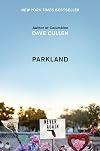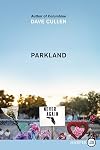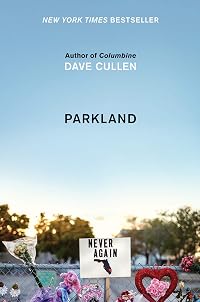
Parkland: Birth of a Movement
by Dave Cullen 
On This Page
Description
On the first anniversary of the events at Parkland, the acclaimed, New York Times bestselling author of Columbine offers an intimate, deeply moving account of the extraordinary teenage survivors who became activists and pushed back against the NRA and feckless Congressional leaders--inspiring millions of Americans to join their grassroots #neveragain movement. Nineteen years ago, Dave Cullen was among the first to arrive at Columbine High, even before most of the SWAT teams went in. While show more writing his acclaimed account of the tragedy, he suffered two bouts of secondary PTSD. He covered all the later tragedies from a distance, working with a cadre of experts cultivated from academia and the FBI, but swore he would never return to the scene of a ghastly crime. But in March 2018, Cullen went to Marjory Stoneman Douglas High School because something radically different was happening. In nearly twenty years witnessing the mass shootings epidemic escalate, he was stunned and awed by the courage, anger, and conviction of the high school's students. Refusing to allow adults and the media to shape their story, these remarkable adolescents took control, using their grief as a catalyst for change, transforming tragedy into a movement of astonishing hope that has galvanized a nation. Cullen unfolds the story of Parkland through the voices of key participants whose diverse personalities and outlooks comprise every facet of the movement. Instead of taking us into the minds of the killer, he takes us into the hearts of the Douglas students as they cope with the common concerns of high school students everywhere--awaiting college acceptance letters, studying for mid-term exams, competing against their athletic rivals, putting together the yearbook, staging the musical Spring Awakening, enjoying prom and graduation--while moving forward from a horrific event that has altered them forever. Deeply researched and beautifully told, Parkland is an in-depth examination of this pivotal moment in American culture--and an up-close portrait that reveals what these extraordinary young people are like as kids. As it celebrates the passion of these astonishing students who are making history, this spellbinding book is an inspiring call to action for lasting change. show lessTags
Recommendations




Member Reviews
I just finished this book about an hour ago, and I should probably wait a few days to give a more thorough and thought out review, but...here goes.
This book was not quite as tough a read as the last Cullen book I read, [b:Columbine|5632446|Columbine|Dave Cullen|https://i.gr-assets.com/images/S/compressed.photo.goodreads.com/books/1442939134l/5632446._SY75_.jpg|5803859], which destroyed me. To this day, working in a bookstore, if anyone asks for a horror recommendation, that is the book I point to because, to me, there is no greater horror than the fact that two kids went in and killed a bunch of their classmates, and America sat back and let it happen again...and again...and again.
This book builds on that same horror. Cullen has an show more obvious bias toward the kids that started the movement that grew out of the Parkland shooting, but honestly, I don't know how anyone could learn about both what they went through, and then their reaction to it, and not be awestruck.
I know "awesome" and "awestruck" are words that are used so often that they've lost their power, but I can only describe my admiration of these people as "awe". It's the only word that works.
There's a lot to unpack in this book. There's the actual event itself, coming mere months after the Las Vegas shooting, and something like the 81st one after Columbine, not two decades previously.
Let that number sit in your head. Columbine happened. Then eighty-one more shootings in schools. Then Parkland.
But...the Second Amendment. But...the NRA.
The outrage is so underwhelming compared to the cost. Throughout this book, I kept thinking, are these few kids the only sane ones in the room? Are they truly the only ones that understand the stakes here?
And then they draw in other like-minded but even more ignored factions, like Chicago. They go up against politicians—some, unbelievably, that have actually survived shootings themselves—who resolutely close their eyes, plug their ears, and spout the familiar refrains of "thoughts and prayers" and "it's a mental health issue, not a gun issue". It's infuriating, but it draws a very solid line under the fact that the politicians that are elected by their constituents do not actually work for them. They work for whomever yells the loudest from the upper ranks of their party, and often that message is whispered in their ears by those with the most money.
So yes, the initial outrage stems from the fact that 17 people—17 more people—died needlessly while everyone hid behind a 250 year old piece of paper, wrung their hands, and offered thoughts and prayers. But the outrage goes beyond that, scaling up to understand the sheer enormity of the issue at hand.
At one point, toward the end of the book, one of the March For Our Lives group says she hopes that the movement won't be needed by the time she's 30. It's a beautiful thought.
It's a terrifying book. It's an inspirational book. And it's just as much of a horror story as the first one, but it does cast some hope. show less
This book was not quite as tough a read as the last Cullen book I read, [b:Columbine|5632446|Columbine|Dave Cullen|https://i.gr-assets.com/images/S/compressed.photo.goodreads.com/books/1442939134l/5632446._SY75_.jpg|5803859], which destroyed me. To this day, working in a bookstore, if anyone asks for a horror recommendation, that is the book I point to because, to me, there is no greater horror than the fact that two kids went in and killed a bunch of their classmates, and America sat back and let it happen again...and again...and again.
This book builds on that same horror. Cullen has an show more obvious bias toward the kids that started the movement that grew out of the Parkland shooting, but honestly, I don't know how anyone could learn about both what they went through, and then their reaction to it, and not be awestruck.
I know "awesome" and "awestruck" are words that are used so often that they've lost their power, but I can only describe my admiration of these people as "awe". It's the only word that works.
There's a lot to unpack in this book. There's the actual event itself, coming mere months after the Las Vegas shooting, and something like the 81st one after Columbine, not two decades previously.
Let that number sit in your head. Columbine happened. Then eighty-one more shootings in schools. Then Parkland.
But...the Second Amendment. But...the NRA.
The outrage is so underwhelming compared to the cost. Throughout this book, I kept thinking, are these few kids the only sane ones in the room? Are they truly the only ones that understand the stakes here?
And then they draw in other like-minded but even more ignored factions, like Chicago. They go up against politicians—some, unbelievably, that have actually survived shootings themselves—who resolutely close their eyes, plug their ears, and spout the familiar refrains of "thoughts and prayers" and "it's a mental health issue, not a gun issue". It's infuriating, but it draws a very solid line under the fact that the politicians that are elected by their constituents do not actually work for them. They work for whomever yells the loudest from the upper ranks of their party, and often that message is whispered in their ears by those with the most money.
So yes, the initial outrage stems from the fact that 17 people—17 more people—died needlessly while everyone hid behind a 250 year old piece of paper, wrung their hands, and offered thoughts and prayers. But the outrage goes beyond that, scaling up to understand the sheer enormity of the issue at hand.
At one point, toward the end of the book, one of the March For Our Lives group says she hopes that the movement won't be needed by the time she's 30. It's a beautiful thought.
It's a terrifying book. It's an inspirational book. And it's just as much of a horror story as the first one, but it does cast some hope. show less
This is a story simultaneously chilling and uplifting. Following the events of yet another school shooting, a group of students band together to send a message to their government. Their platform is intentionally nonpartisan, and their demands are eminently reasonable. This is the story of how a grassroots movement took form, driven by the passionate players who were still reeling from the trauma of their experiences. They bravely put themselves in the spotlight and became the target of accolades and death threats.
This is a moving story and one that bring both shame and hope. It is a troubled time we find ourselves in, and it is unfortunate that children too young to vote feel that they are the only ones who will take any action to show more protect innocent lives. They find themselves on the world stage - being the adults they want to see in the world. show less
This is a moving story and one that bring both shame and hope. It is a troubled time we find ourselves in, and it is unfortunate that children too young to vote feel that they are the only ones who will take any action to show more protect innocent lives. They find themselves on the world stage - being the adults they want to see in the world. show less
Unlike in his book Columbine, Cullen does not try to get into the mind of the Parkland killer. He is never named and mostly ignored. This book is about the aftermath. This is about the children, the young adults, we failed to protect. They took it upon themselves to try to bring about change to protect themselves and to protect all of us.
In the few days it took me to read this book, two Parkland survivors committed suicide. One father of a Sandy Hook victim committed suicide. These people were victims as much as the original victims of murder. There are still many living victims who will survive, but their lives will never be the same.
Although this book had an entirely different perspective than Columbine, it was interesting. I applaud show more these young people who think the best way to go on is to fight the system that allows these mass murders to continue. I also applaud those who choose not to fight that particular fight, or to fight it less forcefully. Every victim, and that includes far more than the people directly in the situation, has to do what is best for that individual.
I understand that the book focuses so much on the post-Parkland activists that there is resentment or mixed emotions among the others. The author does tell in detail what the activists were doing and how they presented themselves to the world and what they tried to hide. He never implies that all should react the same. In fact, he goes out of his way to not imply that. A book well worth reading if you care at all about children or common sense gun control.
On another note, I have nothing but contempt and disgust for those deniers who harass the survivors and their families. It takes a special kind of person to spew lies and hate like they do. show less
In the few days it took me to read this book, two Parkland survivors committed suicide. One father of a Sandy Hook victim committed suicide. These people were victims as much as the original victims of murder. There are still many living victims who will survive, but their lives will never be the same.
Although this book had an entirely different perspective than Columbine, it was interesting. I applaud show more these young people who think the best way to go on is to fight the system that allows these mass murders to continue. I also applaud those who choose not to fight that particular fight, or to fight it less forcefully. Every victim, and that includes far more than the people directly in the situation, has to do what is best for that individual.
I understand that the book focuses so much on the post-Parkland activists that there is resentment or mixed emotions among the others. The author does tell in detail what the activists were doing and how they presented themselves to the world and what they tried to hide. He never implies that all should react the same. In fact, he goes out of his way to not imply that. A book well worth reading if you care at all about children or common sense gun control.
On another note, I have nothing but contempt and disgust for those deniers who harass the survivors and their families. It takes a special kind of person to spew lies and hate like they do. show less
Parkland: Birth of a Movement - Cullen
4 stars
I did not read Columbine, Cullen’s book about that first horrific school shooting. I’d had enough of it from news reports and subsequent staff training sessions for the ‘unlikely’ copycat shooting at my place of work. I was, and had been for many years, teaching first grade at the time of the Newtown shooting. I couldn’t bear to watch the news reports, but found I couldn’t avoid it. I had trouble sleeping. More staff training, and school drills. (They changed the locks on all of our doors, which still had to be locked from the outside with a key.)
Although I did not want to read about another school shooting, this book interested me. The immediate aftermath of this shooting was show more different. I was captivated, along with the rest of the country. I wanted to know more about those charismatic kids that we all saw on national television.
Cullen did provide a look at the well known personalities, although I found that there was not much that I didn’t already know. This book is also the memoir of a working journalist. Cullen isn’t just reporting what happened. This book speaks to how he did his job and how the work affected him personally. The prologue to this book is very personal. Cullen discusses his professional involvement with the many mass shootings since Columbine. He writes about PTSD as well as VT (vicarious traumatization). Depression and anxiety, both symptoms of VT, had curtailed Cullen’s journalism. If there had been a typical newscycle following the Parkland shootings, he would probably have avoided the assignment.
The newscycle following this shooting was a game changer. (At least, we all hoped so at the time.)
Cullen details just how different it became as he followed the story well past the March for our Lives in Washington, D.C. He gives informed historical comparisons to the Columbine shootings. He provides a timeline of just how fast those traumatized and charismatic kids took control of the story. It’s mind-boggling. Cullen wasn’t the only working journalist featured in this book. As the main group of activists formed itself for action, they were mostly students with particular interests in the arts; theater, film production, journalism. Cullen refers to them as ‘the creatives’. (In my ancient high school experience, we were called ‘nerds’. I was a journalism nerd. By comparison, I think we must have been putting out the student paper using rock and chisel.) This was a well endowed school with a privileged population. They were tech and media savvy. They put those assets to very good use.
This book was very detailed, including Cullen’s thorough listing of his sources for each chapter. I was sometimes lost in the details. He made a point of referring to all of the high school students by their first names ‘because they were children’. And he also referred to adults by first names after an introduction. I had some trouble following the who-was-who. Or, possibly, I was just overwhelmed by the gruelling pace and rapid growth of the March for Our Lives movement.
This story isn’t really over, but the beginning has been well documented. Dave Cullen was there, as it happened. That’s good journalism. show less
4 stars
I did not read Columbine, Cullen’s book about that first horrific school shooting. I’d had enough of it from news reports and subsequent staff training sessions for the ‘unlikely’ copycat shooting at my place of work. I was, and had been for many years, teaching first grade at the time of the Newtown shooting. I couldn’t bear to watch the news reports, but found I couldn’t avoid it. I had trouble sleeping. More staff training, and school drills. (They changed the locks on all of our doors, which still had to be locked from the outside with a key.)
Although I did not want to read about another school shooting, this book interested me. The immediate aftermath of this shooting was show more different. I was captivated, along with the rest of the country. I wanted to know more about those charismatic kids that we all saw on national television.
Cullen did provide a look at the well known personalities, although I found that there was not much that I didn’t already know. This book is also the memoir of a working journalist. Cullen isn’t just reporting what happened. This book speaks to how he did his job and how the work affected him personally. The prologue to this book is very personal. Cullen discusses his professional involvement with the many mass shootings since Columbine. He writes about PTSD as well as VT (vicarious traumatization). Depression and anxiety, both symptoms of VT, had curtailed Cullen’s journalism. If there had been a typical newscycle following the Parkland shootings, he would probably have avoided the assignment.
The newscycle following this shooting was a game changer. (At least, we all hoped so at the time.)
Cullen details just how different it became as he followed the story well past the March for our Lives in Washington, D.C. He gives informed historical comparisons to the Columbine shootings. He provides a timeline of just how fast those traumatized and charismatic kids took control of the story. It’s mind-boggling. Cullen wasn’t the only working journalist featured in this book. As the main group of activists formed itself for action, they were mostly students with particular interests in the arts; theater, film production, journalism. Cullen refers to them as ‘the creatives’. (In my ancient high school experience, we were called ‘nerds’. I was a journalism nerd. By comparison, I think we must have been putting out the student paper using rock and chisel.) This was a well endowed school with a privileged population. They were tech and media savvy. They put those assets to very good use.
This book was very detailed, including Cullen’s thorough listing of his sources for each chapter. I was sometimes lost in the details. He made a point of referring to all of the high school students by their first names ‘because they were children’. And he also referred to adults by first names after an introduction. I had some trouble following the who-was-who. Or, possibly, I was just overwhelmed by the gruelling pace and rapid growth of the March for Our Lives movement.
This story isn’t really over, but the beginning has been well documented. Dave Cullen was there, as it happened. That’s good journalism. show less
This book follows closely in the never-ending, easily resolved drama that is American school mass murders.
I say easily resolved, as it’s no secret that the fewer guns one has access to, and the fewer class differences there are in the society that one lives in, the fewer mass murders there are. That’s simplifying things, but not much.
Cullen follows youths who have somehow been, geographically and/or show more physically speaking, been affected by the mass-murder in Parkland in 2018.
What differed reactions of the mass murder in Columbine—which Cullen excellently covered in his book “Columbine“—is that what happened at Parkland sparked hundreds of movements of sorts, by youth.
Youth directed political strife, started organisations with the sole purpose to ban semi-automatic rifles, to spark true political change, to prevent themselves from being slaughtered.
And that’s mainly what this book is about; while Cullen’s “Columbine” focused on the perpetrators, this book is all about the youth and their organisation towards changing the future.
Sadly, this book does not delve deeply, or even semi-deeply into what could be done to stop what truly erects mass murder in schools in the USA; that is what I believe. Access to weapons is one thing, but weapons do not create the chaos that leads to mass murder; I’m not pro-NRA or anything like it, and I firmly believe that the NRA is a destructive organisation that should best be cancelled, and weapons be demolished. However, weapons will always exist.
The best part about this book is summed up by the author:
All in all, this book is a good job on kids who rush to danger, willing to make changes that affect humans for real. Cullen’s capturing of the urgency is the best part. Having said that, I truly wish that Cullen would have delved more into the thoughts and processes that drove the youth which rallied for true change, and this book would have been much better for it. show less
I say easily resolved, as it’s no secret that the fewer guns one has access to, and the fewer class differences there are in the society that one lives in, the fewer mass murders there are. That’s simplifying things, but not much.
The Pulse shooting in 2016 seems to have been the point when millions of Americans decided they couldn’t bear it anymore. Nothing ever changed, except the body count, which kept rising. The Onion famously reruns the same headline after every time: “‘No Way To Prevent This,’ Says Only Nation Where This Regularly Happens.”
Cullen follows youths who have somehow been, geographically and/or show more physically speaking, been affected by the mass-murder in Parkland in 2018.
Sadly, Columbine ignited the school-shooter era, which we’re still dealing with, and it’s getting much worse. While keeping top-ten lists of these massacres is part of the problem, it’s notable that Columbine no longer even makes that list.
What differed reactions of the mass murder in Columbine—which Cullen excellently covered in his book “Columbine“—is that what happened at Parkland sparked hundreds of movements of sorts, by youth.
Youth directed political strife, started organisations with the sole purpose to ban semi-automatic rifles, to spark true political change, to prevent themselves from being slaughtered.
And that’s mainly what this book is about; while Cullen’s “Columbine” focused on the perpetrators, this book is all about the youth and their organisation towards changing the future.
After two decades of research based on the voices of victims and victim advocates, and responses from the best minds in academia, psychology, criminology, and journalism, plausible roads out seem clear: major reforms to the easy access to deadly weapons and ammunition; a targeted approach to mental health in the form of screening for teen depression, every semester, in every high school in the country; and a major change in the media’s coverage of these killers, which lionizes them in the eyes of unraveling future perps. It may take a combination of these strategies, and of course the smart money is on doing all three. Yet in twenty years, America alone has lost 683 lives in 81 mass shootings, and we’ve done virtually nothing. Concealed-carry and a host of other laws have made quick access to guns easier and easier. The “mental health” component has always been addressed with that absurdly broad label, so of course we have failed to move an inch. Only the media angle has begun to show some progress, or at least the early rumblings, in which journalists are beginning to accept our role in the star-making cycle.
Sadly, this book does not delve deeply, or even semi-deeply into what could be done to stop what truly erects mass murder in schools in the USA; that is what I believe. Access to weapons is one thing, but weapons do not create the chaos that leads to mass murder; I’m not pro-NRA or anything like it, and I firmly believe that the NRA is a destructive organisation that should best be cancelled, and weapons be demolished. However, weapons will always exist.
Senate president Joe Negron opened his session to the media. He was joined by two other Republican Senate leaders. The senators were respectful and engaging, seemed genuinely concerned, and answered every question—but most of them evasively. The questions were dignified, as instructed, but the reactions were spontaneous and blunt. “Why should anyone have an assault rifle?” a boy asked. “That’s an issue that we’re reviewing,” Negron said. The students groaned.
“I’ll take two more questions,” Senator Negron said. “This young lady, and the young man in the red tie.” When his turn came, the red-tie boy stood and spoke more sternly than his peers. “You said you would look at things closely. Are you willing to actually act on anything? Yes or no?” Senator Negron gave a long, meandering answer: he was proud of the senate, they were working on mental health . . . No real answer.
The planning phase typically lasts weeks or months. In the case of the deeply depressed, it typically comes at the tail end of a far longer downward spiral into depression. The definitive study on school shooters reported that nearly 95 percent of perpetrators planned the attack in advance, just over half spent a month or more doing so, and some planned for an entire year. The Secret Service conducted that investigation in 2004, and studied every targeted school shooting in the United States until that point: thirty-seven incidents from 1974 to 2000. The FBI did a companion study with similar findings and has recently done more exhaustive work on the broader cohort of mass shooters. In all cases, same result. The Secret Service report made a startling statement, backed by all the others: “There is no accurate or useful ‘profile’ of students who engaged in targeted school violence.” Shooters encompass all racial, ethnic, and socioeconomic factors, parenting styles, and so forth. However, most of the major studies have indicated that mental health disorders play a big factor. The FBI’s June 2018 study examined “concerning behaviors” in major mass shooters, and only one of those broke 50 percent: mental health issues afflicted 62 percent of all shooters studied. Depression, anxiety, and paranoia were the issues most frequently cited.
The best part about this book is summed up by the author:
“Adults will always think of ten thousand reasons why you can’t do something,” Dr. Ley said. “Kids won’t do that. That’s what’s glorious about young people: the still-developing impulse control. They see something, they see a cause, and they say, ‘I’m going to do what’s right. You’re not going to stop me.’”
All in all, this book is a good job on kids who rush to danger, willing to make changes that affect humans for real. Cullen’s capturing of the urgency is the best part. Having said that, I truly wish that Cullen would have delved more into the thoughts and processes that drove the youth which rallied for true change, and this book would have been much better for it. show less
A compelling and comprehensive study in how a social justice movement is born and sustained in the wake of tragedy. I learned a lot about the Parkland kids and what helped the gun safety movement grow.
Dave Cullen wrote the definitive book on Columbine. In this book we discover the price he paid during his ten years of researching that tragedy. After the school shooting in Parkland, Cullen voluntarily dove in to write another tale, though this one is different in many ways. These teens grew up will various drills in school in order to deal with a potential active shooter situation, something that was never anticipated when Columbine happened. Perhaps because they were better prepared and better educated on this topic, many of the teens involved had a different response. Some started on the road to activism even as bullets were still flying. Perhaps the time is also right, but whatever the reasons, these teenagers are having a lasting show more impact on this important topic, taking on the NRA and showing how we can all come together to be a better nation. Kudos to Cullen for all of his time with these teens and bringing their story to print. More kudos to these kids and their families for saying "Never Again." I know I voted in 2018 with gun control as one of my focuses for my vote. show less
Members
- Recently Added By
Lists

True Crime
156 works; 1 member

To Read
617 works; 7 members

Books That Made Us Cry
278 works; 145 members
Author Information

6+ Works 4,874 Members
Dave Cullen is the author of the New York Times bestseller Columbine. He covered Parkland for Vanity Fair since the first weekend, following the Parkland kids around the country and into their rehearsals, their clandestine office, and their homes.
Dave Cullen is a LibraryThing Author, an author who lists their personal library on LibraryThing.
Awards and Honors
Awards
Distinctions
Common Knowledge
- People/Characters
- Emma González
- Important places
- Florida, USA
- Important events
- Shooting at Parkland; Gun Control; Marjory Stoneman Douglas High School shooting, Parkland, Florida (February 14, 2018)
- Canonical DDC/MDS
- 371.7820975935
- Canonical LCC
- LB3013.33.F6
Classifications
- Genres
- General Nonfiction, Nonfiction, History, Biography & Memoir
- DDC/MDS
- 371.7820975935 — Society, government, & culture Education Schools and their activities; special education School hygiene School violence
- LCC
- LB3013.33 .F6 — Education Theory and practice of education Theory and practice of education School administration and organization School management and discipline
- BISAC
Statistics
- Members
- 458
- Popularity
- 66,967
- Reviews
- 12
- Rating
- (3.99)
- Languages
- English
- Media
- Paper, Audiobook, Ebook
- ISBNs
- 13
- ASINs
- 5