
Dave Cullen
Author of Columbine
About the Author
Dave Cullen is the author of the New York Times bestseller Columbine. He covered Parkland for Vanity Fair since the first weekend, following the Parkland kids around the country and into their rehearsals, their clandestine office, and their homes.
Image credit: Photo by MaryLynn Gillaspie.
Series
Works by Dave Cullen
Associated Works
Backstabbers, Crazed Geniuses, and Animals We Hate: The Writers of Slate's "Assessment" Column Tell It Like It Is (2006) — Contributor — 20 copies
Tagged
Common Knowledge
- Canonical name
- Cullen, Dave
- Legal name
- Cullen, David Thomas
- Birthdate
- 1961-06-03
- Gender
- male
- Education
- University of Colorado at Boulder (MA|Creative Writing)
University of Illinois, Urbana-Champaign (BS|Math & Computer Science) - Occupations
- journalist
- Organizations
- United States Army
- Awards and honors
- GLAAD Media Award
Society of Professional Journalists Award - Agent
- Betsy Lerner (Dunow, Carlson & Lerner)
- Relationships
- Berlin, Lucia (mentor)
- Short biography
- Dave Cullen is the author of Columbine, an indelible portrait of the killers, the victims, and the community that suffered one of the greatest tragedies of the 20th century. He is a journalist who has contributed to the New York Times, Times of London, Slate, Salon, New York Daily News, The Guardian, 5280, Pacific News Service and In These Times.
Cullen is considered a leading authority on the Columbine killers, and has also written extensively on Evangelical Christians, gays in the military, politics, and pop culture. A graduate of the MA program at the University of Colorado at Boulder, Cullen has won several writing awards, including a GLAAD Media Award, Society of Professional Journalism awards, the Jovanovich Imaginative Writing Award, and several Best of Salon citations. He is an Ochberg Fellow at the Dart Center for Journalism & Trauma at Columbia University.
Dave grew up in Chicago, and has worked in most regions of the U.S., as well as England, Kuwait and Bahrain. He worked as a computer systems developer for EDS and a management consultant for Arthur Andersen. He served as a Private and a Second Lieutenant in the U.S. Army. He moved to Colorado in1994, and currently lives in Denver. - Nationality
- USA
- Places of residence
- Chicago, Illinois, USA
Denver, Colorado, USA
Kuwait
Ft. Benning, Georgia, USA
Dallas, Texas, USA
Manama, Bahrain (show all 10)
Blackpool, England
Detroit, Michigan, USA
Urbana, Illinois, USA
Washington, D.C., USA - Map Location
- Illinois, USA
Members
Reviews
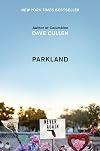
I just finished this book about an hour ago, and I should probably wait a few days to give a more thorough and thought out review, but...here goes.
This book was not quite as tough a read as the last Cullen book I read, [b:Columbine|5632446|Columbine|Dave Cullen|https://i.gr-assets.com/images/S/compressed.photo.goodreads.com/books/1442939134l/5632446._SY75_.jpg|5803859], which destroyed me. To this day, working in a bookstore, if anyone asks for a horror recommendation, that is the book I show more point to because, to me, there is no greater horror than the fact that two kids went in and killed a bunch of their classmates, and America sat back and let it happen again...and again...and again.
This book builds on that same horror. Cullen has an obvious bias toward the kids that started the movement that grew out of the Parkland shooting, but honestly, I don't know how anyone could learn about both what they went through, and then their reaction to it, and not be awestruck.
I know "awesome" and "awestruck" are words that are used so often that they've lost their power, but I can only describe my admiration of these people as "awe". It's the only word that works.
There's a lot to unpack in this book. There's the actual event itself, coming mere months after the Las Vegas shooting, and something like the 81st one after Columbine, not two decades previously.
Let that number sit in your head. Columbine happened. Then eighty-one more shootings in schools. Then Parkland.
But...the Second Amendment. But...the NRA.
The outrage is so underwhelming compared to the cost. Throughout this book, I kept thinking, are these few kids the only sane ones in the room? Are they truly the only ones that understand the stakes here?
And then they draw in other like-minded but even more ignored factions, like Chicago. They go up against politicians—some, unbelievably, that have actually survived shootings themselves—who resolutely close their eyes, plug their ears, and spout the familiar refrains of "thoughts and prayers" and "it's a mental health issue, not a gun issue". It's infuriating, but it draws a very solid line under the fact that the politicians that are elected by their constituents do not actually work for them. They work for whomever yells the loudest from the upper ranks of their party, and often that message is whispered in their ears by those with the most money.
So yes, the initial outrage stems from the fact that 17 people—17 more people—died needlessly while everyone hid behind a 250 year old piece of paper, wrung their hands, and offered thoughts and prayers. But the outrage goes beyond that, scaling up to understand the sheer enormity of the issue at hand.
At one point, toward the end of the book, one of the March For Our Lives group says she hopes that the movement won't be needed by the time she's 30. It's a beautiful thought.
It's a terrifying book. It's an inspirational book. And it's just as much of a horror story as the first one, but it does cast some hope. show less
This book was not quite as tough a read as the last Cullen book I read, [b:Columbine|5632446|Columbine|Dave Cullen|https://i.gr-assets.com/images/S/compressed.photo.goodreads.com/books/1442939134l/5632446._SY75_.jpg|5803859], which destroyed me. To this day, working in a bookstore, if anyone asks for a horror recommendation, that is the book I show more point to because, to me, there is no greater horror than the fact that two kids went in and killed a bunch of their classmates, and America sat back and let it happen again...and again...and again.
This book builds on that same horror. Cullen has an obvious bias toward the kids that started the movement that grew out of the Parkland shooting, but honestly, I don't know how anyone could learn about both what they went through, and then their reaction to it, and not be awestruck.
I know "awesome" and "awestruck" are words that are used so often that they've lost their power, but I can only describe my admiration of these people as "awe". It's the only word that works.
There's a lot to unpack in this book. There's the actual event itself, coming mere months after the Las Vegas shooting, and something like the 81st one after Columbine, not two decades previously.
Let that number sit in your head. Columbine happened. Then eighty-one more shootings in schools. Then Parkland.
But...the Second Amendment. But...the NRA.
The outrage is so underwhelming compared to the cost. Throughout this book, I kept thinking, are these few kids the only sane ones in the room? Are they truly the only ones that understand the stakes here?
And then they draw in other like-minded but even more ignored factions, like Chicago. They go up against politicians—some, unbelievably, that have actually survived shootings themselves—who resolutely close their eyes, plug their ears, and spout the familiar refrains of "thoughts and prayers" and "it's a mental health issue, not a gun issue". It's infuriating, but it draws a very solid line under the fact that the politicians that are elected by their constituents do not actually work for them. They work for whomever yells the loudest from the upper ranks of their party, and often that message is whispered in their ears by those with the most money.
So yes, the initial outrage stems from the fact that 17 people—17 more people—died needlessly while everyone hid behind a 250 year old piece of paper, wrung their hands, and offered thoughts and prayers. But the outrage goes beyond that, scaling up to understand the sheer enormity of the issue at hand.
At one point, toward the end of the book, one of the March For Our Lives group says she hopes that the movement won't be needed by the time she's 30. It's a beautiful thought.
It's a terrifying book. It's an inspirational book. And it's just as much of a horror story as the first one, but it does cast some hope. show less
A welcome and necessary book. I was only a couple of years out of high school when the Columbine massacre occurred, and even back then I suspected that it was a bit of a media spectacle - an event whose true cultural importance could be attributed to the fact that it terrified America's secure-but-nervous suburban middle class. After reading "Columbine," I realize that I hadn't grasped just how much it shocked and disturbed people. I didn't know that it'd led the news on the cable channels show more for weeks and that Al Gore had attended memorial services for the Klebold and Harris's victims.
Cullen's book finally sets the story straight, and it's a commendable work of research, myth-busing and good, old-fashioned reportage. Cassie Bernall wasn't the one who defended her belief in Jesus before being shot. Eric Harris was a psychopath, Dylan Klebold was an angry depressive, and neither of them were goths or social outsiders. Cullen seems to have done a superhuman amount of research while writing "Columbine," doing numerous interviews with massacre's survivors and meticulously combing through the enormous amount of paperwork the case produced. "Columbine" provides a painstakingly accurate timeline of the massacre, carefully maps out the high's school's complex social structure, and goes on to discuss some of the political and cultural fallout from the massacre, which, I think it's safe to say, continues into the present day. Of course, that last topic could provide material for another couple of books, and Cullen's real interest here is getting the facts right. His account of the events that occurred in Littleton, Colorado on April 20, 1999 is, to my mind, definitive.
"Columbine" isn't without its faults, though. Chapters that describe life before the massacre alternate with chapters that describe its aftermath throughout most of the book. Admittedly, there's a lot of ground to cover here, but I think a more traditional narrative structure might have served the story better. Cullen's chapter titles and prose are a bit on the breathless side, too, though much of this heartbreakingly sad material doesn't need much embellishment – perhaps the author was unable to escape his story's tabloid appeal after all. Even so, "Columbine" is superbly informed, addictively readable, and profoundly moving. Problematic, but nevertheless highly recommended. show less
Cullen's book finally sets the story straight, and it's a commendable work of research, myth-busing and good, old-fashioned reportage. Cassie Bernall wasn't the one who defended her belief in Jesus before being shot. Eric Harris was a psychopath, Dylan Klebold was an angry depressive, and neither of them were goths or social outsiders. Cullen seems to have done a superhuman amount of research while writing "Columbine," doing numerous interviews with massacre's survivors and meticulously combing through the enormous amount of paperwork the case produced. "Columbine" provides a painstakingly accurate timeline of the massacre, carefully maps out the high's school's complex social structure, and goes on to discuss some of the political and cultural fallout from the massacre, which, I think it's safe to say, continues into the present day. Of course, that last topic could provide material for another couple of books, and Cullen's real interest here is getting the facts right. His account of the events that occurred in Littleton, Colorado on April 20, 1999 is, to my mind, definitive.
"Columbine" isn't without its faults, though. Chapters that describe life before the massacre alternate with chapters that describe its aftermath throughout most of the book. Admittedly, there's a lot of ground to cover here, but I think a more traditional narrative structure might have served the story better. Cullen's chapter titles and prose are a bit on the breathless side, too, though much of this heartbreakingly sad material doesn't need much embellishment – perhaps the author was unable to escape his story's tabloid appeal after all. Even so, "Columbine" is superbly informed, addictively readable, and profoundly moving. Problematic, but nevertheless highly recommended. show less

I might have known I couldn't get through the week or two it would take me to read Columbine without a current school mass shooting going down. (It was the one at Umpqua Community College.) It seems like we have one or two each month in the US these days, as contrasted with their roughly quarterly occurrence back in the late decades of the previous century. Guns are much easier to get now, so there's that, along with the snowballing of the phenomenon itself: the media spectacle and cultural show more spasm which was a conscious objective of the killers.
Ten years after the 1999 mass homicides and shooter suicides at Columbine High School in Jefferson County, Colorado, Dave Cullen completed writing what is probably still the most thorough and authoritative examination of those events. It is not the final word, however. The parents of the killers, particularly those of Eric Harris, who seems to have been the dominant partner in the project, have been understandably silent, and there is a court seal on many materials in the investigation that will not expire until 2027. Still, Cullen worked on this story from its outset, and followed it long after all the students had graduated, the controversies had been exhausted, and its "record" exceeded by the Virginia Tech massacre in 2007.
Cullen's book begins with a recounting of the April 1999 events from the perspective of teachers and students. Then he splits his narrative, with one part going back to the childhood of the killers and following them forward to their deaths, while the other alternating part continues to follow victims, investigators, and press in the wake of the killings. On the whole, this approach works well, with short chapters heavy on documented detail.
As I look at the thumbnail description of the Columbine massacre in the "List of school shootings in the United States" on Wikipedia at this moment, it consists of two sentences, one of them false. It is not true that Harris and Klebold "had complained of being bullied and ill treated by other students." That claim is part of the matrix of conjecture and myth that accreted around the killers from the day of the event, and solidified through media treatments while police concealed facts from the public for years.
Even in the front matter, Cullen offers a mea culpa regarding the errors and misdeeds of the press regarding Columbine High School. And the press comes to figure as a villain in the later chapters, as their desire to perpetuate a story comes into conflict with the survivors' need to grieve and move on. What's more, although the killers' incompetence meant that they did far less damage than they had planned--all of their large bombs were hopeless failures--the media "bomb" meant that they gained their memory all of the notoriety and even inspirational influence that they coveted.
This book's sober yet sympathizing approach and its thorough command of the public evidence are antidotes to still-popular misconceptions about the 1999 massacre in Colorado and American school shootings generally. Unfortunately, the issue is as current as ever. show less
Ten years after the 1999 mass homicides and shooter suicides at Columbine High School in Jefferson County, Colorado, Dave Cullen completed writing what is probably still the most thorough and authoritative examination of those events. It is not the final word, however. The parents of the killers, particularly those of Eric Harris, who seems to have been the dominant partner in the project, have been understandably silent, and there is a court seal on many materials in the investigation that will not expire until 2027. Still, Cullen worked on this story from its outset, and followed it long after all the students had graduated, the controversies had been exhausted, and its "record" exceeded by the Virginia Tech massacre in 2007.
Cullen's book begins with a recounting of the April 1999 events from the perspective of teachers and students. Then he splits his narrative, with one part going back to the childhood of the killers and following them forward to their deaths, while the other alternating part continues to follow victims, investigators, and press in the wake of the killings. On the whole, this approach works well, with short chapters heavy on documented detail.
As I look at the thumbnail description of the Columbine massacre in the "List of school shootings in the United States" on Wikipedia at this moment, it consists of two sentences, one of them false. It is not true that Harris and Klebold "had complained of being bullied and ill treated by other students." That claim is part of the matrix of conjecture and myth that accreted around the killers from the day of the event, and solidified through media treatments while police concealed facts from the public for years.
Even in the front matter, Cullen offers a mea culpa regarding the errors and misdeeds of the press regarding Columbine High School. And the press comes to figure as a villain in the later chapters, as their desire to perpetuate a story comes into conflict with the survivors' need to grieve and move on. What's more, although the killers' incompetence meant that they did far less damage than they had planned--all of their large bombs were hopeless failures--the media "bomb" meant that they gained their memory all of the notoriety and even inspirational influence that they coveted.
This book's sober yet sympathizing approach and its thorough command of the public evidence are antidotes to still-popular misconceptions about the 1999 massacre in Colorado and American school shootings generally. Unfortunately, the issue is as current as ever. show less
Sorry, but pretty much everything you know about Columbine is probably wrong.
For example, you know the Trench Coat Mafia -- the one that shooters Eric Harris and Dylan Klebold belonged to? Well, although there was such a thing, they didn't belong to it (and actually, they were dusters, not trench coats). Nor were Harris and Klebold bullied (they bullied others, actually), nor did they target jocks, or Christians, or anyone else (the shootings were random). And the martyr Cassie Bernall, who show more was murdered professing her belief in God? Nope, that one isn't true either (she didn't say a word before Harris killed her, nor did Harris ask her whether she believed in God).
Even more interesting, to me at least, was that the common wisdom about Harris and Klebold's parents -- they were too busy watching TV in the den to notice that their kids were amassing small armories upstairs -- also misses the mark. Harris and Klebold didn't build pipe bombs under the noses of their neglectful parents; quite to the contrary, their parents were pretty typical middle-class people trying to do their best. Harris, a full-blown psychopath at 17, managed to flimflam nearly everyone, including his strict father. And Klebold's parents, like many other parents, tried but failed to discern the depths of their son's depression.
Dave Cullen's book is painstakingly researched and extremely well-written; the accounts of the shootings are painful to read. As for the reportage, Cullen probes, but doesn't accuse, at least not unfairly. For example, while his portrayal of the Jefferson County Sheriff's office is less than flattering (with good reason), he's generally evenhanded in his criticism, acknowledging the nearly impossible circumstances that faced all the players in Littleton during and after the shooting. Cullen also fixes his eye on the media's behavior after the shooting -- most notably, the eagerness to make Cassie Bernall into a martyr, despite eyewitness testimony casting doubt on the story.
Very well done. show less
For example, you know the Trench Coat Mafia -- the one that shooters Eric Harris and Dylan Klebold belonged to? Well, although there was such a thing, they didn't belong to it (and actually, they were dusters, not trench coats). Nor were Harris and Klebold bullied (they bullied others, actually), nor did they target jocks, or Christians, or anyone else (the shootings were random). And the martyr Cassie Bernall, who show more was murdered professing her belief in God? Nope, that one isn't true either (she didn't say a word before Harris killed her, nor did Harris ask her whether she believed in God).
Even more interesting, to me at least, was that the common wisdom about Harris and Klebold's parents -- they were too busy watching TV in the den to notice that their kids were amassing small armories upstairs -- also misses the mark. Harris and Klebold didn't build pipe bombs under the noses of their neglectful parents; quite to the contrary, their parents were pretty typical middle-class people trying to do their best. Harris, a full-blown psychopath at 17, managed to flimflam nearly everyone, including his strict father. And Klebold's parents, like many other parents, tried but failed to discern the depths of their son's depression.
Dave Cullen's book is painstakingly researched and extremely well-written; the accounts of the shootings are painful to read. As for the reportage, Cullen probes, but doesn't accuse, at least not unfairly. For example, while his portrayal of the Jefferson County Sheriff's office is less than flattering (with good reason), he's generally evenhanded in his criticism, acknowledging the nearly impossible circumstances that faced all the players in Littleton during and after the shooting. Cullen also fixes his eye on the media's behavior after the shooting -- most notably, the eagerness to make Cassie Bernall into a martyr, despite eyewitness testimony casting doubt on the story.
Very well done. show less
Lists
NTS Book Channel (1)
True Crime Books (1)
Books for Birute (1)
Favourite Books (1)
To Read (1)
Five star books (1)
True Crime (1)
Awards


You May Also Like


Associated Authors
Statistics
- Works
- 6
- Also by
- 1
- Members
- 4,867
- Popularity
- #5,162
- Rating
- 4.3
- Reviews
- 233
- ISBNs
- 44
- Languages
- 4
- Favorited
- 5
