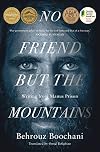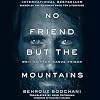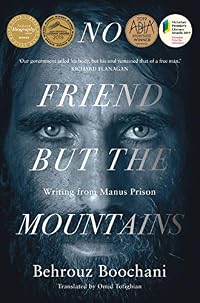
No Friend But the Mountains
by Behrouz Boochani
On This Page
Description
Where have I come from? From the land of rivers, the land of waterfalls, the land of ancient chants, the land of mountains. In 2013, Kurdish journalist Behrouz Boochani was illegally detained on Manus Island. He has been there ever since. People would run to the mountains to escape the warplanes and found asylum within their chestnut forests. This book is the result. Laboriously tapped out on a mobile phone and translated from the Farsi. It is a voice of witness, an act of survival. A lyric show more first-hand account. A cry of resistance. A vivid portrait through five years of incarceration and exile. Do Kurds have any friends other than the mountains? show lessTags
Recommendations


















Member Reviews
A gripping, harrowing, and vital first-hand account of one of Australia's national shames.
As Boochani illustrates so beautifully in this book, the government and right-wing media are at pains to almost completely dehumanise asylum seekers that reach our shores by boat. No Friend But the Mountains does an incredible job at breathing the life back into all these many people we'd rather forget, and will no doubt serve as an important historical record of this low period in our country's history.
Remarkably, given its subject matter, this is book is beautifully written. A truly unique amalgamation of gonzo, magical realism, and prose-poetry; Boochani's writing here ebbs and flows with an irrepressible energy that pulls you in and keeps you show more there. Which is both important and difficult to do, because pretty much everything that happens to him and the people around him is fucking awful.
I don't want to spoil this much. If you're an Australian, or anyone with even a passing interest in border politics and policy, this is necessary reading. show less
As Boochani illustrates so beautifully in this book, the government and right-wing media are at pains to almost completely dehumanise asylum seekers that reach our shores by boat. No Friend But the Mountains does an incredible job at breathing the life back into all these many people we'd rather forget, and will no doubt serve as an important historical record of this low period in our country's history.
Remarkably, given its subject matter, this is book is beautifully written. A truly unique amalgamation of gonzo, magical realism, and prose-poetry; Boochani's writing here ebbs and flows with an irrepressible energy that pulls you in and keeps you show more there. Which is both important and difficult to do, because pretty much everything that happens to him and the people around him is fucking awful.
I don't want to spoil this much. If you're an Australian, or anyone with even a passing interest in border politics and policy, this is necessary reading. show less
(7.5) This is an eye witness account of life in the Manus Island Detention Centre for refugees.
After enduring a hazardous ocean crossing from Indonesia, in a leaky, overladen boat, through tempestuous seas, where they believed they would all drown, they experience the euphoria of believing they had made it to safety and freedom when they espied the Australian flag on a ship.
I was shocked at the reception and treatment of these starving, traumatised travelers by the Australian Navy. There was no evidence of compassion and kindness for what they had survived. They were made to sit on the hard deck, not allowed to stand or walk even a few steps other than to witness the sinking of their leaky boat. Their hope is rekindled when they arrive show more at Christmas Island. After being gifted a pair of jandals they are then locked in for a month, at which time the narrator is transferred along with others to Manus Island Detention Centre in Papua New Guinea.
I was appalled at the conditions of this facility, described in graphic detail. The lack of human rights and the degradation these refugees experienced was a well kept secret from the Australian public. The government sought to deter individuals seeking refuge and chose to make an example of them.
Throughout the ensuing five years of detainment Behrouz was witness to desperate men driven to suicide and eventually rebellion.
At times I found my reading slowed by his reflections on human behaviour. However I did enjoy the poetic passages and his lyrical writing. My favourite section was his recollections of his early life in Iran, despite being born in war time, his passion and love for his homeland is vividly drawn. show less
After enduring a hazardous ocean crossing from Indonesia, in a leaky, overladen boat, through tempestuous seas, where they believed they would all drown, they experience the euphoria of believing they had made it to safety and freedom when they espied the Australian flag on a ship.
I was shocked at the reception and treatment of these starving, traumatised travelers by the Australian Navy. There was no evidence of compassion and kindness for what they had survived. They were made to sit on the hard deck, not allowed to stand or walk even a few steps other than to witness the sinking of their leaky boat. Their hope is rekindled when they arrive show more at Christmas Island. After being gifted a pair of jandals they are then locked in for a month, at which time the narrator is transferred along with others to Manus Island Detention Centre in Papua New Guinea.
I was appalled at the conditions of this facility, described in graphic detail. The lack of human rights and the degradation these refugees experienced was a well kept secret from the Australian public. The government sought to deter individuals seeking refuge and chose to make an example of them.
Throughout the ensuing five years of detainment Behrouz was witness to desperate men driven to suicide and eventually rebellion.
At times I found my reading slowed by his reflections on human behaviour. However I did enjoy the poetic passages and his lyrical writing. My favourite section was his recollections of his early life in Iran, despite being born in war time, his passion and love for his homeland is vividly drawn. show less
What an achievement! Documenting the legal cruelty of Australia's "Stop The Boats" policy, Boochani exposes the awful reality of these concentration camps (styled "detention centres" with Orwellian resonance). These are not mere prisons, and Boochani shows us what they really are--facilities for the destruction of the human spirit. All the twisted cruelties of power without responsibility, the caprice of meaningless and constantly changing rules and routines, casual pointless violence. Soul destroying? That's the clear intention, too stark to dismiss as negligent incompetence. Every Australian should read this. And Boochani should get the Nobel Prize for Literature. As a piece of writing, this book is a phenomenon.
Behrouz Boochani is a Kurdish journalist who is still imprisoned on Manus Island, Papua New Guinea as a result of the Australian Government's punitive policy toward asylum seekers who arrive in Australia by boat. This book is written in a poetic rather than pragmatic style, and it describes the desperate monotony and the systematic oppression of the Manus Prison System, which is apparently designed to break the spirits of its inmates. Boochani names other prisoners with titles like The Cow, The Hero, The Man with the Thick Moustache. With his life stuck in an eternal stinking, hopeless present, the author manages to find some delight in the jungle and the ocean surrounding the camp.
I don’t know how to rate this book. As so many others have said, it’s an incredible achievement by Boochani and it is an absolutely revolting and shameful chapter in Australian history. An extremely important book, but definitely not a light read. Extremely harrowing at times, and I forced myself to finish it, but I skimmed over the last couple of chapters because I just wanted it to end. And I feel shallow for admitting that, because these men are still going through hell... I absolutely detest the Liberal government. And I am ashamed that all of this torture is being committed in the name of Australia.
Australia has a long and proud history of fighting for human rights.
Australians fought in both world wars, and many since, against the scourge of tyranny. Australia has a long history of defending human beings’ dignity and worth.
Eminent Australian Dr Herbert Vere Evatt helped draft the Universal Declaration of Human Rights and was the United Nations General Assembly President from 1948 to 1949. Diplomat and author Alan Renouf wrote: “The reputation Evatt won for himself as the voice of Australia long endured in the United Nations. It brought great credit to his country; more than any other national leader, Evatt made Australia known universally and made it known as a country of courage, responsibility and liberalism”.
Australia is show more a signatory to the 1951 United Nations Convention Relating to the Status of Refugees. The convention includes the principle of non-refoulement – protection for refugees who fear persecution if they return to their country or another. Australia’s refugee policy breaches the convention. Several arms of the United Nations have condemned the imprisonment policy.
Imprisoned refugees have fled tyranny against which Australia has long fought. Boochani paints a penetrating portrait of the inhumanity, horror and hopelessness that pervades Manus Island not long before the Papua New Guinea government declared it illegal. This book is a great achievement, made even more by the extraordinary circumstances in which Boochani wrote it over five years: text messages in his native Farsi translated by refugee advocate Moones Mansoubi. They involved a few other people in bringing the words into a book format.
Boochani is a political scientist but No Friend But the Mountains is not an academic treatise. The narrative reads like a novel; in places a thriller. Hamid Khazaei, The Gentle Giant and The Smiling Youth are among the distinctive characters.
Boochani describes the prisoners’ fear, despair and despondency in such deft detail it was easy to feel as though I was watching. Boochani writes equally well about the macro picture. He disconnects from his intensely personal and horrific experience to provide academic analysis of the structures governments have created to punish refugees. He calls it the Kyriarchal system – a connected framework that work together to maintain oppression in Manus Island prison. He argues the Kyriarchal system reflects Australia’s colonial roots and xenophobia.
The system died a prisoner the right to speak to his dying father because it was “against the rules”, other prisoners have suicided; there is no logic, fairness or justice on Manus – and the other refugee prisons – just like the prison regimes tens of thousands of Australians died fighting against.
The Australian Government does all it can to suppress information about the refugee prisons lest the prisoners because humanised and Australians demand an end to the Kyriarchal system.
Dr Evatt wouldn’t recognise what his country has become. show less
Australians fought in both world wars, and many since, against the scourge of tyranny. Australia has a long history of defending human beings’ dignity and worth.
Eminent Australian Dr Herbert Vere Evatt helped draft the Universal Declaration of Human Rights and was the United Nations General Assembly President from 1948 to 1949. Diplomat and author Alan Renouf wrote: “The reputation Evatt won for himself as the voice of Australia long endured in the United Nations. It brought great credit to his country; more than any other national leader, Evatt made Australia known universally and made it known as a country of courage, responsibility and liberalism”.
Australia is show more a signatory to the 1951 United Nations Convention Relating to the Status of Refugees. The convention includes the principle of non-refoulement – protection for refugees who fear persecution if they return to their country or another. Australia’s refugee policy breaches the convention. Several arms of the United Nations have condemned the imprisonment policy.
Imprisoned refugees have fled tyranny against which Australia has long fought. Boochani paints a penetrating portrait of the inhumanity, horror and hopelessness that pervades Manus Island not long before the Papua New Guinea government declared it illegal. This book is a great achievement, made even more by the extraordinary circumstances in which Boochani wrote it over five years: text messages in his native Farsi translated by refugee advocate Moones Mansoubi. They involved a few other people in bringing the words into a book format.
Boochani is a political scientist but No Friend But the Mountains is not an academic treatise. The narrative reads like a novel; in places a thriller. Hamid Khazaei, The Gentle Giant and The Smiling Youth are among the distinctive characters.
Boochani describes the prisoners’ fear, despair and despondency in such deft detail it was easy to feel as though I was watching. Boochani writes equally well about the macro picture. He disconnects from his intensely personal and horrific experience to provide academic analysis of the structures governments have created to punish refugees. He calls it the Kyriarchal system – a connected framework that work together to maintain oppression in Manus Island prison. He argues the Kyriarchal system reflects Australia’s colonial roots and xenophobia.
The system died a prisoner the right to speak to his dying father because it was “against the rules”, other prisoners have suicided; there is no logic, fairness or justice on Manus – and the other refugee prisons – just like the prison regimes tens of thousands of Australians died fighting against.
The Australian Government does all it can to suppress information about the refugee prisons lest the prisoners because humanised and Australians demand an end to the Kyriarchal system.
Dr Evatt wouldn’t recognise what his country has become. show less
I'm 10/12 hours through the audio for this but my loan just ended and honestly I've been slogging through it for a while so I'm going to DNF it here around 83%.
This book is all about the writing. The prologue talks so much about this aspect, and I actually found that aspect and learning about how the book was written and translated very fascinating.
Behrouz's story is obviously extraordinary and highlights the terrors of Australia's prison system and the way that refugees are treated. It's not a problem that's isolated to Australia, unfortunately. The writing of this is extraordinary.
But unfortunately I didn't love it like I wanted to. It was long. It felt long. I want to read a short vignette or essay from Boochani, but I felt like show more there wasn't actually super a lot of substance for the length that was here. I think for a certain reader though, this will work, and I'm unsurprised that it's won some awards. show less
This book is all about the writing. The prologue talks so much about this aspect, and I actually found that aspect and learning about how the book was written and translated very fascinating.
Behrouz's story is obviously extraordinary and highlights the terrors of Australia's prison system and the way that refugees are treated. It's not a problem that's isolated to Australia, unfortunately. The writing of this is extraordinary.
But unfortunately I didn't love it like I wanted to. It was long. It felt long. I want to read a short vignette or essay from Boochani, but I felt like show more there wasn't actually super a lot of substance for the length that was here. I think for a certain reader though, this will work, and I'm unsurprised that it's won some awards. show less
Members
- Recently Added By
Lists

Best Australian Books of the 21st Century
88 works; 2 members
Author Information
6 Works 531 Members
Awards and Honors
Awards
Series
Belongs to Publisher Series
Common Knowledge
- Canonical title*
- Alleen de bergen zijn mijn vrienden
- Original title
- No Friend But the Mountains
- Alternate titles
- Cap altre amic que les muntanyes
- Original publication date
- 2018
- Important places
- Manus, Admiralty Islands, Papua New Guinea; Australia; Kurdistan
*Some information comes from Common Knowledge in other languages. Click "Edit" for more information.
Classifications
- Genres
- Biography & Memoir, Nonfiction
- DDC/MDS
- 325.210994 — Social sciences Political science International migration and colonization Emigration and Refugees
- LCC
- HV640.5 .K87 .B44 — Social sciences Social pathology. Social and public welfare. Criminology Social pathology. Social and public welfare. Refugee problems
- BISAC
Statistics
- Members
- 512
- Popularity
- 58,270
- Reviews
- 14
- Rating
- (3.88)
- Languages
- 9 — Catalan, Dutch, English, German, Italian, Polish, Portuguese, Romanian, Spanish
- Media
- Paper, Audiobook, Ebook
- ISBNs
- 28
- ASINs
- 5