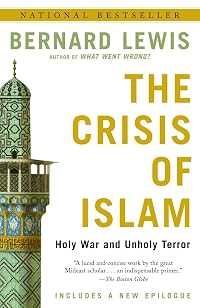
The Crisis of Islam: Holy War and Unholy Terror
by Bernard Lewis
On This Page
Description
In his first book since What went wrong? Bernard Lewis examines the historical roots of the resentments that dominate the Islamic world today and that are increasingly being expressed in acts of terrorism. He looks at the theological origins of political Islam and takes us through the rise of militant Islam in Iran, Egypt, and Saudi Arabia, examining the impact of radical Wahhabi proselytizing, and Saudi oil money, on the rest of the Islamic world ... The crisis of Islam ranges widely show more through thirteen centuries of history, but in particular it charts the key events of the twentieth century leading up to the violent confrontations of today: the creation of the state of Israel, the Cold War, the Iranian Revolution, the Soviet defeat in Afghanistan, the Gulf War, and the September 11th attacks on the United States. While hostility toward the West has a long and varied history in the lands of Islam, its current concentration on America is new. So too is the cult of the suicide bomber. show lessTags
Recommendations






Member Reviews
This work takes an excessively academic and abstract view of war and violence in the Middle East - leaving a feeling of lots of research with little substance. The historical discussion is well done, but the reader isn't really left with any true lessons or morals to take away at the end of the work. The last chapter is particularly frustrating, and seems more of a rationale for invasion than anything else.
The book does not require any previous study of Islam and the style is accessible to any reader.
Its ability to convey the difference in perception of the modernity by Muslim and non-Muslim societies, the ability to explain the depth of the religion-based differences of such perception is probably the most significant virtue of this book.
Lewis is reasonably neutral in his narrative and provides internal logic and historical background that explains fundamentalist Islam. He also provides some valid reasons why Islamic fundamentalists manipulate and distort the scripture.
Unfortunately, written in 2003 it does not account for recent changes, but it does confront Bin Laden's attacks on Western morals.
Its ability to convey the difference in perception of the modernity by Muslim and non-Muslim societies, the ability to explain the depth of the religion-based differences of such perception is probably the most significant virtue of this book.
Lewis is reasonably neutral in his narrative and provides internal logic and historical background that explains fundamentalist Islam. He also provides some valid reasons why Islamic fundamentalists manipulate and distort the scripture.
Unfortunately, written in 2003 it does not account for recent changes, but it does confront Bin Laden's attacks on Western morals.
Finally, a couple of decades late, I got around to reading this history giving context post-9/11 to Bush and Osama bin Laden's disagreements and how Iraq figures in. The purpose is to help the reader understand the the published complaints Bin Laden made against America. This basically suggests that the Islamic world has a religiously motivated world view that is more intertwined with religion and foreign policy that we in the West would consider and also there is a longer memory - going back centuries. The history includes the post-WWII Middle East mandates leading to artificial states in those problems, Arab world views on Israel, and the hatred "fundamentalist" (not the best word) Islamists would have for Arab world establishment show more from Sadat (assassinated for impiety) to the Saud family, etc. show less
In this slim volume Lewis artfully explains the complexity of Islam in brief but understandable terms. The work would be a useful introduction for anyone seeking to learn reliably and usefully how to explain the Islamic holy war against the West. It is superseded by many more comprehensive works but Lewis does not claim to go beyond the introductory in this short work. Lewis is on less sure ground, and more controversial on his political and diplomatic points but I do not see him straying from an accurate and factual account of Islam regardless of what his critics argue.
I really enjoyed this book. I see that it has gotten mixed reviews. I was looking for something to give me some background and reasoning behind the fundamentalist Islamic terrorists we see today, and this book did a good job. I have read other books on the subject as well, and Lewis gives a fair background without going into extraordinary detail. I did not feel that he was making excuses for the terrorists, but rather saying, "This is the history that they are idolizing- right or wrong." What I found most interesting is the belief that the Muslims were superior during the middle ages to the point that they refused to learn from other civilizations, which became their downfall.
'The Crisis of Islam' does an excellent job of reviewing the history; however, the author takes to the sideline in the novel always being careful not to be too critical of either the West or Islam.
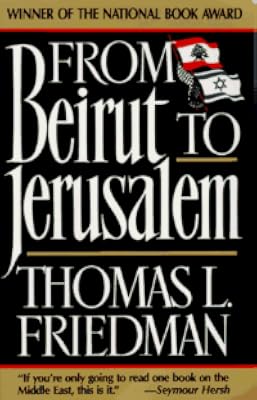
A book club selection. I read much of it, but also listened to a reading of it by the author. If you want to begin to understand Islam and the modern world, this is an excellent start. It is so clearly written. Fascinating, yet unsettleing. I still like Thomas Friedman's from "Beruit to Jerusalem" the best, even though it may be somewhat dated by now.
Members
- Recently Added By
Lists

Radical Islam/Islamism
75 works; 6 members

LtGen James Mattis' Reading List
58 works; 2 members

Jordan B. Peterson's Recommended Books
104 works; 5 members

Wish to read
6 works; 1 member
Author Information

69+ Works 11,196 Members
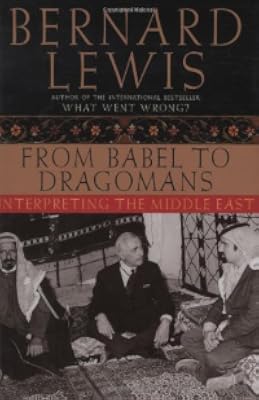
Bernard Lewis was born in London, England on May 31, 1916. He graduated with honors in history from the School of Oriental Studies at the University of London in 1936 with special reference to the Middle East. In 1938, he was named an assistant lecturer at the University of London, where he received a Ph.D. the next year. In 1940, he was drafted show more into the British armed forces and assigned to the Army tank corps. He was soon transferred to intelligence. He taught at the University of London for 25 years. In 1974, he accepted joint appointments at the Institute for Advanced Study in Princeton, New Jersey and Princeton University. He also taught at Cornell from 1984 to 1990. He became an American citizen in 1982. He was a scholar of Middle Eastern history and a prolific writer. His books included The Emergence of Modern Turkey, What Went Wrong?: The Clash between Islam and Modernity in the Middle East, and From Babel to Dragomans: Interpreting the Middle East. Because he was considered an expert on interactions between the Christian and Islamic worlds, his view helped shape American foreign policy under President George W. Bush. He died on May 19, 2018 at the age of 101. (Bowker Author Biography) show less
Awards and Honors
Distinctions
Common Knowledge
- Original publication date
- 2003
- Original language
- English
Classifications
- Genres
- Religion & Spirituality, Nonfiction, General Nonfiction, History
- DDC/MDS
- 297.72 — Religion Other religions Islam Islamic Education Jihad
- LCC
- BP182 .L48 — Philosophy, Psychology and Religion Islam. Bahaism. Theosophy, etc. Islam. Bahai Faith. Theosophy, etc. The practice of Islam Jihad (Holy War)
- BISAC
Statistics
- Members
- 1,535
- Popularity
- 14,990
- Reviews
- 25
- Rating
- (3.47)
- Languages
- 9 — Danish, Dutch, English, French, Italian, Serbian, Spanish, Turkish, Portuguese (Portugal)
- Media
- Paper, Audiobook, Ebook
- ISBNs
- 23
- ASINs
- 8