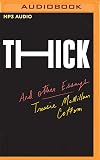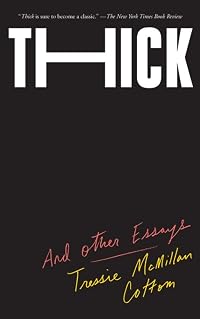
Thick: And Other Essays
by Tressie McMillan Cottom
On This Page
Description
One of Book Riot's "The Best Books We Read in October 2018""To say this collection is transgressive, provocative, and brilliant is simply to tell you the truth."
—Roxane Gay, author of Hunger and Bad Feminist
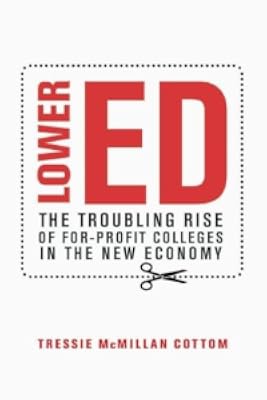
Smart, humorous, and strikingly original essays by one of "America's most bracing thinkers on race, gender, and capitalism of our time" (Rebecca Traister) In these eight piercing explorations on beauty, media, money, and more, Tressie McMillan Cottom—award-winning professor and show more acclaimed author of Lower Ed—embraces her venerated role as a purveyor of wit, wisdom, and Black Twitter snark about all that is right and much that is wrong with this thing we call society.
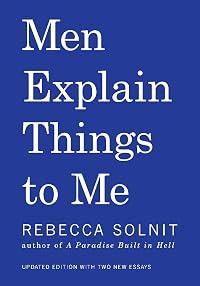
Ideas and identity fuse effortlessly in this vibrant collection that on bookshelves is just as at home alongside Rebecca Solnit and bell hooks as it is beside Jeff Chang and Janet Mock. It also fills an important void on those very shelves: a modern black American feminist voice waxing poetic on self and society, serving up a healthy portion of clever prose and southern aphorisms as she covers everything from Saturday Night Live, LinkedIn, and BBQ Becky to sexual violence, infant mortality, and Trump rallies. Thick speaks fearlessly to a range of topics and is far more genre-bending than a typical compendium of personal essays.
An intrepid intellectual force hailed by the likes of Trevor Noah, Chimamanda Ngozi Adichie, and Oprah, Tressie McMillan Cottom is "among America's most bracing thinkers on race, gender, and capitalism of our time" (Rebecca Traister). This stunning debut collection—in all its intersectional glory—mines for meaning in places many of us miss, and reveals precisely how the political, the social, and the personal are almost always one and the same.
. show less
Tags
Recommendations
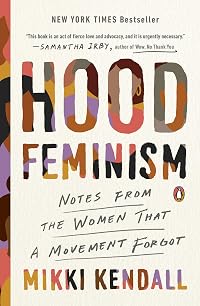
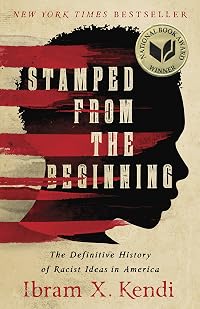
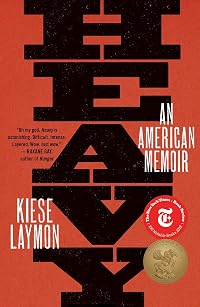

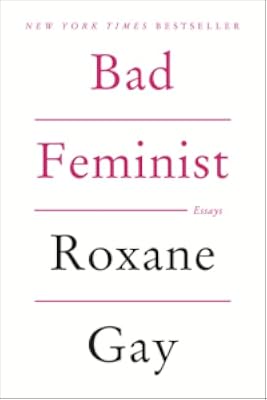
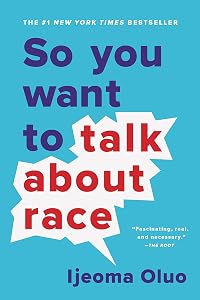
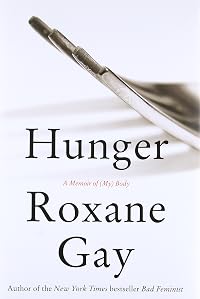
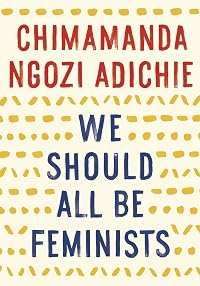
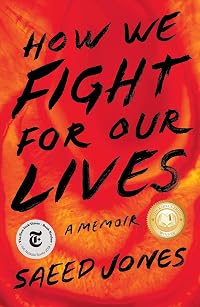

Member Reviews
I'm always in awe of Tressie McMillan Cottom's ability to convey an argument, or sum up a point, with a sentence that makes you feel like you've been hit over the head but in a very profound way. Each of these short essays has something to offer, though as of course is the case with all essay collections the extent to which you'll connect to each one will vary from reader to reader. For me, the hardest essay to read was the one about the death of her newborn daughter thanks to medical incompetence and racism; the most bitterly funny the one about how she wants a Black woman to have the chance to write banal op-eds at a major media outlet. Highly recommended.
"If my work is about anything it is about making plain precisely how prestige, money, and power structure our so-called democractic institutions so that most of us will always fail."
In these 8 essays, Cottom, a sociologist, professor, and cultural commentator, explores issues of structural inequality, Black identity, and feminism. She sprinkles her thought-provoking and deeply thought-through work with cultural references and, occasionally humor (I loved her ruminations on David Brooks' column on sandwiches). The prose can be dense with sociological scholarship, but it's never dry or mind-numbing. I don't find her work quite as illuminating or accessible as, say, Roxane Gay, but her voice is an important one.
In these 8 essays, Cottom, a sociologist, professor, and cultural commentator, explores issues of structural inequality, Black identity, and feminism. She sprinkles her thought-provoking and deeply thought-through work with cultural references and, occasionally humor (I loved her ruminations on David Brooks' column on sandwiches). The prose can be dense with sociological scholarship, but it's never dry or mind-numbing. I don't find her work quite as illuminating or accessible as, say, Roxane Gay, but her voice is an important one.
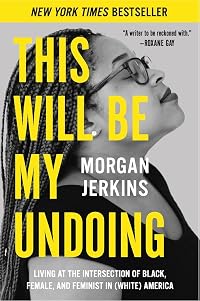
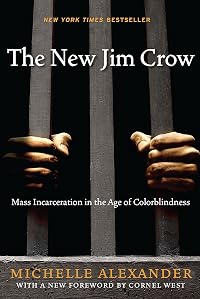
What distinguishes Thick from other well-written books by black women academics (Brittney Cook, Ijeoma Oluo, Morgan Jenkins)? Her fierce and targeted criticism of how black women are shut out of the hierarchy of success in America, especially in journalism. As McMillan states, until the New York Times hired Michelle Alexander (The New Jim Crow), the Times had NEVER had a woman of color as a regular opinion writer.
Each of the seven chapters takes issue with a specific painful topic for women of color: perceived beauty, the danger of childbirth, entering white spaces, African-Americans vs black immigrants, the lure of status symbols, rape, and David Brooks of the New York Times. The power of her words can feel like a whip across the face, show more as does how Cottom defines when black women "become a problem" a/k/a speak up and lead movements of change and disruption.
Quotes: "Privileged people feel that it is easier to fix me than to fix the world."
"What pleases us is any technocratic fairytale of how we can network enough to offset unstable employment."
"The paradox of how we could elect Obama AND Trump is not how black Obama is or isn't. It is how white he is, or is not. White voters needed only to have faith in Obama and in his willingness to reflect their ideal selves back at them, to change blackness without being black to them."
"The act of being conservative necessitates an undesirable progress against which it can rebel."
"I had properly signaled that I was not a typical black or a typical woman, two identities that in combination are almost always conflated with being poor."
"R. Kelly was an unlikely crossover artist, mostly based on a horrible song in which he believed he could fly. It is just the type of inspirational, soulless black music that corporations love. It made R. Kelly a safe negro for millions of white consumers while his reputation as a sexual predator was solidifying in black communities."
'We do not share much in the U.S. culture of individualism except our delusions of meritocracy. God help my people, but I can talk to hundreds of black folk who have been systematically separated from their money, citizenship, and personhood and hear at least eighty stories about how no one is to blame but themselves." show less
Each of the seven chapters takes issue with a specific painful topic for women of color: perceived beauty, the danger of childbirth, entering white spaces, African-Americans vs black immigrants, the lure of status symbols, rape, and David Brooks of the New York Times. The power of her words can feel like a whip across the face, show more as does how Cottom defines when black women "become a problem" a/k/a speak up and lead movements of change and disruption.
Quotes: "Privileged people feel that it is easier to fix me than to fix the world."
"What pleases us is any technocratic fairytale of how we can network enough to offset unstable employment."
"The paradox of how we could elect Obama AND Trump is not how black Obama is or isn't. It is how white he is, or is not. White voters needed only to have faith in Obama and in his willingness to reflect their ideal selves back at them, to change blackness without being black to them."
"The act of being conservative necessitates an undesirable progress against which it can rebel."
"I had properly signaled that I was not a typical black or a typical woman, two identities that in combination are almost always conflated with being poor."
"R. Kelly was an unlikely crossover artist, mostly based on a horrible song in which he believed he could fly. It is just the type of inspirational, soulless black music that corporations love. It made R. Kelly a safe negro for millions of white consumers while his reputation as a sexual predator was solidifying in black communities."
'We do not share much in the U.S. culture of individualism except our delusions of meritocracy. God help my people, but I can talk to hundreds of black folk who have been systematically separated from their money, citizenship, and personhood and hear at least eighty stories about how no one is to blame but themselves." show less
A collection merging Cottom’s “thick description” with the politics of blackness. She didn’t conceive of these as personal essays, even though “the personal essay had become the way that black women writers claim legitimacy in a public discourse that defines itself, in part, by how well it excludes black women.” She discusses the negative reactions she got from black women when she described herself as unattractive; she resists the idea that she could be “beautiful” under racism and capitalism, because the aspiration would make her into a market subject and she wants to name what’s been done to her. The hardest essay to read is about the death of her newborn, which was preceded by pain and bleeding and healthcare show more professionals assuming she was incompetent and later berating her for not telling them something was wrong earlier (she did, but they didn’t understand her symptoms as important)—I’ve experienced a fraction of this treatment as a white woman, but for black women it routinely kills their babies.
Cottom also writes about universities’ expectations that black “ethnic” students (immigrants or children of immigrants) will do better than U.S. black students, and points out that we are “generally cherrypicking the winners of extreme social stratification in other countries through our admissions processes.” The most bitterly hilarious part is the essay on why she wants banal black women writers at elite outlets, “since David Brooks wrote 865 words about how gourmet sandwiches are ruining America in the New York effing Times.That was 593 words more than the Gettysburg Address and about 365 words more than we allow poor students to write about their neediness on many scholarship applications.” Otherwise, the great black women intellectuals she knows will continue doing second-, third-, and fourth-shift work to get published in the same places, instead of benefits and a salary—the bind is that you get exposure but only by contributing to writers’ economic precarity, but that bind is unequally distributed. show less
Cottom also writes about universities’ expectations that black “ethnic” students (immigrants or children of immigrants) will do better than U.S. black students, and points out that we are “generally cherrypicking the winners of extreme social stratification in other countries through our admissions processes.” The most bitterly hilarious part is the essay on why she wants banal black women writers at elite outlets, “since David Brooks wrote 865 words about how gourmet sandwiches are ruining America in the New York effing Times.That was 593 words more than the Gettysburg Address and about 365 words more than we allow poor students to write about their neediness on many scholarship applications.” Otherwise, the great black women intellectuals she knows will continue doing second-, third-, and fourth-shift work to get published in the same places, instead of benefits and a salary—the bind is that you get exposure but only by contributing to writers’ economic precarity, but that bind is unequally distributed. show less
This powerful collection of essays examines the intersections of culture, class, race, and beauty with sharp wit and clarity. Cottom tackles issues like visibility, accessibility, health, respect, and competence. The writing is funny and fierce, making difficult topics approachable while never losing their effect. As a white millennial Canadian woman, this book was both accessible and an eye-opening window into a culture and lived experience that is different from mine. It reinforced how essential it is to acknowledge and address the systemic injustices that Black women face, particularly in spaces like healthcare. One essay, Dying to Be Competent, hit especially hard, highlighting how Black women are often forced into perceived show more incompetence, denied the grace and trust others receive, and how that injustice costs lives. This is a short but incredibly impactful read. I highly recommend adding it if it’s not already on your list. It challenges you to see the world differently and to do better. We all must. show less
Every essay in this collection is so deeply, deeply good, accessible and brilliant at the same time. "In the Name of Beauty" might be the best essay in the collection, but every other essay is a deeply close second. She's just able to do so much in such little space (the collection itself is barely over 200 pages, the font in the copy I read was frankly pretty huge, and each essay flew by.) She also is able to explain how she does it, in the titular essay, and why the form is so important. Just every part of it is so deeply thought and also so well explained and explored. An incredible collection, and one you should definitely get your hands on if you're able.
My original plan was to leisurely read one essay a day from this collection, but instead I tore through it in less than 24 hours. These essays are so engaging and just excellent overall. I was aware of the issues discussed in this collection on a very surface level, but now I have a much deeper understanding. I hope this wins the National Book Award. I loved it.
Members
- Recently Added By
Lists

Best Autobiographies and Memoirs
370 works; 67 members

2020 Notable Books for Adults
26 works; 5 members

BLM
210 works; 1 member

Books Read in 2021
5,361 works; 114 members

Five star books
1,767 works; 110 members

Favourite Books
1,819 works; 316 members

Memoirs and Nonfiction
4 works; 1 member

Featured in Fat Talk by Virginia Sole-Smith
103 works; 1 member

Patriarchy and white supremacy de-programming
69 works; 1 member
Author Information

5+ Works 1,179 Members
Some Editions
Awards and Honors
Awards
Distinctions
Common Knowledge
- Original publication date
- 2019
- Original language
- English
Classifications
- Genres
- Sociology, General Nonfiction, Nonfiction, Sexuality and Gender Studies, Biography & Memoir
- DDC/MDS
- 301.092 — Society, government, & culture Social sciences, sociology & anthropology Sociology and anthropology standard subdivisions of sociology and/or anthropology History, geographic treatment, biography Biography
- LCC
- HM479 .C68 .C68 — Social sciences Sociology (General) Sociology
- BISAC
Statistics
- Members
- 943
- Popularity
- 28,189
- Reviews
- 23
- Rating
- (4.27)
- Languages
- English
- Media
- Paper, Audiobook, Ebook
- ISBNs
- 5
- ASINs
- 2