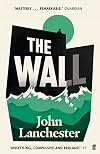
The Wall
by John Lanchester
On This Page
Description
"The best-selling author of The Debt to Pleasure and Capital returns with a chilling fable for our time. Ravaged by the Change, an island nation in a time very like our own has built the Wall--an enormous concrete barrier around its entire border. Joseph Kavanagh, a new Defender, has one task: to protect his section of the Wall from the Others, the desperate souls who are trapped amid the rising seas outside and attack constantly. Failure will result in death or a fate perhaps worse: being show more put to sea and made an Other himself. Beset by cold, loneliness, and fear, Kavanagh tries to fulfill his duties to his demanding Captain and Sergeant, even as he grows closer to his fellow Defenders. And then the Others attack. . . . Acclaimed British novelist John Lanchester, "a writer of rare intelligence" (Los Angeles Times), delivers a taut dystopian novel that blends the most compelling issues of our time--rising waters, rising fear, rising political division--into a suspenseful story of love, trust, and survival"-- show lessTags
Recommendations






























Member Recommendations
Member Reviews
We're probably going to see more of this gender: the post-climate change dystopia. There was already Bacigalupi's Water Knife and others. This novel (not really sci-fi) takes its place squarely within that genre. In the post-climate disaster, The Change, era, England has built a Wall around itself to protect itself from The Others, the environmental refugees from other parts of the world, now underwater or uninhabitable. Young men and women now have to serve time on the Wall, as military service, for two years, to try and prevent the Others from getting through. If the Others succeed, they are offered a choice between euthanasia or becoming Help, that is, slavery. And the Wall Defenders who failed to stop them are put to sea, with close show more to zero chance of survival. As such, this system has created major generational hostility between the generations that did nothing to stop climate change and are still around, and the younger generations who have to live with the consequences, the loss of food diversity, the loss of beaches, and then, of course, the Wall.
The novel follows one such young man as he starts his Wall service.
This is rather bleak, with limited hope. Nevertheless, it is a page-turner, and clearly meant as a warning of things to come. show less
The novel follows one such young man as he starts his Wall service.
This is rather bleak, with limited hope. Nevertheless, it is a page-turner, and clearly meant as a warning of things to come. show less
"The Wall" is a grimly plausible, deftly told, brilliantly narrated tale of what happens when we lock the rest of the world out to protect ourselves from climate change.
John Lanchester's"The Wall" is an extended metaphor for the direction Britain seems to be heading in. In a not too distant future, when the oceans have risen, beaches are a thing of the past and much of the world's population is homeless and or starving, Britain has built a massive wall around the island to lock out "The Others" who are desperate to make a life in Britain. The idea is grimly plausible and as hard to look away from as the scene of a car wreck.
When I bought "The Wall", I wondered whether the extended metaphor thing would work as a novel or whether it would show more feel too much like a didactic tool or a Cassandra-like warning. The warning is definitely there but most of my attention was on Joseph Kavanagh, a young man telling the story of his time as a Defender on The Wall and the things that happened to him afterwards.
In this society, every young person serves two years on the Wall as a Defender. Well, except for the Elite who are suspected of finding a way around such things. Defenders keep The Others out. Others who make it through the Wall, become Help, indentured servants whose children will be born as citizens. When If Others make it over the Wall, Defenders equal in number to the Others who made it through, are put out to sea in an open boat and banished.
Kavanagh is bright, observant, has a vague ambition to work his way up to the Elite, tends towards introspection and sometimes, even poetry. He describes the experience of the Wall as "Concrete. Sea. Sky". He educates us on the different kinds of cold you feel on the wall and how to survive a twelve-hour shift by learning to let time pass through you rather than trying to pass through time.
As he works his way through his two-year tour of duty on the Wall, he becomes a Defender. His fellow Defenders are his family. They share a bond that only ex-Defenders recognise.
Like his comrades, Kavanagh spends his time in the cold on the wall thinking about food and sex and what he'll do after the Wall. His routine is broken only by trips home to parents he can't communicate with. Parents who've never been on the Wall. Parents who are part of the generation whose choices caused the Change that raised the oceans and created the wall.
Kavanagh tells his story plainly in a way that is intimate and honest and also laden with a sense of doom and foreknowledge of regret. Even when he is describing combat, he is calm and untheatrical. This makes him easy to like and to identify with and gives what happens to him and the people around him an emotional impact stronger than the words he uses.
"The Wall" will make you think. It will also make you cry. I recommend it to you if you want a fresh, clear voice to help you explore a possible future as a warning to our present.
The audiobook version is narrated by Will Poulter, who gets the pacing and the tone exactly right and adds power to the text. show less
John Lanchester's"The Wall" is an extended metaphor for the direction Britain seems to be heading in. In a not too distant future, when the oceans have risen, beaches are a thing of the past and much of the world's population is homeless and or starving, Britain has built a massive wall around the island to lock out "The Others" who are desperate to make a life in Britain. The idea is grimly plausible and as hard to look away from as the scene of a car wreck.
When I bought "The Wall", I wondered whether the extended metaphor thing would work as a novel or whether it would show more feel too much like a didactic tool or a Cassandra-like warning. The warning is definitely there but most of my attention was on Joseph Kavanagh, a young man telling the story of his time as a Defender on The Wall and the things that happened to him afterwards.
In this society, every young person serves two years on the Wall as a Defender. Well, except for the Elite who are suspected of finding a way around such things. Defenders keep The Others out. Others who make it through the Wall, become Help, indentured servants whose children will be born as citizens. When If Others make it over the Wall, Defenders equal in number to the Others who made it through, are put out to sea in an open boat and banished.
Kavanagh is bright, observant, has a vague ambition to work his way up to the Elite, tends towards introspection and sometimes, even poetry. He describes the experience of the Wall as "Concrete. Sea. Sky". He educates us on the different kinds of cold you feel on the wall and how to survive a twelve-hour shift by learning to let time pass through you rather than trying to pass through time.
As he works his way through his two-year tour of duty on the Wall, he becomes a Defender. His fellow Defenders are his family. They share a bond that only ex-Defenders recognise.
Like his comrades, Kavanagh spends his time in the cold on the wall thinking about food and sex and what he'll do after the Wall. His routine is broken only by trips home to parents he can't communicate with. Parents who've never been on the Wall. Parents who are part of the generation whose choices caused the Change that raised the oceans and created the wall.
Kavanagh tells his story plainly in a way that is intimate and honest and also laden with a sense of doom and foreknowledge of regret. Even when he is describing combat, he is calm and untheatrical. This makes him easy to like and to identify with and gives what happens to him and the people around him an emotional impact stronger than the words he uses.
"The Wall" will make you think. It will also make you cry. I recommend it to you if you want a fresh, clear voice to help you explore a possible future as a warning to our present.
The audiobook version is narrated by Will Poulter, who gets the pacing and the tone exactly right and adds power to the text. show less
In John Lanchester’s novel, The Wall, a climate catastrophe has changed life for everyone on planet earth. The story takes place at an unspecified future point, after rising water levels have submerged the world’s beaches and coastal communities. In Great Britain, a concrete wall has been constructed along the perimeter of what’s left of the island to keep out refugees, referred to as “Others.” The Wall is defended by ordinary citizens of a certain age drafted into military service for terms lasting two years. The novel begins as the young narrator, Kavanagh, is beginning his tenure guarding The Wall. He is apprehensive about what he will face but looking forward to getting through it and returning to a normal life. As show more Defenders, Kavanagh and his colleagues-in-arms have a single duty: to keep the Others from breaching The Wall and escaping into the countryside. If that happens, for every Other who escapes, one Defender is “put to sea”: in effect exiled from the island and condemned to life as an “Other.” The mood among the Defenders can be bitter. As Kavanagh explains it, his generation resents their elders—people his parents’ age—who did nothing to stop the climate crisis from escalating into full-blown disaster and bringing about “The Change,” which resulted in a brave new world in which the nation is constantly under threat and all citizens are chipped and monitored. Life on The Wall is circumscribed, but Kanavagh forms a close bond with a female defender named Hifa. Everyone is a little fearful of their unit commander, The Captain, though respect for him is universal. Kavanagh, unenthusiastic about his assignment but determined to do his best, distinguishes himself during a surprise attack, and those serving with him along their stretch of The Wall receive commendation and medals. Kavanagh’s ambition is to become a member of the “Elite”: a higher class of mortal, politicians who live and travel in luxury, who make the rules that govern peoples’ lives and preach to ordinary folk about threats to national security and the need for steadfast vigilance. Then rumors surface that there are people on the inside helping the Others. On The Wall, a momentous betrayal results in a breach. Kavanagh, Hifa and surviving Defenders from their unit are punished for their failure and find themselves on the outside looking in, struggling to survive. The Wall is a chilling work of dystopian fiction that posits a utilitarian world bereft of charity and empathy, where paranoia and xenophobia are not only rampant, but are sanctioned by the country’s leadership, drive official policy and define national identity. In The Wall, John Lanchester delivers a stark warning with unflinching assurance. His vision of the future is alarming and unsentimental. If the book comes up short on emotional involvement, it still provides a persuasive argument that “we” and “them” are false distinctions that, every time they are invoked, diminish all of us. show less
It's cold on the Wall. That's the first thing everybody tells you, and the first thing you notice when you're sent there, and it's the thing you think about all the time you're on it, and it's the thing you remember when you're not there anymore. It's cold on the Wall.
When Kavanagh arrives at the Wall for the start of his two year posting all he can think of is counting down the 730 days until he is free to live out the rest of his life. But there is no escaping the two years on the Wall - all citizens, men and women, must serve their two years as Defenders on the Wall to keep out the Others. It's a succession of twelve hour guard duties, with the concrete and sea and cold, waiting for the attack which might never come. Or then again it show more just might ... And at times the cold is cold enough to kill...
But it gradually becomes apparent that this is not the far north, it's a vision of the future of Britain. It's a changed Britain, but a very recognisable one. A country where you can still go camping in the Lake District for a holiday, and where people still commute into London by train. But it's a Britain that is totally surrounded by the Wall...
This dystopian vision of the future was more chilling for being more believable than is usually the case with dystopian fiction. Take some of the more extreme views regarding Brexit, and mix in the effect of climate change and mass migration, and you end up with the Wall. Recommended. show less
When Kavanagh arrives at the Wall for the start of his two year posting all he can think of is counting down the 730 days until he is free to live out the rest of his life. But there is no escaping the two years on the Wall - all citizens, men and women, must serve their two years as Defenders on the Wall to keep out the Others. It's a succession of twelve hour guard duties, with the concrete and sea and cold, waiting for the attack which might never come. Or then again it show more just might ... And at times the cold is cold enough to kill...
But it gradually becomes apparent that this is not the far north, it's a vision of the future of Britain. It's a changed Britain, but a very recognisable one. A country where you can still go camping in the Lake District for a holiday, and where people still commute into London by train. But it's a Britain that is totally surrounded by the Wall...
This dystopian vision of the future was more chilling for being more believable than is usually the case with dystopian fiction. Take some of the more extreme views regarding Brexit, and mix in the effect of climate change and mass migration, and you end up with the Wall. Recommended. show less
This is clearly a book you have to read both as a climate-change dystopia and as a Brexit fable: either way it's an attack on British smugness and selfish insularity. Although, with a few small changes, it wouldn't be too difficult to imagine the same idea working for Australia, the USA, or even France. And Jose Saramago already did something similar for the Iberian peninsula with The stone boat. Islands are more common than you might think if you live on one...
In the world of the story, Great Britain has come out of climate change less badly than most of the planet. A 10 000 km concrete wall around the island is keeping the sea under control, and conditions within it are still relatively prosperous, even if young people find it show more difficult to forgive their parents for what they did to the world, and have little desire to become parents themselves, despite various bribes and incentives from the state.
Naturally, there are a lot of "Others" on the wrong side of the Wall who would like to get in, which means that it has to be guarded, by a huge conscript force of Defenders. The story opens with the narrator, Kavanagh, beginning his two-year stint of "sky cold water concrete wind", scanning the sea for approaching lifeboats and swimmers.
Lanchester frames the conscript experience in terms that (apart from the Defenders being co-ed) are clearly meant to reflect the National Service our fathers experienced in the forties and fifties. Specific things like bits of period slang and nicknames and the two-year term of service, and more general parts of conscript experience like the mix of unnecessarily basic living conditions and odd bits of luxury, the constant risk of draconian (collective) punishment for often incomprehensible offences, the arbitrary social mixing, the camaraderie with other wearers of the uniform, the way civilians react sympathetically to individual Defenders but stay out of the way when they see a group together, the counting down to discharge day, the temptation to avoid difficult life-choices by signing on for another term, and so on. My own father still talks more about the two years he spent in the army in the mid-1950s than about any other part of his 80+ years; I'm sure Lanchester must have had the same sort of thing inflicted on him, and he's clearly made profitable use of it.
This is a fable, not an attempt to create a realistic picture of a future world. The opening chapters are very powerful and effective bits of description, quite poetic in places, and there are a lot of nice satirical hits: reading about a society where exile is the ultimate penalty struck home on a day when the main British news story is about the government trying (and failing) to make good publicity for itself by sending a plane-load of unfortunate ex-convicts to Jamaica. But the book as a whole doesn't seem to work very well, probably because of Lanchester's pessimistic — but not unreasonable — refusal to imagine a sustainable future for his characters. I started to lose interest well before the end. show less
In the world of the story, Great Britain has come out of climate change less badly than most of the planet. A 10 000 km concrete wall around the island is keeping the sea under control, and conditions within it are still relatively prosperous, even if young people find it show more difficult to forgive their parents for what they did to the world, and have little desire to become parents themselves, despite various bribes and incentives from the state.
Naturally, there are a lot of "Others" on the wrong side of the Wall who would like to get in, which means that it has to be guarded, by a huge conscript force of Defenders. The story opens with the narrator, Kavanagh, beginning his two-year stint of "sky cold water concrete wind", scanning the sea for approaching lifeboats and swimmers.
Lanchester frames the conscript experience in terms that (apart from the Defenders being co-ed) are clearly meant to reflect the National Service our fathers experienced in the forties and fifties. Specific things like bits of period slang and nicknames and the two-year term of service, and more general parts of conscript experience like the mix of unnecessarily basic living conditions and odd bits of luxury, the constant risk of draconian (collective) punishment for often incomprehensible offences, the arbitrary social mixing, the camaraderie with other wearers of the uniform, the way civilians react sympathetically to individual Defenders but stay out of the way when they see a group together, the counting down to discharge day, the temptation to avoid difficult life-choices by signing on for another term, and so on. My own father still talks more about the two years he spent in the army in the mid-1950s than about any other part of his 80+ years; I'm sure Lanchester must have had the same sort of thing inflicted on him, and he's clearly made profitable use of it.
This is a fable, not an attempt to create a realistic picture of a future world. The opening chapters are very powerful and effective bits of description, quite poetic in places, and there are a lot of nice satirical hits: reading about a society where exile is the ultimate penalty struck home on a day when the main British news story is about the government trying (and failing) to make good publicity for itself by sending a plane-load of unfortunate ex-convicts to Jamaica. But the book as a whole doesn't seem to work very well, probably because of Lanchester's pessimistic — but not unreasonable — refusal to imagine a sustainable future for his characters. I started to lose interest well before the end. show less
Something about my third read from the Booker long list compelled me to finish it. In a dystopian world where "The Change" has brought guilt to the older generation and where beaches have ceased to exist and only the "Elites" may travel by airplane, Kavanaugh is drafted to serve two years defending "The Wall" from "The Others". Here, he becomes acquainted with other members of society, "The Breeders" and "Help". The punishment is quite severe for Defenders who are on duty when a breach of the Wall occurs.
The message, in the first section, is timely, clear and Green New Dealish but in subsequent sections the message becomes lost.
I credit Lanchester's rhythmic prose for marching me to the conclusion which begs for The Wall II.
The message, in the first section, is timely, clear and Green New Dealish but in subsequent sections the message becomes lost.
I credit Lanchester's rhythmic prose for marching me to the conclusion which begs for The Wall II.
It is all too easy to accept the world created by Lanchester in this novel set in a post climate disaster dystopia. The setting is not too far fetched, particularly when you look at the medieval instincts those in power have signed onto around the world over the last several years. But the realism at work in this novel goes beyond its fantasy scenario and expresses itself through the inner life of the protagonist, which I would argue is the real story Lanchester is telling.
Kavanagh is an alienated figure, in the Marxist sense. He is disconnected from agency over his existence, from the acts of violence he must commit for his job (training "takes over"), from the ability to define his relationships with the people around him, even from show more the very passage of time, which is mostly a torture of duration. All of this is a result of living in a strictly hierarchical society. A society where his activities are dictated by another (the bourgeoisie).
When you track this inner story, the one about the alienated figure in search of his species-essence (Gattungswesen) while competing for survival, the novel really opens up and has an inevitable and yet surprising end. For those who have read (don't worry, no spoilers), the wikipedia definition of Gattungswesen:
The ending, with that definition in mind, works brilliantly. It also highlights the power of narrative to (re)gain species-essence. When you recite a narrative you provide both nourishment for your community of listeners and agency over its fabula.
So while the story may come off as a Game of Thrones spin off I believe there is a lot more under the surface than it seems to be getting credit for (at least here on GR, I mean it DID get longlisted for the Booker) and I do recommend this. show less
Kavanagh is an alienated figure, in the Marxist sense. He is disconnected from agency over his existence, from the acts of violence he must commit for his job (training "takes over"), from the ability to define his relationships with the people around him, even from show more the very passage of time, which is mostly a torture of duration. All of this is a result of living in a strictly hierarchical society. A society where his activities are dictated by another (the bourgeoisie).
When you track this inner story, the one about the alienated figure in search of his species-essence (Gattungswesen) while competing for survival, the novel really opens up and has an inevitable and yet surprising end. For those who have read (don't worry, no spoilers), the wikipedia definition of Gattungswesen:
"...the intrinsic human mental essence that is characterized by a "plurality of interests" and "psychological dynamism", whereby every individual has the desire and the tendency to engage in the many activities that promote mutual human survival and psychological well-being, by means of emotional connections with other people, with society."
The ending, with that definition in mind, works brilliantly. It also highlights the power of narrative to (re)gain species-essence. When you recite a narrative you provide both nourishment for your community of listeners and agency over its fabula.
So while the story may come off as a Game of Thrones spin off I believe there is a lot more under the surface than it seems to be getting credit for (at least here on GR, I mean it DID get longlisted for the Booker) and I do recommend this. show less
Members
- Recently Added By
Published Reviews
ThingScore 75
[...] an environmental fable that manages to be both disquieting and quite good fun at the same time. It’s a calculated extrapolation of our present anxieties about rising sea levels, anti-refugee populism, post-Brexit scarcity and intergenerational conflict, so day after tomorrow that it’s all but guaranteed to be invoked in newspaper columns and kitchen-table debates.
added by Nevov
Lists

1001 Books You Must Read Before You Die
1,448 works; 1,132 members

Books Set in Great Britain
191 works; 13 members

Dystopian and Apocalyptic Literature
350 works; 74 members

Beginner's Guide to Climate Fiction
24 works; 7 members

Walls
24 works; 2 members

Fiction Published in 2019
35 works; 1 member

Ocean Setting
33 works; 5 members

Kirkus Starred Fiction Reviews of Books Published in 2019
411 works; 12 members

Books Read in 2019
4,052 works; 110 members
Author Information

13+ Works 6,444 Members
John Lanchester was the deputy editor of the London Review of Books and the restaurant critic for the London Observer. He is the author of a second novel, Mr. Phillips, and his work has appeared in The New Yorker. He lives in London. (Publisher Provided)
Some Editions
Awards and Honors
Awards
Distinctions
Notable Lists
Common Knowledge
- Canonical title
- The Wall
- Original publication date
- 2019
- People/Characters
- Kavanagh, Hifa
- Important places
- Great Britain
- Dedication
- In memory of Peggie Geraghty
- First words
- It's cold on the Wall.
- Last words
- (Click to show. Warning: May contain spoilers.)I said this to myself over and over again, that's what a story is, something that turns out all right, and then it came to me, and what I said out loud began like this: "It's cold on the Wall."
- Blurbers
- Pullman, Philip
- Canonical DDC/MDS
- 823.914
- Canonical LCC
- PR6062.A4863
Classifications
Statistics
- Members
- 834
- Popularity
- 32,731
- Reviews
- 56
- Rating
- (3.63)
- Languages
- 6 — Catalan, Dutch, English, German, Italian, Spanish
- Media
- Paper, Audiobook, Ebook
- ISBNs
- 29
- ASINs
- 9