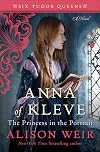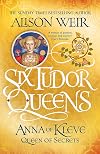
On This Page
Description
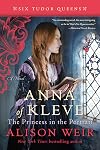
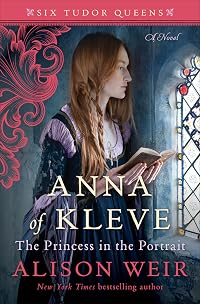
"Newly widowed and the father of an infant son, Henry VIII realizes he must marry again to ensure the royal succession. Forty-six, overweight, and suffering from gout, Henry is soundly rejected by some of Europe's most eligible princesses. Anna of Kleve, from a small German duchy, is twenty-four, and has a secret she is desperate to keep hidden. Henry commissions her portrait from his court painter, who depicts her from the most flattering perspective. Entranced by the lovely image, Henry is show more bitterly surprised when Anna arrives in England and he sees her in the flesh. Some think her attractive, but Henry knows he can never love her. What follows is the fascinating story of an awkward royal union that somehow had to be terminated. Even as Henry begins to warm to his new wife and share her bed, his attention is captivated by one of her maids-of-honor. Will he accuse Anna of adultery as he did Queen Anne Boleyn, and send her to the scaffold? Or will he divorce her and send her home in disgrace?"-- show lessTags
Recommendations










Member Reviews
Disclaimer: I received this book for free from LibraryThing Early Reviewers and Ballantine Books in exchange for an honest review. This does not affect my opinion of the book or the content of my review.
Man, I really wanted to like this book.
First of all, I should start off, I really like Philippa Gregory’s books. I’ve read The Constant Princess three times. I have both a hardcopy and audiobook edition of The Taming of the Queen, which is her take on Anne of Cleves. I am constantly fascinated by the intrigue of the Tudor Court. I love the way it’s a romance, a suspense, and a solidly good drama. But it all depends on the author.
And I’m the worst. I get it. I’m comparing authors and it’s unfair but I need to. Because I adored show more Anne’s story… but when it was told by another person.
I’ve been told for several years now I need to try something by Alison Weir if I’m a historical fiction fan. I still have a couple of her other books on my TBR. And perhaps it’s because I’m so used to Henry VIII’s wives being told in a different voice, but I was so bored but Anna of Kleve.
Being completely upfront… I blame the writing style. It was detailed to a fault, but it was not detailed in such a way that it felt immersive. Instead, it felt like detail dropping. I love the way Philippa Gregory (I know, I know) takes the story and pulls you in… Alison Weir felt more like a tour guide at a weird museum. Like the Iowa Yarn Museum or something. I don’t think that actually exists.
I’m a bit of a history nerd, so as I was reading, I fact-checked constantly. There were quotes in the book that were exactly replicated in Wikipedia. Perhaps they were the most interesting quotes? Very little is known about Anne, and a lot of what Alison Weir used here felt… indulgent. Almost nothing is known of Anne’s early life, except that she was betrothed at eleven and that betrothal was broken. Where this story starts, Anna is twelve and has been betrothed for as long as she can remember, so already Weir is being casual with the little facts she had. This raises a red flag for me. A well-written historical fiction novel should make you forget it’s fiction. This felt absolutely like sappy fiction.
Another thing that soured me right at the beginning? Less than twenty pages into the novel, Anna is having sex with her cousin, a fourteen year old. She goes on to have a baby, and they are her secret family through the whole Henry affair. There’s no historical claim for this other than Henry doubted her virginity, but everything we know of Henry VIII tells us he was an indulgent, prideful king, and honestly? I trust very little of what he says about his wives. So this whole plot (and really, this was more the plot than any other storyline) never sat well with me.
Understand – there’s no proof this stuff didn’t happen… but it just felt … really unlikely.
Anna is portrayed as very changeable. Paragraph by paragraph she’s either frightful or annoyed or making heart-shaped eyes at either Henry or Otho. The writing always felt flat, as so much of England’s story is told through people coming from court to talk to Anna, followed by her fleeing to her rooms to be upset. The reader is one step removed from the action of the Tudor court at all times. I never felt an emotional connection to Anna because of her personality inconsistencies, and I found myself frustrated within her story of “will anything ever happen”?
There are little details here and there which grate, but are subject to creative license. Anne of Cleves is called Anna of Kleves based on the spellings of the time and a desire to de-anglify. Which is fine, but it’s untraditional in this case, and a bit distracting. Katheryn Howard’s name, too, is normally Catherine Howard. Things like that, which are minor, but enough to make me concerned about historical inaccuracies.
I just… deeply did not enjoy Anna of Kleve: The Princess in the Portrait. I’m not sure if this book is a one-off miss for me, or will end up being indicative of Alison Weir’s style. Because there is so little known about Anne, there’s a lot of creative room. Additionally, having already read a version of this story that I greatly enjoyed, it was difficult not to compare. I’ll keep the other books by Alison Weir on my TBR for now, but my hopes have been sorely dashed. She’s not for me, but others – particularly those with a romantic heart and great patience for monotonous detail – will enjoy this one. show less
Man, I really wanted to like this book.
First of all, I should start off, I really like Philippa Gregory’s books. I’ve read The Constant Princess three times. I have both a hardcopy and audiobook edition of The Taming of the Queen, which is her take on Anne of Cleves. I am constantly fascinated by the intrigue of the Tudor Court. I love the way it’s a romance, a suspense, and a solidly good drama. But it all depends on the author.
And I’m the worst. I get it. I’m comparing authors and it’s unfair but I need to. Because I adored show more Anne’s story… but when it was told by another person.
I’ve been told for several years now I need to try something by Alison Weir if I’m a historical fiction fan. I still have a couple of her other books on my TBR. And perhaps it’s because I’m so used to Henry VIII’s wives being told in a different voice, but I was so bored but Anna of Kleve.
Being completely upfront… I blame the writing style. It was detailed to a fault, but it was not detailed in such a way that it felt immersive. Instead, it felt like detail dropping. I love the way Philippa Gregory (I know, I know) takes the story and pulls you in… Alison Weir felt more like a tour guide at a weird museum. Like the Iowa Yarn Museum or something. I don’t think that actually exists.
I’m a bit of a history nerd, so as I was reading, I fact-checked constantly. There were quotes in the book that were exactly replicated in Wikipedia. Perhaps they were the most interesting quotes? Very little is known about Anne, and a lot of what Alison Weir used here felt… indulgent. Almost nothing is known of Anne’s early life, except that she was betrothed at eleven and that betrothal was broken. Where this story starts, Anna is twelve and has been betrothed for as long as she can remember, so already Weir is being casual with the little facts she had. This raises a red flag for me. A well-written historical fiction novel should make you forget it’s fiction. This felt absolutely like sappy fiction.
Another thing that soured me right at the beginning? Less than twenty pages into the novel, Anna is having sex with her cousin, a fourteen year old. She goes on to have a baby, and they are her secret family through the whole Henry affair. There’s no historical claim for this other than Henry doubted her virginity, but everything we know of Henry VIII tells us he was an indulgent, prideful king, and honestly? I trust very little of what he says about his wives. So this whole plot (and really, this was more the plot than any other storyline) never sat well with me.
Understand – there’s no proof this stuff didn’t happen… but it just felt … really unlikely.
Anna is portrayed as very changeable. Paragraph by paragraph she’s either frightful or annoyed or making heart-shaped eyes at either Henry or Otho. The writing always felt flat, as so much of England’s story is told through people coming from court to talk to Anna, followed by her fleeing to her rooms to be upset. The reader is one step removed from the action of the Tudor court at all times. I never felt an emotional connection to Anna because of her personality inconsistencies, and I found myself frustrated within her story of “will anything ever happen”?
There are little details here and there which grate, but are subject to creative license. Anne of Cleves is called Anna of Kleves based on the spellings of the time and a desire to de-anglify. Which is fine, but it’s untraditional in this case, and a bit distracting. Katheryn Howard’s name, too, is normally Catherine Howard. Things like that, which are minor, but enough to make me concerned about historical inaccuracies.
I just… deeply did not enjoy Anna of Kleve: The Princess in the Portrait. I’m not sure if this book is a one-off miss for me, or will end up being indicative of Alison Weir’s style. Because there is so little known about Anne, there’s a lot of creative room. Additionally, having already read a version of this story that I greatly enjoyed, it was difficult not to compare. I’ll keep the other books by Alison Weir on my TBR for now, but my hopes have been sorely dashed. She’s not for me, but others – particularly those with a romantic heart and great patience for monotonous detail – will enjoy this one. show less
 This review was written for LibraryThing Early Reviewers.
This fourth chapter in Alison Weir's "Six Tudor Queens" series is the best thus far. Anna of Kleves is a compelling protagonist, one whose voice is distinct and clear from the first page. It makes it easy to wend your way through the courts of both Kleves and England, scheming and intrigue all around her, by letting you see what is happening only through Anna's eyes.
I have a deeper knowledge of the politics and factors surrounded her ill-fated short marriage to Henry VIII, but putting all that aside and seeing events solely through this foreign princess's eyes was a brilliant decision. The story is fresh and new; Anna is as real as any other heroine, and Weir breathes life into a new, different side of Henry.
There is a great deal of show more detail and unfamiliar places, names, etc. to become accustomed to, but I found the story compelling enough to keep me reading for hours. While there is, of course, some license taken with the fictionalization of Anna's tale, Weir is a good historian and does not go too far past believability.
Very highly recommended. I'm eager to read the rest of the series. show less
I have a deeper knowledge of the politics and factors surrounded her ill-fated short marriage to Henry VIII, but putting all that aside and seeing events solely through this foreign princess's eyes was a brilliant decision. The story is fresh and new; Anna is as real as any other heroine, and Weir breathes life into a new, different side of Henry.
There is a great deal of show more detail and unfamiliar places, names, etc. to become accustomed to, but I found the story compelling enough to keep me reading for hours. While there is, of course, some license taken with the fictionalization of Anna's tale, Weir is a good historian and does not go too far past believability.
Very highly recommended. I'm eager to read the rest of the series. show less
This review was written for LibraryThing Early Reviewers.Brought up in the constricted and pious homes of her family, Anna is shocked when a marriage proposal comes from the notorious King of England. Henry has already had three wives and has scoured Europe for a fourth to try to get more sons, seeing Anna's portrait he decides upon her. However when they meet Henry is not so enamoured and Anna is fearful that her closely guarded secret will mean her downfall.
This is the fourth book in Weir's series about the wives of Henry VIII and here she has far less to work upon in terms of documentary evidence. That has afforded her the chance to really expand on the fictionalised part of the novel by introducing a lot of potentially scandalous plot lines with little evidence in the historical record. show more To that end I found this book more fiction than biography. However Weir is an eminent historian and her learning, though worn lightly, shines through. Managing to balance a keen sense of detail and fact with a genuine ability to tell an interesting tale, Weir has pulled off another great tale. show less
This is the fourth book in Weir's series about the wives of Henry VIII and here she has far less to work upon in terms of documentary evidence. That has afforded her the chance to really expand on the fictionalised part of the novel by introducing a lot of potentially scandalous plot lines with little evidence in the historical record. show more To that end I found this book more fiction than biography. However Weir is an eminent historian and her learning, though worn lightly, shines through. Managing to balance a keen sense of detail and fact with a genuine ability to tell an interesting tale, Weir has pulled off another great tale. show less
Anna of Kleve is largely remembered for her brief, six-month marriage to Henry VIII, and understandably, the historical record offers limited material for a full-length novel. This limitation is evident in this book, where Weir fills the gaps with what can only be described as implausible situations—most notably, the suggestion that Anna bore children both before and after her marriage to Henry. These fictional liberties undermine the credibility of the narrative. Compared to Weir’s other works of Tudor historical fiction, this installment proves to be a disappointing departure from her typically well-balanced blend of fact and imagination. 544 pages
This is the fourth in the author's six novel series tracing the lives of Henry VIII's six wives. Anne of Cleves, as we call her in Britain, is less well known probably than any of the other five wives, and the only things almost anyone really knows about her is the supposedly falsely flattering portrait of her that apparently deceived the King, and the fact that he allegedly compared her in reality to a "Flanders mare" - a sobriquet for which there is no contemporary evidence. She is on the face of it a much less historically significant figure than most of the other wives, and so this novel in one sense relies more on a romantic sub-plot than the others - though this sub-plot has a historically plausible basis. Based on some comments show more by the King after his wedding night that he thought she was no virgin as he recognised what we would call stretch marks, the novel presupposes that Anne fell pregnant by a cousin as a 15 year old back home in Cleves; the cousin is Otto von Wylich, who was a real historical figure who was part of the large company of people she brought with her to England at the end of 1539. In this novel, she gets back together with him in secret after the dissolution of her marriage, and he is the only true love of her life, though she also gets on well with the King after their divorce, when she is honoured as the King's "sister". In reality, Anne of Cleves was probably the most relatively fortunate of Henry's wives - outliving him by a full decade, unlike Catherine Parr who died in childbirth under two years after the King's death. This novel offers a much more interesting and sympathetic portrayal of Anne than is usual. show less
I haven't read Weir's earlier books in this series, but I have read her non-fiction. She's an excellent researcher and it shows, sometimes to her detriment. Unfortunately, Anna of Kleve is a difficult subject. She's a sympathetic character, but dull: a young woman with limited political and social skills, set in an impossible situation. Anna grows up in a provincial ducal household learning to sew and pray. She arrives in England with little knowledge of the language and an extensive and outlandish (to the English) trousseau. Anna is expected to serve as Queen in a glittering Renaissance court where wit, fashion, and political perspicacity are as important as gaming, dancing and feasting. Poor girl!
In the author's note, Weir speculates show more that Henry VIII's instant dislike of his 4th Queen might have been rooted in her lack of education around languages, literature, music and other social graces that Henry valued, as much as her plain looks. Without those, her sole value to the king lay in being a brood mare, but by then Henry was likely impotent--at least Anna didn't spur him to do his duty. Weir works hard to make Anna more interesting. Based on Henry's complaint that Anna had "a loose stomach and breasts," she creates a fictional story-line about a lover and a couple of hidden pregnancies, which didn't quite ring true. I wanted her to find love, but given what I already knew about her, it's more likely she found solace in her freedom, food, and wine.
After the annulment of her marriage, Anna retired to the English countryside to enjoy her freedom from the domination of her brother in Kleve and the danger of Henry's mercurial temper at the English court. She had money, land, status, and a reputation for setting a good table. She wisely avoided religious controversies and political upheavals by living quietly with her insular household--which makes for a very dull story. The conflicts are small and personal. There are things going on and they affect Anna, but usually tangentially. We learn of momentous events third hand through messengers. Anna's emotional throughline never changes. From the beginning to the end she's anxious to please ("conformable"), fearful, ignorant, and--above all--kind: a sweet woman out of her depth.
I think Weir gave it a good go, but ultimately failed to make this Tudor Queen an interesting subject for 486 pages. I think a short biography would have done Anna of Kleve a better turn.
I received an Early Reviewer copy of this book from the publisher in exchange for an honest review. show less
In the author's note, Weir speculates show more that Henry VIII's instant dislike of his 4th Queen might have been rooted in her lack of education around languages, literature, music and other social graces that Henry valued, as much as her plain looks. Without those, her sole value to the king lay in being a brood mare, but by then Henry was likely impotent--at least Anna didn't spur him to do his duty. Weir works hard to make Anna more interesting. Based on Henry's complaint that Anna had "a loose stomach and breasts," she creates a fictional story-line about a lover and a couple of hidden pregnancies, which didn't quite ring true. I wanted her to find love, but given what I already knew about her, it's more likely she found solace in her freedom, food, and wine.
After the annulment of her marriage, Anna retired to the English countryside to enjoy her freedom from the domination of her brother in Kleve and the danger of Henry's mercurial temper at the English court. She had money, land, status, and a reputation for setting a good table. She wisely avoided religious controversies and political upheavals by living quietly with her insular household--which makes for a very dull story. The conflicts are small and personal. There are things going on and they affect Anna, but usually tangentially. We learn of momentous events third hand through messengers. Anna's emotional throughline never changes. From the beginning to the end she's anxious to please ("conformable"), fearful, ignorant, and--above all--kind: a sweet woman out of her depth.
I think Weir gave it a good go, but ultimately failed to make this Tudor Queen an interesting subject for 486 pages. I think a short biography would have done Anna of Kleve a better turn.
I received an Early Reviewer copy of this book from the publisher in exchange for an honest review. show less
This review was written for LibraryThing Early Reviewers.I received a copy of Alison Weir's novel "Anna of Kleve" from LT's Early Reviewer's program. My rating for this book reflect my level of enjoyment reading it -- but you should take that with a grain of salt for the following reason:
I studiously avoid reading fictional accounts of the Tudors. It drives me crazy that authors make up facts about a period of history that is so very rich with compelling true stories. I decided to request this particular book because I've read all of Alison Weir's non-fiction about the Tudors and though it was worth seeing if her fictional novels were any different.
It isn't... in the opening chapters, Weir has Anna of Kleve giving birth (which is incredibly unlikely, as even Weir acknowledges in the show more afterward.) So, this novel drove me a bit nuts since it strayed so far from the historical accounts of Anna's life.
That said, Weir's novel is very readable and well-written -- if you don't have the same hangups about historical fiction as me, and like Tudor-era stuff, this novel would likely be a hit for you. show less
I studiously avoid reading fictional accounts of the Tudors. It drives me crazy that authors make up facts about a period of history that is so very rich with compelling true stories. I decided to request this particular book because I've read all of Alison Weir's non-fiction about the Tudors and though it was worth seeing if her fictional novels were any different.
It isn't... in the opening chapters, Weir has Anna of Kleve giving birth (which is incredibly unlikely, as even Weir acknowledges in the show more afterward.) So, this novel drove me a bit nuts since it strayed so far from the historical accounts of Anna's life.
That said, Weir's novel is very readable and well-written -- if you don't have the same hangups about historical fiction as me, and like Tudor-era stuff, this novel would likely be a hit for you. show less
This review was written for LibraryThing Early Reviewers.Members
- Recently Added By
Lists

Books Read in 2019
4,052 works; 110 members
Author Information

75+ Works 37,471 Members
Alison Weir was born in London, England on July 8, 1951. She received training to be a teacher with a concentration in history from the North Western Polytechnic. Before becoming a full-time writer, she worked as a civil servant and ran her own school for children with learning difficulties from 1991 to 1997. Her first book, Britain's Royal show more Families, was published in 1989. Her other books include The Six Wives of Henry VIII; Children of England; Eleanor of Aquitaine; Henry VIII: King and Court; Mary, Queen of Scots; and Isabella. Her first novel, Innocent Traitor, was published in 2006. Her other novels include The Lady Elizabeth, The Lady in the Tower: The Fall of Anne Boleyn, The Captive Queen, A Dangerous Inheritance, and Katherine of Aragon, the True Queen. (Bowker Author Biography) show less
Some Editions
Awards and Honors
Distinctions
Series

Work Relationships
Is contained in
Common Knowledge
- Canonical title
- Anna of Kleve, the Princess in the Portrait
- Original title
- Anna of Kleve, queen of secrets
- People/Characters
- Anne of Cleves; Henry VIII, King of England
- Important places
- England, UK
- First words
- Anna peered through the window of the gatehouse, watching the chariot trundling through below, enjoying the rich sensuousness of the new silk she was weating, and conscious of her parents' expectations of her.
- Original language
- English
Classifications
Statistics
- Members
- 462
- Popularity
- 66,036
- Reviews
- 36
- Rating
- (3.63)
- Languages
- English, Italian
- Media
- Paper, Audiobook, Ebook
- ISBNs
- 12
- ASINs
- 5