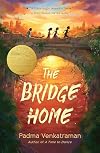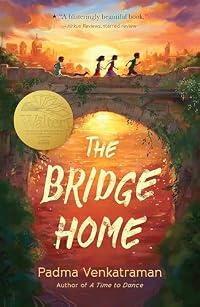
The Bridge Home
by Padma Venkatraman
On This Page
Description
Four determined homeless children make a life for themselves in Chennai, India.Tags
Recommendations


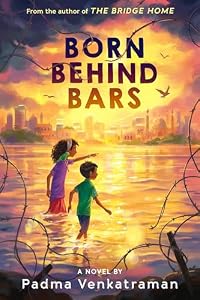


Member Reviews
Venkatraman’s middle-grade debut tackles sisterhood, chosen families, and loss.
Eleven-year-old Viji and her sister, Rukku, flee their abusive father after he breaks Amma’s arm and kicks Rukku. They find themselves, overwhelmed, in the big city of Chennai, where they are temporarily employed by kind Teashop Aunty, who offers them bananas and vadais, and fall in love with a puppy, Kutti, who becomes their constant companion. The sisters meet Muthu and Arul, two boys who live under an abandoned bridge, and join them; Viji tells Rukku elaborate stories to reassure herself and her sister that they will be OK. Soon, Viji finds herself telling the young boys her stories as well; in return, the boys show the girls how to earn money on the show more streets: by scavenging for resalable trash in a very large garbage dump Muthu calls “the Himalayas of rubbish.” When tragedy strikes, it is this new family who helps Viji come to terms. Craftwise, the book is thoughtful: Venkatraman employs the second person throughout as Viji writes to Rukku, and readers will ultimately understand that Viji is processing her grief by writing their story. Viji’s narration is vivid and sensory; moonlight “slip[s] past the rusty iron bars on our window”; “the taste of half an orange…last[s] and last[s].” The novel also touches on social justice issues such as caste, child labor, and poverty elegantly, without sacrificing narrative.
A blisteringly beautiful book. (Fiction. 10-14)
-Kirkus Review show less
Eleven-year-old Viji and her sister, Rukku, flee their abusive father after he breaks Amma’s arm and kicks Rukku. They find themselves, overwhelmed, in the big city of Chennai, where they are temporarily employed by kind Teashop Aunty, who offers them bananas and vadais, and fall in love with a puppy, Kutti, who becomes their constant companion. The sisters meet Muthu and Arul, two boys who live under an abandoned bridge, and join them; Viji tells Rukku elaborate stories to reassure herself and her sister that they will be OK. Soon, Viji finds herself telling the young boys her stories as well; in return, the boys show the girls how to earn money on the show more streets: by scavenging for resalable trash in a very large garbage dump Muthu calls “the Himalayas of rubbish.” When tragedy strikes, it is this new family who helps Viji come to terms. Craftwise, the book is thoughtful: Venkatraman employs the second person throughout as Viji writes to Rukku, and readers will ultimately understand that Viji is processing her grief by writing their story. Viji’s narration is vivid and sensory; moonlight “slip[s] past the rusty iron bars on our window”; “the taste of half an orange…last[s] and last[s].” The novel also touches on social justice issues such as caste, child labor, and poverty elegantly, without sacrificing narrative.
A blisteringly beautiful book. (Fiction. 10-14)
-Kirkus Review show less
Viji and Rukku’s father is physically abusive and alcoholic. Their mother is unwilling to leave him, because she cannot raise the family without him, and she believes her role is to be a good and faithful wife. Unable to accept the abuse, Viji runs away with her developmentally delayed sister to the city. There they meet two boys Arul and Muthu. Together the four eke out a life on the streets, wading through garbage to find recyclables to sell, and forming a family of their own. When Rukku becomes ill during monsoon season, Viji is desperate to help her. Empathetically told, with tenderness and humor contrasting with the kids' dire reality.
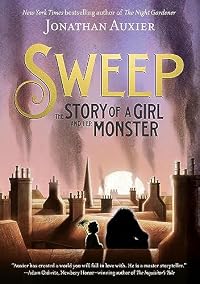
This book reminded me strongly of [b:Boys Without Names|6580712|Boys Without Names|Kashmira Sheth|https://images.gr-assets.com/books/1348712080s/6580712.jpg|6774144] which is also extremely sad. It also brought to mind [b:Bridge to Terabithia|40940121|Bridge to Terabithia|Katherine Paterson|https://images.gr-assets.com/books/1532478367s/40940121.jpg|2237401] (again, extremely sad, obviously). I read somewhere someone comparing it to the Boxcar Children, which made me think there is sort of a genre of stories about a ragtag group of kids hustling to survive without the benefit of caring adults. A few that come to mind are [b:Sweep: The Story of a Girl and Her Monster|37811512|Sweep The Story of a Girl and Her Monster|Jonathan show more Auxier|https://images.gr-assets.com/books/1536675436s/37811512.jpg|59489664], [b:Homecoming|12125|Homecoming (Tillerman Cycle, #1)|Cynthia Voigt|https://images.gr-assets.com/books/1390250078s/12125.jpg|213788], [b:Oliver Twist|18254|Oliver Twist|Charles Dickens|https://images.gr-assets.com/books/1327868529s/18254.jpg|3057979], and [b:The Thief Lord|113304|The Thief Lord|Cornelia Funke|https://images.gr-assets.com/books/1327960342s/113304.jpg|3313414]. These range in tone from relatively lighthearted to dark and disturbing. Bridge Home has some light moments provided by the almost unbelievably resilient characters, but it's mostly very sad.
Anyway, reading this book made me snap at a family member who was complaining about a pretty minor shortcoming of a local middle school. I was like, "Those kids should be grateful they don't have to wade through pools of rotting garbage just to be able to eat." So, yeah, I would say this book may alter many a reader's perspective on life (though that changed perspective often doesn't last very long).
The book is written as a letter to the narrator's sister Rukku, who is developmentally disabled in some unnamed way (could be autism, but it's not clear and I'm no expert). There's a line in the beginning where Viji says, "Why should I write to her? It's not like I have her address." That sparked my curiosity. Where is Viji's sister? Why are they not together anymore? This ends up being a bit of a red herring because the sister is not living at some unknown address -- she dies of dengue fever. I think adults will want to prepare younger readers for a very difficult story (again, like [b:Bridge to Terabithia|40940121|Bridge to Terabithia|Katherine Paterson|https://images.gr-assets.com/books/1532478367s/40940121.jpg|2237401]). I once had a parent come into the library super upset because she was reading Terabithia to her kids and didn't know what was coming and they all sobbed and felt emotionally scarred. So bear that in mind.
I also had trouble with the choices that Viji has to make. Stay with an abusive parent or run away? What a horrible situation to be in -- made even worse by my feeling as an adult reader that she made the wrong decision. No, Viji, no! You absolutely cannot take care of yourself and your sister on the streets! Runaway books are very hard for parents to read.
I thought religious themes were handled really well in this book. Viji runs away from home in part because she doesn't believe she'll be rewarded for being an obedient daughter in the next life. She wants better in this life (oh, Viji! yes but no!). Later she befriends a boy who is devoutly Christian and is helped by a Christian charity. Viji is fiercely reluctant to being recruited and I love what Celina Aunty tells her. She can substitute "good" for "God" in her prayers. She doesn't have to have faith in religion, just faith in the goodness within herself. show less
Anyway, reading this book made me snap at a family member who was complaining about a pretty minor shortcoming of a local middle school. I was like, "Those kids should be grateful they don't have to wade through pools of rotting garbage just to be able to eat." So, yeah, I would say this book may alter many a reader's perspective on life (though that changed perspective often doesn't last very long).
The book is written as a letter to the narrator's sister Rukku, who is developmentally disabled in some unnamed way (could be autism, but it's not clear and I'm no expert). There's a line in the beginning where Viji says, "Why should I write to her? It's not like I have her address." That sparked my curiosity. Where is Viji's sister? Why are they not together anymore? This ends up being a bit of a red herring because the sister is not living at some unknown address -- she dies of dengue fever. I think adults will want to prepare younger readers for a very difficult story (again, like [b:Bridge to Terabithia|40940121|Bridge to Terabithia|Katherine Paterson|https://images.gr-assets.com/books/1532478367s/40940121.jpg|2237401]). I once had a parent come into the library super upset because she was reading Terabithia to her kids and didn't know what was coming and they all sobbed and felt emotionally scarred. So bear that in mind.
I also had trouble with the choices that Viji has to make. Stay with an abusive parent or run away? What a horrible situation to be in -- made even worse by my feeling as an adult reader that she made the wrong decision. No, Viji, no! You absolutely cannot take care of yourself and your sister on the streets! Runaway books are very hard for parents to read.
I thought religious themes were handled really well in this book. Viji runs away from home in part because she doesn't believe she'll be rewarded for being an obedient daughter in the next life. She wants better in this life (oh, Viji! yes but no!). Later she befriends a boy who is devoutly Christian and is helped by a Christian charity. Viji is fiercely reluctant to being recruited and I love what Celina Aunty tells her. She can substitute "good" for "God" in her prayers. She doesn't have to have faith in religion, just faith in the goodness within herself. show less
The Bridge Home by Padma Venkatraman is a YA novel that is based on the stories of real homeless children in India. The author’s mother volunteered at an organization called Concerned for Working Children and the life stories of these children were the basis for this book. The narrator is eleven year old Viji who runs away from home, bringing along her twelve year old developmentally disabled sister, when their abusive father starts to beat them. The two sisters struggle to support themselves and overcome problems of hunger, shelter and violence from others. They meet and forge a friendship with two homeless boys who help them adjust to life on the street. They also find a stray dog who makes their little family complete.
Viji always show more dreams of more than just surviving. Scavenging various garbage dumps barely gives the four children enough to live on. She would like to continue with her education and be able to work and provide a real home for herself and her sister. Eventually conditions deteriorate and two of the children become seriously ill. Viji realizes that she needs help so she turns to a woman who runs a shelter for homeless children and fate smiles on her as this woman is a genuinely caring and responsible person.
The Bridge Home is a thoughtful and engaging story that includes real stories about the abuse, neglect and tragedy that leaves so many children alone in the world. Most of these children survive through luck alone, trusting on their instincts to guide them. Although this book is aimed at middle grade children, I found it an interesting and moving story. show less
Viji always show more dreams of more than just surviving. Scavenging various garbage dumps barely gives the four children enough to live on. She would like to continue with her education and be able to work and provide a real home for herself and her sister. Eventually conditions deteriorate and two of the children become seriously ill. Viji realizes that she needs help so she turns to a woman who runs a shelter for homeless children and fate smiles on her as this woman is a genuinely caring and responsible person.
The Bridge Home is a thoughtful and engaging story that includes real stories about the abuse, neglect and tragedy that leaves so many children alone in the world. Most of these children survive through luck alone, trusting on their instincts to guide them. Although this book is aimed at middle grade children, I found it an interesting and moving story. show less
This is a strong piece of work about homeless children, specifically in India. I don't know if my ARC was missing some chapters at the beginning (I have an older kindle, so this is possible) or if that part of the book is still in development. What I read was moving, heart-rending, well paced. The bonds between the street kids and the sisters were both very powerfully represented. The indifference and cruelty of many of the adults was striking. I hope this book will become an advocate piece that changes the world for the better. This an author to watch.
Book based on true accounts.
Advanced Reader's Copy provided by Edelweiss.
Book based on true accounts.
Advanced Reader's Copy provided by Edelweiss.
This was a really, truly, thoroughly amazing book. The only reason I gave it four stars was because it was so short! The character development with the main character was OUTSTANDING. She went from a victim of abuse, to a protective older sister, and a strong woman, despite the hardships she lived through. Though the writing style wasn't my favorite, this book really hit home. It taught me to be so grateful for everything I have, to not ask for more, and to not look down on others. I 100% recommend this book for younger children, especially if you're trying to find a good role model for them.
Viji and her sister must run away from home a chance at a better life. Will they be able to survive on their own in the streets? Will they find anyone to help them? Viji feels responsible for her sister and that she must do all the work and make all the decisions, but Rukku may surprise her when given the chance.
I highly recommend this story, it will take you on an emotional journey and connect you to the many wonderful characters you meet.
I highly recommend this story, it will take you on an emotional journey and connect you to the many wonderful characters you meet.
Members
- Recently Added By
Lists

Youth: DEI
296 works; 2 members
Author Information

11+ Works 2,150 Members
Awards and Honors
Awards
Distinctions
Notable Lists
Common Knowledge
- Original publication date
- 2019
- Publisher's editor
- Paulsen, Nancy
Classifications
Statistics
- Members
- 754
- Popularity
- 37,062
- Reviews
- 23
- Rating
- (4.24)
- Languages
- English, French
- Media
- Paper, Audiobook, Ebook
- ISBNs
- 17
- ASINs
- 3