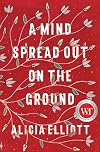
A Mind Spread Out on the Ground
by Alicia Elliott
On This Page
Description
The Mohawk phrase for depression can be roughly translated as a mind spread out on the ground. In this urgent and visceral work, Alicia Elliott explores how apt a description that is for the ongoing effects of the personal, intergenerational, and colonial traumas she and so many Native people have experienced. Elliott's deeply personal writing details a life spent between Indigenous and white communities-a divide reflected in her own family-and engages with such wide-ranging topics as race, show more parenthood, love, art, mental illness, poverty, sexual assault, gentrification, and representation. Throughout, she makes thrilling connections, both large and small, between the past and present, the personal and political. A national bestseller in Canada, this updated and expanded American edition helps us better understand legacy, oppression, and racism throughout North America and offers us a profound new way to decolonize our minds. show lessTags
Recommendations


























Member Reviews
These invaluable, honest, #OwnVoices essays methodically trace the source of many of the problems faced by Native communities today, and how white governments (Canada, U.S.) continue to oppress instead of lift up. Sobering and necessary.
Quotes
In a better world, one that didn't treat my dark-skinned relatives with violence and indignity and death for the way they looked, I would have been able to long for my child to have the thick, black hair and deep-brown skin my family members have without feeling fear. I would have been able to be disappointed that I didn't see visible reminders of my family line peeking through in my child. I wanted to be able to be disappointed. (24)
"Diversity...[is about making sense of difference] through the show more white lens...by creating, curating and demanding palatable definitions of 'diversity' but only in relation to what this means in terms of whiteness." (quoting Tania Canas, "Diversity is a White Word," 32).
...it is possible to both have empathy for a person and still hold inherited, unacknowledged racist views about them and their worth. How else do you explain the Canadian government's apology for residential schools and pleas for reconciliation coexisting with its continued, purposeful underfunding of Indigenous children? ...Clearly having empathy is not dependent upon understanding the social, political and historical circumstances that made that empathy necessary in the first place. (35)
Some things don't matter when a white man does them. (61)
To these people, the only words, actions or thoughts that can be considered real racism are those they can't be blamed for. (73-74)
Racism, for many people, seems to occupy space in very much the same way as dark matter: it forms the skeleton of our world, yet remains ultimately invisible, undetectable. This is convenient. If nothing is racism, then nothing needs to be done to address it. (77)
Our parents were far from perfect, but their main barriers to being better parents were poverty, intergenerational trauma and mental illness - things neither social workers nor police have ever been equipped to address, yet are both allowed, even encouraged, to patrol. (94-95)
["neglect" is another word for poverty]...social services conflates not being able to afford adequate housing, good, clothing and health care with choosing not to have adequate housing, good, clothing and health care. Instead of supporting poor families and helping them become financially secure, social services' approach is to simply take the kids. (95)
America's food industry is highly unethical, even cruel. [Robert Kenner's 2008 documentary Food, Inc.] (103)
The reason junk food is so much cheaper than nutritious food is the U.S. government...[which] subsidizes..."cash crops": wheat, corn, and soybeans....
Since empty calories are both cheap and widely available, it should be no surprise that the biggest indicator of obesity is a person's income level. And since so many Western countries are built on white supremacy, it should also come as no surprise that the biggest indicator of poverty is race. (105)
This is how you can tell white supremacy is functioning the way it's supposed to: because white people are the standard by which all others are measured. If white people are the ones who are "normal," that means racialized people are by default "abnormal." (107)
[Genocide:] First, remove the means for the people to independently look after and support themselves and their community. Next, force them to become dependent on the very state that wants to destroy them. Withhold basic necessities. Wait. (114)
Colonial success has always depended on Indigenous destruction. (115)
Haudenosaunee have always believed in the principle of the seven generations. When you make a decision, you must consciously think about what effects that decision could have on your descendants seven generations in the future. This world does not belong to you; you are merely borrowing it from the coming faces. Epigenetics seems to replicate that philosophy on the genetic level. (118)
Instead of looking at the horrors Canada has inflicted upon us and linking them to our current health issues, Canada has chosen to blame our biology....This is how a once thriving, healthy population comes to be "inherently unhealthy." (121)
Capitalism forever positions itself as the solution to the problem of capitalism. Colonialism forever positions itself as the solution to the problem of colonialism. (124-125)
...as though showing human emotion makes us somehow less than human. (140)
[My mother's] personality eclipsed her features. (145)
Writer and photographer Teju Cole writes that [Jimmy] Nelson "is sentimental about those he photographs and often proclaims their beauty, but having invested himself so deeply in the idea of their 'disappearance,' he is unable to believe that they are not going anywhere, that they are simply adapting to the modern world." (164)
The bare minimum we should expect photographers to impose on their subjects is respect. (174)
Capitalism always relies upon exploitation to create profit, and therefore it must always rely upon differing valuations of people's humanity. (179)
But in the most literal sense, fiction is a lie, even when it reveals essential truths....It's expected that writers borrow from their own lives and experiences to create more realistic fiction - or more compelling lies, whichever you prefer. (195)
It's not hard to see a correlation between the falseness of reality TV and the recent rise of fake news. (206)
We're living in a time where truth is less valuable than attention. (208)
If we can't even get abusers to acknowledge the ways they're abusing others, how can we ever end abuse? (225)
...the U.S. and Canadian governments remind me of one of those estranged parents that hangs out on message boards. They hurt people they claim to value, hurt people they don't value, then when those people finally decide they want nothing to do with the abusers anymore, they ask what they did wrong....our governments know very well what they did. What they continue to do. (235) show less
Quotes
In a better world, one that didn't treat my dark-skinned relatives with violence and indignity and death for the way they looked, I would have been able to long for my child to have the thick, black hair and deep-brown skin my family members have without feeling fear. I would have been able to be disappointed that I didn't see visible reminders of my family line peeking through in my child. I wanted to be able to be disappointed. (24)
"Diversity...[is about making sense of difference] through the show more white lens...by creating, curating and demanding palatable definitions of 'diversity' but only in relation to what this means in terms of whiteness." (quoting Tania Canas, "Diversity is a White Word," 32).
...it is possible to both have empathy for a person and still hold inherited, unacknowledged racist views about them and their worth. How else do you explain the Canadian government's apology for residential schools and pleas for reconciliation coexisting with its continued, purposeful underfunding of Indigenous children? ...Clearly having empathy is not dependent upon understanding the social, political and historical circumstances that made that empathy necessary in the first place. (35)
Some things don't matter when a white man does them. (61)
To these people, the only words, actions or thoughts that can be considered real racism are those they can't be blamed for. (73-74)
Racism, for many people, seems to occupy space in very much the same way as dark matter: it forms the skeleton of our world, yet remains ultimately invisible, undetectable. This is convenient. If nothing is racism, then nothing needs to be done to address it. (77)
Our parents were far from perfect, but their main barriers to being better parents were poverty, intergenerational trauma and mental illness - things neither social workers nor police have ever been equipped to address, yet are both allowed, even encouraged, to patrol. (94-95)
["neglect" is another word for poverty]...social services conflates not being able to afford adequate housing, good, clothing and health care with choosing not to have adequate housing, good, clothing and health care. Instead of supporting poor families and helping them become financially secure, social services' approach is to simply take the kids. (95)
America's food industry is highly unethical, even cruel. [Robert Kenner's 2008 documentary Food, Inc.] (103)
The reason junk food is so much cheaper than nutritious food is the U.S. government...[which] subsidizes..."cash crops": wheat, corn, and soybeans....
Since empty calories are both cheap and widely available, it should be no surprise that the biggest indicator of obesity is a person's income level. And since so many Western countries are built on white supremacy, it should also come as no surprise that the biggest indicator of poverty is race. (105)
This is how you can tell white supremacy is functioning the way it's supposed to: because white people are the standard by which all others are measured. If white people are the ones who are "normal," that means racialized people are by default "abnormal." (107)
[Genocide:] First, remove the means for the people to independently look after and support themselves and their community. Next, force them to become dependent on the very state that wants to destroy them. Withhold basic necessities. Wait. (114)
Colonial success has always depended on Indigenous destruction. (115)
Haudenosaunee have always believed in the principle of the seven generations. When you make a decision, you must consciously think about what effects that decision could have on your descendants seven generations in the future. This world does not belong to you; you are merely borrowing it from the coming faces. Epigenetics seems to replicate that philosophy on the genetic level. (118)
Instead of looking at the horrors Canada has inflicted upon us and linking them to our current health issues, Canada has chosen to blame our biology....This is how a once thriving, healthy population comes to be "inherently unhealthy." (121)
Capitalism forever positions itself as the solution to the problem of capitalism. Colonialism forever positions itself as the solution to the problem of colonialism. (124-125)
...as though showing human emotion makes us somehow less than human. (140)
[My mother's] personality eclipsed her features. (145)
Writer and photographer Teju Cole writes that [Jimmy] Nelson "is sentimental about those he photographs and often proclaims their beauty, but having invested himself so deeply in the idea of their 'disappearance,' he is unable to believe that they are not going anywhere, that they are simply adapting to the modern world." (164)
The bare minimum we should expect photographers to impose on their subjects is respect. (174)
Capitalism always relies upon exploitation to create profit, and therefore it must always rely upon differing valuations of people's humanity. (179)
But in the most literal sense, fiction is a lie, even when it reveals essential truths....It's expected that writers borrow from their own lives and experiences to create more realistic fiction - or more compelling lies, whichever you prefer. (195)
It's not hard to see a correlation between the falseness of reality TV and the recent rise of fake news. (206)
We're living in a time where truth is less valuable than attention. (208)
If we can't even get abusers to acknowledge the ways they're abusing others, how can we ever end abuse? (225)
...the U.S. and Canadian governments remind me of one of those estranged parents that hangs out on message boards. They hurt people they claim to value, hurt people they don't value, then when those people finally decide they want nothing to do with the abusers anymore, they ask what they did wrong....our governments know very well what they did. What they continue to do. (235) show less
these are largely really excellent essays on mental health and the effects of white settler colonialism on native tribes. i especially liked the essay discussing sexual violence and i especially didn't agree with everything in the essay on art and photography, although i thought she made some super interesting points. that was part of the value of this for me - that even though i didn't like or agree with everything she was saying, that i thought it was all well thought out and argued, and worth discussing/thinking more about.
"To these people, the only words, actions, or thoughts that can be considered real racism, are those they can't be blamed for."
"Although we are told that police forces exist to protect the public, incidents like show more this show what the police really prioritize - protecting private corporations and profit, and therefore the nationstate. After all, if politicians didn't utilize state-funded forces to keep major corporate and private donors in the black, how else would they fundraise for their re-election campaigns?" show less
"To these people, the only words, actions, or thoughts that can be considered real racism, are those they can't be blamed for."
"Although we are told that police forces exist to protect the public, incidents like show more this show what the police really prioritize - protecting private corporations and profit, and therefore the nationstate. After all, if politicians didn't utilize state-funded forces to keep major corporate and private donors in the black, how else would they fundraise for their re-election campaigns?" show less
Maybe I expected too much from Alicia Elliott’s memoir A Mind Spread Out on the Ground. Maybe it’s my fault that I found the book so frustrating and, in the end, more confusing than enlightening. I wanted (still do want) to learn more about how North America’s indigenous people live today and whether the reservation system has been overall a good or a bad thing for them. As it turns out, this is not the book to answer that kind of question despite Elliott’s complaints that whites do not bother to wonder what their lives are like today.
A Mind Spread Out on the Ground is a memoir centered on the dysfunctional family that Alicia Elliot had the misfortune to grow up in. Elliot, whose mother is a white Catholic and whose father is a show more Canadian Mohawk, grew up in a home where her mother was institutionalized once or twice a year on average when the mentally ill woman’s bipolar depression became too much for Elliot’s father to handle. What the author so frankly reveals about her childhood is as disturbing as it is sad: the constant hunger, living largely on whatever junk food was available, a case of head lice that lasted more than a decade, being accepted by neither whites nor indigenous schoolmates, etc., but what she describes is a function of poverty not exclusive to indigenous Americans or Canadians.
As readers learn, this is largely a book about depression and those who suffer from it either directly or indirectly. The book’s title, in fact, is a translation of a Mohawk phrase for depression in which such a person is described as having a mind “literally stretched or sprawled out on the ground.” According to Elliott, indigenous people suffer disproportionately from depression, and that is because of the colonialism her people are still suffering from to this day. And, she says, until her people “decolonize” their minds, the problem will not go away.
Even so, Elliott does not seem to expect all that much, for instance, to result from today’s efforts to make the publishing world more obviously reflect real-world diversity because “diversity is a white word.” As she puts it in a quote attributed to a Tania Canas essay of that title:
Diversity is about making sense of difference “through the white lens…by creating and demanding palatable definitions of ‘diversity’ but only in relation to what this means in terms of whiteness.”
Elliott says, “That is the crucial problem with the push for ‘diversity’ in publishing…’diversity’ is not about letting those who aren’t white make whatever art matters to them and their communities.” She goes on to say that, “It’s the literary equivalent of ‘ethnic’ restaurants: they please white people because they provide them with ‘exotic’ new flavours, but if they don’t appease white people’s sensitive taste buds they’re not worth a damn.”
Alicia Elliott’s frustration and anger is obvious in her words, attitude, and accusations even when she momentarily turns her biting sense of humor on herself to make a point about how her childhood memories are different from those of most people, “…my childhood itches. This makes sense, since I had head lice for over a decade. My relationship with head lice was, until recently, the longest relationship I’d ever had.”
The book’s anger is understandable when one considers the generational impact of Canada’s and America’s genocidal approach to their indigenous peoples. The despair and low self-expectations passed from one generation to the next, according to Elliott, continue to plague these people. And she is angered that those who even acknowledge that “awful things” were done in the past expect people like her to forgive and move on with their lives. I’m not convinced she is right about that, but I can understand why she believes it. show less
A Mind Spread Out on the Ground is a memoir centered on the dysfunctional family that Alicia Elliot had the misfortune to grow up in. Elliot, whose mother is a white Catholic and whose father is a show more Canadian Mohawk, grew up in a home where her mother was institutionalized once or twice a year on average when the mentally ill woman’s bipolar depression became too much for Elliot’s father to handle. What the author so frankly reveals about her childhood is as disturbing as it is sad: the constant hunger, living largely on whatever junk food was available, a case of head lice that lasted more than a decade, being accepted by neither whites nor indigenous schoolmates, etc., but what she describes is a function of poverty not exclusive to indigenous Americans or Canadians.
As readers learn, this is largely a book about depression and those who suffer from it either directly or indirectly. The book’s title, in fact, is a translation of a Mohawk phrase for depression in which such a person is described as having a mind “literally stretched or sprawled out on the ground.” According to Elliott, indigenous people suffer disproportionately from depression, and that is because of the colonialism her people are still suffering from to this day. And, she says, until her people “decolonize” their minds, the problem will not go away.
Even so, Elliott does not seem to expect all that much, for instance, to result from today’s efforts to make the publishing world more obviously reflect real-world diversity because “diversity is a white word.” As she puts it in a quote attributed to a Tania Canas essay of that title:
Diversity is about making sense of difference “through the white lens…by creating and demanding palatable definitions of ‘diversity’ but only in relation to what this means in terms of whiteness.”
Elliott says, “That is the crucial problem with the push for ‘diversity’ in publishing…’diversity’ is not about letting those who aren’t white make whatever art matters to them and their communities.” She goes on to say that, “It’s the literary equivalent of ‘ethnic’ restaurants: they please white people because they provide them with ‘exotic’ new flavours, but if they don’t appease white people’s sensitive taste buds they’re not worth a damn.”
Alicia Elliott’s frustration and anger is obvious in her words, attitude, and accusations even when she momentarily turns her biting sense of humor on herself to make a point about how her childhood memories are different from those of most people, “…my childhood itches. This makes sense, since I had head lice for over a decade. My relationship with head lice was, until recently, the longest relationship I’d ever had.”
The book’s anger is understandable when one considers the generational impact of Canada’s and America’s genocidal approach to their indigenous peoples. The despair and low self-expectations passed from one generation to the next, according to Elliott, continue to plague these people. And she is angered that those who even acknowledge that “awful things” were done in the past expect people like her to forgive and move on with their lives. I’m not convinced she is right about that, but I can understand why she believes it. show less
A big-hearted, generous collection of essays that examine weighty topics such as poverty, mental illness, and Indigeneity. Alicia Elliott brilliantly connects her own inner emotions and memories with larger contemporary societal issues. Though her essays are often deeply intimate portrayals of her own past experiences, they are never just about her as there is always a big-picture “why” question at the heart of each essay. Highly recommended!
These essays are very well done and rattle around in my mind.
A collection of essays about a variety of things: depression, bipolar, being Indigenous, Indigenous writers, the ongoing violence of colonialism, the invasive aspects of photography, and growing up on the Six Nations reserve in Ontario, among other things. Alicia Elliott is a member of the Haudenosaunee. The title of the book refers to the Mohawk word for depression,“wake’nikonhra’kwenhtará:’on” which describes the mind as “[l]iterally stretched or sprawled out on the ground. It’s all over.” A second phrase, “ake’nikonhrèn:ton,” means “the mind is suspended.” Such depression is often caused by the destruction of Indigenous cultures, languages, and life ways by colonialism
Brilliant...so many multilayered issues, and such searing honesty with immense vulnerability.
Members
- Recently Added By
Lists

Indigenous America Reader
145 works; 11 members

Native American Heritage
52 works; 2 members

Evergreen Award™ Winners and Nominees 2005–2024
200 works; 3 members
Author Information

4+ Works 1,031 Members
Some Editions
Awards and Honors
Awards
Common Knowledge
- Original publication date
- 2019
- Important places
- Canada
- Publisher's editor
- Harrington, Ryan
- Blurbers
- Mailhot, Terese Marie; Dimaline, Cherie; Simpson, Leanne Betasamosake
Classifications
Statistics
- Members
- 434
- Popularity
- 71,072
- Reviews
- 11
- Rating
- (4.32)
- Languages
- English
- Media
- Paper, Audiobook, Ebook
- ISBNs
- 13
- ASINs
- 4