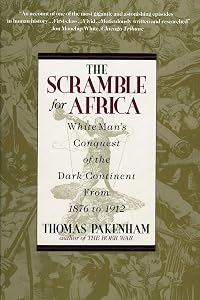
The Scramble for Africa: 1876–1912
by Thomas Pakenham
On This Page
Description
"The White Man's conquest of the Dark Continent from 1876 to 1912"--Jacket subtitle.Tags
Recommendations









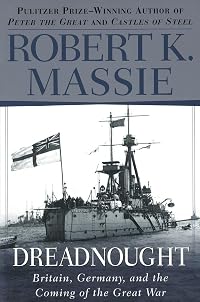
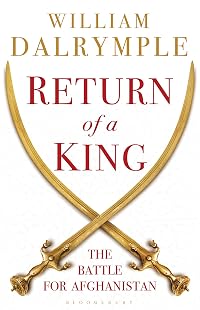
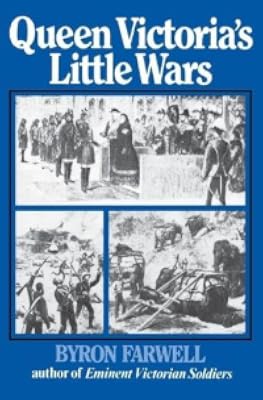
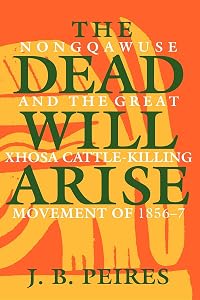
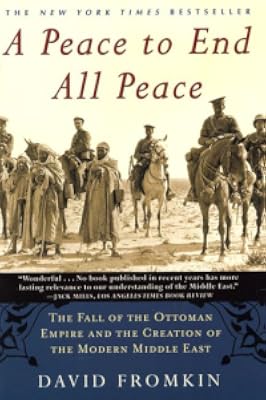
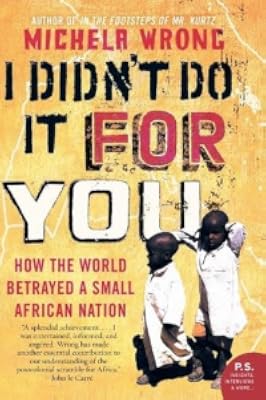

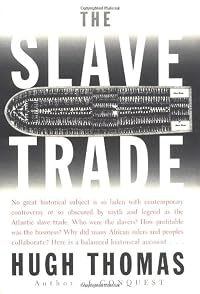
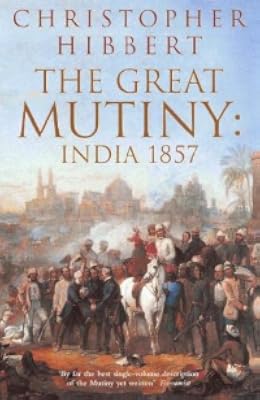
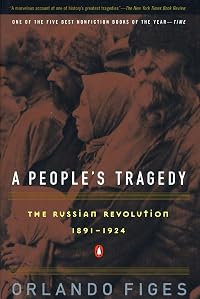
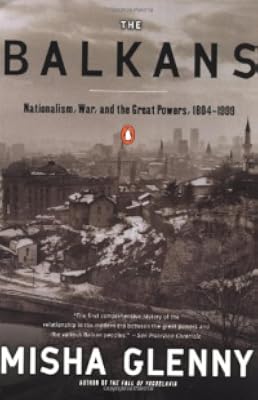
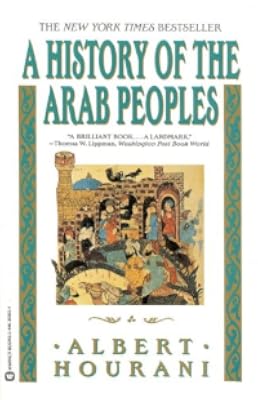
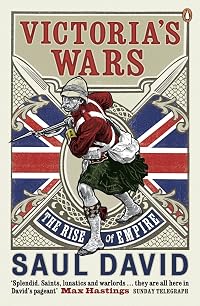
Member Recommendations

Member Reviews
There are times when this book is like a long, endless slog through dense jungle with water and food running low and the natives looking unfriendly and most of the porters giving up and going home; but still the far distant waters of some undiscovered river beckons the fevered brain. It is dense with detail. There are two whole continents involved and this astonishing thirty years changes at least one of them into something unrecognisable, and all for reasons that were, initially at least, perfectly admirable. Stamping out the scourge of slavery was a major aim, and so were commerce and education, so-called civilising influences, if we can refrain from a hollow laugh when using such a phrase. Nothing wrong with trade and nothing wrong show more with the free flow of information, but that's not really what happened at all, is it?
Despite the influence of Livingstone's Three Cs - commerce, Christianity and the other one - there was no real desire or drive for empire in Africa, at least not by anyone who mattered. Britain had its informal empire, trade networks up and down the coast, and they didn't want the expense of anything else.. But mad-capped hare-brained explorers charged off through the interior and fractious settlers in the south caused trouble and poor old Egypt became a luckless pawn in the maneuverings of the Great Powers and the most evil arsehole of the 19th century, King Leopold of Belgium played his long, cunning game, and suddenly countries who could not afford to go to war with each other were competing furiously for domains and dominions and protectorates and colonies they mostly didn't want or need and for which they paid vast quantities in blood and treasure, and for which the Africans who lived there paid even more.
There are a lot of ugly atrocities in this book. A lot of war and a lot of adventure and a lot of international intrigue. It makes for hair-raising reading, but Pakenham keeps a crisp even tone throughout, writing lucidly and clearly. The reader might buckle under the sheer weight of it all, but the book itself never does. There aren't many likeable figures, European or African, a bare handful of women get mentioned in passing and precious few moments of levity, though the repetition of Gordon's phrase about throwing in the sponge must surely count as a kind of running joke. Less funny is the final chapter which begins with a cautiously hopeful description of the independence ceremony of Zimbabwe in 1980. show less
Despite the influence of Livingstone's Three Cs - commerce, Christianity and the other one - there was no real desire or drive for empire in Africa, at least not by anyone who mattered. Britain had its informal empire, trade networks up and down the coast, and they didn't want the expense of anything else.. But mad-capped hare-brained explorers charged off through the interior and fractious settlers in the south caused trouble and poor old Egypt became a luckless pawn in the maneuverings of the Great Powers and the most evil arsehole of the 19th century, King Leopold of Belgium played his long, cunning game, and suddenly countries who could not afford to go to war with each other were competing furiously for domains and dominions and protectorates and colonies they mostly didn't want or need and for which they paid vast quantities in blood and treasure, and for which the Africans who lived there paid even more.
There are a lot of ugly atrocities in this book. A lot of war and a lot of adventure and a lot of international intrigue. It makes for hair-raising reading, but Pakenham keeps a crisp even tone throughout, writing lucidly and clearly. The reader might buckle under the sheer weight of it all, but the book itself never does. There aren't many likeable figures, European or African, a bare handful of women get mentioned in passing and precious few moments of levity, though the repetition of Gordon's phrase about throwing in the sponge must surely count as a kind of running joke. Less funny is the final chapter which begins with a cautiously hopeful description of the independence ceremony of Zimbabwe in 1980. show less
The very phrase "scramble for Africa" evokes images of late-Victorian explorers and statesmen carving up large tracts of a continent for themselves. The book itself is not a disappointment, as Pakenham injects some droll wit into the proceedings as we follow European explorers arrive, subjugate the locals, deal with the Arab slave traders from Zanzibar and surrounds and other Europeans as they grabbed as much territory as they could.
The Germans started late but still got Tanganyika and South West Africa, Leopold II of Belgium also snuck in and grabbed the Belgian Congo and the Lado Enclave, and broke all records in torture and slavery in the process. The Brits and the French got everything else, although all faced problems from the show more locals, who had the audacity to complain about Europeans bringing civilisation to them.
"The Scramble for Africa" is the best book I've read on Africa in the late nineteenth century. show less
The Germans started late but still got Tanganyika and South West Africa, Leopold II of Belgium also snuck in and grabbed the Belgian Congo and the Lado Enclave, and broke all records in torture and slavery in the process. The Brits and the French got everything else, although all faced problems from the show more locals, who had the audacity to complain about Europeans bringing civilisation to them.
"The Scramble for Africa" is the best book I've read on Africa in the late nineteenth century. show less
The "Scramble for Africa" is comprehensive, enjoyable to read, and lively. It is well-edited and logically organized. For those intimidated by it's slightly larger than average size, it can easily be broken into chunks without too much lost. I believe this comprehensive survey is important to understand imperialism, colonialism, and African and world history. So much of the action was intertwined with events thousands of miles away and behaviors or political/ economic/ calculations of so many nations and people. Action in a French border area by a rogue soldier in West Africa could influence British policy in East or southern Africa.
I liked how Pakenham took the participant's POV in regards to the decisions made and actions taken using show more their own words. The rebuttal or criticism comes from their opposition's voices and actions when he writes from the opposition POV. Some readers may feel uncomfortable with this, as if he is presenting a sympathetic view or endorsing actions, but I prefer to have the actors speak for themselves and I'll make my own judgements. Additionally, when viewed in this uncritical way, readers would have to believe that Pakenham endorsed or sympathized with contrarian viewpoints.
This doesn't mean he keeps his personal judgments hidden behind others' words. Painting all of the independence movements as generally good things without the appropriate Cold War context does those peoples and their history a great disservice. His support of Mugabe - "statesman in the making" - should have been left out. All of that; however, is in the short Epilogue.
What amazed me most is to find that much of that colonial history took place in such a short time frame.
My assumption of imperialism from public high school history was that it was a simple drive to paint the map "our color" and hold the most (territory, population, riches...) &/or have markets for goods. I was surprised at how much African imperialism was driven by middle classes and entities (businesses, missionary organizations, NGOs), explorers, and relatively low-level events rather than the actual leadership in the countries. Pakenham doesn't mention this, but as I read, it became evident how much mass media amplified many voices and events far beyond their own ability to influence events. I believe part of this was the rise in mass literacy in Western nations, the contingent rise in mass media publications, and the corresponding rise in innovative politicians learning to play to the mass media. Low-level events (like a few missionaries in danger or killed in some dirt hole in the middle of a larger dirt hole in the middle of nowhere with no benefit to anyone, even the residents) could drive major policies and push politicians in ways that were contrary to their own inclinations and not in their country's best interest. One observation I made was that during this time frame, leadership devolved from statesmen to politicians. Rather than lead, media pushed and so the carts got ahead of the horses.
Overall, I learned a great deal from this book show less
I liked how Pakenham took the participant's POV in regards to the decisions made and actions taken using show more their own words. The rebuttal or criticism comes from their opposition's voices and actions when he writes from the opposition POV. Some readers may feel uncomfortable with this, as if he is presenting a sympathetic view or endorsing actions, but I prefer to have the actors speak for themselves and I'll make my own judgements. Additionally, when viewed in this uncritical way, readers would have to believe that Pakenham endorsed or sympathized with contrarian viewpoints.
This doesn't mean he keeps his personal judgments hidden behind others' words. Painting all of the independence movements as generally good things without the appropriate Cold War context does those peoples and their history a great disservice. His support of Mugabe - "statesman in the making" - should have been left out. All of that; however, is in the short Epilogue.
What amazed me most is to find that much of that colonial history took place in such a short time frame.
My assumption of imperialism from public high school history was that it was a simple drive to paint the map "our color" and hold the most (territory, population, riches...) &/or have markets for goods. I was surprised at how much African imperialism was driven by middle classes and entities (businesses, missionary organizations, NGOs), explorers, and relatively low-level events rather than the actual leadership in the countries. Pakenham doesn't mention this, but as I read, it became evident how much mass media amplified many voices and events far beyond their own ability to influence events. I believe part of this was the rise in mass literacy in Western nations, the contingent rise in mass media publications, and the corresponding rise in innovative politicians learning to play to the mass media. Low-level events (like a few missionaries in danger or killed in some dirt hole in the middle of a larger dirt hole in the middle of nowhere with no benefit to anyone, even the residents) could drive major policies and push politicians in ways that were contrary to their own inclinations and not in their country's best interest. One observation I made was that during this time frame, leadership devolved from statesmen to politicians. Rather than lead, media pushed and so the carts got ahead of the horses.
Overall, I learned a great deal from this book show less
The depth and breadth of research in this book is astounding, and Pakenham deserves credit for his ability as a historian. The fact that this book took 10 years to write really does come through.
I give it 3 stars because of the approach and methodology and how these meshed with my expectations.
The book is written almost entirely from the European perspective, with primarily European archival material. The politics and personalities of European courtrooms and chambers are the bulk of the narrative (along with the exploits of European explorers), with literally hundreds of Great Man characters interacting in a complex web of intrigue. Certain accounts, like that of Livingstone, read like hagiographies. Certain parts of the book read like show more a drama novel. Africans, for the most part, appear in only a handful of capacities: as rulers making deals with Europeans; as auxiliary soldiers helping Europeans; as slaves that need to be freed by Europeans; or as forced labourers being used by Europeans, Arabs, or other Africans. Women and children only appear as refugees, captives, and child-brides. African culture never appears, apart from the grim pagan rituals that Pakenham sometimes describes.
Atrocities, thankfully, are not glossed over. In fact, they're typically described in gruesome detail. Yet they do not seem to condemn imperialism to Pakenham. In his own words, "Europe has given Africa the aspirations for freedom and human dignity ... even if Europe itself was seldom able to live up to them." When atrocities do occur, the only push-back seems to be the politicking of other Europeans.
The social, cultural, political, economic, etc. upheavals brought about by the Scramble do not fit into the scope of this book, which came as a disappointment to me. Neither, however, do the pre-colonial structures of Africa. Though there is frequent mention of chiefs, kabakas, sultans, and vassals, the precise political structures are rarely adequately described. Furthermore, resistances and uprisings are not discussed in a particularly great depth. It is not a flaw for a book to have a certain scope, of course, but omitting these things contributes to the book's strongly European outlook. The impression one gets is of Africa as a pawn of European politics - certainly accurate from the European perspective, but unsatisfactory and simplistic from the African one.
My gripes aside, I do think this is a good book to read on the topic, though perhaps not for the casual reader. It is a dense slog of material at over 700 pages which, understandably, will likely put many people off. If that isn't a problem for you, you'll certainly find the book interesting and even immersive. show less
I give it 3 stars because of the approach and methodology and how these meshed with my expectations.
The book is written almost entirely from the European perspective, with primarily European archival material. The politics and personalities of European courtrooms and chambers are the bulk of the narrative (along with the exploits of European explorers), with literally hundreds of Great Man characters interacting in a complex web of intrigue. Certain accounts, like that of Livingstone, read like hagiographies. Certain parts of the book read like show more a drama novel. Africans, for the most part, appear in only a handful of capacities: as rulers making deals with Europeans; as auxiliary soldiers helping Europeans; as slaves that need to be freed by Europeans; or as forced labourers being used by Europeans, Arabs, or other Africans. Women and children only appear as refugees, captives, and child-brides. African culture never appears, apart from the grim pagan rituals that Pakenham sometimes describes.
Atrocities, thankfully, are not glossed over. In fact, they're typically described in gruesome detail. Yet they do not seem to condemn imperialism to Pakenham. In his own words, "Europe has given Africa the aspirations for freedom and human dignity ... even if Europe itself was seldom able to live up to them." When atrocities do occur, the only push-back seems to be the politicking of other Europeans.
The social, cultural, political, economic, etc. upheavals brought about by the Scramble do not fit into the scope of this book, which came as a disappointment to me. Neither, however, do the pre-colonial structures of Africa. Though there is frequent mention of chiefs, kabakas, sultans, and vassals, the precise political structures are rarely adequately described. Furthermore, resistances and uprisings are not discussed in a particularly great depth. It is not a flaw for a book to have a certain scope, of course, but omitting these things contributes to the book's strongly European outlook. The impression one gets is of Africa as a pawn of European politics - certainly accurate from the European perspective, but unsatisfactory and simplistic from the African one.
My gripes aside, I do think this is a good book to read on the topic, though perhaps not for the casual reader. It is a dense slog of material at over 700 pages which, understandably, will likely put many people off. If that isn't a problem for you, you'll certainly find the book interesting and even immersive. show less
This book is demanding of the reader. It is long. It weighs over 3 pounds. The maps are barely adequate. And Hopkins says Packenham adds nothing new and omits most of the historical scholarship on Africa since 1912. If I recall, he says it is history from the records of the plunderers and blunderers.
But it is a very good read. And, as you read, you have a reference point for the unending, awful events across Africa – and other accounts you may care to look into.
But it is a very good read. And, as you read, you have a reference point for the unending, awful events across Africa – and other accounts you may care to look into.
Encyclopaedic. And readable. Although the full history of Africa is an African history, this story of European incursions into Africa and the horrors they inflicted give some context to the modern States of Africa, and the continuing cycle of poverty and violence there. I might add that this history isn't just about chronicling European avarice and exploitation. The role of the Arab world in slaving on the East coast of Africa was even more rapacious than the Atlantic slave trade, and the level of violence between African proto-States was reminiscent of the latest most extreme outrages in Saharan Africa. Sadly there is nothing much new under the Sun. This is history that needs to be told, and learnt.
Although I took a breather for a few days, I was never tempted to 'throw in the sponge' on this weighty tome. I had previously read Adam Hochschild's excellent 'King Leopold's Ghost', so I was familiar with the tragedy that was (remains?) the Belgian Congo. But this book filled in lots of gaps in my general knowledge of Stanley's and de Brazza's explorations, Isandlwana, Majuba, Gordon of Khartoum, Cecil Rhodes, Lord Kitchener etc etc. A thorough overview of the 'carving' of Africa by the European powers in the late 19th century. Recommend.
Members
- Recently Added By
Lists

Most Popular Books Tagged Africa
35 works; 3 members

r/AskHistorians' Recommended Books
1,068 works; 19 members

In Our Time books
4,934 works; 2 members
Author Information

16+ Works 4,442 Members
Thomas Pakenham's Remarkable Trees of the World received international acclaim
Awards and Honors
Awards
Series
Belongs to Publisher Series
Work Relationships
Common Knowledge
- Canonical title
- The Scramble for Africa: 1876–1912
- Original publication date
- 1991
- People/Characters
- Percy Anderson; Robert Baden-Powell; Arthur Balfour; Otto von Bismarck; Pierre Savorgnan de Brazza; Alexander Broadley (show all 34); Redvers Buller; Joseph Chamberlain; Winston Churchill (Churchill, Winston Leonard Spencer); Alphonse de Courcel; Benjamin Disraeli, 1st Earl of Beaconsfield; Theophile Delcasse; Eugene Etienne; William Ewart Gladstone; Leon Gambetta; Edward Grey; Charles George Gordon; Edward Hamilton; Herbert Kitchener; Paul Kruger; Leopold II, King of the Belgians; David Livingstone; Ndebele Lobengula; Frederick lugard; Jean Baptiste Marchand; Menelik II, Emperor of Abyssinia; Cecil Rhodes; Carl Peters; Robert Arthur Talbot Gascoyne-Cecil Salisbury; Henry Morton Stanley; Garnet Wolseley; Wilhelm II, German Kaiser and King of Prussia; Jean-Baptiste Marchand; H. Rider Haggard
- Important places
- Africa; Lado Enclave
- Important events
- Scramble for Africa
- Original language
- English
- Disambiguation notice
- Two Volumes
Classifications
Statistics
- Members
- 1,572
- Popularity
- 14,524
- Reviews
- 21
- Rating
- (4.15)
- Languages
- English, German
- Media
- Paper, Ebook
- ISBNs
- 14
- UPCs
- 2
- ASINs
- 14