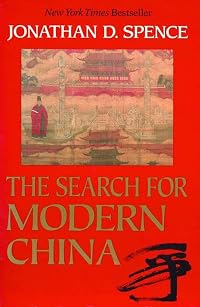
The Search for Modern China
by Jonathan D. Spence
On This Page
Description
This text, the classic introduction to modern China for students and general readers, emerged from the author's introductory course at Yale, in which he traced the beginnings of modern China to internal developments beginning in the early 17th century. Strong on social and political history, as well as Chinese culture and its intersections with politics, this work is a longstanding leader in the survey course on modern China.Tags
Recommendations
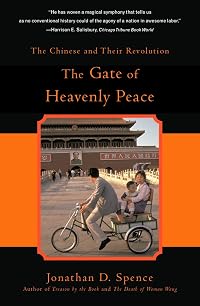
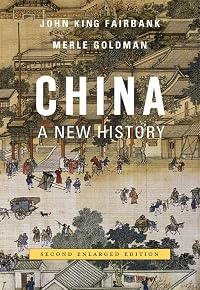
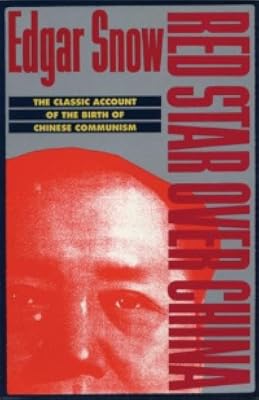
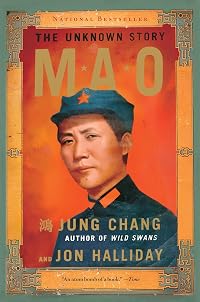



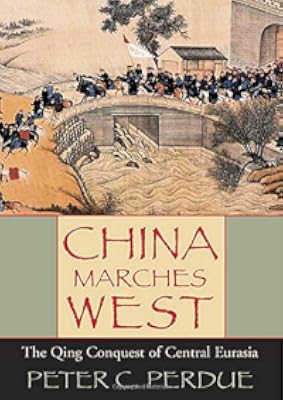
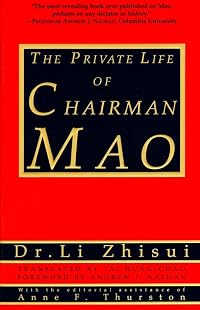
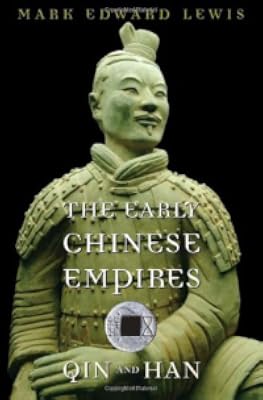
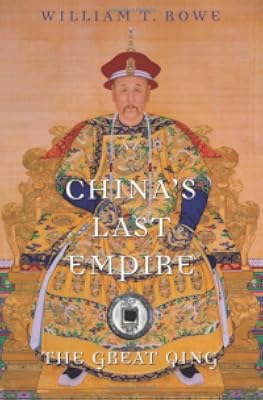




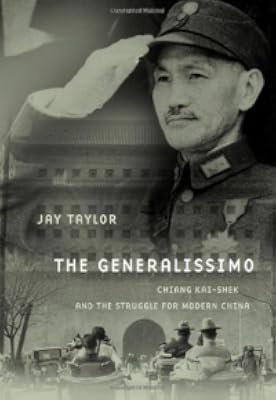
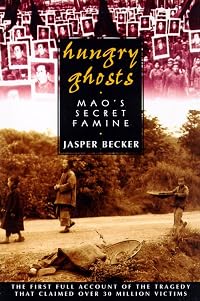
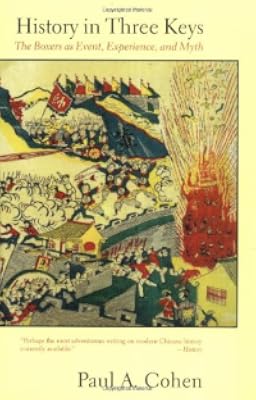

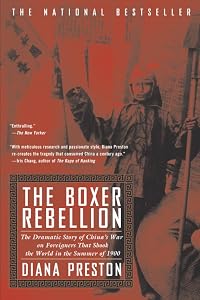
Member Recommendations
Member Reviews
This book shows how China's efforts to respond to her encounter with the imperial industrial powers from the 1840s to the 1970s were an unmitigated disaster. The Qing state made efforts to modernise the economy and military, sending students abroad, recruiting Western armaments experts, building railways, and so on. But the circumstances were impossible. Rapacious predations by foreign forces and devastating internal civil wars denied China time and space to carry out the needed development. In one pathetic incident, a new Chinese fleet was entirely and ignominiously sunk by French ships within minutes. Resistance to westernisation from inside the regime, which as a foreign conquest state was anxious about its own legitimacy, made a show more stark contrast with the unified determination of Japan's Meiji state-led industrialisation and military reforms. Japan went on to abuse China for decades herself. In a further disastrous outcome, China was taken over by a Stalinist psychopath whose catastrophic policies turned the mid-20th century into a waking nightmare, a man who even today is held in official honour by a regime too frightened by its own failures to permit honest discussion of the past. Only after Mao's death has China combined an era of peace with competent leadership and successful state-guided industrialisation policies. But her traumatic encounter with the imperial powers between the Opium Wars and the Japanese occupation still defines her approach to the world today: a determination to overcome the "Century of Humiliation" and maximise her power to address the world on her own terms.
Some essential books on modern and contemporary China:
[b:Wild Swans: Three Daughters of China|1848|Wild Swans Three Daughters of China|Jung Chang|https://images.gr-assets.com/books/1440643710s/1848.jpg|2969000]
[b:Age of Ambition: Chasing Fortune, Truth, and Faith in the New China|18490568|Age of Ambition Chasing Fortune, Truth, and Faith in the New China|Evan Osnos|https://images.gr-assets.com/books/1418113377s/18490568.jpg|26174286]
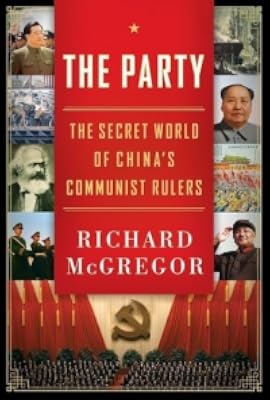
[b:The Party: The Secret World of China's Communist Rulers|7822182|The Party The Secret World of China's Communist Rulers|Richard McGregor|https://images.gr-assets.com/books/1348918012s/7822182.jpg|10863112] show less
Some essential books on modern and contemporary China:
[b:Wild Swans: Three Daughters of China|1848|Wild Swans Three Daughters of China|Jung Chang|https://images.gr-assets.com/books/1440643710s/1848.jpg|2969000]
[b:Age of Ambition: Chasing Fortune, Truth, and Faith in the New China|18490568|Age of Ambition Chasing Fortune, Truth, and Faith in the New China|Evan Osnos|https://images.gr-assets.com/books/1418113377s/18490568.jpg|26174286]
[b:The Party: The Secret World of China's Communist Rulers|7822182|The Party The Secret World of China's Communist Rulers|Richard McGregor|https://images.gr-assets.com/books/1348918012s/7822182.jpg|10863112] show less
This book shows how China's efforts to respond to her encounter with the imperial industrial powers from the 1840s to the 1970s were an unmitigated disaster. The Qing state made efforts to modernise the economy and military, sending students abroad, recruiting Western armaments experts, building railways, and so on. But the circumstances were impossible. Rapacious predations by foreign forces and devastating internal civil wars denied China time and space to carry out the needed development. In one pathetic incident, a new Chinese fleet was entirely and ignominiously sunk by French ships within minutes. Resistance to westernisation from inside the regime, which as a foreign conquest state was anxious about its own legitimacy, made a show more stark contrast with the unified determination of Japan's Meiji state-led industrialisation and military reforms. Japan went on to abuse China for decades herself. In a further disastrous outcome, China was taken over by a Stalinist psychopath whose catastrophic policies turned the mid-20th century into a waking nightmare, a man who even today is held in official honour by a regime too frightened by its own failures to permit honest discussion of the past. Only after Mao's death has China combined an era of peace with competent leadership and successful state-guided industrialisation policies. But her traumatic encounter with the imperial powers between the Opium Wars and the Japanese occupation still defines her approach to the world today: a determination to overcome the "Century of Humiliation" and maximise her power to address the world on her own terms.
Some essential books on modern and contemporary China:
[b:Wild Swans: Three Daughters of China|1848|Wild Swans Three Daughters of China|Jung Chang|https://images.gr-assets.com/books/1440643710s/1848.jpg|2969000]
[b:Age of Ambition: Chasing Fortune, Truth, and Faith in the New China|18490568|Age of Ambition Chasing Fortune, Truth, and Faith in the New China|Evan Osnos|https://images.gr-assets.com/books/1418113377s/18490568.jpg|26174286]
[b:The Party: The Secret World of China's Communist Rulers|7822182|The Party The Secret World of China's Communist Rulers|Richard McGregor|https://images.gr-assets.com/books/1348918012s/7822182.jpg|10863112] show less
Some essential books on modern and contemporary China:
[b:Wild Swans: Three Daughters of China|1848|Wild Swans Three Daughters of China|Jung Chang|https://images.gr-assets.com/books/1440643710s/1848.jpg|2969000]
[b:Age of Ambition: Chasing Fortune, Truth, and Faith in the New China|18490568|Age of Ambition Chasing Fortune, Truth, and Faith in the New China|Evan Osnos|https://images.gr-assets.com/books/1418113377s/18490568.jpg|26174286]
[b:The Party: The Secret World of China's Communist Rulers|7822182|The Party The Secret World of China's Communist Rulers|Richard McGregor|https://images.gr-assets.com/books/1348918012s/7822182.jpg|10863112] show less
A 'magnum opus' work in the field of modern Chinese history. Do not be daunted by its length: this book remains compelling from the height of the Ming dynasty in the 1600s right to the last pages, which cover Tiananmen Square, 1989.
Spence's strength is his expert balance between chronological narrative and historical analysis, which makes for an invigorating reading experience. I read this book in less than a week, fueled by the genuinely well crafted structure and smooth prose of the book which made for a 'page turning' experience.
If you have no prior knowledge of Chinese history, I recommend starting with a more concise overview, or two. However, once you've developed a basic grasp of the direction of Chinese history, I highly show more recommend investing a focused period of study in order to delve into the "deep end" of Chinese history with a "The Search for Modern China". show less
Spence's strength is his expert balance between chronological narrative and historical analysis, which makes for an invigorating reading experience. I read this book in less than a week, fueled by the genuinely well crafted structure and smooth prose of the book which made for a 'page turning' experience.
If you have no prior knowledge of Chinese history, I recommend starting with a more concise overview, or two. However, once you've developed a basic grasp of the direction of Chinese history, I highly show more recommend investing a focused period of study in order to delve into the "deep end" of Chinese history with a "The Search for Modern China". show less
This was the text for a History of Modern China course I took in undergrad. From that you can infer that it's very detailed and scholarly. However, it's also intensely readable: I've reread it for pleasure in the years since graduation.
The "Modern" China of the title is in the strict sense of Modern, in this case starting in the 17th century. That may seem a long time ago, but the context it gives to more contemporary events is rich and useful. I found the patterns and trends that emerged from this book, as well as the sense of China's journey as a nation, fascinating. The insights I got from this book help me understand a little better China's stance toward the world and place in it. Highly recommended.
The "Modern" China of the title is in the strict sense of Modern, in this case starting in the 17th century. That may seem a long time ago, but the context it gives to more contemporary events is rich and useful. I found the patterns and trends that emerged from this book, as well as the sense of China's journey as a nation, fascinating. The insights I got from this book help me understand a little better China's stance toward the world and place in it. Highly recommended.
Excellent overview of Chinese history from the late Ming dynasty through the Tiananmen Square Massacre of 1989. In retrospect, it is pretty amazing how much progress China has made in the 20 years since. Anyone trying to understand the Chinese mindset or why the Chinese can hate communism on the one hand but respond when the communist government uses extreme nationalism to rouse up the populace against some slight from a foreign country needs to read this book or one very much like it. Once you see the humbling of China, which considered itself the center of the world, by foreign powers from 1840 - 1949, you can understand the pride its citizens take in its current achievements and preeminent place in the world. As one who lived in show more China and has visited periodically for the past 20 years, these achievements are impossible to denigrate. show less
I first read about this topic in a college textbook and have found it fascinating ever since. I have always felt that because the history of China is so different from the U.S. it had a lot to tell me. Now that I have got around to reading this book it is one of my favorites on this subject. The book covers the history of China from about 1600-1989. During that time China changed from an Imperial state to a totalitarian bureaucracy. The book begins with the conquest of China by the Manchus and ends just after TiananMen Square, which I consider to be the end of the Chinese Revolution and the beginning of modern China. Along the way China underwent great changes brought on by it's conflict with the Western powers in the 19th century and show more internal changes which ended with the fall of the Imperial system. The 20th century saw the Chinese Civil War and the growth of China into a modern nation shaped by the Chinese Revolution. After 1949 Mao Zedong oversaw the modernization of China with a series of destructive movements that ended with his death. Deng Xioaping fashioned a series of economic reforms which created the economic powerhouse which is modern day China. This is a series of generalizations about an era of history which Jonathan D. Spence has set forth in detail in his wonderful book.
I must begin with what I most like about the book and one item I really dislike. The book is filled with pictures and maps that provided a big plus to my understanding of what was happening. There is a great variety of illustrations from the Imperial age to Tiananmen Square that greatly enrich the story. Almost 50 maps made sure that I always knew where the events described in the text were happening. Maps are very important to me in reading history and this book definitely met my needs. All of the maps and pictures made the book a good cross between a seminar text and a coffee table book. I didn't like or understand the fact that all the way through to the end of the book the author referred to the capital of China as Peking. In my mind the city became Beijing in 1949 and I don't know why the author refused to change. It bothered me a little every time I read it.
Jonathan Spence is one of my favorite Chinese history authors and in this book he tells the complete story of the rise of modern China. He uses 750 pages to write a thorough and detailed story of the changes which took place in China during this time. He concentrates on the events more than the personalities of the people making the book read a lot like a textbook. My interest in the numerous events and the great changes that took place during this time and kept the reading from being dull and dry.
A few items that made an impact on me. I have never felt the same about the British since reading about their actions in the Opium Wars. Purely for the love of money they made drug addicts out of a vast segment of the Chinese and killed people for the right to do so. The Manchus who ruled China during this time were the conquerors of China and Westerners always seemed to think of them as the Chinese. I don't believe that Mao Zedong cared for any body in the world except for himself. From the Great Leap Forward to the Cultural Revolution he ruined the lives of the Chinese people to stay in power and because he wanted to and he could. Tiananmen proved to me that the attitude of the Chinese leadership is the same it has been since 216 b.c.e. when the First Emperor burned all the books so that no one could have any ideas contrary to his. I thank Jonathan Spence for reawakening my interest in this subject. I look forward to digging out some of my other books on the subject that have been gathering dust since college. show less
I must begin with what I most like about the book and one item I really dislike. The book is filled with pictures and maps that provided a big plus to my understanding of what was happening. There is a great variety of illustrations from the Imperial age to Tiananmen Square that greatly enrich the story. Almost 50 maps made sure that I always knew where the events described in the text were happening. Maps are very important to me in reading history and this book definitely met my needs. All of the maps and pictures made the book a good cross between a seminar text and a coffee table book. I didn't like or understand the fact that all the way through to the end of the book the author referred to the capital of China as Peking. In my mind the city became Beijing in 1949 and I don't know why the author refused to change. It bothered me a little every time I read it.
Jonathan Spence is one of my favorite Chinese history authors and in this book he tells the complete story of the rise of modern China. He uses 750 pages to write a thorough and detailed story of the changes which took place in China during this time. He concentrates on the events more than the personalities of the people making the book read a lot like a textbook. My interest in the numerous events and the great changes that took place during this time and kept the reading from being dull and dry.
A few items that made an impact on me. I have never felt the same about the British since reading about their actions in the Opium Wars. Purely for the love of money they made drug addicts out of a vast segment of the Chinese and killed people for the right to do so. The Manchus who ruled China during this time were the conquerors of China and Westerners always seemed to think of them as the Chinese. I don't believe that Mao Zedong cared for any body in the world except for himself. From the Great Leap Forward to the Cultural Revolution he ruined the lives of the Chinese people to stay in power and because he wanted to and he could. Tiananmen proved to me that the attitude of the Chinese leadership is the same it has been since 216 b.c.e. when the First Emperor burned all the books so that no one could have any ideas contrary to his. I thank Jonathan Spence for reawakening my interest in this subject. I look forward to digging out some of my other books on the subject that have been gathering dust since college. show less
Only a book about China could define the modern era in the 17th century. A grand sweeping history, covering all facets of China. History, economics, politics, military events, society, the arts - a good encyclopedic overview, in a very readable style.
Unfortunately, my edition seems to end at the events of Tiananmen Square. A lot has happened since then, and I would have loved for the author to expound on the present China as lucidly as he did for the ages past.
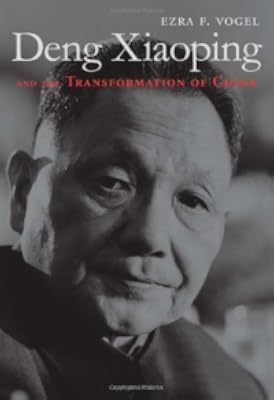
It is also amusing to note that Deng Xiaopeng, the founder of modern Chinese state capitalism, modestly hoped for a 2% growth rate until the year 2050, with the aim of making China a moderately developed nation. Not even he, it seems, could have foreseen the tidal wave that his show more nation has unleashed upon world history yet again. show less
Unfortunately, my edition seems to end at the events of Tiananmen Square. A lot has happened since then, and I would have loved for the author to expound on the present China as lucidly as he did for the ages past.
It is also amusing to note that Deng Xiaopeng, the founder of modern Chinese state capitalism, modestly hoped for a 2% growth rate until the year 2050, with the aim of making China a moderately developed nation. Not even he, it seems, could have foreseen the tidal wave that his show more nation has unleashed upon world history yet again. show less
Members
- Recently Added By
Lists

r/History Recommended Reading List
603 works; 12 members

r/AskHistorians' Recommended Books
1,068 works; 18 members

The China Project Book List
100 works; 2 members

"the china pill"
96 works; 2 members

History: Asia
103 works; 1 member

In Our Time books
4,934 works; 2 members
Author Information

27+ Works 7,149 Members
Jonathan D. Spence was born in Surrey, England on August 11, 1936. He received a B.A. in history from Clare College, Cambridge University and a M.A. and Ph.D. from Yale University. He was Sterling Professor of History at Yale University from 1993 to 2008. As a historian specializing in Chinese history, he wrote several books including The Search show more for Modern China, The Death of Woman Wang, and The Memory Palace of Matteo Ricci. The Gate of Heavenly Peace won the Los Angeles Times Book Award and the Henry D. Vursell Memorial Award of the American Academy-Institute of Arts and Letters. (Bowker Author Biography) show less
Awards and Honors
Awards
Distinctions
Work Relationships
Has as a reference guide/companion
Common Knowledge
- Original publication date
- 1990 (1st edition | New York | Norton) (1st edition | New York | Norton); 1999 (2nd edition | New York | Norton) (2nd edition | New York | Norton)
- Important places
- China
- Important events
- Qing Dynasty (Chinese history, 1644-1911); Republican China (1912-1949); Communist China (1949- )
- Publisher's editor
- Forman, Steve
Classifications
Statistics
- Members
- 1,445
- Popularity
- 16,258
- Reviews
- 20
- Rating
- (4.27)
- Languages
- 6 — Chinese, Dutch, English, German, Portuguese, Spanish
- Media
- Paper, Audiobook, Ebook
- ISBNs
- 23
- ASINs
- 9