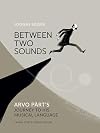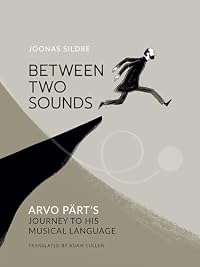
Between Two Sounds: Arvo Pärt's Journey to His Musical Language
by Joonas Sildre
On This Page
Description
Between Two Sounds follows the life of world-famous composer Arvo Pärt from his birth in Estonia in 1935 through 1980, when the Soviets forced him to emigrate because of the nonconformist and religious nature of his music. Based on years of research and close collaboration with Arvo Pärt himself, Joonas Sildre paints an atmospheric portrait of a restless artist who does not shy away from confronting state control or his own internal contradictions. Arvo Pärt stormed Soviet-occupied show more Estonia's music scene in the 1960s as a brash young man pushing the limits of avant-garde modernism. Then he fell silent, no longer able to express what he felt through the musical language he had inherited. When he reemerged a decade later, he had found, in that silence between sounds, a new musical language inspired by ancient sacred music, the basis of his distinctive tintinnabuli technique. This graphic novel will appeal not just to fans of Arvo Pärt's music but to anyone who has known the struggle to remain true to oneself whatever the cost. show lessTags
Recommendations
















Member Reviews
NOTE: I am a librarian and I received a paperback ARC copy of this book from the publisher in exchange for a review.
A graphic novel is an interesting medium to tell the story of one of the foremost composers of the late 20th Century, but Joonas Sildre's art and storytelling give the life and music of Arvo Pärt a sensitive and captivating treatment. "Between Two Sounds" is marked by subtlety at every turn, from its color scheme to its pacing, allowing key events in Pärt's life to unfold gradually, as if in a musical composition. By zooming in on the trials and challenges Pärt and his family faced in USSR-occupied Estonia, Sildre reveals Pärt's musical and personal philosophies and how they shaped his compositional output even in the show more shadow of an authoritarian regime. The tension of that era in history manifests itself in unexpected ways, making the general mood ominous and pensive but never horrific. A little wry humor every now and then adds an additional dimension to this composer and his life. For anyone interested in music history or Eastern European history, "Between Two Sounds" is a breathtaking read. show less
A graphic novel is an interesting medium to tell the story of one of the foremost composers of the late 20th Century, but Joonas Sildre's art and storytelling give the life and music of Arvo Pärt a sensitive and captivating treatment. "Between Two Sounds" is marked by subtlety at every turn, from its color scheme to its pacing, allowing key events in Pärt's life to unfold gradually, as if in a musical composition. By zooming in on the trials and challenges Pärt and his family faced in USSR-occupied Estonia, Sildre reveals Pärt's musical and personal philosophies and how they shaped his compositional output even in the show more shadow of an authoritarian regime. The tension of that era in history manifests itself in unexpected ways, making the general mood ominous and pensive but never horrific. A little wry humor every now and then adds an additional dimension to this composer and his life. For anyone interested in music history or Eastern European history, "Between Two Sounds" is a breathtaking read. show less
Summary: A graphical biography of Arvo Pärt tracing his faith, musical journey and clash with Soviet artistic censorship.
In the first two decades of the twenty-first century, the works of two living composers have been performed more than any others. John Williams and Arvo Pärt. Of the two, the music of Arvo Pärt, with its distinct tintinnabuli style is by far the most distinctive. This graphic biography of the composer was first published in Estonia, the native country of Arvo Pärt. Now, thanks to Plough Publishing, the story of Arvo Pärt’s musical journey, struggle with Soviet repression, and underlying faith, is available to an English-speaking audience.
The account begins with his birth in 1935, the family’s struggle during show more the war, the discovery of Arvo’s love of music and his early musical training. From early on, we see his love of playing for children. Military training interrupts the journey, although he was able to fulfill his service in a military band, playing drums! With his entry into the Talinn Conservatory in 1956, we observe the beginnings of serious work as a composer under Heino Eller. He experiments with twelve tone music, earning him his first ban from having his music performed in public.
Subsequently, much of his work in the 1960’s involved composition for film, including children’s films. He also worked as a recording engineer, affording him extensive time in musical libraries. He experiments with avant-garde and polyphonic styles. A composition in the latter style, Credo, earned him another ban in 1968, and led to an extended period of silence until 1976, and the emergence of his distinctive style.
During this period, he meets Nora. Both are baptized in the Orthodox Church, and subsequently married. He studies early music and Gregorian chant, and composes single melodic lines for each of the Psalms. Then he has the inspiration to add a second note, creating a tension between two voices, in the space between the two notes. It is this that he calls tintinnabuli (from the sound of bells). But as he performs, the religious content of his music once again brings him in conflict with Soviet authorities. Sildre traces the buildup to his emigration to Vienna. They will live there and later in Berlin, until returning to Estonia in 2010.
The black and illustrations fit the black and white keys of a keyboard, and convey the space and tension between notes of Arvo Pärt’s style. It also seems particularly apt to convey his struggle to find his style, and his “leap of faith.” This minimalist palette is in keeping with that of Pärt. I thought this particularly effective in conveying the impact of the performance of his different compositions. The most moving scene for me was the last night in their apartment with friends, giving each a little bell.
I received the book as a Christmas gift from my son, accompanied by a collection of Arvo Pärt recordings. It helped to listen to his work as I read. Plough provides tracks of three of the pieces mentioned in the book on the book’s website. Together, these make for a wonderful introduction to one of our most significant contemporary composers, who is also a man of deep faith. show less
In the first two decades of the twenty-first century, the works of two living composers have been performed more than any others. John Williams and Arvo Pärt. Of the two, the music of Arvo Pärt, with its distinct tintinnabuli style is by far the most distinctive. This graphic biography of the composer was first published in Estonia, the native country of Arvo Pärt. Now, thanks to Plough Publishing, the story of Arvo Pärt’s musical journey, struggle with Soviet repression, and underlying faith, is available to an English-speaking audience.
The account begins with his birth in 1935, the family’s struggle during show more the war, the discovery of Arvo’s love of music and his early musical training. From early on, we see his love of playing for children. Military training interrupts the journey, although he was able to fulfill his service in a military band, playing drums! With his entry into the Talinn Conservatory in 1956, we observe the beginnings of serious work as a composer under Heino Eller. He experiments with twelve tone music, earning him his first ban from having his music performed in public.
Subsequently, much of his work in the 1960’s involved composition for film, including children’s films. He also worked as a recording engineer, affording him extensive time in musical libraries. He experiments with avant-garde and polyphonic styles. A composition in the latter style, Credo, earned him another ban in 1968, and led to an extended period of silence until 1976, and the emergence of his distinctive style.
During this period, he meets Nora. Both are baptized in the Orthodox Church, and subsequently married. He studies early music and Gregorian chant, and composes single melodic lines for each of the Psalms. Then he has the inspiration to add a second note, creating a tension between two voices, in the space between the two notes. It is this that he calls tintinnabuli (from the sound of bells). But as he performs, the religious content of his music once again brings him in conflict with Soviet authorities. Sildre traces the buildup to his emigration to Vienna. They will live there and later in Berlin, until returning to Estonia in 2010.
The black and illustrations fit the black and white keys of a keyboard, and convey the space and tension between notes of Arvo Pärt’s style. It also seems particularly apt to convey his struggle to find his style, and his “leap of faith.” This minimalist palette is in keeping with that of Pärt. I thought this particularly effective in conveying the impact of the performance of his different compositions. The most moving scene for me was the last night in their apartment with friends, giving each a little bell.
I received the book as a Christmas gift from my son, accompanied by a collection of Arvo Pärt recordings. It helped to listen to his work as I read. Plough provides tracks of three of the pieces mentioned in the book on the book’s website. Together, these make for a wonderful introduction to one of our most significant contemporary composers, who is also a man of deep faith. show less
A dull look at the first half of the life of an Estonian composer who struggled to make his music heard under the oppressive restrictions of the Soviet Union.
I'd never heard Arvo Pärt's name before picking up this book and never knowingly heard his music, though it is apparently used in some film and television shows I've viewed, including Ted Lasso and Avengers: Age of Ultron. I listened to a few pieces on Spotify, and I guess they were all right, if a bit slow and repetitive. I didn't feel a need to add them to any playlist though, and he's certainly not gonna knock the more lively Mozart off the top of my favorite classical composers list.
That said, I don't think this book is intended for Pärt virgins like me. A lot of it is just show more him moping around trying to find his sound and ignoring his wife. Literally, he marries the first one after a one-panel introduction, she immediately disappears for half the book, and then a caption offhand tells us they've divorced. His second wife gets a bit more time on the page as she helps him cement his religion. The whole book is chock-full of characters who get little introduction or payoff, so I can only assume their names mean more to people from Estonia or avid fans of Pärt.
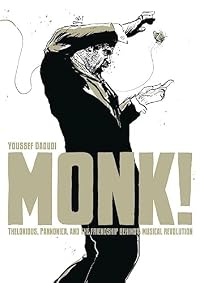
The art's attempt to show the music the characters in the book can hear is mostly floating circles and swirling lines and that fell flat for me. Honestly, it's probably because I couldn't help but compare it unfavorably to the dynamic art of Monk! Thelonious, Pannonica, and the Friendship Behind a Musical Revolution, another graphic novel about a musician whose music I don't listen to but the pages of which gave me a clear impression of how it must sound.
(Best of 2024 Project: I'm reading all the graphic novels that made it onto one or more of these lists:
• Washington Post 10 Best Graphic Novels of 2024
• Publishers Weekly 2024 Graphic Novel Critics Poll
• NPR's Books We Love 2024: Favorite Comics and Graphic Novels
This book made the NPR list.)
FOR REFERENCE:
Contents: Prologue -- I. Credo -- II. Silentium -- III. Tabula Rasa -- The Cast -- The Setting -- Afterword -- Thanks show less
I'd never heard Arvo Pärt's name before picking up this book and never knowingly heard his music, though it is apparently used in some film and television shows I've viewed, including Ted Lasso and Avengers: Age of Ultron. I listened to a few pieces on Spotify, and I guess they were all right, if a bit slow and repetitive. I didn't feel a need to add them to any playlist though, and he's certainly not gonna knock the more lively Mozart off the top of my favorite classical composers list.
That said, I don't think this book is intended for Pärt virgins like me. A lot of it is just show more him moping around trying to find his sound and ignoring his wife. Literally, he marries the first one after a one-panel introduction, she immediately disappears for half the book, and then a caption offhand tells us they've divorced. His second wife gets a bit more time on the page as she helps him cement his religion. The whole book is chock-full of characters who get little introduction or payoff, so I can only assume their names mean more to people from Estonia or avid fans of Pärt.
The art's attempt to show the music the characters in the book can hear is mostly floating circles and swirling lines and that fell flat for me. Honestly, it's probably because I couldn't help but compare it unfavorably to the dynamic art of Monk! Thelonious, Pannonica, and the Friendship Behind a Musical Revolution, another graphic novel about a musician whose music I don't listen to but the pages of which gave me a clear impression of how it must sound.
(Best of 2024 Project: I'm reading all the graphic novels that made it onto one or more of these lists:
• Washington Post 10 Best Graphic Novels of 2024
• Publishers Weekly 2024 Graphic Novel Critics Poll
• NPR's Books We Love 2024: Favorite Comics and Graphic Novels
This book made the NPR list.)
FOR REFERENCE:
Contents: Prologue -- I. Credo -- II. Silentium -- III. Tabula Rasa -- The Cast -- The Setting -- Afterword -- Thanks show less
The narrative is a bit choppy, but the art more than makes up for it; Sildre's use of line to evoke music is exquisite.
Received via NetGalley.
Received via NetGalley.
Between Two Sounds: A Graphic Novel about Arvo Pärt
A review of the Estonian language edition
Estonian composer Arvo Pärt’s music has become increasingly popular throughout the world since his forced emigration from then-Soviet Estonia in 1980. International performances and recordings became more frequent with the release of ECM Records’ Tabula Rasa (1984) to the point now in 2018 where there are over 500 professionally issued recordings with his works included. Online concert tracker Bachtrack has listed him as the world’s most performed living classical composer for the past seven years running (2011-2017) as of January 2018.
Pärt's music (and sometimes that of his imitators) has become ubiquitous in film and television, show more especially when a mood of yearning or of calm resignation is being evoked. Many will have heard his music through popular culture usage without perhaps knowing who the composer even was (e.g. in the music used in the teaser-trailer of Alfonso Cuarón’s film Gravity (2013) and then in the subsequent couch gag Gravity parody in the opening of TV's The Simpsons Season 25 Episode 4 “YOLO”, in a climactic scene of Avengers: Age of Ultron (2015) etc.).
Information about Arvo Pärt’s life prior to 1980 has been limited to snippets from print interviews or film documentaries and a few pages dedicated to biographical information in books such as Paul Hillier’s “Arvo Pärt” (1997), Enzo Restagno’s “Arvo Pärt in Conversation” (Italian original 2004) and Peter Bouteneff’s “Arvo Pärt: Out of Silence” (2015).
Joonas Sildre has expanded the knowledge of this previous time enormously with this non-fiction graphic novel that tells the story of Pärt’s life from his birth, through his youth and beginning love of music, his subsequent musical education and early years as a composer, his retreat while searching for his own musical voice, its realization in the birth of the tintinnabuli sound and the repression of his career under the Soviet system that eventually forced his emigration to the west.
The research that has gone into this book's production spanned a period of ten years and is evident in the detail of the various anecdotes of musical study, composition and performance that are recreated in this heartfelt tribute to a life dedicated to seeking a uniquely personal but also universal way of communication through musical sound.
Pärtophiles will sometimes recognize the recreation of various historical photographs, the wonderful characterizations of various associated musical performers and composers (a helpful List of Characters is provided in an Appendix) and will also be intrigued by what would have been limited knowledge in the past (e.g. the origin of the title of Pärt’s first tintinnabuli work Für Alina, the number of original tintinnabuli works (14, of which only 7 were actually performed publicly) etc.)
Joonas Sildre has done all of this in a clean and simple style utilizing only black, grey and white colours which are especially suited to this composer’s story (who has spoken often of his music’s parallels to white light). The use of black notes to symbolise Pärt’s early music, the discovery of the tintinnabuli sound symbolised by white notes and the harmonies between the melody lines and the tintinnabuli accompaniment in his compositions are all perfect visualisations. The adaptation of musical composition staves / bar-lines provide both ways to communicate types of sound e.g. jagged lines for atonal music, or as a symbolic path or road for a journey being travelled.
Further biographies of Pärt and his musical style are sure to be written, especially with the recent availability of his archives to researchers at the newly opened Arvo Pärt Centre in Estonia. None of them are likely to surpass the delightful entertaining value of this unique non-fiction graphic novel though.
Other Information and LInks
This is a review of the initial Estonian language edition of Kahe heli vahel. It is hoped that translated editions will be available in the future. Copies of the Estonian edition are available from the Arvo Pärt Centre online shop (see under the book's official url) and various Estonian online stores. If you order direct from the author at the book's Facebook page (payment via bank transfer) you will receive a personalized autographed copy with a bonus drawing of Arvo Pärt by artist/writer Joonas Sildre. show less
A review of the Estonian language edition
Estonian composer Arvo Pärt’s music has become increasingly popular throughout the world since his forced emigration from then-Soviet Estonia in 1980. International performances and recordings became more frequent with the release of ECM Records’ Tabula Rasa (1984) to the point now in 2018 where there are over 500 professionally issued recordings with his works included. Online concert tracker Bachtrack has listed him as the world’s most performed living classical composer for the past seven years running (2011-2017) as of January 2018.
Pärt's music (and sometimes that of his imitators) has become ubiquitous in film and television, show more especially when a mood of yearning or of calm resignation is being evoked. Many will have heard his music through popular culture usage without perhaps knowing who the composer even was (e.g. in the music used in the teaser-trailer of Alfonso Cuarón’s film Gravity (2013) and then in the subsequent couch gag Gravity parody in the opening of TV's The Simpsons Season 25 Episode 4 “YOLO”, in a climactic scene of Avengers: Age of Ultron (2015) etc.).
Information about Arvo Pärt’s life prior to 1980 has been limited to snippets from print interviews or film documentaries and a few pages dedicated to biographical information in books such as Paul Hillier’s “Arvo Pärt” (1997), Enzo Restagno’s “Arvo Pärt in Conversation” (Italian original 2004) and Peter Bouteneff’s “Arvo Pärt: Out of Silence” (2015).
Joonas Sildre has expanded the knowledge of this previous time enormously with this non-fiction graphic novel that tells the story of Pärt’s life from his birth, through his youth and beginning love of music, his subsequent musical education and early years as a composer, his retreat while searching for his own musical voice, its realization in the birth of the tintinnabuli sound and the repression of his career under the Soviet system that eventually forced his emigration to the west.
The research that has gone into this book's production spanned a period of ten years and is evident in the detail of the various anecdotes of musical study, composition and performance that are recreated in this heartfelt tribute to a life dedicated to seeking a uniquely personal but also universal way of communication through musical sound.
Pärtophiles will sometimes recognize the recreation of various historical photographs, the wonderful characterizations of various associated musical performers and composers (a helpful List of Characters is provided in an Appendix) and will also be intrigued by what would have been limited knowledge in the past (e.g. the origin of the title of Pärt’s first tintinnabuli work Für Alina, the number of original tintinnabuli works (14, of which only 7 were actually performed publicly) etc.)
Joonas Sildre has done all of this in a clean and simple style utilizing only black, grey and white colours which are especially suited to this composer’s story (who has spoken often of his music’s parallels to white light). The use of black notes to symbolise Pärt’s early music, the discovery of the tintinnabuli sound symbolised by white notes and the harmonies between the melody lines and the tintinnabuli accompaniment in his compositions are all perfect visualisations. The adaptation of musical composition staves / bar-lines provide both ways to communicate types of sound e.g. jagged lines for atonal music, or as a symbolic path or road for a journey being travelled.
Further biographies of Pärt and his musical style are sure to be written, especially with the recent availability of his archives to researchers at the newly opened Arvo Pärt Centre in Estonia. None of them are likely to surpass the delightful entertaining value of this unique non-fiction graphic novel though.
Other Information and LInks
This is a review of the initial Estonian language edition of Kahe heli vahel. It is hoped that translated editions will be available in the future. Copies of the Estonian edition are available from the Arvo Pärt Centre online shop (see under the book's official url) and various Estonian online stores. If you order direct from the author at the book's Facebook page (payment via bank transfer) you will receive a personalized autographed copy with a bonus drawing of Arvo Pärt by artist/writer Joonas Sildre. show less
Estonian Composer Arvo Pärt at 90
A review of the Plough Books hardcover (September 3, 2024) translated by [author:Adam Cullen|3518709] from the Estonian language original (2018).
See photograph at https://pbs.twimg.com/media/G0j3tiRXEAAJSvD?format=jpg&name=4096x4096
Arvo Pärt at 90, photograph by Brigid Püve at the Arvo Pärt Centre, Estonia.
I reviewed the original Estonian language edition back in 2018. The following is an updated review posted on the occasion of Arvo Pärt's 90th birthday on September 11, 2025. The translation by Adam Cullen for the English show more language edition is excellent. In recent years, Cullen has become the most widely published English language translator of Estonian in the world with several dozen books to his credit.
Estonian composer Arvo Pärt’s music has become increasingly popular throughout the world since his forced emigration from then-Soviet Estonia in 1980. International performances and recordings became more frequent with the release of ECM Records’ Tabula Rasa (1984) to the point now in 2025 where there are over 1,000 professionally issued recordings with his works included. Classical music performance tracker Bachtrack has consistently listed him as either the world's 1st or 2nd most performed living classical composer for the past 15 years (2011-2025) as of January 2025. The main competition for the #1 position has been John Williams, best known for his film scores which are often performed live by symphony orchestras at film screenings.
Pärt's music (and sometimes that of his imitators) has become ubiquitous in film and television, especially when a mood of yearning or of calm resignation is being evoked. Many will have heard his music through popular culture usage without perhaps knowing who the composer even was (e.g. in the music used in the teaser-trailer of Alfonso Cuarón’s film Gravity (2013) and then in the subsequent couch gag Gravity parody in the opening of TV's The Simpsons Season 25 Episode 4 “YOLO”, in a climactic scene of Avengers: Age of Ultron (2015), the finale episode of the fantasy comedy/drama TV series The Good Place (2016-2020), etc.).
Information about Arvo Pärt’s life prior to 1980 has been limited to snippets from print interviews or film documentaries and a few pages dedicated to biographical information in books such as Paul Hillier’s [book:Arvo Pärt|1285324] (1997), Enzo Restagno’s [book:Arvo Pärt in Conversation|14433708] (Italian original [book:Arvo Pärt allo specchio: conversazioni, saggi e testimonianze|10453071] 2004) and Peter Bouteneff’s [book:Arvo Pärt: Out of Silence|25144154] (2015).
Graphic novelist Joonas Sildre has expanded the knowledge of this previous time enormously with this non-fiction graphic novel that tells the story of Pärt’s life from his birth, through his youth and beginning love of music, his subsequent musical education and early years as a composer, his retreat while searching for his own musical voice, its realization in the birth of his unique composition tintinnabuli (little bell-like) style and the repression of his career under the Soviet system which eventually forced his emigration to the west.
The research that has gone into this book's production spanned a period of ten years and is evident in the detail of the various anecdotes of musical study, composition and performance that are recreated in this heartfelt tribute to a life dedicated to seeking a uniquely personal but also universal way of communication through musical sound.
Pärtophiles will sometimes recognize the recreation of various historical photographs, the wonderful characterizations of various associated musical performers and composers (a helpful List of Characters is provided in an Appendix) and will also be intrigued by what would have been limited knowledge in the past (e.g. the origin of the title of Pärt’s first tintinnabuli work Für Alina, the number of original tintinnabuli works (14, of which only 7 were actually performed publicly) etc.)
Joonas Sildre has done all of this in a clean and simple style utilizing only black, grey and white colours which are especially suited to this composer’s story (who has spoken often of his music’s parallels to white light). The use of black notes to symbolise Pärt’s early music, the discovery of the tintinnabuli sound symbolised by white notes and the harmonies between the melody lines and the tintinnabuli accompaniment in his compositions are all perfect visualisations. The adaptation of musical composition staves / bar-lines provide both ways to communicate types of sound e.g. jagged lines for atonal music, or as a symbolic path or road for a journey being travelled.
Further biographies of Pärt and his musical style are sure to be written, especially with the recent availability of his archives to researchers at the newly opened Arvo Pärt Centre in Estonia. None of them are likely to surpass the delightful entertaining value of this unique non-fiction graphic novel though.
Soundtrack
There are many thousands of online postings of Arvo Pärt's music from recordings and live performances which you can listen to or watch on YouTube here. On Spotify you can listen to a wide selection of the officially released recordings here.
Trivia and Links
Further information and resources about Arvo Pärt can be found at the website of the Arvo Pärt Centre in Estonia which has both Estonian and English language versions.
The primary recording label of Arvo Pärt's music since 1984 has been Manfred Eicher's ECM Records in Germany and the selection of related albums and books can be seen here
See album cover at https://ecmrecords.com/wp-content/uploads/2025/09/AP25Q-640x640.jpg
On the occasion of Arvo Pärt's 90th birthday, ECM Records producer Manfred Eicher made a digital only release of "Fratres - Through a Glass Darkly - Sequence by Manfred Eicher" containing a selection of 2025 remastered recordings from the ECM archives. It is currently available exclusively on iTunes here.
I maintain a Goodreads Listopia of books with fictional characters who love Arvo Pärt which you can see here. The range of authors is quite extensive and sometimes surprising. I would be delighted if anyone comes across Arvo Pärt's name and/or music in a fictional work and would let me know about it in order to add to the list. Thank you in advance 😊! show less
A review of the Plough Books hardcover (September 3, 2024) translated by [author:Adam Cullen|3518709] from the Estonian language original (2018).
I could compare my music to white light which contains all colours. Only a prism can divide the colours and make them appear; this prism could be the spirit of the listener.
See photograph at https://pbs.twimg.com/media/G0j3tiRXEAAJSvD?format=jpg&name=4096x4096
Arvo Pärt at 90, photograph by Brigid Püve at the Arvo Pärt Centre, Estonia.
I reviewed the original Estonian language edition back in 2018. The following is an updated review posted on the occasion of Arvo Pärt's 90th birthday on September 11, 2025. The translation by Adam Cullen for the English show more language edition is excellent. In recent years, Cullen has become the most widely published English language translator of Estonian in the world with several dozen books to his credit.
Estonian composer Arvo Pärt’s music has become increasingly popular throughout the world since his forced emigration from then-Soviet Estonia in 1980. International performances and recordings became more frequent with the release of ECM Records’ Tabula Rasa (1984) to the point now in 2025 where there are over 1,000 professionally issued recordings with his works included. Classical music performance tracker Bachtrack has consistently listed him as either the world's 1st or 2nd most performed living classical composer for the past 15 years (2011-2025) as of January 2025. The main competition for the #1 position has been John Williams, best known for his film scores which are often performed live by symphony orchestras at film screenings.
Pärt's music (and sometimes that of his imitators) has become ubiquitous in film and television, especially when a mood of yearning or of calm resignation is being evoked. Many will have heard his music through popular culture usage without perhaps knowing who the composer even was (e.g. in the music used in the teaser-trailer of Alfonso Cuarón’s film Gravity (2013) and then in the subsequent couch gag Gravity parody in the opening of TV's The Simpsons Season 25 Episode 4 “YOLO”, in a climactic scene of Avengers: Age of Ultron (2015), the finale episode of the fantasy comedy/drama TV series The Good Place (2016-2020), etc.).
Information about Arvo Pärt’s life prior to 1980 has been limited to snippets from print interviews or film documentaries and a few pages dedicated to biographical information in books such as Paul Hillier’s [book:Arvo Pärt|1285324] (1997), Enzo Restagno’s [book:Arvo Pärt in Conversation|14433708] (Italian original [book:Arvo Pärt allo specchio: conversazioni, saggi e testimonianze|10453071] 2004) and Peter Bouteneff’s [book:Arvo Pärt: Out of Silence|25144154] (2015).
Graphic novelist Joonas Sildre has expanded the knowledge of this previous time enormously with this non-fiction graphic novel that tells the story of Pärt’s life from his birth, through his youth and beginning love of music, his subsequent musical education and early years as a composer, his retreat while searching for his own musical voice, its realization in the birth of his unique composition tintinnabuli (little bell-like) style and the repression of his career under the Soviet system which eventually forced his emigration to the west.
The research that has gone into this book's production spanned a period of ten years and is evident in the detail of the various anecdotes of musical study, composition and performance that are recreated in this heartfelt tribute to a life dedicated to seeking a uniquely personal but also universal way of communication through musical sound.
Pärtophiles will sometimes recognize the recreation of various historical photographs, the wonderful characterizations of various associated musical performers and composers (a helpful List of Characters is provided in an Appendix) and will also be intrigued by what would have been limited knowledge in the past (e.g. the origin of the title of Pärt’s first tintinnabuli work Für Alina, the number of original tintinnabuli works (14, of which only 7 were actually performed publicly) etc.)
Joonas Sildre has done all of this in a clean and simple style utilizing only black, grey and white colours which are especially suited to this composer’s story (who has spoken often of his music’s parallels to white light). The use of black notes to symbolise Pärt’s early music, the discovery of the tintinnabuli sound symbolised by white notes and the harmonies between the melody lines and the tintinnabuli accompaniment in his compositions are all perfect visualisations. The adaptation of musical composition staves / bar-lines provide both ways to communicate types of sound e.g. jagged lines for atonal music, or as a symbolic path or road for a journey being travelled.
Further biographies of Pärt and his musical style are sure to be written, especially with the recent availability of his archives to researchers at the newly opened Arvo Pärt Centre in Estonia. None of them are likely to surpass the delightful entertaining value of this unique non-fiction graphic novel though.
Soundtrack
There are many thousands of online postings of Arvo Pärt's music from recordings and live performances which you can listen to or watch on YouTube here. On Spotify you can listen to a wide selection of the officially released recordings here.
Trivia and Links
Further information and resources about Arvo Pärt can be found at the website of the Arvo Pärt Centre in Estonia which has both Estonian and English language versions.
The primary recording label of Arvo Pärt's music since 1984 has been Manfred Eicher's ECM Records in Germany and the selection of related albums and books can be seen here
See album cover at https://ecmrecords.com/wp-content/uploads/2025/09/AP25Q-640x640.jpg
On the occasion of Arvo Pärt's 90th birthday, ECM Records producer Manfred Eicher made a digital only release of "Fratres - Through a Glass Darkly - Sequence by Manfred Eicher" containing a selection of 2025 remastered recordings from the ECM archives. It is currently available exclusively on iTunes here.
I maintain a Goodreads Listopia of books with fictional characters who love Arvo Pärt which you can see here. The range of authors is quite extensive and sometimes surprising. I would be delighted if anyone comes across Arvo Pärt's name and/or music in a fictional work and would let me know about it in order to add to the list. Thank you in advance 😊! show less
This was a nice way to get to know this wonderful musician. Very nice artwork. I found the print kind of small. Not a problem for me now, but I can see that it might be a problem for others. I enjoyed looking up the music as it was mentioned and listening as I read.
Members
- Recently Added By
Lists

Music
89 works; 1 member
Author Information
Some Editions
Awards and Honors
Awards
Distinctions
Common Knowledge
- Canonical title
- Between Two Sounds: Arvo Pärt's Journey to His Musical Language
- Original title
- Kahe heli vahel
- Original publication date
- 2018
- People/Characters
- Arvo Pärt; Linda Pärt (mother of Arvo Pä | rt); Maximilian Kuhlberg (stepfather of Arvo Pä | rt); Ille Martin; Ivalo Randalu; Heimar Ilves (show all 30); Heino Eller; Lydia Auster; Jaan Rääts; Hille Pärt (wife of Arvo Pä | rt, born Hille Aasmä | e); Eri Kas; Eugen Kapp; Valter Ojakäär; Heino Pars; Helju Tauk; Kuldar Sink; Toomes Velmet; Avo Hirvesoo; Neeme Järvi; Olaf Utt; Elbert Tuganov; Eleanora Pärt (wife of Arvo Pä | rt, born Eleanora Supina); Valeri Povedski; Andres Mustonen; Helle Mustonen; Alfred Schnittke; Alina; Tatjana Grindenko; Gidon Kremer; Toomas Siitan
- Important places
- Paide, Estland; Rakvere, Estland; Soviet Union; Tallinn, Estonia
- Dedication
- For Elina
- First words
- Thousands of pages of notes.
- Last words
- (Click to show. Warning: May contain spoilers.)Tintinnabuli music now sounds in concert halls, films, homes, and headphones all around the world. People love it.
- Original language
- Estonian
- Canonical DDC/MDS
- 741.59479
- Disambiguation notice
- Contents: Prologue -- I. Credo -- II. Silentium -- III. Tabula Rasa -- The Cast -- The Setting -- Afterword -- Thanks
Classifications
- Genres
- Music, Graphic Novels & Comics
- DDC/MDS
- 741.59479 — Arts & recreation Drawing & decorative arts Drawing Comic books, graphic novels, fotonovelas, cartoons, caricatures, comic strips History, geographic treatment, biography European Russian; Eastern European Lithuania, Latvia, Estonia
- LCC
- ML410 .S5613 — Music Literature on music Literature on music History and criticism Biography
- BISAC
Statistics
- Members
- 56
- Popularity
- 553,986
- Reviews
- 8
- Rating
- (3.94)
- Languages
- 6 — Czech, English, Estonian, Finnish, German, Swedish
- Media
- Paper, Ebook
- ISBNs
- 7
- ASINs
- 1