On This Page
Description
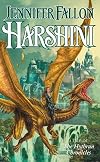
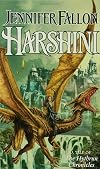
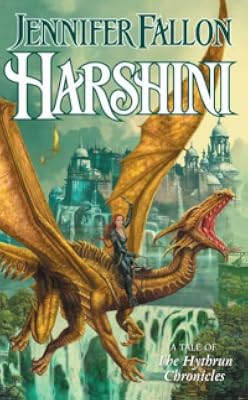
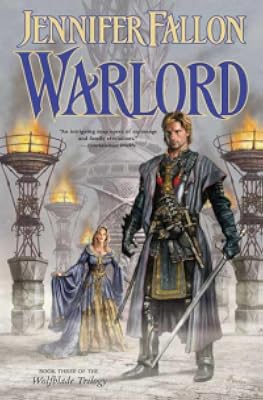
Rendered outlaws in the wilderness when the land of Medalon surrenders to foreign invaders, Damin Wolfblade and his army work to defeat a usurper, while Demon Child R'shiel struggles toward a final confrontation with the powerful Xaphista.Tags
Recommendations




Member Reviews
ORIGINALLY POSTED AT Fantasy Literature.
Up till now I've enjoyed Jennifer Fallon's Demon Child trilogy; her writing is competent (not beautiful, but competent), her characters intriguing, and the story was interesting enough. But I always had this feeling ... the same feeling I get when I watch my 2 year old daughter constructing a tower of blocks by stacking the big ones on top of the smaller ones ....
Sure enough, just like my daughter's tower, in Harshini, it all comes crashing down.
R'shiel finally embraces her role as Demon Child and we at last see her putting her riding leathers to good use -- she actually rides dragons in this novel (though it doesn't help much when taking a trip on a flying dragon takes just as long as it does in show more a rowboat). And that's probably the nicest thing I can say about R'shiel. She was never a particularly loveable heroine, but in Harshini, she's just a b*$. She is suddenly an outspoken expert in world politics and military tactics and the rulers of all the lands jump to obey her (even though she has no political or military experience and her grand plan in the last novel was a complete disaster). If they don't obey, she threatens to sic the gods on them. She's a bully, and it's hard to like people who act like that.
Then we still have the problem with the arbitrary activities of the gods, the demons, and the Harshini. Gods and demons are called on to help at random times in random ways. I was really ticked when a demon popped out of nowhere to protect Brak from a crossbow bolt and Brak informed us that "the demons live to protect the Harshini." Huh? If this is true, why haven't we seen them protecting Harshini before now? R'shiel is supposedly undertaking this very dangerous and important mission, so where were the demons when she was beaten, raped, captured, stabbed in the gut, etc.? And, if they exist to protect the Harshini, why are they running around trying to gather believers so they can become gods? And, about the Gods: okay, I can understand a goddess of love, but a god of thieves? And, if Xaphista (the "bad" god) can so easily coerce people to try to kill R'shiel, why does he only try it with one person (who fails)? Why not several people? He's bad, but he's not smart. And I won't even get into the hypocricy of the Harshini not being able to do anything that might indirectly cause death -- there are too many logisitcal problems with that.
The climax and ending of the novel was also random -- R'shiel's weird idea for killing the "bad" god was just plain silly. Most of what R'shiel does to solve problems is arbitrary and easy. She puts on a glamour to escape. She puts on a glamour to help other people escape. She threatens someone into doing what she wants them to. She gets crazy ideas that end up working. This randomness causes the reader to never be concerned that things won't work out in the end. I never felt any sort of fear or tension. Got a problem? Call a god or a demon, or do some random magic trick. Fantasy novel needs tension, and Fallon fails to deliver it in the last Demon Child novel.
But, she's a good author -- I will not hesitate to pick up another Fallon series someday.
Read more Jennifer Fallon book reviews at Fantasy Literature . show less
Up till now I've enjoyed Jennifer Fallon's Demon Child trilogy; her writing is competent (not beautiful, but competent), her characters intriguing, and the story was interesting enough. But I always had this feeling ... the same feeling I get when I watch my 2 year old daughter constructing a tower of blocks by stacking the big ones on top of the smaller ones ....
Sure enough, just like my daughter's tower, in Harshini, it all comes crashing down.
R'shiel finally embraces her role as Demon Child and we at last see her putting her riding leathers to good use -- she actually rides dragons in this novel (though it doesn't help much when taking a trip on a flying dragon takes just as long as it does in show more a rowboat). And that's probably the nicest thing I can say about R'shiel. She was never a particularly loveable heroine, but in Harshini, she's just a b*$. She is suddenly an outspoken expert in world politics and military tactics and the rulers of all the lands jump to obey her (even though she has no political or military experience and her grand plan in the last novel was a complete disaster). If they don't obey, she threatens to sic the gods on them. She's a bully, and it's hard to like people who act like that.
Then we still have the problem with the arbitrary activities of the gods, the demons, and the Harshini. Gods and demons are called on to help at random times in random ways. I was really ticked when a demon popped out of nowhere to protect Brak from a crossbow bolt and Brak informed us that "the demons live to protect the Harshini." Huh? If this is true, why haven't we seen them protecting Harshini before now? R'shiel is supposedly undertaking this very dangerous and important mission, so where were the demons when she was beaten, raped, captured, stabbed in the gut, etc.? And, if they exist to protect the Harshini, why are they running around trying to gather believers so they can become gods? And, about the Gods: okay, I can understand a goddess of love, but a god of thieves? And, if Xaphista (the "bad" god) can so easily coerce people to try to kill R'shiel, why does he only try it with one person (who fails)? Why not several people? He's bad, but he's not smart. And I won't even get into the hypocricy of the Harshini not being able to do anything that might indirectly cause death -- there are too many logisitcal problems with that.
The climax and ending of the novel was also random -- R'shiel's weird idea for killing the "bad" god was just plain silly. Most of what R'shiel does to solve problems is arbitrary and easy. She puts on a glamour to escape. She puts on a glamour to help other people escape. She threatens someone into doing what she wants them to. She gets crazy ideas that end up working. This randomness causes the reader to never be concerned that things won't work out in the end. I never felt any sort of fear or tension. Got a problem? Call a god or a demon, or do some random magic trick. Fantasy novel needs tension, and Fallon fails to deliver it in the last Demon Child novel.
But, she's a good author -- I will not hesitate to pick up another Fallon series someday.
Read more Jennifer Fallon book reviews at Fantasy Literature . show less
After a slow start in Medalon, Jennifer Fallon reached her stride in Treason Keep, and with Harshini really shows that she can write. I have some minor plot qualms, but I really enjoyed this book.
The major qualm is something that I read in other reviews before I began the book, and I found it to be true; the gods are used often as a deus ex machina. In the previous two books, R’shiel could call on them and they sometimes listened to her, but here they obeyed her without question and allowed her an easy out most of the time. While this is bad, I think it’s also understandable. The gods need R’shiel to do what they cannot, and naturally they want to convince her to continue, so helping her is the obvious choice for them. Moreover, show more their power is definitely shown in the previous two books, so it isn’t as though the reader is unaware that they can perform these feats. It is more a problem that R’shiel uses them when she should be using her own intelligence to get herself out of a bad situation. If she was relying on herself, the book would have been better, because the heroine would have been stronger.
That said, R’shiel has become practically omnipotent in this book, and she has grown quite a bit. She is the demon child, after all, destined to destroy a god, and we get the idea that she has finally settled into and accepted her destiny. I like that she doesn’t always have the answer, even though she thinks she does. She’s much more human that way.
My favorite character is undoubtedly still Adrina, who is surprisingly lovable and obstinate and clever. She really shows her intelligence and doesn’t rely on anything but her mind and her will, which in contrast to R’shiel is very striking.
This is the first book of the trilogy with writing that didn’t make me cringe in parts. Treason Keep was undoubtedly better than Medalon, but Harshini swept me along so that I didn’t even notice if there was any awkwardness, a sure sign that Ms. Fallon has improved.
Overall, I found the book very engaging, the characters endearing if sometimes a bit flat (Mandah in particular), and the resolution satisfying. Jennifer Fallon is not a master of fantasy yet and I wouldn’t list these books among my favorites, but I liked them. Some reviewers declare that she is very good at balancing political entanglements, but I would ask them to read George R.R. Martin or Jacqueline Carey before making such a grandiose statement. There are politics, but not nearly on the level those authors can muster up. I would call the Demon Child trilogy an entertaining read, but not one that is likely to stick in the mind for very long.
http://chikune.com/blog/?p=14 show less
The major qualm is something that I read in other reviews before I began the book, and I found it to be true; the gods are used often as a deus ex machina. In the previous two books, R’shiel could call on them and they sometimes listened to her, but here they obeyed her without question and allowed her an easy out most of the time. While this is bad, I think it’s also understandable. The gods need R’shiel to do what they cannot, and naturally they want to convince her to continue, so helping her is the obvious choice for them. Moreover, show more their power is definitely shown in the previous two books, so it isn’t as though the reader is unaware that they can perform these feats. It is more a problem that R’shiel uses them when she should be using her own intelligence to get herself out of a bad situation. If she was relying on herself, the book would have been better, because the heroine would have been stronger.
That said, R’shiel has become practically omnipotent in this book, and she has grown quite a bit. She is the demon child, after all, destined to destroy a god, and we get the idea that she has finally settled into and accepted her destiny. I like that she doesn’t always have the answer, even though she thinks she does. She’s much more human that way.
My favorite character is undoubtedly still Adrina, who is surprisingly lovable and obstinate and clever. She really shows her intelligence and doesn’t rely on anything but her mind and her will, which in contrast to R’shiel is very striking.
This is the first book of the trilogy with writing that didn’t make me cringe in parts. Treason Keep was undoubtedly better than Medalon, but Harshini swept me along so that I didn’t even notice if there was any awkwardness, a sure sign that Ms. Fallon has improved.
Overall, I found the book very engaging, the characters endearing if sometimes a bit flat (Mandah in particular), and the resolution satisfying. Jennifer Fallon is not a master of fantasy yet and I wouldn’t list these books among my favorites, but I liked them. Some reviewers declare that she is very good at balancing political entanglements, but I would ask them to read George R.R. Martin or Jacqueline Carey before making such a grandiose statement. There are politics, but not nearly on the level those authors can muster up. I would call the Demon Child trilogy an entertaining read, but not one that is likely to stick in the mind for very long.
http://chikune.com/blog/?p=14 show less
Jennifer Fallon concludes her Demon Child trilogy with Harshini.
The plot of this book is, for the most part, a direct continuation of the first two books. It brings together multiple loose ends from the previous books. Some of the previous plot lines are resolved: Loclon, who was a tormentor of R'shiel in the past books, gets his comeuppance; we finally get to see if R'shiel is successful in the goal she was created for; Tarja is freed from the geas tying him to R’shiel; and there are several political sub plots that are resolved (or at the very least furthered for future novels). R’shiel is still irritating – I could slap her at times; and I found Tarja’s total turn around a little unbelievable. Nonetheless, I was drawn into show more their adventures.
In fact, I got so caught up in this story that I've read all three in just under three weeks! show less
The plot of this book is, for the most part, a direct continuation of the first two books. It brings together multiple loose ends from the previous books. Some of the previous plot lines are resolved: Loclon, who was a tormentor of R'shiel in the past books, gets his comeuppance; we finally get to see if R'shiel is successful in the goal she was created for; Tarja is freed from the geas tying him to R’shiel; and there are several political sub plots that are resolved (or at the very least furthered for future novels). R’shiel is still irritating – I could slap her at times; and I found Tarja’s total turn around a little unbelievable. Nonetheless, I was drawn into show more their adventures.
In fact, I got so caught up in this story that I've read all three in just under three weeks! show less
It took me a while to get into this series, but by the end I must say I very much enjoyed it. The characters of R'shiel and Tarja didn't appeal to me too much, but once Damin and Adrina and the likes appeared I found it much more enjoyable.
Harshini summed up the series nicely and in a way I found enjoyable. It wasn't the 'they lived happily ever after' ending, but still a suitable one nonetheless.
A good series all round!
Harshini summed up the series nicely and in a way I found enjoyable. It wasn't the 'they lived happily ever after' ending, but still a suitable one nonetheless.
A good series all round!
Well, the series wrapped up with a sense of regret. I did enjoy these books, and went out immediately to buy up the next series. The Wolfblade series is in the same world. Somehow, I feel this is the end of the story for both series. *Sigh*
Good to get lost in, I really enjoyed this trilogy. The main characters were interesting, and there was less repetitive bores in the plot in the second two books. Really to see it come to an end. Let's just say, everyone gets their just desserts. So the ending is at least satisfying.
Off to read the next series I found by her, the Immortal Prince and Tide Lords. I must admit, Fallon does a great job creating a world you can get lost in. It's the point of fantasy fiction. Bravo!
Good to get lost in, I really enjoyed this trilogy. The main characters were interesting, and there was less repetitive bores in the plot in the second two books. Really to see it come to an end. Let's just say, everyone gets their just desserts. So the ending is at least satisfying.
Off to read the next series I found by her, the Immortal Prince and Tide Lords. I must admit, Fallon does a great job creating a world you can get lost in. It's the point of fantasy fiction. Bravo!
Plot: The book delivers the msising ending of Treason Keep, then proceeds to keep up the split plotlines, two to three for most of the time. The non-magical plotline falls flat in comparison, mostly because its central characters just aren't interesting enough. Plots tend to suffer from solutions that come too easily, and which didn't look this easy earlier in the trilogy. The ending brings relative closure - sequels aren't impossible, but all major matters are settled.
Characters: R'shiel's changes are debatable after Treason Keep - they can be believed, but aren't quite convincing. Brak is developed more into the mentor and tends to steal her scenes. The rest is solidly done, although not everybody is interesting enough to make for an show more intriguing point of view, let alone an entire plot thread.
Style: The political maneuvering makes for an interesting contrast to the magic. Prose is at times awkward, but it's not a major problem. Occasional situational humour and sarcasm.
Plus: As before, likable characters stand the risk of getting killed. Nobody's perfect. Surprisingly many characters are more than 30 years old, a rare sight in fantasy.
Minus: Get into a tight spot and a god will eliminate the problem. The whole rebel plot never got off the ground.
Summary: Satisfying conclusion to the trilogy, entertaining despite flaws. show less
Characters: R'shiel's changes are debatable after Treason Keep - they can be believed, but aren't quite convincing. Brak is developed more into the mentor and tends to steal her scenes. The rest is solidly done, although not everybody is interesting enough to make for an show more intriguing point of view, let alone an entire plot thread.
Style: The political maneuvering makes for an interesting contrast to the magic. Prose is at times awkward, but it's not a major problem. Occasional situational humour and sarcasm.
Plus: As before, likable characters stand the risk of getting killed. Nobody's perfect. Surprisingly many characters are more than 30 years old, a rare sight in fantasy.
Minus: Get into a tight spot and a god will eliminate the problem. The whole rebel plot never got off the ground.
Summary: Satisfying conclusion to the trilogy, entertaining despite flaws. show less
I was very bored with this book. I lost interest in the story by the end of book 2, but thought I would try continuing with the series anyway. I got about 3/4ths of the way through and gave up. It took me a little over a month. I think that's the longest I ever spent on one book. I kept putting it down. The beginning was very slow. I don't even remember what happened. When it finally started to pick up, around the middle, it was still pretty slow and also very predictable.
I ended up just skimming the chapters from Damin's and Adrina's point of view. Damin has always been boring to me, but in the second book Adrina used to be one of my favorite characters to read about. I know characters are supposed to evolve with the story and the show more author was just making her a better person, but it also made her boring. About half of this books plot centered around Adrina's and Damin's relationship. I'm not big on romance, so of course, this bored me too. Even when these two characters weren't in a scene we're still reading about them because whosoever point of view we're reading from (R'Shiel, Brak, etc...) is thinking about them and their relationship and getting all mushy brained. It was odd. I don't think most people give that much thought to other peoples relationships, especially if you hardly know the people, like Brak.
The situation between R'shiel and Tarja was predictable, and even though I haven't read that part, I know who they end up with. Tarja's new relationship was set up a long time ago. It was too obvious and I knew those two were going to end up together ever since the beginning of the first book. :/ I can't believe that was dragged out all the way to the end of the last book. Was this change in relationships supposed to be a surprise?
So yeah, the romance was too heavy for me. The first book started out full of politics, religion, social issues and culture and I feel like those themes have been replaced (mostly but not totally) by romance. show less
I ended up just skimming the chapters from Damin's and Adrina's point of view. Damin has always been boring to me, but in the second book Adrina used to be one of my favorite characters to read about. I know characters are supposed to evolve with the story and the show more author was just making her a better person, but it also made her boring. About half of this books plot centered around Adrina's and Damin's relationship. I'm not big on romance, so of course, this bored me too. Even when these two characters weren't in a scene we're still reading about them because whosoever point of view we're reading from (R'Shiel, Brak, etc...) is thinking about them and their relationship and getting all mushy brained. It was odd. I don't think most people give that much thought to other peoples relationships, especially if you hardly know the people, like Brak.
So yeah, the romance was too heavy for me. The first book started out full of politics, religion, social issues and culture and I feel like those themes have been replaced (mostly but not totally) by romance. show less
Members
- Recently Added By
Lists

mom
729 works; 1 member
Author Information

36+ Works 7,715 Members

Jennifer Fallon is a LibraryThing Author, an author who lists their personal library on LibraryThing.
Some Editions
Series

Belongs to Publisher Series
Work Relationships
Common Knowledge
- Canonical title
- Harshini
- Original title
- Harshini
- Original publication date
- 2005-08 (First UK Publication) (First UK Publication)
- People/Characters
- R'shiel; Brak; Damin Wolfblade; Tarja; Xaphista
- Important places
- Medalon; Hythria; Fardohnya; Sunrise Mountains
- Dedication
- For Harshini Bhoola
and as always, Adele Robinson
Classifications
Statistics
- Members
- 709
- Popularity
- 40,123
- Reviews
- 12
- Rating
- (3.86)
- Languages
- English, French, German
- Media
- Paper, Audiobook, Ebook
- ISBNs
- 11
- ASINs
- 6