On This Page
Description
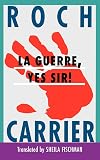
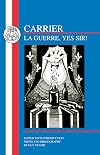
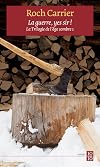
Vital, funny, moving and assured, La Guerre, Yes Sir! is a surrealist fable set in rural Quebec during WWI and one of the major achievements in Canadian fiction. Canadian Literature greeted its first appearance in these terms, it is the French-Canadian writer Roch Carrier who comes closest to the significance, power and artistry of Faulkner at his best . . . . He might well be able to do for French Canada what Faulkner did for the American South.Tags
Recommendations






















Member Reviews
The Second World War comes home to a village in rural Quebec when the village's first casualty is repatriated, accompanied by an Anglo honour guard. Here follows the obligatory wake, a comic romp through sex, death, and language politics, all in the overbearing presence of the Catholic church. The weight of history, the rural setting, and all that snow: it's the stereotypical stuff of Canlit, but La Guerre, Yes Sir! is short, and riotously funny.
Both swearing and prayers (which in a sense, amount to the same thing here) are left untranslated; the mangled prayers of the villagers are, unfortunately, an untranslateable joke. The villagers don't get a free ride here in favour of mocking the maudits Anglais; Carrier mocks the ignorance and show more religiosity of rural Quebec, circa 1944, much more savagely than he attacks the Anglos. In keeping with the attitudes of its day, the novel has no sympathy for the rural, the hick, or the traditional. In this sense it recalls Joyce in A Portrait of the Artist as a Young Man; both the mangled prayers and a clock ticking "always, never" over a sinner allude to Joyce. The language, however, is straightforward, and this book is an easy read.
Highly recommended.
(Review applies to the English translation.) show less
Both swearing and prayers (which in a sense, amount to the same thing here) are left untranslated; the mangled prayers of the villagers are, unfortunately, an untranslateable joke. The villagers don't get a free ride here in favour of mocking the maudits Anglais; Carrier mocks the ignorance and show more religiosity of rural Quebec, circa 1944, much more savagely than he attacks the Anglos. In keeping with the attitudes of its day, the novel has no sympathy for the rural, the hick, or the traditional. In this sense it recalls Joyce in A Portrait of the Artist as a Young Man; both the mangled prayers and a clock ticking "always, never" over a sinner allude to Joyce. The language, however, is straightforward, and this book is an easy read.
Highly recommended.
(Review applies to the English translation.) show less
Ratings
Members
- Recently Added By
Lists

The Best of Canadian Literature
235 works; 33 members

University literature
145 works; 5 members

Literary Works Read in College
316 works; 15 members
Author Information

50+ Works 1,145 Members
Roch Carrier was born May 13, 1937 in Sainte-Justine, Quebec. He went to boarding school in neighbouring Saint-Georges de Beauce. He earned a B.A. in 1957 from Université Saint-Louis in Edmundston, New Brunswick, a Masters in 1964 from the Université de Montréal, and a Doctorat ès Lettres in 1970, from the Université de Paris. In 1964, he show more joined the French Department of the Collège militaire royal de Saint-Jean, teaching literature until 1970. IN 1968, at the age of 31, he published his hugely successful novel, La Guerre, Yes Sir!. Since then he has written many other novels, short stories, plays, film and television scripts, essays, travel books, and poetry. He continued his teaching career at the Université de Montréal from 1970 to 1971. In 1971, he was appointed secretary general of the Théâtre du Nouveau Monde. From 1973 to 1980, he was the director of the French Department and coordinator of the undergraduate program in Canadian Studies at the Collège militaire royal de Saint-Jean. He stayed on and was appointed to various positions, becoming the principal in 1990. In 1991, Carrier was awarded the Stephen Leacock Award for Humour for Prayers of a Very Wise Child. Carrier is also a Fellow of the Royal Society of Canada, an Officer of the Order of Canada, and has honorary doctorates from the Université de Moncton, York University, Memorial University and the Royal Military College of Canada. From 1994 to 1997, he was the director of the Canada Council for the Arts. In October of 1999, Carrier became the National Librarian of Canada. (Bowker Author Biography) show less
Series

Common Knowledge
- Important places
- Québec, Canada
- Important events
- World War II
Classifications
Statistics
- Members
- 165
- Popularity
- 199,199
- Reviews
- 1
- Rating
- (3.97)
- Languages
- Danish, English, French
- Media
- Paper, Ebook
- ISBNs
- 15
- ASINs
- 5