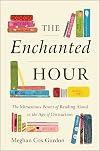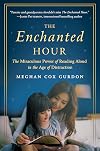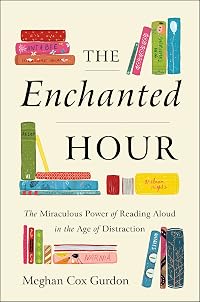
The Enchanted Hour: The Miraculous Power of Reading Aloud in the Age of Distraction
by Meghan Cox Gurdon
On This Page
Description
A Wall Street Journal writer's conversation-changing look at how reading aloud makes adults and children smarter, happier, healthier, more successful and more closely attached, even as technology pulls in the other direction. A miraculous alchemy occurs when one person reads to another, transforming the simple stuff of a book, a voice, and a bit of time into complex and powerful fuel for the heart, brain, and imagination. Grounded in the latest neuroscience and behavioral research, and show more drawing widely from literature, The Enchanted Hour explains the dazzling cognitive and social-emotional benefits that await children, whatever their class, nationality or family background. But it's not just about bedtime stories for little kids: Reading aloud consoles, uplifts and invigorates at every age, deepening the intellectual lives and emotional well-being of teenagers and adults, too. Meghan Cox Gurdon argues that this ancient practice is a fast-working antidote to the fractured attention spans, atomized families and unfulfilling ephemera of the tech era, helping to replenish what our devices are leaching away. For everyone, reading aloud engages the mind in complex narratives; for children, it's an irreplaceable gift that builds vocabulary, fosters imagination, and kindles a lifelong appreciation of language, stories and pictures. Bringing together the latest scientific research, practical tips, and reading recommendations, The Enchanted Hour will both charm and galvanize, inspiring readers to share this invaluable, life-altering tradition with the people they love most. show lessTags
Recommendations


Member Reviews
I anticipate contention, since the author has already annoyed me on page xi.
Show of hands: who else reads this and thinks "wouldn't the word reader be more simple, more clear, and less likely to piss off someone who regularly reads aloud but isn't on this list like, say, a librarian?" Yes, it is simpler, so is calling all animals "cat", but it doesn't actually make sense, does it?
Liar. There is no way in hell that the author uses the pronoun "he" to describe any theoretical child. "I'm pregnant; I hope he's another girl" is not traditional usage. You know what is traditional? Singular "they" for a person of unknown or unspecified gender has appeared in print since at least 1200: like "he" and "she" it goes back to Old English. Ease of reading? If you find "she" significantly harder to read than "he" I really don't think you're qualified enough to pontificate on this subject.
So that's it: author demonstrated insufficient language skills for the task at the second paragraph. There isn't going to be anything here I can trust. This is a privileged white woman telling parents that they are bad people if they do not read aloud to their children the way she says they should, and you know she cares because she actually gave some books to one family once to get them started. [Full disclosure: I am also a privileged white woman, although not as privileged, and I give most of my used books to the library to keep or sell and turn into even more library books]
Skip this book. Your local librarian will help you with any kind of reading that interests you at any level, often in multiple languages and formats, and will be able to offer helpful suggestions on specific local issues. They are wonderful people who actually want to improve the lives of others and they are a fabulous resource to everything in your community, because if they don't know already, they know how to find out.
Library copy, of course. show less
"For simplicity, I often use the word parent to describe any given adult who reads to a child and trust that all the aunts, uncles, cousins, brothers, sisters, teachers, babysitters, and lovely next-door neighbors who read to children will understand that of course I mean them, too.
Show of hands: who else reads this and thinks "wouldn't the word reader be more simple, more clear, and less likely to piss off someone who regularly reads aloud but isn't on this list like, say, a librarian?" Yes, it is simpler, so is calling all animals "cat", but it doesn't actually make sense, does it?
Similarly, in the spirit of tradition (not to mention ease of reading) I useshow more
the pronoun he to describe any theoretical child."
Liar. There is no way in hell that the author uses the pronoun "he" to describe any theoretical child. "I'm pregnant; I hope he's another girl" is not traditional usage. You know what is traditional? Singular "they" for a person of unknown or unspecified gender has appeared in print since at least 1200: like "he" and "she" it goes back to Old English. Ease of reading? If you find "she" significantly harder to read than "he" I really don't think you're qualified enough to pontificate on this subject.
So that's it: author demonstrated insufficient language skills for the task at the second paragraph. There isn't going to be anything here I can trust. This is a privileged white woman telling parents that they are bad people if they do not read aloud to their children the way she says they should, and you know she cares because she actually gave some books to one family once to get them started. [Full disclosure: I am also a privileged white woman, although not as privileged, and I give most of my used books to the library to keep or sell and turn into even more library books]
Skip this book. Your local librarian will help you with any kind of reading that interests you at any level, often in multiple languages and formats, and will be able to offer helpful suggestions on specific local issues. They are wonderful people who actually want to improve the lives of others and they are a fabulous resource to everything in your community, because if they don't know already, they know how to find out.
Library copy, of course. show less
This was a very enjoyable read, that is, I had a good time reading it and was entertained and pulled along throughout. And while I think Gurdon does a good job laying out an argument for reading aloud (especially to children, though to anyone, really), her discussion often felt unnuanced, both in its seeming complete disavowal of screens (from reading Enchanted Hour you'd be forgiven feeling that Gurdon has never fallen in love with a movie or TV show or ever had an experience of sharing in an imaginative world that came from *anywhere else* than a book) and in the way it ignores real barriers to reading aloud (is she talking only to college-educated, middle-class, (white?) folks here? it seems like maybe she is. which, eh.). I also show more found myself wondering repeatedly if she had investigated whether reading aloud continued to work its magic with people who previously didn't like reading. Do parents who don't read themselves enjoy reading to their kids? Do their kids enjoy the read alouds? Do adults who don't like to read enjoy being read aloud to? So many questions unanswered. A nice read, and it makes it pretty clear that reading aloud is good for development and familial bonding, but there's so much work the book could have done that it doesn't that it's hard to recommend. show less
This book champions reading aloud to children and teens. The author cites research as she makes her arguments for its benefits. She briefly touches on benefits for the adult reading (or listening). Technological threats to reading aloud earns a place as a major theme. The book is perhaps too academic in tone for most adults and not academic enough for the academic market. The use of hidden end notes limits its academic usefulness even more. An appendix lists read-alouds, but its lack of annotation limits its usefulness to parents unfamiliar with the books. Still the book presents interesting information, but perhaps not in an engaging manner.
It could be me. It could be the German translation. I can't force myself to read any more of this. Horribly boring.
I'm not sure how useful the Brain scans are. Lying still in a scanner with something playing in earphones and watching pictures on a screen is a totally different situation from normal being read to. In fact it is much more like using a tablet.
Ancient Greeks reciting the Iliad is impressive, but has very little to do with reading a book to a child today.
Perhaps this gets better, but I won't be finding that out.
I'm not sure how useful the Brain scans are. Lying still in a scanner with something playing in earphones and watching pictures on a screen is a totally different situation from normal being read to. In fact it is much more like using a tablet.
Ancient Greeks reciting the Iliad is impressive, but has very little to do with reading a book to a child today.
Perhaps this gets better, but I won't be finding that out.
Excellent read for anyone! Hopefully it will inspire everyone to share reading aloud more at all ages. While much of the information is not new to educators, pediatricians, & some parents, it is still very relevant, especially as it relates to children using technology, versus being read to by an attentive reader. I especially enjoyed the vignettes of adults reading aloud to other adults, teachers reading to teenagers, and the amazing research about the value of reading to preemies!
Ratings
Members
- Recently Added By
Lists

Five in a Row
174 works; 2 members

Books Read in 2025
4,128 works; 98 members
Author Information
3 Works 346 Members
Meghan Cox Gurdon is a book critic, essayist, and former foreign correspondent who has been the Wall Street Journal's children's book reviewer since 2005. Her work has appeared widely in publications such as the Washington Examiner, Daily Telegraph, Christian Science Monitor, Washington Post, San Francisco Chronicle, and National Review. A show more graduate of Bowdoin College, she lives in Bethesda, Maryland, with her husband, Hugo Gurdon, and their five children. show less
Classifications
- Genre
- Nonfiction
- DDC/MDS
- 649.58 — Applied science & technology Home economics & family management Child rearing; home care of people with illnesses and disabilities by family and friends Education, Games, Reading, and Play Literacy
- LCC
- LB1573.5 .G87 — Education Theory and practice of education Theory and practice of education Elementary or public school education
- BISAC
Statistics
- Members
- 343
- Popularity
- 92,470
- Reviews
- 5
- Rating
- (3.48)
- Languages
- English, German
- Media
- Paper, Audiobook, Ebook
- ISBNs
- 12
- ASINs
- 3