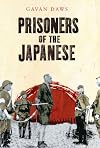
Prisoners of the Japanese: Pows of World War II in the Pacific
by Gavan Daws
On This Page
Description
In the first disastrous months following Pearl Harbor, the Japanese Army took over 140,000 Allied prisoners. More than one in four of these POWs died at the hands of their captors. They were denied medical treatment. They were starved. When the International Red Cross sent food and medicine, the Japanese looted the shipments. They sacrificed prisoners in medical experiments. They watched them die by the tens of thousands from diseases of malnutrition like beriberi, pellagra, and scurvy, and show more from the epidemic diseases of the tropics: malaria, dysentery, tropical ulcers, and cholera. Those who survived were slated to be worked to death. If the war had lasted another twelve months, there would not have been a POW left alive. Prisoners of the Japanese raises disturbing questions as well about the value placed on the lives of Allied POWs by their own supreme command. Of all military prisoners who died in the Japanese zone of captivity, more than one in four were killed by "friendly fire" ordered by General Douglas MacArthur. It is impossible not to be seized by the horror of the POWs' ordeal. But while the inhuman cruelty of the Japanese prison camps is documented exhaustively - beyond the shadow of a doubt - the book, at its core, tells a heartening story of ordinary men, trapped in impossible circumstances, not only struggling to survive but stubbornly, triumphantly asserting their humanity. show lessTags
Recommendations




































Member Reviews
Prisoners of the Japanese, by Gavan Daws, is an in depth look at the experiences of mostly American POWs held captive by the Japanese during World War 2. It focuses on the specific stories of several individuals including the incidents that caused their captures, and, of course, the terrible trials and ordeals suffered during over three years of captivity.
In graphic detail it describes the tortures, neglect, murders, malnutrition, experiments, and beatings that occurred in camps, hell ships, marches. This book delivered much more than I expected and touches on subjects not covered in most histories of World War 2. For example, on September 12, 1944, far more American POWs were killed by when the Japanese Hell Ships the "Rakuyo Maru" show more and the "Kachidoki Maru," (unmarked tankers which also contained POWs) were torpedoed by American submarines than were killed on the Bataan Death March. "Of all POWs who died in the Pacific war, one in every three was killed on the water by friendly fire." (p.297).
While focusing on the Allied side, it also gets into the Japanese psyche and tries to describe how they could be so cold-hearted to captives, apparently clainimg that their code of bushido did not apply to POWs and captive civilian populations.
This is a must read add to any World War 2 library, but it isn't pleasant reading. It sheds a light on human behavior, even our own, and it left me with a knot in my stomach more than once. show less
In graphic detail it describes the tortures, neglect, murders, malnutrition, experiments, and beatings that occurred in camps, hell ships, marches. This book delivered much more than I expected and touches on subjects not covered in most histories of World War 2. For example, on September 12, 1944, far more American POWs were killed by when the Japanese Hell Ships the "Rakuyo Maru" show more and the "Kachidoki Maru," (unmarked tankers which also contained POWs) were torpedoed by American submarines than were killed on the Bataan Death March. "Of all POWs who died in the Pacific war, one in every three was killed on the water by friendly fire." (p.297).
While focusing on the Allied side, it also gets into the Japanese psyche and tries to describe how they could be so cold-hearted to captives, apparently clainimg that their code of bushido did not apply to POWs and captive civilian populations.
This is a must read add to any World War 2 library, but it isn't pleasant reading. It sheds a light on human behavior, even our own, and it left me with a knot in my stomach more than once. show less
Gavan Daws combined ten years of documentary research and hundreds of interviews with surviving POWs to write this explosive, first-and-only account of the experiences of the Allied POWs of World War II. The Japanese Army took over 140,000 Allied prisoners, and one in four died the hands of their captors. Here Daws reveals the survivors' haunting experiences, from the atrocities perpetrated during the Bataan Death March and the building of the Burma-Siam railroad to descriptions of disease, torture, and execution.
KIRKUS REVIEW
A wide-angle saga that adds a chapter long missing from official and traditional histories of WW II's Pacific theater: the story of the torments endured by Allied military personnel captured when Japanese forces show more overran Greater East Asia. Drawing on interviews with survivors of the Japanese prison camps as well as archival sources, Daws (A Dream of Islands, 1980, etc.) effectively combines the experiences of individual American, Australian, British, and Dutch POWs with a panoramic perspective. He probes why the death rate among the more than 140,000 men interned by the Japanese reached 27% (as against but 4% for military prisoners of the Germans). By the author's painstakingly documented account, the causes were legion: inhuman living conditions, starvation diets, an almost complete lack of medical care, constant beatings by brutish guards whose (heartily reciprocated) racial hatred of whites often led to summary executions, forced labor on construction projects like the Burma- Siam railroad, and workaday atrocities. Thousands more POWs perished when the ships transporting them from the fetid jungles of conquered lands to Japan were blown out of the water by Allied aircraft or submarines. show less
KIRKUS REVIEW
A wide-angle saga that adds a chapter long missing from official and traditional histories of WW II's Pacific theater: the story of the torments endured by Allied military personnel captured when Japanese forces show more overran Greater East Asia. Drawing on interviews with survivors of the Japanese prison camps as well as archival sources, Daws (A Dream of Islands, 1980, etc.) effectively combines the experiences of individual American, Australian, British, and Dutch POWs with a panoramic perspective. He probes why the death rate among the more than 140,000 men interned by the Japanese reached 27% (as against but 4% for military prisoners of the Germans). By the author's painstakingly documented account, the causes were legion: inhuman living conditions, starvation diets, an almost complete lack of medical care, constant beatings by brutish guards whose (heartily reciprocated) racial hatred of whites often led to summary executions, forced labor on construction projects like the Burma- Siam railroad, and workaday atrocities. Thousands more POWs perished when the ships transporting them from the fetid jungles of conquered lands to Japan were blown out of the water by Allied aircraft or submarines. show less
Ratings
Members
- Recently Added By
Author Information

17+ Works 1,188 Members
Common Knowledge
- Important places
- Pacific Ocean
- Important events
- World War II (1939 | 1945); World War II, Pacific Theater (1941-12-07 | 1945-09-02)
- Original language
- English
Classifications
Statistics
- Members
- 237
- Popularity
- 135,559
- Reviews
- 2
- Rating
- (4.11)
- Languages
- Czech, Dutch, English
- Media
- Paper
- ISBNs
- 10
- ASINs
- 3