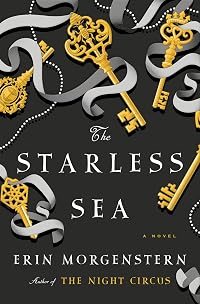
The Starless Sea
by Erin Morgenstern
On This Page
Description
"Zachary Ezra Rawlins is a graduate student in Vermont when he discovers a rare book hidden in the stacks. As he turns the pages, entranced by tales of lovelorn prisoners, key collectors, and nameless acolytes, he reads something strange: a story from his own childhood. Bewildered by this inexplicable book and desperate to make sense of how his own life came to be recorded, Zachary uncovers a series of clues--a bee, a key, and a sword--that lead him to a masquerade party in New York, to a show more secret club, and through a doorway to a subterranean library, hidden far below the surface of the earth. What Zachary finds in this curious place is more than just a buried home for books and their guardians--it is a place of lost cities and seas of honey, lovers who pass notes under doors and across time, and of stories whispered by the dead. Zachary learns of those who have sacrificed much to protect this realm, relinquishing their sight and their tongues to preserve this archive, and also those who are intent on its destruction. Together with Mirabel, a fierce, pink-haired protector of the place, and Dorian, a beautiful barefoot man with shifting alliances, Zachary travels the twisting tunnels, darkened stairwells, crowded ballrooms, and sweetly-soaked shores of this magical world, discovering his purpose--in both the rare book and in his own life"-- show lessTags
Recommendations



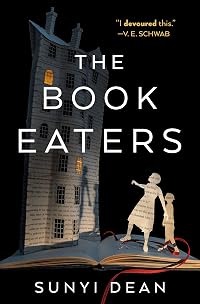
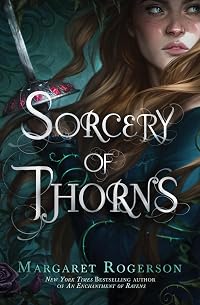
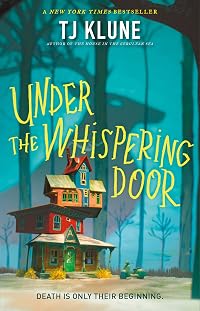
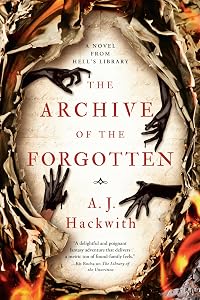


Member Recommendations


Corinne-pixel Strange and enchanting with an emphasis on the power of stories
Member Reviews
How do you describe a book like this? I mean, I could always just explain the plot but that would defeat the purpose of others reading the book and experiencing it for themselves. It would also be very long and convoluted.
This book isn't for everyone. It's not linear in fashion, but everything weaves together towards the end. Many come away confused because Morgenstern doesn't attempt to explain many aspects or the world. The Guardian had described it as looking at a Renaissance painting. That's the beauty of it, to not entirely know if you're interpretation is right or wrong.
I would describe this book very aptly as honey. It's sweet, but not the artificial kind. It dissolves easily in your mouth, but leaves just enough behind to smack show more your lips and think, *wow that was really good* and the aftertaste sticks with you for a while, even while you consume other things. You may marvel at how hard it the bees worked to create the honey, and then wonder what exactly makes honey so delicious. Maybe you even google it a bunch of times to learn more, yet come away still confused because at the end of the day you're not a bee. But that's okay. Put it in tea, coffee, a cake, on bread or over top some fruit. Sometimes it's about enjoying the honey and other times it's about thinking about the honey.
Did I lose you? Or is your curiosity peaked just enough? Perhaps you should read this book. show less
This book isn't for everyone. It's not linear in fashion, but everything weaves together towards the end. Many come away confused because Morgenstern doesn't attempt to explain many aspects or the world. The Guardian had described it as looking at a Renaissance painting. That's the beauty of it, to not entirely know if you're interpretation is right or wrong.
I would describe this book very aptly as honey. It's sweet, but not the artificial kind. It dissolves easily in your mouth, but leaves just enough behind to smack show more your lips and think, *wow that was really good* and the aftertaste sticks with you for a while, even while you consume other things. You may marvel at how hard it the bees worked to create the honey, and then wonder what exactly makes honey so delicious. Maybe you even google it a bunch of times to learn more, yet come away still confused because at the end of the day you're not a bee. But that's okay. Put it in tea, coffee, a cake, on bread or over top some fruit. Sometimes it's about enjoying the honey and other times it's about thinking about the honey.
Did I lose you? Or is your curiosity peaked just enough? Perhaps you should read this book. show less
I always say that I don't really like fantasy but some authors are able to create a world that draws me in. I was charmed by Morgenstern's The Night Circus when I read it so I thought I'd take a chance on The Starless Sea. I'm so glad I did. I'm equally glad that I listened to the audiobook as the full cast of narrators did an excellent job of embodying the characters. (Narrators make such a difference to the success of an audiobook.)
Zachary Ezra Rawlins (always referred to by his full name) is a graduate student on a campus in the northeastern part of the US. His thesis involves reading many other books and while still on his Christmas break he finds a book called The Starless Sea in the library that the librarian can't find in their show more catalogue. Zachary takes it back to his room and reads the stories, one of which mirrors an experience he had as a child. He came upon a door in an alleyway that had just appeared there but, although he is intrigued, he decides not to open it. Now, as an adult he wonders what would have happened if he had as other stories in the book tell of a world hidden beneath the surface of Earth that is perhaps key to knowing what is going to happen in real life. Zachary follows clues to a party in a hotel in New York City where he meets a woman who perhaps comes from that hidden world. Although she disappears he finds more clues that lead him to a door which takes him to the Starless Sea. As he progresses through the underground world he meets others and uncovers more information but his way is thwarted by a mysterious woman who seems to want the underground world destroyed. It's a classic tale of good versus evil but nobody is entirely good or entirely evil. And, sooner or later, people have to leave the fantasy behind and emerge into the real world. But the journey is magical and for anyone who loves reading and books and libraries this journey is a dream come true.
This is also a romance for a number of characters meet their one true love while travelling through the underground world. Some of these loves are outside of the traditional male/female partnerships and that's lovely. show less
Zachary Ezra Rawlins (always referred to by his full name) is a graduate student on a campus in the northeastern part of the US. His thesis involves reading many other books and while still on his Christmas break he finds a book called The Starless Sea in the library that the librarian can't find in their show more catalogue. Zachary takes it back to his room and reads the stories, one of which mirrors an experience he had as a child. He came upon a door in an alleyway that had just appeared there but, although he is intrigued, he decides not to open it. Now, as an adult he wonders what would have happened if he had as other stories in the book tell of a world hidden beneath the surface of Earth that is perhaps key to knowing what is going to happen in real life. Zachary follows clues to a party in a hotel in New York City where he meets a woman who perhaps comes from that hidden world. Although she disappears he finds more clues that lead him to a door which takes him to the Starless Sea. As he progresses through the underground world he meets others and uncovers more information but his way is thwarted by a mysterious woman who seems to want the underground world destroyed. It's a classic tale of good versus evil but nobody is entirely good or entirely evil. And, sooner or later, people have to leave the fantasy behind and emerge into the real world. But the journey is magical and for anyone who loves reading and books and libraries this journey is a dream come true.
This is also a romance for a number of characters meet their one true love while travelling through the underground world. Some of these loves are outside of the traditional male/female partnerships and that's lovely. show less
Exquisite.
I think that this book is an excellent book for people who love books. An astoundingly well-told tale (as might be expected from the author of The Night Circus), it centers on Zachary, a graduate student who finds a book of fairy tales that also tells the story of his childhood. After this discovery, he eventually finds his way into the world of the Starless Sea, a land literally filled with books and in which stories have tremendous power. The world is vibrant, rich, and tremendously well-crafted, described as vividly as I could have hoped by Morgenstern.
Just as in The Night Circus (it's hard to write a review of this book without referencing The Night Circus), every member of the cast of characters is multifaceted and show more lifelike, and I truly don't think that any are irredeemable. The story is by turns sad and exalting and really, entirely beautiful. And just as in The Night Circus, it unfolds slowly and intricately to reveal different strands of plots and characters that fit together marvelously. I think that this would be a good book to return to multiple times, to appreciate the full manner in which the different pieces of the story fit together. The overall structure of this book, I would say, is also generally reminiscent of the other one, with a lot of descriptions of the world near the beginning, and a plot that accelerates rapidly near the end. But I do think that, throughout this one, there's a generally stronger sense of plot overall, especially because of the fairy-tale elements.
If I were to offer any criticism, it would be that the "real-world" elements of this story are much more tightly bound to the present day than those of The Night Circus, which could take away a bit from the timelessness that The Night Circus seemed to me to have--I'm not sure, for instance, that I needed to know that Zachary owned a PS4 or in what year he was born. But that's a very minor complaint.
I was a little bit doubtful about whether Erin Morgenstern's second book could live up to her first one, but I think that it absolutely did. show less
I think that this book is an excellent book for people who love books. An astoundingly well-told tale (as might be expected from the author of The Night Circus), it centers on Zachary, a graduate student who finds a book of fairy tales that also tells the story of his childhood. After this discovery, he eventually finds his way into the world of the Starless Sea, a land literally filled with books and in which stories have tremendous power. The world is vibrant, rich, and tremendously well-crafted, described as vividly as I could have hoped by Morgenstern.
Just as in The Night Circus (it's hard to write a review of this book without referencing The Night Circus), every member of the cast of characters is multifaceted and show more lifelike, and I truly don't think that any are irredeemable. The story is by turns sad and exalting and really, entirely beautiful. And just as in The Night Circus, it unfolds slowly and intricately to reveal different strands of plots and characters that fit together marvelously. I think that this would be a good book to return to multiple times, to appreciate the full manner in which the different pieces of the story fit together. The overall structure of this book, I would say, is also generally reminiscent of the other one, with a lot of descriptions of the world near the beginning, and a plot that accelerates rapidly near the end. But I do think that, throughout this one, there's a generally stronger sense of plot overall, especially because of the fairy-tale elements.
If I were to offer any criticism, it would be that the "real-world" elements of this story are much more tightly bound to the present day than those of The Night Circus, which could take away a bit from the timelessness that The Night Circus seemed to me to have--I'm not sure, for instance, that I needed to know that Zachary owned a PS4 or in what year he was born. But that's a very minor complaint.
I was a little bit doubtful about whether Erin Morgenstern's second book could live up to her first one, but I think that it absolutely did. show less
Very clever, but every time I was interested and pulled along by the story it was interrupted by a little fairy tale. The fairy tales were good and everything, even before it all came together I got how they were necessary as part of the narrative, but the constant interstitial placement of them meant that every single time they pulled me out and disrupted my reading. It's no good to resent every second chapter in a book as if it's a commerical break.
“A boy at the beginning of the story has no way of knowing that the story has begun.”
The writing is beautiful and exquisite, and I was grateful for the images it kept putting in my head. It was like spending hours in a fairy tale art museum.
Compared to The Night Circus, this book has more plot and characters that feel more like real people (even when they are metaphors or ideas ;) ). I was on board for that. The magic here is darker, more fragile, flickering like a candle flame.
There are lots of things to love here: books and reading, finding amazing dreamlike places behind hidden doors, mysterious books, stories within stories within stories within stories. I also had several cozy bookish moments: one of the characters borrows The show more Little Stranger from the library, and my GR friends had been reading that book; someone picks Jonathan Strange & Mr Norrell off a shelf – it’s not named, but the description tells you what book it is; there is a parliament of owls (a real one, the owls make decisions), and I’ve recently read a book called The Parliament, with lots of owls in it. What is all this, magic? ;)))
There are cats! Lots of cats! “What’s your problem?” he asks the cat. “Meooorwrrror,”, the cat says in hybrid meow-growl implying that it has so many problems it does not even know where to begin.”
I liked Zachary and Dorian. “Dorian smiles and Zachary wonders how you can miss someone’s smile when you’ve only seen it once before.” I did wish for more of Dorian’s backstory. There were just breadcrumbs – the book is long, there was space, so why not?
Stories within stories and the main story didn’t always make sense. The villains didn’t make sense. But I felt it wasn’t really necessary. Lullabies don’t always make sense, right? But you are happy to go to dreamland if the song is right, and if the right person is singing it. This book had all the right songs.
We could have gotten to the end in fewer pages, in less convoluted ways, but the story came together beautifully. show less
The writing is beautiful and exquisite, and I was grateful for the images it kept putting in my head. It was like spending hours in a fairy tale art museum.
Compared to The Night Circus, this book has more plot and characters that feel more like real people (even when they are metaphors or ideas ;) ). I was on board for that. The magic here is darker, more fragile, flickering like a candle flame.
There are lots of things to love here: books and reading, finding amazing dreamlike places behind hidden doors, mysterious books, stories within stories within stories within stories. I also had several cozy bookish moments: one of the characters borrows The show more Little Stranger from the library, and my GR friends had been reading that book; someone picks Jonathan Strange & Mr Norrell off a shelf – it’s not named, but the description tells you what book it is; there is a parliament of owls (a real one, the owls make decisions), and I’ve recently read a book called The Parliament, with lots of owls in it. What is all this, magic? ;)))
There are cats! Lots of cats! “What’s your problem?” he asks the cat. “Meooorwrrror,”, the cat says in hybrid meow-growl implying that it has so many problems it does not even know where to begin.”
I liked Zachary and Dorian. “Dorian smiles and Zachary wonders how you can miss someone’s smile when you’ve only seen it once before.” I did wish for more of Dorian’s backstory. There were just breadcrumbs – the book is long, there was space, so why not?
Stories within stories and the main story didn’t always make sense. The villains didn’t make sense. But I felt it wasn’t really necessary. Lullabies don’t always make sense, right? But you are happy to go to dreamland if the song is right, and if the right person is singing it. This book had all the right songs.
We could have gotten to the end in fewer pages, in less convoluted ways, but the story came together beautifully. show less
I was in two minds about reading 'The Starless Sea' as I found Morgenstern's previous novel, [b:The Night Circus|9361589|The Night Circus|Erin Morgenstern|https://i.gr-assets.com/images/S/compressed.photo.goodreads.com/books/1387124618l/9361589._SY75_.jpg|14245059], rather underwhelming. It felt pretty but insubstantial to me. These days I have to make snap decisions about what books to borrow from the library, though, and 'The Starless Sea' has a very pretty cover that caught my eye. Unfortunately, it caused me the same frustrations as [b:The Night Circus|9361589|The Night Circus|Erin Morgenstern|https://i.gr-assets.com/images/S/compressed.photo.goodreads.com/books/1387124618l/9361589._SY75_.jpg|14245059], with the bonus irritation of show more knowing I should have expected them. Don't get me wrong, it isn't a bad novel and I can imagine other people really loving it. What I perceive as flaws wouldn't necessarily be considered such by everyone. To begin on a positive front, I did rather like the main characters and there are some fun details. The darker plot twists appealed to me and I liked the ways things wrapped up at the end.
What made it difficult for me to get invested in and swept away by the novel was how twee I found it. Everything is so whimsical, beautiful, mannered, and convenient. There is little sense of strangeness or threat, despite many concepts in the fantastical setting being ostensibly very weird. Something about the tone, or perhaps the writing style, never felt visceral to me. It was the same with [b:The Night Circus|9361589|The Night Circus|Erin Morgenstern|https://i.gr-assets.com/images/S/compressed.photo.goodreads.com/books/1387124618l/9361589._SY75_.jpg|14245059]: pretty but insubstantial. In addition to and overlapping with this, I couldn't find any great depth or significance to the stories-within-the-story. The whole novel is about fairy tales and their importance, yet it didn't capture for me why such tales persist. Surely it is because their message provides a meaningful allegory for emotional themes that remain important to us? Fairy tales have the depth and texture of history behind them, so are very difficult to newly invent out of whole cloth. The stories in 'The Starless Sea' didn't have the emotive power to seem like genuine fairy tales to me. The motifs of bees, swords, and keys felt largely decorative rather than meaningful.I did like it when the bees finally turned up in the dolls house at the end, because they were pleasantly odd. Keys were used as keys throughout, so didn't seem like a metaphor for anything. The sword was likewise used as a sword. The fact that they passed between stories was interesting, though.
As the book wore on and I struggled to enjoy it, I wondered whether the problem was my cynicism. Perhaps someone who just took the book at face value would be swept away by it? Various references to [a:Donna Tartt|8719|Donna Tartt|https://images.gr-assets.com/authors/1409871301p2/8719.jpg] novels reminded me that her books sweep me away, especially [b:The Goldfinch|17333223|The Goldfinch|Donna Tartt|https://i.gr-assets.com/images/S/compressed.photo.goodreads.com/books/1378710146l/17333223._SY75_.jpg|24065147], and in fact I often sincerely enjoy novels. Even recent novels in which fantastical events happen to young Americans, like [b:Plain Bad Heroines|50496875|Plain Bad Heroines|Emily M. Danforth|https://i.gr-assets.com/images/S/compressed.photo.goodreads.com/books/1584977118l/50496875._SY75_.jpg|66539403]. I can only conclude that Morgenstern's writing style just isn't for me, although I like the concepts she writes about. There's a mysterious magical library, queer romance, and bees in 'The Starless Sea', yet it was too twee for me to enjoy them properly. show less
What made it difficult for me to get invested in and swept away by the novel was how twee I found it. Everything is so whimsical, beautiful, mannered, and convenient. There is little sense of strangeness or threat, despite many concepts in the fantastical setting being ostensibly very weird. Something about the tone, or perhaps the writing style, never felt visceral to me. It was the same with [b:The Night Circus|9361589|The Night Circus|Erin Morgenstern|https://i.gr-assets.com/images/S/compressed.photo.goodreads.com/books/1387124618l/9361589._SY75_.jpg|14245059]: pretty but insubstantial. In addition to and overlapping with this, I couldn't find any great depth or significance to the stories-within-the-story. The whole novel is about fairy tales and their importance, yet it didn't capture for me why such tales persist. Surely it is because their message provides a meaningful allegory for emotional themes that remain important to us? Fairy tales have the depth and texture of history behind them, so are very difficult to newly invent out of whole cloth. The stories in 'The Starless Sea' didn't have the emotive power to seem like genuine fairy tales to me. The motifs of bees, swords, and keys felt largely decorative rather than meaningful.
As the book wore on and I struggled to enjoy it, I wondered whether the problem was my cynicism. Perhaps someone who just took the book at face value would be swept away by it? Various references to [a:Donna Tartt|8719|Donna Tartt|https://images.gr-assets.com/authors/1409871301p2/8719.jpg] novels reminded me that her books sweep me away, especially [b:The Goldfinch|17333223|The Goldfinch|Donna Tartt|https://i.gr-assets.com/images/S/compressed.photo.goodreads.com/books/1378710146l/17333223._SY75_.jpg|24065147], and in fact I often sincerely enjoy novels. Even recent novels in which fantastical events happen to young Americans, like [b:Plain Bad Heroines|50496875|Plain Bad Heroines|Emily M. Danforth|https://i.gr-assets.com/images/S/compressed.photo.goodreads.com/books/1584977118l/50496875._SY75_.jpg|66539403]. I can only conclude that Morgenstern's writing style just isn't for me, although I like the concepts she writes about. There's a mysterious magical library, queer romance, and bees in 'The Starless Sea', yet it was too twee for me to enjoy them properly. show less
I don't exactly remember what led me to read The Starless Sea, but that seems fitting. Perhaps I encountered a painted door of my own. That metaphor, which may not mean much to the uninitiated, is as poetic and amorphous as the beginning of the book. Morgenstern's fantasy has its sharp edges, evident from the violence and captivity described in the initial pages. But the wardrobe,
at least initially, does not quite lead to Narnia here, and we are better for it.
Zachary Ezra Rawlins, who is half-heartedly chipping away at a Master's degree in "Emerging Media,"would rather just read. He hides out in a Vermont college library during the term break, only to encounter a strange book that changes his life forever.
Yes, there are definitely show more Neverending Story tropes here, as well as Narnia tropes (the latter made transparent by the author), but Morgenstern weaves stories within stories that seem so distinctly unique yet familiar at the same time. This is, as Joseph Campbell recognized, the power of mythmaking--to hold on to the common themes, but dress them up in an unending variety of costumes. Most of the characters stay behind a gauzy curtain of mystery by necessity, but not without character development. Most endearing is Zachary's friend Kat, whose sense of humor and self-awareness provides moments of utter charm: "I accepted because mysterious ladies offering bourbon under the stars is very much my aesthetic" (464), she tells us, explaining her choices. Kat, notably, also gives a shout out to Campbell via a quip regarding the Hero's journey.
There were moments when the journey felt a bit too drawn out -- a choose-your-own-adventure without being able to choose, and being taken down every possible path. There are things--crucial things--that are never really explained, and that's part of the point. One doesn't mind so much, and comes to accept the truths of the novel as fantasy and reality begin to blur. Time and Fate are leading players in all worlds, it would seem. What we protect is not always what we love, and we don't always protect that which we do love. These are some of the wisdoms that Morgenstern reveals through paper stars, bees, owls, keys, and swords.
This is a book that will benefit from more than one reading, no doubt unearthing layers upon layers. It deserves to be savored, not rushed. And if you happen to like cats, you'll be an even more willing participant. show less
at least initially, does not quite lead to Narnia here, and we are better for it.
Zachary Ezra Rawlins, who is half-heartedly chipping away at a Master's degree in "Emerging Media,"would rather just read. He hides out in a Vermont college library during the term break, only to encounter a strange book that changes his life forever.
Yes, there are definitely show more Neverending Story tropes here, as well as Narnia tropes (the latter made transparent by the author), but Morgenstern weaves stories within stories that seem so distinctly unique yet familiar at the same time. This is, as Joseph Campbell recognized, the power of mythmaking--to hold on to the common themes, but dress them up in an unending variety of costumes. Most of the characters stay behind a gauzy curtain of mystery by necessity, but not without character development. Most endearing is Zachary's friend Kat, whose sense of humor and self-awareness provides moments of utter charm: "I accepted because mysterious ladies offering bourbon under the stars is very much my aesthetic" (464), she tells us, explaining her choices. Kat, notably, also gives a shout out to Campbell via a quip regarding the Hero's journey.
There were moments when the journey felt a bit too drawn out -- a choose-your-own-adventure without being able to choose, and being taken down every possible path. There are things--crucial things--that are never really explained, and that's part of the point. One doesn't mind so much, and comes to accept the truths of the novel as fantasy and reality begin to blur. Time and Fate are leading players in all worlds, it would seem. What we protect is not always what we love, and we don't always protect that which we do love. These are some of the wisdoms that Morgenstern reveals through paper stars, bees, owls, keys, and swords.
This is a book that will benefit from more than one reading, no doubt unearthing layers upon layers. It deserves to be savored, not rushed. And if you happen to like cats, you'll be an even more willing participant. show less
Members
- Recently Added By
Lists

Top Five Books of 2020
982 works; 350 members

Recommend the 20 best books you've read in the last five years
2,168 works; 601 members

Best Books about Readers
23 works; 14 members

Female Author
1,234 works; 67 members

Books that contain themselves
12 works; 4 members

Books Read in 2020
4,379 works; 124 members

LGBTQ+ Speculative Fiction
821 works; 51 members

Book Club 2020
4 works; 1 member

Books Read in 2022
5,226 works; 112 members
Stories Inspired by Other Fiction
127 works; 24 members

Fiction Published in 2019
35 works; 1 member

al.vick-wishlist-scifi-fant
181 works; 2 members

Novels Set Underground
28 works; 7 members

Kirkus Starred Fiction Reviews of Books Published in 2019
411 works; 12 members

BookTok Adult
115 works; 2 members

infjsarah's wishlist
408 works; 2 members

Books With Water Words in the Title
186 works; 12 members

6 Books Set in Mysterious Libraries
6 works; 1 member

Favorite Romance Fiction
247 works; 115 members

Books Read in 2024
4,727 works; 128 members

Books Read in 2019
4,052 works; 110 members

Book Worlds We'd Like To Visit
322 works; 158 members
Books We Want To Read Again For The First Time
384 works; 160 members

Adult Fantasy TBR
23 works; 1 member

2020 Hugo Eligible Novels
71 works; 12 members
Talk Discussions
Past Discussions
The Starless Sea by Erin Morgenstern – BOOKS ILLUSTRATED 2024 in Fine Press Forum (June 2025)
Books Illustrated The Starless Sea in Fine Press Forum (March 2024)
Any fans of the Starless Sea by Erin Morgenstern? (Night Circus talk also welcome) in The Green Dragon (December 2023)
Author Information

9 Works 29,667 Members
Some Editions
Awards and Honors
Common Knowledge
- Canonical title
- The Starless Sea
- Original title
- The Starless Sea
- Original publication date
- 2019-11-05; 2019
- People/Characters
- Zachary Ezra Rawlins; Mirabel; Dorian; Katrina Hawkins
- Important places
- Algonquin Hotel, New York, New York, USA; New York Public Library, New York, New York, USA
- First words
- There is a pirate in the basement.
- Quotations
- Everyone is a part of a story, what they want is to be part of something worth recording. It’s that fear of mortality, ‘I Was Here and I Mattered’ mind-set
What’s the difference between a door and a cage? Between not yet and too late?
Endings are what give stories meaning.
no story ever truly ends as long as it is told - Last words
- (Click to show. Warning: May contain spoilers.)Far above, the stars are watching, delighted.
- Publisher's editor
- Jackson, Jenny
- Blurbers
- Niffenegger, Audrey
- Original language
- English
- Canonical DDC/MDS
- 813.6
- Canonical LCC
- PS3613.O74875
Classifications
Statistics
- Members
- 7,058
- Popularity
- 1,676
- Reviews
- 246
- Rating
- (3.91)
- Languages
- 9 — Chinese, Dutch, English, French, German, Italian, Polish, Spanish, Portuguese (Portugal)
- Media
- Paper, Audiobook, Ebook
- ISBNs
- 45
- ASINs
- 13