
On This Page
Description
An outbreak of kleptomania at a student hostel was not normally the sort of crime that aroused Hercule Poirot's interest. But then he saw the list of stolen and vandalized items: a stethoscope, some old flannel trousers, a box of chocolates, a slashed rucksack, and a diamond ring found in a bowl of soup. He congratulated the warden, Mrs. Hubbard, on a "unique and beautiful problem."The list made absolutely no sense at all. But, reasoned Poirot, if this was merely a petty thief at work, why show more was everyone at the hostel so frightened?
. show less
Tags
Recommendations
















Member Recommendations
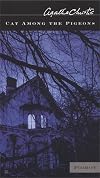
Porua Just as Hickory Dickory Dock is set at a hostel for students, Cat among the Pigeons is set at a girls' school. Those who have enjoyed the ups and downs in the lives of the students living at the hostel in Hickory Dickory Dock, will also enjoy the atmosphere of carefree school days in Cat among the Pigeons.
50
Member Reviews
I found this in my area's newly-reopened Little Free Library. It'll be going back there as soon as I muster the nous to go out onto the boardwalk *early* in the morning when it's not crowded with unmasked future plague victims.
This entry into Dame Agatha's nursery-rhyme titled mysteries (eg, A Pocket Full of Rye; One, Two, Buckle My Shoe) is only mildly related to the rhyme in question...the action centers on Hickory Street...and it's also a Poirot-lite tale. It does, unusually, feature Miss Lemon (the Ubersecretary with Major Filing Chops), previously only seen in short stories. Her family connection to the Hickory Street Ménage, the ickily-title Warden of the boarders being her sister, is the only entrée Poirot has to the case. In show more fact, it seems like an absurdly minor matter for Poirot to do more than merely acknowledge with a wintry little smile as Miss Lemon hands him her typo-riddled assignment.
Miss Lemon? Typos?!
And thus is Poirot engaged in what seems to be, but isn't, a wildly inappropriate chase after the thief of some boracic powder, a stethoscope, and some random weirdness like a single shoe. This is 1955's Dame Agatha, so there are quite a lot of baroque connections among the various players. Many of them, comme d'habitude, are ridiculously overdone...one boarder is a murder victim's unacknowledged child, oh really now!...but they serve to distract from the weird and fraught central relationship of killer and crime.
At the end, I was diverted, amused, and irritated in equal measures by the resolution. A corking Dame Agatha experience? Mm...on balance no, but made me seek out the forty-years-newer TV adaptation. show less
This entry into Dame Agatha's nursery-rhyme titled mysteries (eg, A Pocket Full of Rye; One, Two, Buckle My Shoe) is only mildly related to the rhyme in question...the action centers on Hickory Street...and it's also a Poirot-lite tale. It does, unusually, feature Miss Lemon (the Ubersecretary with Major Filing Chops), previously only seen in short stories. Her family connection to the Hickory Street Ménage, the ickily-title Warden of the boarders being her sister, is the only entrée Poirot has to the case. In show more fact, it seems like an absurdly minor matter for Poirot to do more than merely acknowledge with a wintry little smile as Miss Lemon hands him her typo-riddled assignment.
Miss Lemon? Typos?!
And thus is Poirot engaged in what seems to be, but isn't, a wildly inappropriate chase after the thief of some boracic powder, a stethoscope, and some random weirdness like a single shoe. This is 1955's Dame Agatha, so there are quite a lot of baroque connections among the various players. Many of them, comme d'habitude, are ridiculously overdone...one boarder is a murder victim's unacknowledged child, oh really now!...but they serve to distract from the weird and fraught central relationship of killer and crime.
At the end, I was diverted, amused, and irritated in equal measures by the resolution. A corking Dame Agatha experience? Mm...on balance no, but made me seek out the forty-years-newer TV adaptation. show less
I'm working my way through Christie's novels at the rate of one a month in their order of publication. Most of them are fun and some of them are remarkable but 'Hickory Dickory Dock' is the second book in a row that I've set aside halfway through. I could put 'Destination Unknown', last month's disappointment, down to Christie trying to revive her thriller writing and not getting it right but 'Hickory Dickory Dock' is her thirty-fourth Poirot book so I'd expected her to have the hang of them by this time.
'Hickory Dickery Dock' had all the signs of a crank-the-handle offering from a franchise that the author has grown bored with. From the first page, the book plods. The plot is slight and what there is of it is hard to take seriously. show more The exposition is clumsy and repetitive. The foreigner stereotypes are annoying. There is no tension. Unlike earlier Christie books with a nursery rhyhme title, the plot has little or no connection to the rhyme.
Some of the early character sketches were interesting but they tended towards the stereotypical if not the straightforwardly racist, It was as if Christie had based her characters on newspaper reports of what hostel-dwelling young people from multiple nationalities were like in 1955, rather than basing them on people she'd met. Miss Lemon and her sister were interesting but not interesting enough to stop 'Hickory Dickory Dock' from being too tedious for me to read the second half.
I'm hoping that next month's book, 'Dead Man's Folly' (1956), another Poirot book but this time in the more familiar environs of middle-class village folk, will be better. show less
'Hickory Dickery Dock' had all the signs of a crank-the-handle offering from a franchise that the author has grown bored with. From the first page, the book plods. The plot is slight and what there is of it is hard to take seriously. show more The exposition is clumsy and repetitive. The foreigner stereotypes are annoying. There is no tension. Unlike earlier Christie books with a nursery rhyhme title, the plot has little or no connection to the rhyme.
Some of the early character sketches were interesting but they tended towards the stereotypical if not the straightforwardly racist, It was as if Christie had based her characters on newspaper reports of what hostel-dwelling young people from multiple nationalities were like in 1955, rather than basing them on people she'd met. Miss Lemon and her sister were interesting but not interesting enough to stop 'Hickory Dickory Dock' from being too tedious for me to read the second half.
I'm hoping that next month's book, 'Dead Man's Folly' (1956), another Poirot book but this time in the more familiar environs of middle-class village folk, will be better. show less
Summary: Poirot’s secretary’s sister is warden at a student hostel subject to a baffling string of petty thefts.
Miss Lemon never makes mistakes. So when Poirot’s secretary makes three mistakes on a routine letter, Poirot deduces there is something wrong. It turns out Miss Lemon’s sister, Mrs. Hubbard is dealing with a troubling string of thefts. Mrs. Hubbard is the warden at a student boarding house. Men live on one side, the women on the other, and students from many countries as well as England live there. There seems no rhyme or reason to the thefts: a shoe, a stethoscope, a bracelet, a powder compact, a cookbook, some lightbulbs, some old flannel trousers, a box of chocolates, a rucksack, a silk scarf, some boracic powder, show more some green ink, and a diamond ring.
As it turns out, the baffling character of the list intrigues Poirot, and he agrees to investigate. Under the pretense of a talk on crime, Poirot meets the students, and at the end recommends calling in the police. While Mrs. Nicoletis, the hostel owner, tries to stall, Poirot’s recommendation gets results. One of the girls, Celia Austin, confesses to some of the thefts and promises restitution. Later that evening, she announces her engagement to another resident, Colin McNabb, a psychology graduate student.
However, this apparently happy ending quickly turns more serious. Celia is found dead of a morphine overdose, apparently a suicide from the scrap of a note left behind. But the authorities quickly see through this. Someone in the house murdered Celia. The murder reveals the problems beneath the placid appearances, and many of the students are plausible suspects.
Only one is the killer and before this is over, two more will die. As Poirot aids in the investigation, the thefts and incidents Celia wasn’t responsible for, and the order in which they took place, become important. Things as baffling as a cut up rucksack and missing lightbulbs are key. In the process, it is apparent that much more than petty theft is going on.
In addition to serious crime, it turns out the murderer got away with murder in the past. But not with Poirot!
This is the first mystery I can think of to take place in a student boarding house. What an ideal setting for a household full of suspects. Not only that, Christie creates an interesting cast of characters and a liberal number of red herrings. It was fun to try to unravel this one! show less
Miss Lemon never makes mistakes. So when Poirot’s secretary makes three mistakes on a routine letter, Poirot deduces there is something wrong. It turns out Miss Lemon’s sister, Mrs. Hubbard is dealing with a troubling string of thefts. Mrs. Hubbard is the warden at a student boarding house. Men live on one side, the women on the other, and students from many countries as well as England live there. There seems no rhyme or reason to the thefts: a shoe, a stethoscope, a bracelet, a powder compact, a cookbook, some lightbulbs, some old flannel trousers, a box of chocolates, a rucksack, a silk scarf, some boracic powder, show more some green ink, and a diamond ring.
As it turns out, the baffling character of the list intrigues Poirot, and he agrees to investigate. Under the pretense of a talk on crime, Poirot meets the students, and at the end recommends calling in the police. While Mrs. Nicoletis, the hostel owner, tries to stall, Poirot’s recommendation gets results. One of the girls, Celia Austin, confesses to some of the thefts and promises restitution. Later that evening, she announces her engagement to another resident, Colin McNabb, a psychology graduate student.
However, this apparently happy ending quickly turns more serious. Celia is found dead of a morphine overdose, apparently a suicide from the scrap of a note left behind. But the authorities quickly see through this. Someone in the house murdered Celia. The murder reveals the problems beneath the placid appearances, and many of the students are plausible suspects.
Only one is the killer and before this is over, two more will die. As Poirot aids in the investigation, the thefts and incidents Celia wasn’t responsible for, and the order in which they took place, become important. Things as baffling as a cut up rucksack and missing lightbulbs are key. In the process, it is apparent that much more than petty theft is going on.
In addition to serious crime, it turns out the murderer got away with murder in the past. But not with Poirot!
This is the first mystery I can think of to take place in a student boarding house. What an ideal setting for a household full of suspects. Not only that, Christie creates an interesting cast of characters and a liberal number of red herrings. It was fun to try to unravel this one! show less
When his paragon of a secretary makes several mistakes on a single page of typing, Hercule Poirot is concerned. As it turns out, Miss Lemon is worried about her sister and the student boarding house she manages, which has been plagued by a string of petty thefts and other mischief. Since Poirot is at loose ends, he pays a visit to the boarding house, where he senses something very wrong beneath the surface. When one of the students dies, apparently by her own hand, Poirot deduces it was murder. Poirot serves as a sounding board for Inspector Sharpe as he investigates the sudden death.
I wish Christie had given readers more of Miss Lemon when she had the chance in this novel. I did enjoy meeting her sister, who shares some of the same show more no-nonsense qualities that make Miss Lemon such a valuable secretary. Unusually for Christie, this book also suffers from a surfeit of characters who share too many similarities of age and circumstance. I do enjoy the audio recordings of this, and other Poirot novels, read by Hugh Fraser, who played Hastings in the British TV series. David Suchet is the definitive Poirot for my generation, and Fraser seems to model the voice of his Poirot on Suchet’s portrayal. show less
I wish Christie had given readers more of Miss Lemon when she had the chance in this novel. I did enjoy meeting her sister, who shares some of the same show more no-nonsense qualities that make Miss Lemon such a valuable secretary. Unusually for Christie, this book also suffers from a surfeit of characters who share too many similarities of age and circumstance. I do enjoy the audio recordings of this, and other Poirot novels, read by Hugh Fraser, who played Hastings in the British TV series. David Suchet is the definitive Poirot for my generation, and Fraser seems to model the voice of his Poirot on Suchet’s portrayal. show less
Hercule Poirot frowned.
"Miss Lemon," he said.
"Yes, M. Poirot?"
"There are three mistakes in this letter."
His voice held incredulity. For Miss Lemon, that hideous and efficient woman, never made mistakes. She was never ill, never tired, never upset, never inaccurate. For all practical purposes, that is to say, she was not a woman at all. She was a machine - the perfect secretary. She knew everything, she coped with everything. She ran Hercule Poirot's life for him, so that it, too, functioned like a machine.
Order and method had been Hercule Poirot's watchwords from many years ago. With George, his perfect manservant, and Miss Lemon, his perfect secretary, order and method ruled supreme in his life. Now that crumpets were baked square as show more well as round, he had nothing about which to complain.
Square crumpets?! Have I missed these so far?
Anyway, to the book... Hickory Dickory Dock was a fun read, in which Miss Lemon gets some page time. The story is set in 1955 in London and Miss Lemon is worried about her sister and the strange goings on at the hostel where her sister works: Things have gone missing.
In order to return to a life of normalcy and perfection, Poirot offers to help Miss Lemon's sister solve the mystery of the disappearing items.
Hickory Dickory Dock is a great story to note the differences in Christie's writing between the pre- and post-war periods. This story is set in the 50s, and the bright young things are now less decadent and more international. The youth comes across in Christie's dialogues reasonably well, but the international aspect made me cringe.
Let's face it, despite her efforts, Christie just was not great at writing characters from non-English backgrounds.
Still, it was fun watching Poirot solve this, even if sometimes you just want to kick Poirot in the shins.
Hercule Poirot nodded understandingly. It seemed to him appropriate that Miss Lemon's sister should have spent most of her life in Singapore. That was what places like Singapore were for. The sisters of women like Miss Lemon married men in business in Singapore, so that the Miss Lemons of this world could devote themselves with machine-like efficiency to their employers' affairs (and of course to the invention of filing systems in their moments of relaxations). show less
"Miss Lemon," he said.
"Yes, M. Poirot?"
"There are three mistakes in this letter."
His voice held incredulity. For Miss Lemon, that hideous and efficient woman, never made mistakes. She was never ill, never tired, never upset, never inaccurate. For all practical purposes, that is to say, she was not a woman at all. She was a machine - the perfect secretary. She knew everything, she coped with everything. She ran Hercule Poirot's life for him, so that it, too, functioned like a machine.
Order and method had been Hercule Poirot's watchwords from many years ago. With George, his perfect manservant, and Miss Lemon, his perfect secretary, order and method ruled supreme in his life. Now that crumpets were baked square as show more well as round, he had nothing about which to complain.
Square crumpets?! Have I missed these so far?
Anyway, to the book... Hickory Dickory Dock was a fun read, in which Miss Lemon gets some page time. The story is set in 1955 in London and Miss Lemon is worried about her sister and the strange goings on at the hostel where her sister works: Things have gone missing.
In order to return to a life of normalcy and perfection, Poirot offers to help Miss Lemon's sister solve the mystery of the disappearing items.
Hickory Dickory Dock is a great story to note the differences in Christie's writing between the pre- and post-war periods. This story is set in the 50s, and the bright young things are now less decadent and more international. The youth comes across in Christie's dialogues reasonably well, but the international aspect made me cringe.
Let's face it, despite her efforts, Christie just was not great at writing characters from non-English backgrounds.
Still, it was fun watching Poirot solve this, even if sometimes you just want to kick Poirot in the shins.
Hercule Poirot nodded understandingly. It seemed to him appropriate that Miss Lemon's sister should have spent most of her life in Singapore. That was what places like Singapore were for. The sisters of women like Miss Lemon married men in business in Singapore, so that the Miss Lemons of this world could devote themselves with machine-like efficiency to their employers' affairs (and of course to the invention of filing systems in their moments of relaxations). show less
Agatha Christie presents what must have been her most diverse cast ever - all students at a youth hostel - with just a bit of cringe thrown in. I normally let the 'signs of the times,' so to speak, go - I am reading for enjoyment and not to pass judgement on an author, dead or alive. (Unless of course I hate the book, and then I am both the judge and jury.) This one just had some especially awkward moments. Poirot, of course, takes it all in stride.
You tell 'em, Hercule.
Story-wise, this was a little light on characterization while being quite heavy on characters. I barely knew Pat from Jean from Elizabeth from, well, any of the others. There may have been a Sally in there. The males were a little easier to remember, probably because most of them were left on the sidelines with very little to do. The mystery itself was fine, if a bit convoluted and only vaguely related to whatever it is you might have thought it was about. show less
A detective or inspector says to him, "...I shall want to question them all - and frankly, it's not a business I'm looking forward to. You met some of them the other night and I wondered if you could give me any useful dope - on the foreigners, anyway."show more
And Poirot says, "You think I am a good
judge of foreigners? But mon cher, there were no Belgians amongst them."
You tell 'em, Hercule.
Story-wise, this was a little light on characterization while being quite heavy on characters. I barely knew Pat from Jean from Elizabeth from, well, any of the others. There may have been a Sally in there. The males were a little easier to remember, probably because most of them were left on the sidelines with very little to do. The mystery itself was fine, if a bit convoluted and only vaguely related to whatever it is you might have thought it was about. show less
Hercule Poirot drew in a long deep breath. “Remarkable,” he said, “and quite—quite fascinating.” He was entranced. He looked from the severe disapproving face of Miss Lemon to the kindly, distressed face of Mrs. Hubbard. “I congratulate you,” he said warmly to the latter. She looked startled.
“But why, M. Poirot?”
“I congratulate you on having such a unique and beautiful problem.”
“Well, perhaps it makes sense to you, M. Poirot, but—”
“It does not make sense at all.
Christie, Agatha. Hickory Dickory Dock: A Hercule Poirot Mystery: The Official Authorized Edition (Hercule Poirot series Book 30) (p. 10). HarperCollins. Kindle Edition.
Hercule Poirot is horrified when his efficient, trustworthy, machine like show more secretary, Miss Lemon makes not one, not two but three mistakes and then fails to notice those mistakes. Deciding the cause of Miss Lemon's worries must be addressed, Poirot finds himself investigating a curious series of thefts from the boarding house Miss Lemon's sister, Mrs Hubbard runs.
I enjoyed this. It wasn't as good as some of the other Poirot books but it was a decent read. The mystery itself was great and the investigation into the crimes was fun - Poirot just wasn't his over the top flamboyant self in this one. He felt a little bland without his ridiculous jokes, sneaky nature and worry for his outfits and appetite. The other characters did make up for some of it but it felt more like just a great mystery than a Hercule Poirot book.
I enjoyed the other characters though - some of them were brutal and I was rating it. Nigel, Valerie, Pat were all funny and memorable. The twists had me all twisted around and I loved the ending. It definitely didn't go how I expected it to. I kind of feel like maybe I should have read Agatha Christie's backlist from end to beginning. As she got older, her books are great but just not quite as good as her earlier titles. I feel like it might have been less disappointing going the other way, having them get better. But it is what it is.
A well written mystery with a great twist, fun characters and a deeper look into the life of Miss Lemon. 3.5 stars, rounded up to 4 stars. show less
“But why, M. Poirot?”
“I congratulate you on having such a unique and beautiful problem.”
“Well, perhaps it makes sense to you, M. Poirot, but—”
“It does not make sense at all.
Christie, Agatha. Hickory Dickory Dock: A Hercule Poirot Mystery: The Official Authorized Edition (Hercule Poirot series Book 30) (p. 10). HarperCollins. Kindle Edition.
Hercule Poirot is horrified when his efficient, trustworthy, machine like show more secretary, Miss Lemon makes not one, not two but three mistakes and then fails to notice those mistakes. Deciding the cause of Miss Lemon's worries must be addressed, Poirot finds himself investigating a curious series of thefts from the boarding house Miss Lemon's sister, Mrs Hubbard runs.
I enjoyed this. It wasn't as good as some of the other Poirot books but it was a decent read. The mystery itself was great and the investigation into the crimes was fun - Poirot just wasn't his over the top flamboyant self in this one. He felt a little bland without his ridiculous jokes, sneaky nature and worry for his outfits and appetite. The other characters did make up for some of it but it felt more like just a great mystery than a Hercule Poirot book.
I enjoyed the other characters though - some of them were brutal and I was rating it. Nigel, Valerie, Pat were all funny and memorable. The twists had me all twisted around and I loved the ending. It definitely didn't go how I expected it to. I kind of feel like maybe I should have read Agatha Christie's backlist from end to beginning. As she got older, her books are great but just not quite as good as her earlier titles. I feel like it might have been less disappointing going the other way, having them get better. But it is what it is.
A well written mystery with a great twist, fun characters and a deeper look into the life of Miss Lemon. 3.5 stars, rounded up to 4 stars. show less
Members
- Recently Added By
Lists

British Mystery
469 works; 14 members

Crime and Mysteries to Read
746 works; 31 members
Books With Nursery Rhyme Titles
37 works; 8 members

Agatha Christie Poirot
43 works; 2 members

Books About Murder
313 works; 7 members

Favorite Books from the 1950s
33 works; 2 members

Detective Stories
343 works; 5 members

Books Read in 2010
631 works; 11 members

Books Read in 2022
5,168 works; 111 members

TBR
77 works; 1 member

Agatha Christie Chronology
93 works; 1 member
Author Information

2,153+ Works 440,216 Members
One of the most successful and beloved writer of mystery stories, Agatha Mary Clarissa Christie was born in 1890 in Torquay, County Devon, England. She wrote her first novel, The Mysterious Affair at Styles, in 1920, launching a literary career that spanned decades. In her lifetime, she authored 79 crime novels and a short story collection, 19 show more plays, and six novels written under the name of Mary Westmacott. Her books have sold over a billion copies in the English language with another billion in 44 foreign languages. Some of her most famous titles include Murder on the Orient Express, Mystery of the Blue Train, And Then There Were None, 13 at Dinner and The Sittaford Mystery. Noted for clever and surprising twists of plot, many of Christie's mysteries feature two unconventional fictional detectives named Hercule Poirot and Miss Jane Marple. Poirot, in particular, plays the hero of many of her works, including the classic, The Murder of Roger Ackroyd (1926), and Curtain (1975), one of her last works in which the famed detective dies. Over the years, her travels took her to the Middle East where she met noted English archaeologist Sir Max Mallowan. They married in 1930. Christie accompanied Mallowan on annual expeditions to Iraq and Syria, which served as material for Murder in Mesopotamia (1930), Death on the Nile (1937), and Appointment with Death (1938). Christie's credits also include the plays, The Mousetrap and Witness for the Prosecution (1953; film 1957). Christie received the New York Drama Critics' Circle Award for 1954-1955 for Witness. She was also named Dame Commander of the Order of the British Empire in 1971. Christie died in 1976. (Bowker Author Biography) show less
Some Editions
Series

Belongs to Publisher Series
Work Relationships
Is contained in
Poirot: The Post-War Years: After the Funeral, Hickory Dickory Dock, Cat Among the Pigeons, The Clocks by Agatha Christie
The Nursery Rhyme Murders: Crooked House / Hickory Dickory Dock / A Pocket Full of Rye by Agatha Christie
Common Knowledge
- Canonical title
- Hickory Dickory Dock
- Original title
- Hickory Dickory Dock
- Alternate titles
- Hickory Dickory Death
- Original publication date
- 1955-10-31
- People/Characters
- Hercule Poirot; Felicity Lemon; Leonard Bateson; Valerie Gregson; Mrs. L. Hubbard (Mother Hubbard, Mom, Ma -- Sister to Miss Lemon); Inspecter Sharpe (show all 28); Celia Austin; George (Hercule Poirot's valet); Elizabeth Johnston (Black Bess); Akibombo; Valerie Hobhouse; Nigel Chapman; Patricia Lane; Mrs. Nicoletis; Sally Finch; Gopal Ram; Chandra Lal; Colin McNabb; Genevieve Maricaud; René Halle; Jean Tomlinson; Achmed Ali; Miss Reinjeer; Geronimo (servant); Marie (cook); Superintendent Wilding (Narcotics squad); Sergeant Bell; Sergeant Cobb
- Important places
- London, England, UK; 26 Hickory Road, London, England, UK; New Scotland Yard, London, England, UK
- Related movies
- Hickory Dickory Dock (1995 | IMDb)
- Epigraph
- Hickory dickory dock
The mouse ran up the clock
The clock struck one
The mouse ran down
Hickory dickory dock.
Traditional, 1744 - First words
- Hercule Poirot frowned.
- Last words
- (Click to show. Warning: May contain spoilers.)"Nothing," said Hercule Poirot.
- Publisher's editor
- William Edmund Cork
- Original language
- English
- Disambiguation notice
- Published in English as both Hickory Dickory Dock and Hickory Dickory Death.
Classifications
Statistics
- Members
- 3,736
- Popularity
- 4,280
- Reviews
- 67
- Rating
- (3.56)
- Languages
- 25 — Catalan, Chinese, Czech, Danish, Dutch, English, Estonian, Finnish, French, German, Greek, Hindi, Hungarian, Italian, Japanese, Norwegian (Bokmål), Norwegian, Polish, Romanian, Serbian, Slovenian, Spanish, Swedish, Turkish, Portuguese (Portugal)
- Media
- Paper, Audiobook, Ebook
- ISBNs
- 132
- UPCs
- 3
- ASINs
- 91