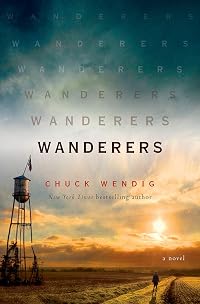
On This Page
Description
A decadent rock star. A deeply religious radio host. A disgraced scientist. And a teenage girl who may be the world's last hope. In the tradition of The Stand and Station Eleven comes a gripping saga that weaves an epic tapestry of humanity into an astonishing tale of survival. Shana wakes up one morning to discover her little sister in the grip of a strange malady. She appears to be sleepwalking. She cannot talk and cannot be woken up. And she is heading with inexorable determination to a show more destination that only she knows. But Shana and her sister are not alone. Soon they are joined by a flock of sleepwalkers from across America, on the same mysterious journey. And like Shana, there are other "shepherds" who follow the flock to protect their friends and family on the long dark road ahead. For on their journey, they will discover an America convulsed with terror and violence, where this apocalyptic epidemic proves less dangerous than the fear of it. As the rest of society collapses all around them--and an ultraviolent militia threatens to exterminate them--the fate of the sleepwalkers depends on unraveling the mystery behind the epidemic. The terrifying secret will either tear the nation apart--or bring the survivors together to remake a shattered world. show lessTags
Recommendations








Member Reviews
While Wanderers has and will continue to garner comparisons to Stephen King’s The Stand, it is almost unfair to do so. Yes, they both involve a mysterious illness, and they both have a group of people traveling across the country. One might even be able to argue that both have a battle between good and evil. However, one is more metaphysical, and the other is a bit more couched in reality. Both are excellent novels in their own right.
Wanderers is an exciting and frightening story that involves everything from religious extremism, racial hatred, computer sentience, antibiotic-resistant bacteria, climate change, and overpopulation. Its character arcs are fantastic, allowing for the natural growth that comes with maturity and a greater show more understanding of the immediate situation and of the larger picture. Even with its religious elements, it never feels preachy. Plus, even though it clocks in at over 800 pages, it doesn’t feel as long as that as it engages all of your senses. Wanderers is simply a great but chilling warning about your current decisions and their lasting impact. show less
Wanderers is an exciting and frightening story that involves everything from religious extremism, racial hatred, computer sentience, antibiotic-resistant bacteria, climate change, and overpopulation. Its character arcs are fantastic, allowing for the natural growth that comes with maturity and a greater show more understanding of the immediate situation and of the larger picture. Even with its religious elements, it never feels preachy. Plus, even though it clocks in at over 800 pages, it doesn’t feel as long as that as it engages all of your senses. Wanderers is simply a great but chilling warning about your current decisions and their lasting impact. show less
I've been thinking a lot lately about how 2020 is going to be an inflection point for science fiction. From now on, any time you read a post-apocalyptic sci-fi book, especially if it involves an epidemic, you're going to be able to tell if it was written before or after coronavirus (this is going to apply to a lot of genres, depending on how long it is before we have an effective vaccine - the experience of being in crowds is never going to be the same, and that's going to show up in fiction). Wanderers might be the last pre-corona epidemic novel. In some ways, the novel is very prescient (which is more of an indicator of how predictable our current predicament is than it is a credit to Wendig's ability to predict the future), and it show more some ways it completely misses the mark in ways that make it obvious that it was written before 2020.
Quick summary (as quickly as one can summarize an 800-page book): A small group of people start walking. These people have no biological functions (no eating or pooping), they are completely unresponsive to all stimuli, they are impervious to needles, and they literally explode if you try to restrain them. They walk day and night. Their family members and loved ones follow them to protect them, forming a weird caravan. The story focuses on the first wanderer and her sister and dad. Meanwhile, a black man who used to work for the CDC is contacted by a woman who runs an artificial intelligence that is designed to predict and analyze epidemics. The AI has said that this man is the best man to study this disease, even though he was kicked out of the CDC for over-stating the dangers of factory farms. Meanwhile, a preacher starts preaching about how these wanderers are a sign of the end-times, and then gets wrapped up in a conservative political group that turns out to have ties with white supremacists who want to eliminate people of color. Meanwhile, an aging rock star decides to get another 15 minutes of fame by joining the wanderers. Meanwhile, a millionaire breaks ground on a theme park that is built on top of some caves and releases a bunch of bats from the cave. So there's obviously a lot going on here (and there are a few more sub-plots that I've left out), but it all eventually ties together.
Reading this in 2020 is a completely different experience than it would have been in 2019, because you can't help but compare it to current events. There's a very minor incident with a trigger-happy cop that has a lot more resonance now than it would have last year. At one point, the president sends the DHS to control the wanderers: I happened to read that scene while anonymized DHS troops were kidnapping people off the streets of Portland, and reality turned out to be far worse than fiction. In the book, the president's response to the wanderers is based more on politics than science, but the fictional president isn't a fascist narcissist, so again, reality turns out to be worse than the book. The book focuses a lot on conspiracy-minded white supremacists and far-right religious kooks and how they twist a natural disaster to their own ends, but ignores the liberal resistance to them. So the book is at once really relevant and also totally obsolete.
As for the book itself: despite being 800 pages (I'm surprised the publisher didn't insist on breaking this up into a trilogy, although there does seem to be room for a sequel), the book is really engaging and doesn't feel too long. The characters are generally well-rounded and develop in believable ways. I wish that there had been some more development of the leader of the white supremacist group - he was very one-dimensional, and I would have liked to know why he was so evil. There are plenty of people like him in the real world right now that Wendig could have drawn from.
Naturally, with any book this long, I'm going to have some quibbles. I think the weakest point of the book is the AI. The rest of the book feels very contemporary, but the AI and nanotech are way beyond our current capabilities and basically feel like some man-behind-the-curtain magic. One of the main characters gets pregnant and never once thinks "maybe having a baby during an apocalypse when I'm 18 years old is a bad idea."
I was impressed with the book's handling of religion. It is critical of evangelical Christianity, but sympathetic to a more liberal reading of the Bible and the book's primary scientist is also religious. There are some interesting scenes between the scientist and the evangelical preacher. It's rare for science fiction to be anything but critical of Christianity, and I appreciated the nuance Wendig used in handling religion.
I listened to the audiobook, which had two narrators. The woman narrator was way better than the man. The narrators apparently didn't coordinate with each other, because they used entirely different accents for some of the characters and that was confusing. show less
Quick summary (as quickly as one can summarize an 800-page book): A small group of people start walking. These people have no biological functions (no eating or pooping), they are completely unresponsive to all stimuli, they are impervious to needles, and they literally explode if you try to restrain them. They walk day and night. Their family members and loved ones follow them to protect them, forming a weird caravan. The story focuses on the first wanderer and her sister and dad. Meanwhile, a black man who used to work for the CDC is contacted by a woman who runs an artificial intelligence that is designed to predict and analyze epidemics. The AI has said that this man is the best man to study this disease, even though he was kicked out of the CDC for over-stating the dangers of factory farms. Meanwhile, a preacher starts preaching about how these wanderers are a sign of the end-times, and then gets wrapped up in a conservative political group that turns out to have ties with white supremacists who want to eliminate people of color. Meanwhile, an aging rock star decides to get another 15 minutes of fame by joining the wanderers. Meanwhile, a millionaire breaks ground on a theme park that is built on top of some caves and releases a bunch of bats from the cave. So there's obviously a lot going on here (and there are a few more sub-plots that I've left out), but it all eventually ties together.
Reading this in 2020 is a completely different experience than it would have been in 2019, because you can't help but compare it to current events. There's a very minor incident with a trigger-happy cop that has a lot more resonance now than it would have last year. At one point, the president sends the DHS to control the wanderers: I happened to read that scene while anonymized DHS troops were kidnapping people off the streets of Portland, and reality turned out to be far worse than fiction. In the book, the president's response to the wanderers is based more on politics than science, but the fictional president isn't a fascist narcissist, so again, reality turns out to be worse than the book. The book focuses a lot on conspiracy-minded white supremacists and far-right religious kooks and how they twist a natural disaster to their own ends, but ignores the liberal resistance to them. So the book is at once really relevant and also totally obsolete.
As for the book itself: despite being 800 pages (I'm surprised the publisher didn't insist on breaking this up into a trilogy, although there does seem to be room for a sequel), the book is really engaging and doesn't feel too long. The characters are generally well-rounded and develop in believable ways. I wish that there had been some more development of the leader of the white supremacist group - he was very one-dimensional, and I would have liked to know why he was so evil. There are plenty of people like him in the real world right now that Wendig could have drawn from.
Naturally, with any book this long, I'm going to have some quibbles. I think the weakest point of the book is the AI. The rest of the book feels very contemporary, but the AI and nanotech are way beyond our current capabilities and basically feel like some man-behind-the-curtain magic. One of the main characters gets pregnant and never once thinks "maybe having a baby during an apocalypse when I'm 18 years old is a bad idea."
I was impressed with the book's handling of religion. It is critical of evangelical Christianity, but sympathetic to a more liberal reading of the Bible and the book's primary scientist is also religious. There are some interesting scenes between the scientist and the evangelical preacher. It's rare for science fiction to be anything but critical of Christianity, and I appreciated the nuance Wendig used in handling religion.
I listened to the audiobook, which had two narrators. The woman narrator was way better than the man. The narrators apparently didn't coordinate with each other, because they used entirely different accents for some of the characters and that was confusing. show less
I received an advance reading copy via Netgalley.
What makes Wanderers such an intense, disturbing read isn't that it's gory--though it has some major moments of that. Or that it spins the apocalypse in a sinister new way; sneezing as you read will creep you out, trust me. Or that Chuck Wendig is from a GRRM school of writers where no one is sacred or safe; seriously, expect a lot of death, torture, and even a graphic rape mixed in. What makes this book such a successful psychological trip is that Wendig brings a deep level of humanity to the full cast. I came to care about these people, so as the tension ratchets up--and wow, does it ratchet up--I felt the compulsion to sneak in reading time as often as I could to find out what happens show more next.
I don't read a lot of thrillers or watch horror movies for that reason. They tend to really get to me. But I really enjoy Wendig's other writing, and couldn't help but be curious about the book because of the buzz it's generating. I was happy that the publisher approved me to read it early. Now, with the book done, I'm feeling a mix of awe and relief and trauma. Wanderers is well done even as the content is absolutely horrible.
The premise is bizarre to start: in the Midwest, disparate people enter a bizarre sleepwalking state. They don't need food or water or to even defecate. Their skin is impenetrable to needles. Bad things happen if you try to hold them back. As the group walks, more people join as sleepwalkers--and other loyal family members follow, becoming loyal shepherds, even as the rest of the country and world squabble about if this is a terror attack or infection or what.
As I mentioned earlier, this book is intense, sometimes very gory and outright disturbing. There were a couple scenes that really got to me, and if they'd happened early on, I probably would have stopped reading right there. As dark as the book is, though, there is still a sense of hope and humor throughout. This is about people being people, with the full spectrum of hate and nastiness and love and joy.
All of the buzz around this book is justified. I know in my case, this is a read that will haunt me for a long while to come. show less
What makes Wanderers such an intense, disturbing read isn't that it's gory--though it has some major moments of that. Or that it spins the apocalypse in a sinister new way; sneezing as you read will creep you out, trust me. Or that Chuck Wendig is from a GRRM school of writers where no one is sacred or safe; seriously, expect a lot of death, torture, and even a graphic rape mixed in. What makes this book such a successful psychological trip is that Wendig brings a deep level of humanity to the full cast. I came to care about these people, so as the tension ratchets up--and wow, does it ratchet up--I felt the compulsion to sneak in reading time as often as I could to find out what happens show more next.
I don't read a lot of thrillers or watch horror movies for that reason. They tend to really get to me. But I really enjoy Wendig's other writing, and couldn't help but be curious about the book because of the buzz it's generating. I was happy that the publisher approved me to read it early. Now, with the book done, I'm feeling a mix of awe and relief and trauma. Wanderers is well done even as the content is absolutely horrible.
The premise is bizarre to start: in the Midwest, disparate people enter a bizarre sleepwalking state. They don't need food or water or to even defecate. Their skin is impenetrable to needles. Bad things happen if you try to hold them back. As the group walks, more people join as sleepwalkers--and other loyal family members follow, becoming loyal shepherds, even as the rest of the country and world squabble about if this is a terror attack or infection or what.
As I mentioned earlier, this book is intense, sometimes very gory and outright disturbing. There were a couple scenes that really got to me, and if they'd happened early on, I probably would have stopped reading right there. As dark as the book is, though, there is still a sense of hope and humor throughout. This is about people being people, with the full spectrum of hate and nastiness and love and joy.
All of the buzz around this book is justified. I know in my case, this is a read that will haunt me for a long while to come. show less
It's the end of the world and I feel... uuurkkk...
Let me tell you something, my fine folks. I think I had more fun reading this book than I have for ANY apocalypse book. That's including the Stand, Lucifer's Hammer, or The Power. And perhaps a few others that I rank higher than the rest.
But let me be clear. I had the most fun with this. I'm not saying it has MORE to gloam onto than the Stand, but I had myself a few issues with the Stand. The whole moralistic good vs. evil, for example. And I had a bit of a rough time with some of the 70's sexism in Lucifer's Hammer.
Wanderers, however, is leagues above most of the current runs of epic dystopias. No, it's not a zombie apocalypse or a big meteorite spoiling everyone's day or the ultimate show more reversal of the sexes. It is, however, quite free of rampant female humiliation, gratuitous rape, and violence in general. This book is full of heart even while it DOES have a rather usual trope of religious nutters, white supremacists, and NRA hotheads. They're quite happy to be all opportunistic on humanity's ass.
What sets this above all the rest? Clever fundamental choices and trope inclusions, baby. Very strong science, too. And delightfully complex characters.
But for me? I love the pop culture references. Wendig is like, some kind of master with pop trivia and really sharp, maybe bloody, wit. His Miriam Black novels left me bloody with words. In Wanderers, he tones it down a LOT and he tames it for the sake of this story. So what that means is we'll be seeing some REALLY cool crap popping up subtly in the tiny spaces.
Like Fallout? Check. Like Matrix? Check. Like brilliantly chosen musical references, strange-ass details that HAVE to be memes that haven't happened yet, or setting choices that wind up being fantastic in-jokes for you modern pop-reference junkies? CHECK.
And in the end, I remained excited... exhilarated... throughout this read. Sometimes a book will sap my energy. Other times, rarely, a book will just pour it into me. This is one of those books. :)
Am I super happy to have read this? You betcha. :) :) I feel almost like I was watching the first season of Walking Dead the first time. Before it got all... you know. :) show less
Let me tell you something, my fine folks. I think I had more fun reading this book than I have for ANY apocalypse book. That's including the Stand, Lucifer's Hammer, or The Power. And perhaps a few others that I rank higher than the rest.
But let me be clear. I had the most fun with this. I'm not saying it has MORE to gloam onto than the Stand, but I had myself a few issues with the Stand. The whole moralistic good vs. evil, for example. And I had a bit of a rough time with some of the 70's sexism in Lucifer's Hammer.
Wanderers, however, is leagues above most of the current runs of epic dystopias. No, it's not a zombie apocalypse or a big meteorite spoiling everyone's day or the ultimate show more reversal of the sexes. It is, however, quite free of rampant female humiliation, gratuitous rape, and violence in general. This book is full of heart even while it DOES have a rather usual trope of religious nutters, white supremacists, and NRA hotheads. They're quite happy to be all opportunistic on humanity's ass.
What sets this above all the rest? Clever fundamental choices and trope inclusions, baby. Very strong science, too. And delightfully complex characters.
But for me? I love the pop culture references. Wendig is like, some kind of master with pop trivia and really sharp, maybe bloody, wit. His Miriam Black novels left me bloody with words. In Wanderers, he tones it down a LOT and he tames it for the sake of this story. So what that means is we'll be seeing some REALLY cool crap popping up subtly in the tiny spaces.
Like Fallout? Check. Like Matrix? Check. Like brilliantly chosen musical references, strange-ass details that HAVE to be memes that haven't happened yet, or setting choices that wind up being fantastic in-jokes for you modern pop-reference junkies? CHECK.
And in the end, I remained excited... exhilarated... throughout this read. Sometimes a book will sap my energy. Other times, rarely, a book will just pour it into me. This is one of those books. :)
Am I super happy to have read this? You betcha. :) :) I feel almost like I was watching the first season of Walking Dead the first time. Before it got all... you know. :) show less
Wanderers by Chuck Wendig is an epic about the end of mankind by way of an insidious disease. Peopled with some interesting characters that one grows to care about over the 800 some pages of the book including a disgraced scientist, an aging and decadent rock star, a religious pastor who gives in to temptation and sells himself to the devil, and a young woman who just may be the one who will keep the planet alive. This was an intense, twisty, suspenseful read that kept me glued to the pages but there is a downside to this as well. I wasn’t totally in the right head-space to be reading about an epidemic, and a particular nasty one at that. At over 800 pages, this book is just too long and to top it off, this is just the first volume of show more the story, there is a second one that is even longer.
The story unfolds through the viewpoint of various characters and we are introduced to the AI called Black Swan who seems to know more than it should about what is happening to Earth. As an ever growing group of people become “sleepwalkers” and head off across America, they are cared for by their relatives and friends who eventually become known as “shepherds”. Meanwhile a terrible fungal disease has been awakened and is killing people. The sleepwalkers appear to be immune and their caregivers come to realize that they are mankind’s hope for survival. Of course many in America don’t see this and instead feel that the “flock” and it’s shepherds should be wiped out.
The author uses his story to ponder upon many things from the power of technology to the violence and prejudice that is done in a religious zeal. The Christian right, the crumbling of society, the rise of Trump-like politicians are all touched upon. There are pop-cultural references from movies, television and music that helped with the slow and tedious speed of the book. Due to it’s subject matter one can be excused for calling Wanderers a thriller, but in reality, it is far from that. This is an apocalyptic story that is very much a reflection of the times in which it was written. show less
The story unfolds through the viewpoint of various characters and we are introduced to the AI called Black Swan who seems to know more than it should about what is happening to Earth. As an ever growing group of people become “sleepwalkers” and head off across America, they are cared for by their relatives and friends who eventually become known as “shepherds”. Meanwhile a terrible fungal disease has been awakened and is killing people. The sleepwalkers appear to be immune and their caregivers come to realize that they are mankind’s hope for survival. Of course many in America don’t see this and instead feel that the “flock” and it’s shepherds should be wiped out.
The author uses his story to ponder upon many things from the power of technology to the violence and prejudice that is done in a religious zeal. The Christian right, the crumbling of society, the rise of Trump-like politicians are all touched upon. There are pop-cultural references from movies, television and music that helped with the slow and tedious speed of the book. Due to it’s subject matter one can be excused for calling Wanderers a thriller, but in reality, it is far from that. This is an apocalyptic story that is very much a reflection of the times in which it was written. show less
This is a chunkster nearing 1000 pages, but it is utterly gripping from beginning to end. Over these many pages, we follow a disgraced scientist, a deeply religious small town pastor, an aging Rockstar, and a fiercely loyal young woman as they attempt to understand the mysterious sleepwalking disease. Each has a stake in the fate of the walkers and walks alongside them across an evermore dangerous country.
If you’ve been looking for books reminiscent of Stephen King, look no further. This chunkster will keep you turning the pages long after you should have reapplied your sunscreen.
If you’ve been looking for books reminiscent of Stephen King, look no further. This chunkster will keep you turning the pages long after you should have reapplied your sunscreen.
I’ve found myself these last few months being more and more drawn to dystopian pandemic books than I have in a long time, and I’ve read several of them. One of the best of them - and at almost 800 pages, by far the longest - is Chuck Wendig’s 2019 novel Wanderers. Too, despite its science fiction elements, it is also probably the scariest of the ones I’ve read since the beginning of our own real-world pandemic because of how by the time anyone figures out that something very wrong is happening to people, it is already too late to stop the spread. Way too late.
It all starts one morning when Shana wakes up to find that her little sister is nowhere in the house, and spots her walking toward the highway leading away from their show more isolated Indiana farm. At first, the little girl appears to be sleepwalking, but as Shana soon learns this is no ordinary sleep-walk. There is no way to wake her up, turn her around, or even minutely change the direction in which she’s walking. And soon enough, she is not alone. Other “sleepwalkers” will join her, so many of them, in fact, that the media come to call them “the flock,” just as they begin to call those who follow the flock to care for them, as Shana does, “the shepherds.”
But where is the flock heading, and how is it possible that they can continue walking west (all the while gathering new members) from Indiana for weeks without stopping to rest, eat or drink anything, or communicate with anyone around them? Maybe they really are a flock, but no one can figure out what they have in common other than their ability to endlessly sleepwalk toward some unknown destination for an equally unknown purpose. And then people begin to die…and with a push from a radicalized radio preacher, the flock starts to get blamed for their deaths.
Bottom Line: Wanderers is a long book, but Chuck Wendig does not waste many pages in this accounting of how quickly the civilized world is capable of losing its civility and its soul. What Wendig has to say about humanity and the ties that bind us is sometimes horrifying, sometimes inspirational. This is a book that perhaps owes a tip-of-the-cap to Stephen King’s The Stand, but in my estimation, it is the better book of the two. show less
It all starts one morning when Shana wakes up to find that her little sister is nowhere in the house, and spots her walking toward the highway leading away from their show more isolated Indiana farm. At first, the little girl appears to be sleepwalking, but as Shana soon learns this is no ordinary sleep-walk. There is no way to wake her up, turn her around, or even minutely change the direction in which she’s walking. And soon enough, she is not alone. Other “sleepwalkers” will join her, so many of them, in fact, that the media come to call them “the flock,” just as they begin to call those who follow the flock to care for them, as Shana does, “the shepherds.”
But where is the flock heading, and how is it possible that they can continue walking west (all the while gathering new members) from Indiana for weeks without stopping to rest, eat or drink anything, or communicate with anyone around them? Maybe they really are a flock, but no one can figure out what they have in common other than their ability to endlessly sleepwalk toward some unknown destination for an equally unknown purpose. And then people begin to die…and with a push from a radicalized radio preacher, the flock starts to get blamed for their deaths.
Bottom Line: Wanderers is a long book, but Chuck Wendig does not waste many pages in this accounting of how quickly the civilized world is capable of losing its civility and its soul. What Wendig has to say about humanity and the ties that bind us is sometimes horrifying, sometimes inspirational. This is a book that perhaps owes a tip-of-the-cap to Stephen King’s The Stand, but in my estimation, it is the better book of the two. show less
Members
- Recently Added By
Published Reviews
Anyone who’s touched on Wendig’s oeuvre, let alone his lively social media presence, knows he’s a full-voiced political creature who’s less concerned with left and right than the chasm between right and wrong, and that impulse is fully on display here. Parsing the plot isn’t really critical—Wendig has stretched his considerable talents beyond the hyperkinetic horror that is his show more wheelhouse to deliver a story about survival that’s not just about you and me, but all of us, together. Wendig is clearly wrestling with some of the demons of our time, resulting in a story that is ambitious, bold, and worthy of attention. show less
added by Lemeritus
Wendig challenges readers with twists and revelations that probe issues of faith and free will while crafting a fast-paced narrative with deeply real characters. His politics are unabashed—characters include a populist president brought to power by neo-Nazis, as well as murderous religious zealots—but not simplistic, and he tackles many moral questions while eschewing easy answers. This show more career-defining epic deserves its inevitable comparisons to Stephen King’s The Stand, easily rising above the many recent novels of pandemic and societal collapse. show less
added by Lemeritus
Lists

Dystopian and Apocalyptic Literature
350 works; 74 members

It's the end of the world as we know it!
90 works; 23 members

Kirkus Starred Fiction Reviews of Books Published in 2019
411 works; 12 members

KayStJ's to-read list
1,616 works; 11 members
Viral Outbreaks and Pandemics
82 works; 8 members

TBR - Older Books
92 works; 1 member

At the Library
217 works; 1 member

Nightmares Not Included
175 works; 3 members
Post Apocalyptic Novels
41 works; 1 member

Favorite Science Fiction
456 works; 218 members
Author Information

112+ Works 13,117 Members
Chuck Wendig is a novelist, screenwriter and video game developer. He is the author of the Double Dead, The Heartland, Miriam Black, Atlanta Burns, Blackbirds, Zer0es, and Star Wars: The Aftermath Trilogy. He is co-writer of the short film Pandemic and the digital narrative Collapsus. (Bowker Author Biography)
Some Editions
Awards and Honors
Awards
Distinctions
Notable Lists
Series

Work Relationships
Common Knowledge
- Canonical title
- Wanderers
- Original publication date
- 2019-07-02
- Epigraph
- A wilderness, in contrast with those areas where man and his works dominate the landscape, is hereby recognized as an area where the earth and its community of life are untrammeled by man, where man himself is a visitor who d... (show all)oes not remain. -The Winderness Act of 1964
- Dedication
- For Kevin Hearne, who is kindness and coolness personified.
- First words
- The woman who discovered the comet, Yumiko Sakamoto, age twenty-eight, was an amateur astronomer in Okayama Prefecture, in the town of Kurashiki. -Prelude
Last night's amateur astronomers got a treat in the form of clear skies, a new moon, and Comet Sakamoto -Chapter One, Part One - Quotations
- Last night's amateur astronomers got a treat in the form of clear skies, a new moon, and Comet Sakamoto -Chapter One, Part One
THE WOMAN WHO DISCOVERED THE comet, Yumiko Sakamoto, age twenty-eight, was an amateur astronomer in Okayama Prefecture, in the town of Kurashiki...Yumiko Sakamoto was going to begin her new academic study the following Octobe... (show all)r, but did not live long enough to see the chance. She died of a brain aneurysm the night the comet passed overhead.
Black swan events were therefore viewed as outliers—named as such from a statement made by the Roman poet Juvenal: “Rara avis in terris nigroque simillima cygno.” Or, roughly translated: “A rare bird, like a black swa... (show all)n.” His statement was understood throughout history as one meant to symbolize something that was impossible. Because black swans were believed not to exist. Except they did. Just as humankind often believed certain events or outcomes to be impossible—until they happened.
(Politicians were always keen to try to “bring back coal,” but you might as well try to bring back the buggy whip. Talking about coal was never about coal, though: It was always code for making promises to blue-collar Ame... (show all)rica about their blue-collar ways of life.)
Dreams were not made on the internet; they were killed there. By mean, nasty little shits who were all looking to one-up each other.
That voice tells me that I’m not good enough, and the world is going to hell, and nothing matters. I’ll never be a famous artist. The coral reef is bleached and dead. I’ll never have more kids than the one we have. I’... (show all)ll die without ever accomplishing anything and it doesn’t matter anyway because global warming is going to boil us or bake us but that only happens if North Korea doesn’t drop a bomb in our lap first, or maybe a plane will crash on my head, or maybe the ground will swallow me up, or maybe I’ll get cancer and it’ll eat me up. And then—then I turn on the TV and everybody’s talking about those walkers and that sends me into a different spiral. What are they? Do they need our help? Do we need their help? Is it a disease, is it climate change, is it…some terrorist group in the Middle East? It repeats again and again, this cycle. I get sad, then I get worried, and then I get helpless. Lost in a…in a fog.
You didn’t change anyone’s mind about politics by hammering away at them—all that did was drive the nail deeper into the wall of their own certainty.
Maybe it was the comet. Maybe the Devil himself. Maybe this was a sign of something worse to come. Those walkers didn’t serve God. God wouldn’t do that to Americans.
One of those towns where the country had moved on but this place stayed behind, as if it had found grim comfort in the fact it would never grow up, would never get better, and it was what it was from here until it was gone.
Some people are just trash, and they find other trash and start to form a landfill. The internet makes it easier.”
Not to do the right thing, Benji thought, but to give comfort. Even when it wasn’t appropriate to do so. The way the man spoke about Americans with such disregard rankled Benji. Shovel hot dogs. Dump beer. He really did see... (show all) them as animals to be led around by the nose. Again Benji’s faith in the system shuddered and seized.
A fire broke out backstage in a theatre. The clown came out to warn the public; they thought it was a joke and applauded. He repeated it; the acclaim was even greater. I think that’s just how the world will come to an end: ... (show all)to general applause from wits who believe it’s a joke. —Søren Kierkegaard, Either/Or, part 1
Maybe God had existed once. But it was easier to believe that He had died not for our sins but rather, because of them. It was better that than accept He would allow all this horror to happen to the world of men.
Vegas always carried with it an eat-drink-and-be-merry-for-tomorrow-we-may-die energy: a city perched on the cusp of a never-ending yet never-quite-happening end. It was a city permanently stuck in the predawn hour before the... (show all) hangover truly hit. Right there at the Rubicon of still having fun and about to start puking, on the line between everything is amazing and the End Times are here.
Benji lifted the box. “The world was an odder place than I knew.” “Shit, Benji. Have you met America?” - Last words
- (Click to show. Warning: May contain spoilers.)The future was a question and she had no answer for it.
- Publisher's editor
- Narwani, Tricia
- Blurbers
- Coben, Harlan; Morgenstern, Erin; Shepherd, Peng; Rollins, James; Tremblay, Paul; Soule, Charles (show all 16); Sigler, Scott; Gardiner, Meg; Chupeco, Rin; Christopher, Adam; Dawson, Delilah S.; Wilde, Fran; Howard, Kat; Golden, Christopher; Kadrey, Richard; Clines, Peter
- Canonical DDC/MDS
- 813.6
- Canonical LCC
- PS3623.E534
Classifications
Statistics
- Members
- 1,486
- Popularity
- 15,621
- Reviews
- 51
- Rating
- (3.89)
- Languages
- English, French, Spanish
- Media
- Paper, Audiobook, Ebook
- ISBNs
- 19
- ASINs
- 5