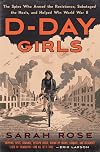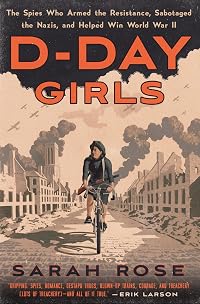
D-Day Girls: The Spies Who Armed the Resistance, Sabotaged the Nazis, and Helped Win World War II
by Sarah Rose
On This Page
Description
NATIONAL BESTSELLER • The dramatic, untold history of the heroic women recruited by Britain’s elite spy agency to help pave the way for Allied victory in World War II“Gripping. Spies, romance, Gestapo thugs, blown-up trains, courage, and treachery (lots of treachery)—and all of it true.”—Erik Larson, author of The Devil in the White City and Dead Wake
In 1942, the Allies were losing, Germany seemed unstoppable, and every able man in England was on the front lines. To show more “set Europe ablaze,” in the words of Winston Churchill, the Special Operations Executive (SOE), whose spies were trained in everything from demolition to sharpshooting, was forced to do something unprecedented: recruit women. Thirty-nine answered the call, leaving their lives and families to become saboteurs in France.
In D-Day Girls, Sarah Rose draws on recently declassified files, diaries, and oral histories to tell the thrilling story of three of these remarkable women. There’s Andrée Borrel, a scrappy and streetwise Parisian who blew up power lines with the Gestapo hot on her heels; Odette Sansom, an unhappily married suburban mother who saw the SOE as her ticket out of domestic life and into a meaningful adventure; and Lise de Baissac, a fiercely independent member of French colonial high society and the SOE’s unflappable “queen.” Together, they destroyed train lines, ambushed Nazis, plotted prison breaks, and gathered crucial intelligence—laying the groundwork for the D-Day invasion that proved to be the turning point in the war.
Rigorously researched and written with razor-sharp wit, D-Day Girls is an inspiring story for our own moment of resistance: a reminder of what courage—and the energy of politically animated women—can accomplish when the stakes seem incalculably high.
Praise for D-Day Girls
“Rigorously researched . . . [a] thriller in the form of a non-fiction book.”—Refinery29
“Equal parts espionage-romance thriller and historical narrative, D-Day Girls traces the lives and secret activities of the 39 women who answered the call to infiltrate France. . . . While chronicling the James Bond-worthy missions and love affairs of these women, Rose vividly captures the broken landscape of war.”—The Washington Post
“Gripping history . . . thoroughly researched and written as smoothly as a good thriller, this is a mesmerizing story of creativity, perseverance, and astonishing heroism.”—Publishers Weekly (starred review). show less
Tags
Recommendations
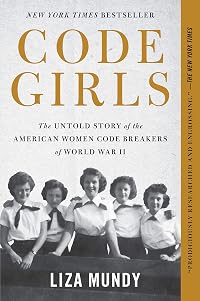
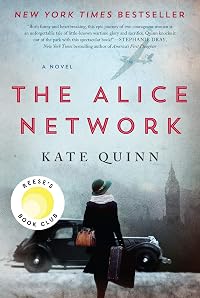
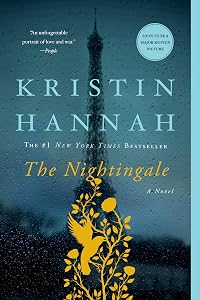
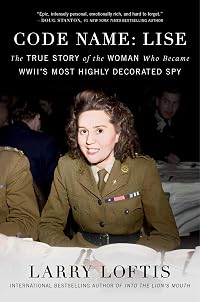
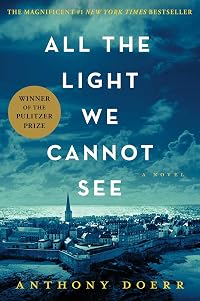
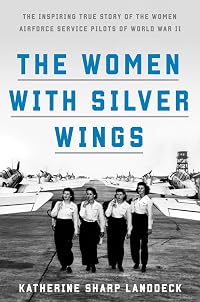
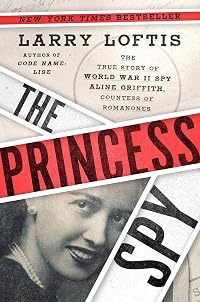
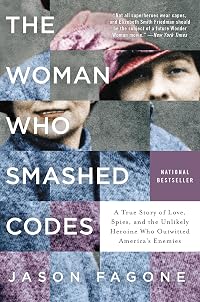








Member Reviews
In the midst of my May Re-Reading Binge, I did manage to finish one new book, and it’s one I’ve been trying to get from my libraries for the last year, at least.
D-Day Girls chronicles the experiences of some of the first women who joined the British war effort in WWII as spies and collaborators with the French Resistance.
Unfortunately, it wasn’t quite all I’d hoped. Part of the reason might have been the audio format. While the author gave a solid performance, she reads aloud the same way I do, and I don’t like the way I read aloud, because I’m trying to add life to the words and I suck at it. I’m not saying Sarah Rose sucks, but it definitely seemed as though she wasn’t totally comfortable doing it, either. The book’s show more narrative also jumps around a lot between people, times and places, something I can take in stride when I read, but when I listen, becomes a lot more challenging.
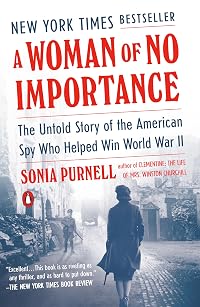
What definitely hurt my rating of this book was the fact that I’d already read/listened to A Woman of No Importance by Sonia Purnell, which chronicles the life of Virginia Hall, another woman who served Great Britain, and then the US, organising and running French Resistance. Purnell covers a few of the other players, but only as they were connected to Virginia Hall, and her time jumps were far less frequent, making it an easier book for me to fall into and one that affected me deeply.
Those two caveats aside, the book is a worthwhile read and Rose’s dedication to her subject comes through clearly in her writing. These women meant something to her beyond being historical subjects, and her efforts to bring them to life for the reader (or listener) shine through, audio or not. While Virginia Hall made it through the war relatively unscathed, these women were not so fortunate, and what they experienced and persevered through (especially Odette), made me want to go fetal in a corner and rock.
Books like this are widely considered Pop History, but I’ve never thought that was an insult; books like these are as important as the academically important History Books, because they remind us that history isn’t just about the wars and the battles and the generals who fought them. It’s about the cultures and societies and people who live through them, and Pop History books about women remind us that women have been stepping up, getting it done, and often giving their lives in the effort, long before Feminism became A Thing, and they’ve been doing it in spite of mens’ efforts to hold them back. That’s what I love about the women of historical importance: they never asked for permission or validation, they just did what needed to be done. And I love these books for bringing them out of obscurity.
I have many heroes of both genders, but almost without exception, the women who are my heroines are the ones that stepped up and led by example, and the D-Day Girls join their ranks. show less
D-Day Girls chronicles the experiences of some of the first women who joined the British war effort in WWII as spies and collaborators with the French Resistance.
Unfortunately, it wasn’t quite all I’d hoped. Part of the reason might have been the audio format. While the author gave a solid performance, she reads aloud the same way I do, and I don’t like the way I read aloud, because I’m trying to add life to the words and I suck at it. I’m not saying Sarah Rose sucks, but it definitely seemed as though she wasn’t totally comfortable doing it, either. The book’s show more narrative also jumps around a lot between people, times and places, something I can take in stride when I read, but when I listen, becomes a lot more challenging.
What definitely hurt my rating of this book was the fact that I’d already read/listened to A Woman of No Importance by Sonia Purnell, which chronicles the life of Virginia Hall, another woman who served Great Britain, and then the US, organising and running French Resistance. Purnell covers a few of the other players, but only as they were connected to Virginia Hall, and her time jumps were far less frequent, making it an easier book for me to fall into and one that affected me deeply.
Those two caveats aside, the book is a worthwhile read and Rose’s dedication to her subject comes through clearly in her writing. These women meant something to her beyond being historical subjects, and her efforts to bring them to life for the reader (or listener) shine through, audio or not. While Virginia Hall made it through the war relatively unscathed, these women were not so fortunate, and what they experienced and persevered through (especially Odette), made me want to go fetal in a corner and rock.
Books like this are widely considered Pop History, but I’ve never thought that was an insult; books like these are as important as the academically important History Books, because they remind us that history isn’t just about the wars and the battles and the generals who fought them. It’s about the cultures and societies and people who live through them, and Pop History books about women remind us that women have been stepping up, getting it done, and often giving their lives in the effort, long before Feminism became A Thing, and they’ve been doing it in spite of mens’ efforts to hold them back. That’s what I love about the women of historical importance: they never asked for permission or validation, they just did what needed to be done. And I love these books for bringing them out of obscurity.
I have many heroes of both genders, but almost without exception, the women who are my heroines are the ones that stepped up and led by example, and the D-Day Girls join their ranks. show less
This is a very readable history of the women who were recruited into the Firm, the name attached to Churchill's Special Operations Executive,and the training they went through before being dropped into France by parachute, boat or plane. Their role was to organize an underground resistance to the Germans by training French men & women in weapons use, sabotage, radio and signaling skills and how to keep themselves and their activities secrete from the Nazis and the Vichy French.
Many of these agents were arrested and tortured with some being turned by the Gestapo to be counter agents for the Nazis. This in turn led to many other agents being arrested to the point in1943 that the Resistance structure was almost completely wiped out. Only show more the persistence and clever efforts of some of the women kept the movement viable. General Eisenhower acknowledged that their efforts probably was the equivalent of 15 Divisions and shorten the war by six months.
All the incidents covered in this book have been verified by research in available documents. show less
Many of these agents were arrested and tortured with some being turned by the Gestapo to be counter agents for the Nazis. This in turn led to many other agents being arrested to the point in1943 that the Resistance structure was almost completely wiped out. Only show more the persistence and clever efforts of some of the women kept the movement viable. General Eisenhower acknowledged that their efforts probably was the equivalent of 15 Divisions and shorten the war by six months.
All the incidents covered in this book have been verified by research in available documents. show less
Wow!! Unbelievable historic tale of ultra brave women who helped liberate France from the Germans as spies! Covert actions, recruiting and organizing the resistance, delivering messages, operating radio transmissions, blowing up bridges, bringing down power lines, destroying railroad lines, these women paved the way and helped ensure the success of D-Day.
And received little to no recognition. The whole operation received little recognition and was basically ignored by de Gaulle when he "triumphantly returned to Paris.
Absolutely fascinating history.
I read this kind of quickly and somehow feel I really didn't absorb all the facts. Some parts of it bored me and I glossed over some of the more military explanations. The excessive use of show more French terms was both necessary and off putting. show less
And received little to no recognition. The whole operation received little recognition and was basically ignored by de Gaulle when he "triumphantly returned to Paris.
Absolutely fascinating history.
I read this kind of quickly and somehow feel I really didn't absorb all the facts. Some parts of it bored me and I glossed over some of the more military explanations. The excessive use of show more French terms was both necessary and off putting. show less
Andrée Borrel, Lise de Baissac, Odette Sansom, Yvonne Rudellat, and Mary Herbert all worked as undercover operatives in France during World War II. At a time when women did not serve in combat, these women were trained in the use of arms and explosives. Some of the women served as field leaders. Journalist Rose tells their stories, including both these women’s voices and the voices of those who knew them well.
Having watched the British television series Wish Me Luck at least a couple of times, I was very interested in the true stories of the women operatives in France. The stories of these women were every bit as interesting as I hoped they would be. However, the book as a whole seems incomplete. Only one of the five women was still show more in active service by the end of the war in Europe. The first two thirds of the book is largely the story of failures, then suddenly it’s D-Day and the Americans and British land in Normandy and fight their way through to liberate all of France. More attention to the broader context in which these women served would have strengthened the book. I kept waiting for an explanation of why the author chose to focus on these particular women. Were they representative of all of the women who were undercover operatives in France? If not, how were they different? I found the answers to these questions not in the text, but in the interview with the author included in the book club guide at the end of the book. show less
Having watched the British television series Wish Me Luck at least a couple of times, I was very interested in the true stories of the women operatives in France. The stories of these women were every bit as interesting as I hoped they would be. However, the book as a whole seems incomplete. Only one of the five women was still show more in active service by the end of the war in Europe. The first two thirds of the book is largely the story of failures, then suddenly it’s D-Day and the Americans and British land in Normandy and fight their way through to liberate all of France. More attention to the broader context in which these women served would have strengthened the book. I kept waiting for an explanation of why the author chose to focus on these particular women. Were they representative of all of the women who were undercover operatives in France? If not, how were they different? I found the answers to these questions not in the text, but in the interview with the author included in the book club guide at the end of the book. show less
In 1942, the Allies were losing, Germany seemed unstoppable, and every able man in England was fighting. Churchill believed Britain was locked in an existential battle and created a secret agency, the Special Operations Executive (SOE), whose spies were trained in everything from demolition to sharp-shooting. Their job, he declared, was "to set Europe ablaze!" But with most men on the frontlines, the SOE did something unprecedented: it recruited women. Thirty-nine women answered the call, leaving their lives and families to become saboteurs in France. Half were caught, and a third did not make it home alive.
In D-Day Girls, Sarah Rose draws on recently declassified files, diaries, and oral histories to tell the story of three of these show more women. There's Odette Sansom, a young mother who feels suffocated by domestic life and sees the war as her ticket out; Lise de Baissac, an unflappable aristocrat with the mind of a natural leader; and Andrée Borrel, the streetwise organizer of the Paris Resistance. Together, they derailed trains, blew up weapons caches, destroyed power and phone lines, and gathered crucial intelligence—laying the groundwork for the D-Day invasion that proved to be the turning point in the war. Stylishly written and rigorously researched, this is an inspiring story for our own moment of resistance, in which women continue to play a vital role.
I'm in love with this book! I'm so glad women's roles in history are being recognized now.
*Book received from NetGalley in exchange for an honest review* show less
In D-Day Girls, Sarah Rose draws on recently declassified files, diaries, and oral histories to tell the story of three of these show more women. There's Odette Sansom, a young mother who feels suffocated by domestic life and sees the war as her ticket out; Lise de Baissac, an unflappable aristocrat with the mind of a natural leader; and Andrée Borrel, the streetwise organizer of the Paris Resistance. Together, they derailed trains, blew up weapons caches, destroyed power and phone lines, and gathered crucial intelligence—laying the groundwork for the D-Day invasion that proved to be the turning point in the war. Stylishly written and rigorously researched, this is an inspiring story for our own moment of resistance, in which women continue to play a vital role.
I'm in love with this book! I'm so glad women's roles in history are being recognized now.
*Book received from NetGalley in exchange for an honest review* show less
I can't recall if I have ever read a book before that left me so discouraged. Granted, the war years were most unusual, but they were also years of learning in ways we never would have imagined. And yet, the women of the secret services were so brave and resourceful ... and so willingly and confidently screwed ... by the men who have written a history that is so incomplete. Yes, necessarily, this is more a verbal history than one might ordinarily find but what we have in this book simply ignorance and pride by my sex. If I could, I would urge the widest possible readership both to inform and to shame. My goodness, what these women endured and to then to be made part of the living dead is simply sinful.
To be sure, war creates turmoil and show more records are lost or are incomplete. Sadly, those best positioned to do something about straightening things out are silent.
Heroes arise from all walks of life. The list of heroes of WWII must be made more complete. show less
To be sure, war creates turmoil and show more records are lost or are incomplete. Sadly, those best positioned to do something about straightening things out are silent.
Heroes arise from all walks of life. The list of heroes of WWII must be made more complete. show less
First off, I do want to comment by saying that while, I do agree with some readers that this book was a bit scattered; it did not distract or turn me off from my reading experience of this book. Yes, it felt like the author, Ms. Rose was so excited that she was just penning down all of the facts and her research to paper. However, it is because of this "excitement" that helped me with my reading experience.
It is easy to forget that past history not only touched men but women as well. Women were very beneficial to wars as well. It is just that they did not get the huge recognition like men did. That is changing even in todays world but not fully embraced yet. I know years ago when I was considering joining the military, the idea of show more women on the front line was not as favored.
Back to this book. I liked all of the women. Each one had a different reason for joining this cause. I was impressed by their courage and bravery. Fans of history books or just looking for a new book to read should pick up a copy of this book. show less
It is easy to forget that past history not only touched men but women as well. Women were very beneficial to wars as well. It is just that they did not get the huge recognition like men did. That is changing even in todays world but not fully embraced yet. I know years ago when I was considering joining the military, the idea of show more women on the front line was not as favored.
Back to this book. I liked all of the women. Each one had a different reason for joining this cause. I was impressed by their courage and bravery. Fans of history books or just looking for a new book to read should pick up a copy of this book. show less
Members
- Recently Added By
Lists

Books Read in 2023
5,638 works; 147 members

History: War & Terrorism
64 works; 1 member
Author Information

2 Works 1,368 Members
Some Editions
Common Knowledge
- Alternate titles
- D-Day girls : the untold story of the female spies who armed the resistance, sabotaged the Nazis, and helped win World War II
- Original publication date
- 2019
- People/Characters
- Odette; Andrée Borrel; Lise de Baissac
- Important events
- World War II
- Publisher's editor
- Cook, Amanda
- Canonical DDC/MDS
- 940.54864109252
Classifications
- Genres
- History, General Nonfiction, Nonfiction, Biography & Memoir
- DDC/MDS
- 940.54864109252 — History & geography History of Europe History of Europe 1918- Military history of World War II Other Topics Unconventional warfare of Allies Europe British Isles
- LCC
- D810 .S7 .C766 — History of Europe, Asia, Africa and Oceania History (General) World War II (1939-1945)
- BISAC
Statistics
- Members
- 617
- Popularity
- 47,378
- Reviews
- 27
- Rating
- (3.67)
- Languages
- Dutch, English, Hungarian, Portuguese (Portugal)
- Media
- Paper, Audiobook, Ebook
- ISBNs
- 15
- ASINs
- 2