
Robert Matzen
Author of Dutch Girl: Audrey Hepburn and World War II
About the Author
Image credit: Robert Matzen at BookExpo at the Javits Center in New York City, May 2019. By Rhododendrites - Own work, CC BY-SA 4.0, https://commons.wikimedia.org/w/index.php?curid=79387601
Works by Robert Matzen
Errol Flynn Slept Here: The Flynns, the Hamblens, Rick Nelson, and the Most Notorious House in Hollywood (2009) 22 copies, 3 reviews
Associated Works
Tagged
Common Knowledge
- Gender
- male
Members
Reviews

Dutch Girl: Audrey Hepburn and World War II - Robert Matzen Biographies are not usually my thing, and biographies of celebrities even less so. Most peoples lives are terribly interesting, and the risk of learning something truly off-putting is high. So for the most part I'm a enjoy their art or athleticism or moment in history and move on, unknowing.Like much of humanity who's seen her movies, I like Audrey Hepburn: so lovely, so stylish, willing to use her fame and popularity on behalf of show more the world's most desperate children. But I knew pretty much nothing about her life. Until recently I didn't know she was from the Kingdom of the Netherlands or that she had been associated with the Resistance during the war. Audrey Hepburn: Girl Spy sounds great but it rather overstates the case. Matzen doesn't oversell it. He's quite clear that she spent most of the war shy, lonely, and only interested in dance.What her wartime experiences illustrate isn't tales of great daring and glamour, but the quiet day to day heroism of people under occupation, trying to carry on with their lives despite deprivations and ever-present danger. There are interesting similarities between this and A Castle in Wartime. The Nazis were keen on holding hostages. Hepburn's family was not rich, but her mother was a Baroness and a fool. She was very keen on fascism and Nazis and Hitler's great charm right up until the Netherlands were invaded and people she cared for started dying. Hepburn's mother had rather a bad time of it after liberation when her earlier warmth to the occupiers was closely examined. While it is morally important to prosecute war criminals I'm not sure that it is any sort of deterrent and certainly shaming women for attention received from the occupiers is just mean and vindictive.War is hell. It is particularly hell for the women and children starving and freezing in bombed-out cities like Arnhem or Aleppo. It's not surprising the Hepburn would become an ambassador for children for UNICEF. She never forgot what she had lived through and what it meant to her to receive aid at a most desperate time. In her honor I am donating to UNICEF today on behalf of all the children who have been refused a home or help when they needed it to survive. Donations made today will be tripled.Library copy show less
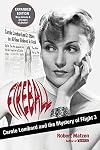
I have always believed deeply that when you read a book, it should draw some sort of emotion from you, whether it be joy, sadness, disgust, consternation, etc. I can tell you that this book did not disappoint. It left indelible marks upon my very being. I have always known about Carole Lombard and Clark Gable. I have even visited the place where they spent their honeymoon. Please understand this: I am not a star-watcher, nor do I follow their every movement. But it was the situation of these show more two lives which intrigued me: two people very much in love, and without warning, taken from each other.
Admittedly, it is something that happens to people every day. But you do not read about it every day. You do not read about their lives quite the way Mr. Matzen has written. He has interspersed every other chapter with Ms. Lombard and Mr. Gable's life from their beginning right up until the end together. You learn things that are not the fodder of fan magazines - the tragedies that befell her when she was young, and the reason she lived her life at such a fast pace. She felt she had to; that she needed to, as if each day meant something important, and she was not going to let one minute slip by unnoticed.
Mr. Gable lived his life quite differently from hers, and reading it, you wouldn't expect the two completely disparate personalities to come together at all. But they did - and they lived furiously; and when the news of her death becomes a reality to him, it shakes him up and shapes him as nothing else has ever done before.
As I said, every other chapter is about these two, but it is what is in between that is the most heart-wrenching of all. He allows us into the lives of the others on the plane, the people who were there and some that were not supposed to be (although I suppose, in a way they were supposed to be); a glimpse of their lives and the ones they left behind who were waiting for word even while Mr. Gable was hurrying to find his wife, hoping against hope that everyone was wrong.
At the last, there is the story of the people who gave their time and effort climbing up that mountain on a cold January day, trying to see if there was anyone alive who needed rescuing, and their stories are here as well, and just as thought-provoking. A sad read, but an intense one, and worth the time. Highly recommended. show less
Admittedly, it is something that happens to people every day. But you do not read about it every day. You do not read about their lives quite the way Mr. Matzen has written. He has interspersed every other chapter with Ms. Lombard and Mr. Gable's life from their beginning right up until the end together. You learn things that are not the fodder of fan magazines - the tragedies that befell her when she was young, and the reason she lived her life at such a fast pace. She felt she had to; that she needed to, as if each day meant something important, and she was not going to let one minute slip by unnoticed.
Mr. Gable lived his life quite differently from hers, and reading it, you wouldn't expect the two completely disparate personalities to come together at all. But they did - and they lived furiously; and when the news of her death becomes a reality to him, it shakes him up and shapes him as nothing else has ever done before.
As I said, every other chapter is about these two, but it is what is in between that is the most heart-wrenching of all. He allows us into the lives of the others on the plane, the people who were there and some that were not supposed to be (although I suppose, in a way they were supposed to be); a glimpse of their lives and the ones they left behind who were waiting for word even while Mr. Gable was hurrying to find his wife, hoping against hope that everyone was wrong.
At the last, there is the story of the people who gave their time and effort climbing up that mountain on a cold January day, trying to see if there was anyone alive who needed rescuing, and their stories are here as well, and just as thought-provoking. A sad read, but an intense one, and worth the time. Highly recommended. show less

I began to read this with some trepidation… I didn't want these two to lose their luster. I also didn't want to cry over them, but I was resigned to that – when one of a loving couple is going to crash into a mountain in the course of a book, tears are going to happen.
In the end, was the Great Love Affair between Gable and Lombard everything fond fans say it was? I don't know. Probably not. (Two words: Lana Turner.) Would they have been divorced in a few years? Maybe. But it doesn't show more really matter. It's sort of like JFK's presidency – cut untimely short, there's so much room left for fantasy and imagining.
And, also like JFK's presidency, press coverage resulted in a public perception of the situation which didn't bear much resemblance to reality. Which goes back to the beginning of this review. I kind of like the fantasy, the he-for-her-only-and-she-for-him illusion. It's not any fun to become resigned to the fact that Gable was a dog, and Lombard was no saint herself. But … well, the couple in this book are human beings, not Movie Stars. There's the difference.
This is the story of a woman described as the kind of friend everyone longs for, energetic and loyal and fierce – a fireball – and the fireball that ended her. I knew little enough about her, except for her earlier marriage to William Powell, her love of animals, and the romance with Gable; I had no idea about the other accident that changed the course of Carole Lombard's life. Shocked, I felt stunningly unobservant never to have noticed the scars … until I went looking for them. They're most definitely there in some pictures – I can't say I'm not unobservant – but in my defense, makeup and lighting were used skillfully to hide or at least minimize them. Her tremendous heart, her "salty" language – and the reason for the language; her "Causes" which ranged from parrots to people and everywhere in between… No, this exploration of her life and death did not dim Carole Lombard in my eyes.
Supplemental to the tale of Gable and Lombard and that damned mountain, this was a look inside Hollywood of the 20's and 30's, and how Gable hated playing Rhett Butler but Lombard longed to play Scarlett, and the often vicious process of casting and celebrity. "The result is equal parts biography, rescue effort, and mystery; it’s also a love story and an unimaginable tragedy that continues to haunt me, as it may haunt you." And it's about early air travel, the uncertain first steps of the country into war, about the other people who were on that damned plane and the people they left behind. It could have been a scattered mess – but it's not. The method in which Matzen tells the history, in which the timeline is cut in half and braided until about the 60% point where they catch up to each other, and the story of Gable and Lombard is woven together with that of all the other people involved in the fireball, works to deepen the story. I don't think it's easy to tell a story with a foregone conclusion; reading another biography of a beloved celebrity, I thought about how I would probably get his death out of the way early and soften the blow a bit. I mean, as with this book, I went into it knowing full well that he died some years ago, but the exploration of the long illness that killed him, culminating in his death and funeral and a brief aftermath, left me a bit wrecked at the end – testament more to how I felt about the actor than to the book. So I liked the fact that there is no coyness or artificial buildup to the very definitely foregone conclusion in Fireball. The emotional impact is still powerful, the description of the crash is horrific in its detail, but it's not what the reader closes the book with for the last time.
The cause, or rather possible cause of the crash is explored, and no real answer attained. I found it remarkable that even in this story there are conspiracy theories.
Yeah, I cried. "If I can do it, so can you." I learned a bit more about the Golden Age Hollywood stars I love so much – Spencer Tracy, and Lucille Ball, and William Powell. Gable and Lombard. And it didn't hurt my affection for them – on the contrary. They are more fully formed in my mind's eye, and knowing that I like them as human beings will enhance my enjoyment of their performances.
We're not really supposed to quote from advance copies of books, but … well, that never really stopped me before, and I want to make note of: "…Stand your ground, and make it look like you were planting flowers on that ground all the while." I'd like that cross-stitched and framed.
And I want to close with another quote, the author's summation of why I wish I'd known the woman born as Jane Alice Peters: "the soft-hearted, hard-charging, caffeine-fueled, self-promoting, profanity-laced, nicotine-addicted, business-oriented, and usually optimistic sexpot and perpetual motion machine known to the world as Carole Lombard". God bless – and angels keep. show less
In the end, was the Great Love Affair between Gable and Lombard everything fond fans say it was? I don't know. Probably not. (Two words: Lana Turner.) Would they have been divorced in a few years? Maybe. But it doesn't show more really matter. It's sort of like JFK's presidency – cut untimely short, there's so much room left for fantasy and imagining.
And, also like JFK's presidency, press coverage resulted in a public perception of the situation which didn't bear much resemblance to reality. Which goes back to the beginning of this review. I kind of like the fantasy, the he-for-her-only-and-she-for-him illusion. It's not any fun to become resigned to the fact that Gable was a dog, and Lombard was no saint herself. But … well, the couple in this book are human beings, not Movie Stars. There's the difference.
This is the story of a woman described as the kind of friend everyone longs for, energetic and loyal and fierce – a fireball – and the fireball that ended her. I knew little enough about her, except for her earlier marriage to William Powell, her love of animals, and the romance with Gable; I had no idea about the other accident that changed the course of Carole Lombard's life. Shocked, I felt stunningly unobservant never to have noticed the scars … until I went looking for them. They're most definitely there in some pictures – I can't say I'm not unobservant – but in my defense, makeup and lighting were used skillfully to hide or at least minimize them. Her tremendous heart, her "salty" language – and the reason for the language; her "Causes" which ranged from parrots to people and everywhere in between… No, this exploration of her life and death did not dim Carole Lombard in my eyes.
Supplemental to the tale of Gable and Lombard and that damned mountain, this was a look inside Hollywood of the 20's and 30's, and how Gable hated playing Rhett Butler but Lombard longed to play Scarlett, and the often vicious process of casting and celebrity. "The result is equal parts biography, rescue effort, and mystery; it’s also a love story and an unimaginable tragedy that continues to haunt me, as it may haunt you." And it's about early air travel, the uncertain first steps of the country into war, about the other people who were on that damned plane and the people they left behind. It could have been a scattered mess – but it's not. The method in which Matzen tells the history, in which the timeline is cut in half and braided until about the 60% point where they catch up to each other, and the story of Gable and Lombard is woven together with that of all the other people involved in the fireball, works to deepen the story. I don't think it's easy to tell a story with a foregone conclusion; reading another biography of a beloved celebrity, I thought about how I would probably get his death out of the way early and soften the blow a bit. I mean, as with this book, I went into it knowing full well that he died some years ago, but the exploration of the long illness that killed him, culminating in his death and funeral and a brief aftermath, left me a bit wrecked at the end – testament more to how I felt about the actor than to the book. So I liked the fact that there is no coyness or artificial buildup to the very definitely foregone conclusion in Fireball. The emotional impact is still powerful, the description of the crash is horrific in its detail, but it's not what the reader closes the book with for the last time.
The cause, or rather possible cause of the crash is explored, and no real answer attained. I found it remarkable that even in this story there are conspiracy theories.
Yeah, I cried. "If I can do it, so can you." I learned a bit more about the Golden Age Hollywood stars I love so much – Spencer Tracy, and Lucille Ball, and William Powell. Gable and Lombard. And it didn't hurt my affection for them – on the contrary. They are more fully formed in my mind's eye, and knowing that I like them as human beings will enhance my enjoyment of their performances.
We're not really supposed to quote from advance copies of books, but … well, that never really stopped me before, and I want to make note of: "…Stand your ground, and make it look like you were planting flowers on that ground all the while." I'd like that cross-stitched and framed.
And I want to close with another quote, the author's summation of why I wish I'd known the woman born as Jane Alice Peters: "the soft-hearted, hard-charging, caffeine-fueled, self-promoting, profanity-laced, nicotine-addicted, business-oriented, and usually optimistic sexpot and perpetual motion machine known to the world as Carole Lombard". God bless – and angels keep. show less
Several biographies have been written about Audrey Hepburn, but none has attempted to cover her intense experiences through five years of Nazi occupation in the Netherlands, where she spent the entirety of World War II.
Drawing upon thorough research, Robert Matzen delivers a moving and persuasive account of a time that the actress seldom discussed in detail and which has been glossed over or sensationalized by other biographers. Hepburn’s hesitation was not an unwillingness to recall the show more war’s hardships and horrors, but reflected the uncomfortable fact that her parents were openly pro-Nazi.
She also suffered personal loss during the war when her uncle, Otto van Limburg Stirum, was arrested along with many other prominent Dutch citizens to be held as a deterrent against organized resistance. When a train station was blown up, Otto and four other men were executed in retaliation.
Audrey Hepburn, for all her future fame, was defined and haunted by World War II. In her final years, she became an ambassador for UNICEF, devoting herself to helping the young victims of conflict. Among her many contributions, she gave fund-raising readings from the diary of Anne Frank.
976 show less
Drawing upon thorough research, Robert Matzen delivers a moving and persuasive account of a time that the actress seldom discussed in detail and which has been glossed over or sensationalized by other biographers. Hepburn’s hesitation was not an unwillingness to recall the show more war’s hardships and horrors, but reflected the uncomfortable fact that her parents were openly pro-Nazi.
She also suffered personal loss during the war when her uncle, Otto van Limburg Stirum, was arrested along with many other prominent Dutch citizens to be held as a deterrent against organized resistance. When a train station was blown up, Otto and four other men were executed in retaliation.
Audrey Hepburn, for all her future fame, was defined and haunted by World War II. In her final years, she became an ambassador for UNICEF, devoting herself to helping the young victims of conflict. Among her many contributions, she gave fund-raising readings from the diary of Anne Frank.
976 show less
Lists
You May Also Like


Associated Authors
Statistics
- Works
- 10
- Also by
- 1
- Members
- 669
- Popularity
- #37,727
- Rating
- 4.0
- Reviews
- 49
- ISBNs
- 60
- Languages
- 3