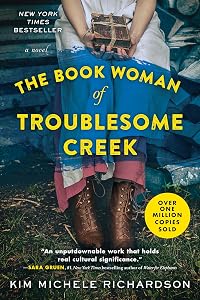
The Book Woman of Troublesome Creek
by Kim Michele Richardson 
The Book Woman of Troublesome Creek (1)
On This Page
Description
"Cussy Mary Carter is the last of her kind, her skin the color of a blue damselfly in these dusty hills. But that doesn't mean she's got nothing to offer. As a member of the Pack Horse Library Project, Cussy delivers books to the hill folk of Troublesome, hoping to spread learning in these desperate times. But not everyone is so keen on Cussy's family or the Library Project, and the hardscrabble Kentuckians are quick to blame a Blue for any trouble in their small town. The Book Woman of show more Troublesome Creek is a story of raw courage, fierce strength, and one woman's determination to bring a little bit of hope to the darkly hollers"-- show lessTags
Recommendations



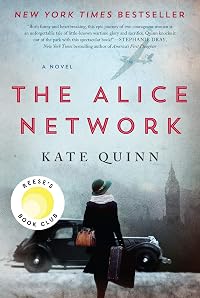


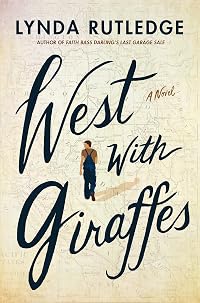






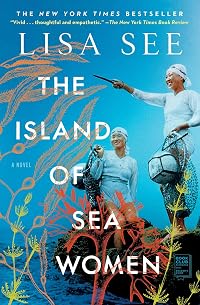
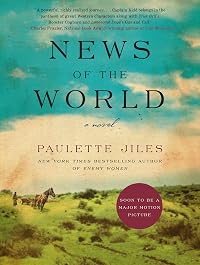


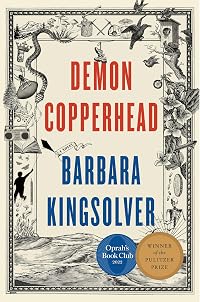
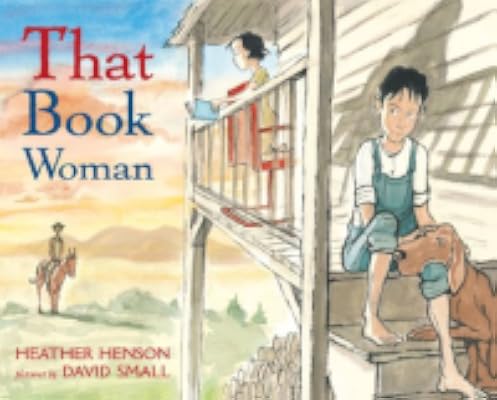
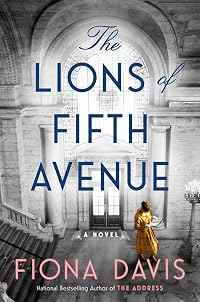


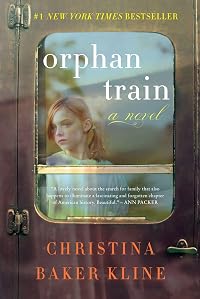
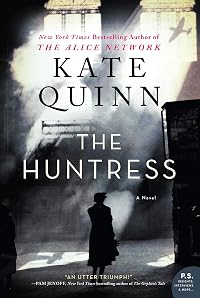
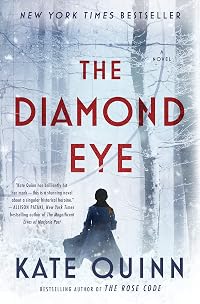

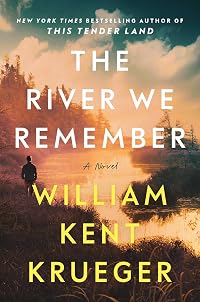
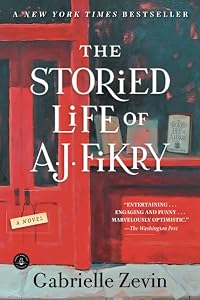



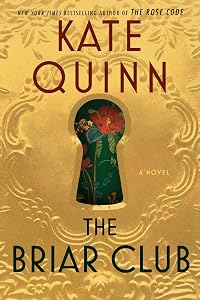
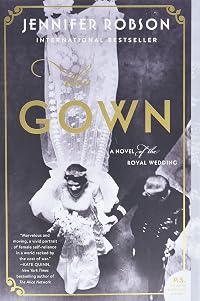
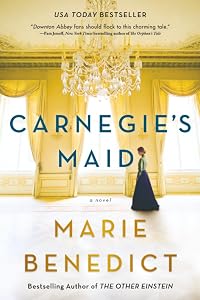
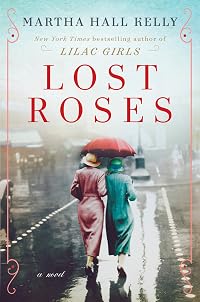

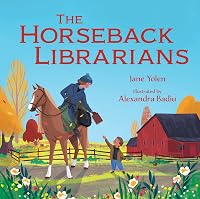
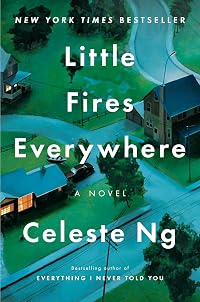

Member Recommendations

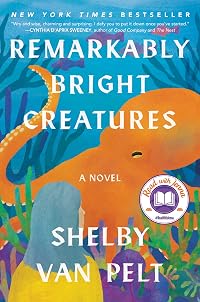
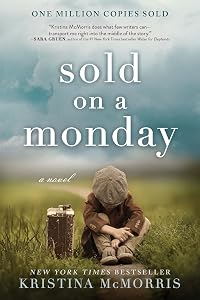
cbl_tn Both books are about young women in the early 20th century trying to educate Appalachians and break the cycle of poverty.
30
out-and-about Same time frame and setting, about the PackHorse library in KY.
30

dara85 Takes place in the past in Appalachia. Main character's friend and matchmaker drives a book mobile.
Member Reviews
Cussy Mary Carter is a Blue, a member of a family in extremely rural 1930s Kentucky that has an inherited genetic disorder causing blue skin. She lives with her father, a miner, and has a job as a Pack Horse Librarian - a federal program that pays local residents to share donated books, magazines, and newspapers among remote homes. Cussy is ostracized from the rural society, with some people thinking her color is a contagious disease, it is a sign of the devil and she needs to be “saved”, or associating her with “colored” (i.e. Black) people. Life in the mountains, in extreme poverty, is very hard, but the joy that she can bring people with a novel or magazine or pie recipe pasted in a scrapbook are worth it.
The true stories show more behind this fictional one are fascinating. The Blue Fugates of Kentucky were a real family, descended from a real French immigrant in 1820, who carried a real gene that really made their skin blue. The Pack Horse Librarian Program was a New Deal project which really employed women to deliver materials and read to rural people. There is no evidence that any of the Blue Fugates were Pack Horse Librarians. The details of Cussy’s father’s life as a miner were accurate and detailed - the mining company paid the workers in chits that could only be spent at the Company store, thus keeping them in debt, and was constantly threatening to pack up and leave (as one of the few employers in the area). Pa suffers from black lung disease, tries to organize a union with his fellow miners, is forced to take on the most dangerous tasks due to his blue skin, andeventually dies in a collapse . There is no doubt that the blue people of Kentucky suffered real discrimination, isolation, and violence. However, the book (in Cussy’s first person perspective) frequently asserts that the lives of blue people are equal to or harder than those of Black people. The one Black character in the town is another librarian who moves to Philadelphia, leaving Cussy jealous: “Maybe there was opportunity and blessings for her color, but I’d never once seen one for mine.” and Cussy constantly mentions the “No Coloreds” signs which she knows refer to her. In the end, her happily-ever-after is semi-thwarted by anti-miscegenation law, without any concern for who else the law might affect. It’s not clear if the reader is to believe that Cussy believes these things are true, or if the author does. I’d cautiously recommend the book if you’re interested in the real-life subjects, but I wish there was a better book about them. show less
The true stories show more behind this fictional one are fascinating. The Blue Fugates of Kentucky were a real family, descended from a real French immigrant in 1820, who carried a real gene that really made their skin blue. The Pack Horse Librarian Program was a New Deal project which really employed women to deliver materials and read to rural people. There is no evidence that any of the Blue Fugates were Pack Horse Librarians. The details of Cussy’s father’s life as a miner were accurate and detailed - the mining company paid the workers in chits that could only be spent at the Company store, thus keeping them in debt, and was constantly threatening to pack up and leave (as one of the few employers in the area). Pa suffers from black lung disease, tries to organize a union with his fellow miners, is forced to take on the most dangerous tasks due to his blue skin, and
Eye-opening narrative focusing on two unique elements of Kentucky history: the small population of "blues"--a genetic fluke that lowered the oxygenization of the blood so that it gave the skin a blue pallor--and the Depression-era Pack Horse Library service. The combination is effective. Although fictionalized, the main points are based in fact and thus the book can serve as an introduction to both these under-recognized histories.
The well-researched book is not without some minor execution weaknesses. After a paced development of the main character's story, the ending seemed a tad thin and rushed. A few inconsistencies in character development arise--e.g., although a major theme of the book is the starving conditions, the central show more character throws a perfectly good cake into the bushes in a fit of pique at not being treated nicely.
But these are petty issues. The tale is engrossing, and although a map would have helped to get a better handle on the geography, the reader is left with a new appreciation of what is for most of us a new aspect of Kentucky history. show less
The well-researched book is not without some minor execution weaknesses. After a paced development of the main character's story, the ending seemed a tad thin and rushed. A few inconsistencies in character development arise--e.g., although a major theme of the book is the starving conditions, the central show more character throws a perfectly good cake into the bushes in a fit of pique at not being treated nicely.
But these are petty issues. The tale is engrossing, and although a map would have helped to get a better handle on the geography, the reader is left with a new appreciation of what is for most of us a new aspect of Kentucky history. show less
I was hooked from the beginning and Cussy Mary is a fantastic heroine. I also read Giver of Stars sometime back and now that I've read both books, I would say I felt this one had more heart. They are both good stories about the book women that delivered books in the hills of Kentucky during the 30's as part of the New Deal. It is a fascinating time in American History. What Richardson's book also tackles is the plight of a young woman considered a "Blue" and the discrimination she encounters because of her skin color. Richardson told the story eloquently and respectfully. I found both story lines fascinating.
Cussy Mary is a librarian in the Kentucky Pack Horse library. Her patrons are hard-to-reach hillfolk, dealing with extreme poverty made only worse by the Great Depression. Cussy is also a Blue, the last of her kind according to her Pa, an outcast in a community that sees only black and white and doesn't quite know what to make of her.
This historical fiction includes two fascinating elements, and learning something about the Pack Horse library was a huge draw for me. In that, I was not disappointed as Cussy narrates and tells the reader about her patrons, how the Pack Horse Library works, and the scrapbooks she would make for her patrons. I liked the story, but I never got to the point where I could fully sink in, turn off my analytical show more brain, and just love it. The main reason was that the story itself was pretty disjointed, with short chapters and almost an episodic feel as a conflict would be introduced and then suddenly resolved a few chapters in rather than a smooth read. And finally some aspects, such as the love interest, felt forced rather than organic. It never quite rises above a solid like with some reservations. show less
This historical fiction includes two fascinating elements, and learning something about the Pack Horse library was a huge draw for me. In that, I was not disappointed as Cussy narrates and tells the reader about her patrons, how the Pack Horse Library works, and the scrapbooks she would make for her patrons. I liked the story, but I never got to the point where I could fully sink in, turn off my analytical show more brain, and just love it. The main reason was that the story itself was pretty disjointed, with short chapters and almost an episodic feel as a conflict would be introduced and then suddenly resolved a few chapters in rather than a smooth read. And finally some aspects, such as the love interest, felt forced rather than organic. It never quite rises above a solid like with some reservations. show less
Outstanding historical fiction!
I wanted to read this book as although I’ve seen photographs of pack horse librarians on Facebook many times over the years I didn’t know anything of their history.
Against incredible odds every day…Cussy Mary Carter is an extraordinary young woman giving her all as daughter to Thomas Carter and especially as one of the librarians of The Kentucky Pack Horse program that was implemented in 1935, by the Works Progress Administration (WPA) to create women’s work programs and to assist economic recovery and build literacy as part of President Franklin D. Roosevelt’s New Deal Acts.
Cussy is nicknamed "Bluet" or simply called "Book Woman" by most of her patrons along her route. She faced treacherous show more conditions daily due to weather, terrain, animals such as snakes on the path, and the evil of man sometimes lurking along isolated parts of the forest landscape. Cussy’s transportation is either an old mule she named "Junia" or simply to walk next to her mule on the sections of route too steep to safely ride.
Understanding the joy Cussy’s mother had given to her through books Cussy now endeavors with tenacity and grit to bring that same joy, that same comfort, that same uplifting experience to her patrons. After one period of time when Cussy was unable to work she said, "Being able to return to the books was a sanctuary for my heart. And a joy bolted free, lessening my own grievances, forgiving spent youth and dying dreams lost to a hard life, the hard land, and to folks’ hard thoughts and partialities."
At times there were tears running down my face and so many times I wanted to rush into the pages and hug Cussy. I surely wanted to reach in between the pages and give that dear old mule Junia as many apples as she wanted to eat for the rest of her life for all of the times her instincts alerted Cussy to danger, protected Cussy from danger, or at the very least tried her very best to keep Cussy safe from all harm whether from nature, animals, or mankind.
This book is outstanding as it combines the author’s meticulous research with her passion to humanize and bring understanding to the blue-skinned people of Kentucky and recognize and highlight the dedication and commitment of the Kentucky Pack Horse Librarians all with atmospheric and literary storytelling and compelling narrative. show less
I wanted to read this book as although I’ve seen photographs of pack horse librarians on Facebook many times over the years I didn’t know anything of their history.
Against incredible odds every day…Cussy Mary Carter is an extraordinary young woman giving her all as daughter to Thomas Carter and especially as one of the librarians of The Kentucky Pack Horse program that was implemented in 1935, by the Works Progress Administration (WPA) to create women’s work programs and to assist economic recovery and build literacy as part of President Franklin D. Roosevelt’s New Deal Acts.
Cussy is nicknamed "Bluet" or simply called "Book Woman" by most of her patrons along her route. She faced treacherous show more conditions daily due to weather, terrain, animals such as snakes on the path, and the evil of man sometimes lurking along isolated parts of the forest landscape. Cussy’s transportation is either an old mule she named "Junia" or simply to walk next to her mule on the sections of route too steep to safely ride.
Understanding the joy Cussy’s mother had given to her through books Cussy now endeavors with tenacity and grit to bring that same joy, that same comfort, that same uplifting experience to her patrons. After one period of time when Cussy was unable to work she said, "Being able to return to the books was a sanctuary for my heart. And a joy bolted free, lessening my own grievances, forgiving spent youth and dying dreams lost to a hard life, the hard land, and to folks’ hard thoughts and partialities."
At times there were tears running down my face and so many times I wanted to rush into the pages and hug Cussy. I surely wanted to reach in between the pages and give that dear old mule Junia as many apples as she wanted to eat for the rest of her life for all of the times her instincts alerted Cussy to danger, protected Cussy from danger, or at the very least tried her very best to keep Cussy safe from all harm whether from nature, animals, or mankind.
This book is outstanding as it combines the author’s meticulous research with her passion to humanize and bring understanding to the blue-skinned people of Kentucky and recognize and highlight the dedication and commitment of the Kentucky Pack Horse Librarians all with atmospheric and literary storytelling and compelling narrative. show less
rabck from hyphen8; Cussy Mary Carter is a pack horse librarian for Troublesome Creek, Kentucky paid for by Roosevelt's WPA. She's also the last of the "blues", because her skin is always blue & therefore she's lumped in with the colored folks and shunned. Pa's getting old from the coal mines work and puts up a land dowry to get Mary married off...to an old buzzard who beats and rapes her on her wedding night, before dying of a heart attack. The only good thing is she inherits his mule for the pack horse library. The book delves into the hard scrabble lives of the folks in the holler, many who can't read - until Cussy can teach them. Jackson Lovett, a white man, returns to town after working on the Hoover dam, and the whites are none show more too pleased that he's courting Cussy. All in all a very good read about "blue" skinned people (it's a white person's recessive gene on both sides that causes the condition), being poor in the holler no matter what your color, and racial tensions that still are around all these years later. show less
When I read The Giver of Stars by Jojo Moyes in January, I was unaware that another book on the same subject, the Pack Horse Librarians of 1930s Kentucky, had been published at the same time. The debate about whose book came first, and if Moyes' novel might have been 'influenced' by Richardson's, flared up last year, but was settled without going to court. Had I known about The Book Woman of Troublesome Creek in time to compare reviews, however, I think I might have chosen this. Moyes' take on the brave women of Kentucky is easier to read, in that the storyline flows better, but I found the pacing too pat and the characters weak and cliched. Richardson, who actually grew up in Kentucky and therefore knows more of the hardships she is show more writing about, knocks Moyes' version into a cocked hat. Yes, Book Woman took longer to read, but was well worth the extra concentration required.
Cussy Mary Carter is the last of the 'blue people' of Kentucky, afflicted with a rare genetic disorder which limits the oxygen in her blood and tinges her skin a mottled blue colour. She and her father, a miner fighting the company for basic human rights and better pay, live in terrible poverty in the hills, shunned by the townspeople for being 'coloured'. Still Cussy looks forward to travelling a dangerous route on her faithful mule Junia to deliver books and magazines, even scrapbooks of recipes and household hints, to her 'patrons' in the hills, some living in even worse conditions than Cussy herself, as a 'book woman' for the Packhorse Librarian Project. After a brief but catastrophic marriage arranged by her father, Cussy becomes the 'Widow Frazier' but is determined to carry on her proud work, bringing reading and learning to a pregnant sixteen year old, a starving young boy, a teenager trying to improve his lot and win the girl he loves, and old woman slowly going blind, and even a gruff moonshiner who initially rejects Cussy and her 'government books'. She also meets Jackson Lovett, a handsome young man who has recently moved back to Troublesome Creek, and doesn't seem at all put off by Cussy's colour.
Slow going, yes, and hard to read - I can't even begin to comprehend the depths of poverty and ignorance portrayed here, and in the 1930s not the nineteenth century! - but so emotionally rewarding. As the author explains in her notes, the reader gets to know the 'blue woman' as a person, not a medical anomaly, and also meet the other, equally marginalised people on her route, who are doing the best they can with what they have, to misquote Scout from To Kill A Mockingbird.
Heartrending and instructive - what more can anyone ask from a book? show less
Cussy Mary Carter is the last of the 'blue people' of Kentucky, afflicted with a rare genetic disorder which limits the oxygen in her blood and tinges her skin a mottled blue colour. She and her father, a miner fighting the company for basic human rights and better pay, live in terrible poverty in the hills, shunned by the townspeople for being 'coloured'. Still Cussy looks forward to travelling a dangerous route on her faithful mule Junia to deliver books and magazines, even scrapbooks of recipes and household hints, to her 'patrons' in the hills, some living in even worse conditions than Cussy herself, as a 'book woman' for the Packhorse Librarian Project. After a brief but catastrophic marriage arranged by her father, Cussy becomes the 'Widow Frazier' but is determined to carry on her proud work, bringing reading and learning to a pregnant sixteen year old, a starving young boy, a teenager trying to improve his lot and win the girl he loves, and old woman slowly going blind, and even a gruff moonshiner who initially rejects Cussy and her 'government books'. She also meets Jackson Lovett, a handsome young man who has recently moved back to Troublesome Creek, and doesn't seem at all put off by Cussy's colour.
Slow going, yes, and hard to read - I can't even begin to comprehend the depths of poverty and ignorance portrayed here, and in the 1930s not the nineteenth century! - but so emotionally rewarding. As the author explains in her notes, the reader gets to know the 'blue woman' as a person, not a medical anomaly, and also meet the other, equally marginalised people on her route, who are doing the best they can with what they have, to misquote Scout from To Kill A Mockingbird.
Heartrending and instructive - what more can anyone ask from a book? show less
Members
- Recently Added By
Published Reviews
Richardson has penned an emotionally moving and fascinating story about the power of literacy over bigotry, hatred and fear.
added by Lemeritus
Richardson, a master of phrase, cadence, and imagery, once again delivers a powerful yet heartfelt story that gives readers a privileged glimpse into an impoverished yet rigidly hierarchical society, this time by shining a light on the courageous, dedicated women who brought books and hope to those struggling to survive on its lowest rung. Strongly recommended.
added by Lemeritus
Kim Michele Richardson’s presentation of her protagonist’s challenges and perseverance within a culture hostile to deviation from norms is a significant accomplishment. Equally valuable is her reminder of the priceless necessity, the enduring thrill, of books and reading.
added by Lemeritus
Lists

Best books about books
209 works; 105 members

Recommend the 20 best books you've read in the last five years
2,168 works; 606 members

Top Five Books of 2020
982 works; 350 members

Top Five Books of 2019
387 works; 111 members

Top Five Books of 2021
604 works; 181 members

Books about Books
149 works; 24 members

Phi Beta Kappa reading list
260 works; 8 members

Literature About Women and Girls
394 works; 39 members

Books Read in 2020
4,379 works; 124 members

Books Read in 2022
5,168 works; 114 members

Books Read in 2019
4,052 works; 108 members

fictional librarians
53 works; 19 members

Troublesome bodies
110 works; 7 members

Income Inequality
20 works; 4 members

Tagged Great Depression
23 works; 3 members

Books Read in 2021
5,361 works; 114 members

Books to Read
95 works; 2 members
Best Audiobooks
240 works; 114 members
Author Information

9 Works 5,457 Members
Kim Michele Richardson is a LibraryThing Author, an author who lists their personal library on LibraryThing.
Some Editions
Awards and Honors
Awards
Distinctions
Notable Lists
Series

Common Knowledge
- Canonical title
- The Book Woman of Troublesome Creek
- Original publication date
- 2019-05-07
- People/Characters
- Cussy Mary Carter; Elijah Carter; Jackson Lovett; Angeline Moffit; R.C. Cole; Vester Frazier (show all 22); Eulah Foster; Charlie Frazier; Willie Moffit; Harriett Hardin; Queenie Johnson; Winnie Parker; Loretta Adams; Ruth Beck Cole; Doc Thomas; Randall Mills; Devil John Smith; Davies Kimbo (sheriff); Constance Poole; Oren Taft; Comfort Marshall; Henry Marshall
- Important places
- Troublesome Creek, Kentucky, USA; Kentucky, USA; Lexington, Kentucky, USA; Appalachia, USA; Hell-fer-Sartin, Kentucky, USA
- Important events
- Great Depression; Pack Horse Library Project
- Epigraph
- The very existence of libraries affords the best evidence that we may yet have hope for the future of man. - T. S. Eliot
- Dedication
- For Stacy Testa, a dear Book Woman
- First words
- Kentucky, 1936
The librarian and her mule spotted it at the same time. - Last words
- (Click to show. Warning: May contain spoilers.)For Stacy Testa, a dear Book Woman
- Publisher's editor
- Drehs, Shana; Johnston, MJ
- Blurbers
- Gruen, Sara; Rash, Ron; Jackson, Joshilyn; Abbott, Karen; Chee, Alexander
- Original language
- English
- Canonical DDC/MDS
- 813.6
Classifications
Statistics
- Members
- 3,753
- Popularity
- 4,263
- Reviews
- 233
- Rating
- (4.00)
- Languages
- 7 — Czech, Dutch, English, French, Hungarian, Serbian, Spanish
- Media
- Paper, Audiobook, Ebook
- ISBNs
- 30
- UPCs
- 1
- ASINs
- 8