On This Page
Description
Princess Sun has finally come of age. Growing up in the shadow of her mother, Eirene, has been no easy task. The legendary queen-marshal did what everyone thought impossible: expel the invaders and build Chaonia into a magnificent republic, one to be respected--and feared. But the cutthroat ambassador corps and conniving noble houses have never ceased to scheme--and they have plans that need Sun to be removed as heir, or better yet, dead. To survive, the princess must rely on her wits and show more companions: her biggest rival, her secret lover, and a dangerous prisoner of war. Take the brilliance and cunning courage of Princess Leia--add in a dazzling futuristic setting where pop culture and propaganda are one and the same--and hold on tight ... -- show lessTags
Recommendations


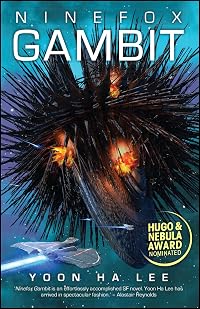
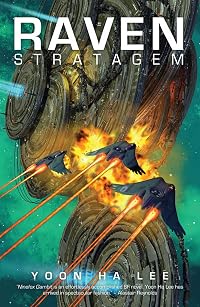


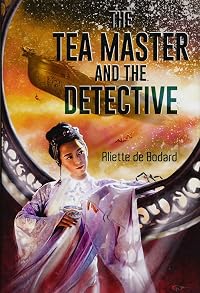
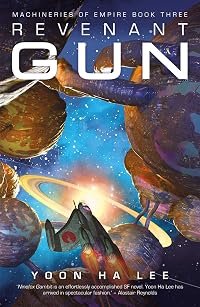






Member Recommendations

Member Reviews
'Unconquerable Sun' is everything a space opera should be. It has the Military SF tropes, the imperial politics and intrigue, the millennia-long history of constant conflict between human societies living on multiple worlds connected by technology no one really understands left behind by a race no one has ever seen, the diverse societies that draw heavily on Asian and European cultures, the space and weapons hardware well in advance of our own and an intricate and slow-reveal plot, punctuated with good action scenes.
Yet what makes 'The Unconquerable Sun' fly is that the story is told through the eyes of three strong young women, each of whom is at the start of a long path towards their chosen goals - Ruler, Engineer, Pilot and none of show more whom have yet understood the big picture that will shape their lives.
The 'Sun' of the title is the young mixed-race Heir to the throne: charismatic, determined, fearless, ruthless, gay and totally convinced of her right to rule. In counterpoint to her, we have a daughter of one of the great houses who has rejected the role her family want her to play, assumed a false identity and spent five years at a leading military academy. Finally there is a woman we meet only in chapters entitled 'Dispatches From The Enemy'. She has four arms, the remnants of a hard shell, and is the daughter of an impoverished single mother and has the top scores of any pilot going through training. Her desire is simply to do her job well but things keep happening that suggest that someone somewhere has different plans for her. The paths of all three women cross in an unexpected war that they all must fight in.
This is a fairly long book (528 pages / 17 hours 43 minutes) yet it flew by as I lost myself to the story. I admired the skill with which Kate Elliott kept up the forward momentum of the story while deepening my interest in the characters, keeping me occupied with life-threatening action and still giving me time to wonder about the unanswered questions like how do the interstellar gates really work and why did some of them stop working and who are The Riders and why are the Banner Soldiers engineered so differently and ...
There were several fresh ideas in the book that kept my attention: the way senior people have 'Companions' from the main families, most of who stay with them from childhood onwards; the way the would-be-ruler manipulates social media to gain support; the depiction of how badly refugees are treated and the threat that will eventually pose to the society that treats them that way; the grim, unheroic, body-shattering, blood-spilling, fear-inducing way that the battle stories are told.
This first book was a wild ride that laid the foundations for the series, leaving me hungry for the next book, 'Furious Heaven' (which comes out in 2023) without inflicting a cliffhanger ending on me. show less
Promotional copy glosses the far-future adventure Unconquerable Sun as "a genderspun Alexander the Great," and the protagonist Sun Shān is indeed a young woman set up to lead the interstellar Republic of Chaonia (Greece) against the Phene (Persian) Empire that overshadows it. Many more specific parallels are present, along with clever allusions to the ancient model. When not simply inverting historical types, gender identity and sexual preference seemed like they were chosen by dice rolls. To the extent that I enjoyed the "gender bending" elements of the story, I liked them far less than comparable features of Ada Palmer's Terra Ignota, where they were more consciously relevant to the business of the books--which had besides a more show more sophisticated relationship to classical antiquity.
The interstellar setting is in something of a renaissance after the prior collapses of the original Celestial Empire and the subsequent Asparas Convergence. There doesn't seem to be any life that isn't of terrestrial derivation. The flora all have familiar names, and there are instances of modern animal types and assorted dinosaurs, along with explicit reference to terraforming. The various sapient races are all "human," although they are actually a wide variety of post-human types, adapted and engineered, some of them inventive and intriguing. I wasn't so inclined to credit the persistence of 20th-century popular songs, nor the sustained popularity of "badminton, volleyball, and basketball" (185) many millennia hence.
The book is thick, with fifty short chapters of fast-paced prose, frequently with cliffhanger chapter endings. A single battle can take three or four chapters to describe. There are plenty of episodes of combat, from the personal level to that of interstellar fleets, and the latter are pretty conventionally space-operatic. The story also has healthy doses of intrigue, and for all of the conspicuous world-building, the narrative focus is really on character development and action. There are three principal viewpoint characters. Sun herself gets the heroic center-of-the-tale treatment, her near-peer Persephone narrates her own chapters in the first person, and there are interlude chapters featuring a Phene "enemy" in her own separate and parallel adventure.
Although Chaonia is a rigid caste-based society with a militaristic monarchy, the author frequently inserts left-ish ideological reflections, such as having a character remark with astonishment that a planetary government makes "people pay for medical care" (433). Inconsistently, there was no such surprise at making the same people pay for air to breathe, so it came across more as a barely-cloaked remark about the US in the 2020s than as a political awakening among the companions of Princess Sun.
Knowing that this book was the first volume of a trilogy, I spent the first few hundred pages ambivalent about whether I would proceed to its sequels. By the end, though, I had been sold on the characters and I enjoyed the dramatic payoff of this volume, while appreciating the tensions that it set up for the later story. I won't make Furious Heaven a priority, but there's a good chance I will get around to it--probably only after the third book Lady Chaos reaches print, so I can read the last two at a gallop. show less
The interstellar setting is in something of a renaissance after the prior collapses of the original Celestial Empire and the subsequent Asparas Convergence. There doesn't seem to be any life that isn't of terrestrial derivation. The flora all have familiar names, and there are instances of modern animal types and assorted dinosaurs, along with explicit reference to terraforming. The various sapient races are all "human," although they are actually a wide variety of post-human types, adapted and engineered, some of them inventive and intriguing. I wasn't so inclined to credit the persistence of 20th-century popular songs, nor the sustained popularity of "badminton, volleyball, and basketball" (185) many millennia hence.
The book is thick, with fifty short chapters of fast-paced prose, frequently with cliffhanger chapter endings. A single battle can take three or four chapters to describe. There are plenty of episodes of combat, from the personal level to that of interstellar fleets, and the latter are pretty conventionally space-operatic. The story also has healthy doses of intrigue, and for all of the conspicuous world-building, the narrative focus is really on character development and action. There are three principal viewpoint characters. Sun herself gets the heroic center-of-the-tale treatment, her near-peer Persephone narrates her own chapters in the first person, and there are interlude chapters featuring a Phene "enemy" in her own separate and parallel adventure.
Although Chaonia is a rigid caste-based society with a militaristic monarchy, the author frequently inserts left-ish ideological reflections, such as having a character remark with astonishment that a planetary government makes "people pay for medical care" (433). Inconsistently, there was no such surprise at making the same people pay for air to breathe, so it came across more as a barely-cloaked remark about the US in the 2020s than as a political awakening among the companions of Princess Sun.
Knowing that this book was the first volume of a trilogy, I spent the first few hundred pages ambivalent about whether I would proceed to its sequels. By the end, though, I had been sold on the characters and I enjoyed the dramatic payoff of this volume, while appreciating the tensions that it set up for the later story. I won't make Furious Heaven a priority, but there's a good chance I will get around to it--probably only after the third book Lady Chaos reaches print, so I can read the last two at a gallop. show less
Very few books managed to hold my attention this year, so it’s no shame to Unconquerable Sun that I found myself frustrated at times by its 500+ pages – mostly during the slow opening act, which is heavy on exposition. But the supporting characters – tart-tongued Persephone Lee, determined to disappoint her family; mysterious cee-cee Tiana, whose secrets kept me guessing until the end – rapidly won me over and kept me engaged until the plot pot bubbled over.
And Unconquerable Sun is a book in which I find more to admire the longer I reflect on it. It’s expertly constructed, layered with intrigue and nuance. I loved that the Companions' journey forces Sun to look past the propaganda and acknowledge the inequities of Chaonian show more society. I appreciated that none of the societies were monoliths, each preoccupied by different ideologies and riven with different prejudices. There’s so much seeded here that I look forward to finding out more about: the mysteries of the beacon builders, the dark secrets of the Lee family, the biotech of the Phene Empire.
If I was sometimes distracted by its historical inspirations, that’s entirely my own fault. I wanted to be able to admire how Kate Elliott has rewoven history into her new context, but I haven’t read up on Alexander the Great since I was 14. Instead, I had to settle for reading it as fictional space opera.
And on that score, Unconquerable Sun succeeds beautifully.
Side-note: key arcs are all closed out (so this can be read as a stand alone) whilst neatly setting up characters and conflicts for future books.
Full review
I received a free copy from the publisher in exchange for an honest review show less
And Unconquerable Sun is a book in which I find more to admire the longer I reflect on it. It’s expertly constructed, layered with intrigue and nuance. I loved that the Companions' journey forces Sun to look past the propaganda and acknowledge the inequities of Chaonian show more society. I appreciated that none of the societies were monoliths, each preoccupied by different ideologies and riven with different prejudices. There’s so much seeded here that I look forward to finding out more about: the mysteries of the beacon builders, the dark secrets of the Lee family, the biotech of the Phene Empire.
If I was sometimes distracted by its historical inspirations, that’s entirely my own fault. I wanted to be able to admire how Kate Elliott has rewoven history into her new context, but I haven’t read up on Alexander the Great since I was 14. Instead, I had to settle for reading it as fictional space opera.
And on that score, Unconquerable Sun succeeds beautifully.
Side-note: key arcs are all closed out (so this can be read as a stand alone) whilst neatly setting up characters and conflicts for future books.
Full review
I received a free copy from the publisher in exchange for an honest review show less
Good space opera is an indulgence: rich, creamy, flavorful, slightly embarassing but hard to stop eating. Unconquerable Sun is low-fat frozen diary space opera product. Technically dessert, and mostly unsatisfying.
Frozen yogurt
Princess Sun is heir to the Chaonian Republic, three systems with a host of valuable jump points caught between the much larger Yele League and Phene Republic. But Chaonia has two edges. First, the ruling Queen-Marshall is a skilled commander and has built up a powerful navy. Second, Sun is inspired by Alexander the Great and is destined to conquer a whole bunch of shit. I'm not spoiling anything, because that the main tagline and some of the references are painfully obviously, like Sun's battlecruiser named show more target="_top">Boukephalous, but the whole book totters under the weight of historical analogies and a sense of capital-D Destiny rather than actually doing any world building or characterization.
We meet Sun coming back from her first victory, but still unable to earn what she truly wants in her mother's approval. Court intrigue swirling around her, connected to her foreign father and a secret project to gain the loyalty of the Phene empire's most fanatical soldiers. But it's not really actual intrigue so much as stagey Intrigue, characters making outlandish boasts, threats, and declarations of secrecy. Worse, the primary point-of-view swerves to Persephone Lee, a daughter of one of the seven great houses that rule Chaonia (it's a very flawed Republic). She's ducked out from family responsibility by enrolling in the military academy as a commoner under an assumed name, but is called back to replace her assassinated brother as one of Sun's Companions. Perse is an utter wet blanket, who mostly is around to admire Sun and be doubtful of her place near Sun. There's roughly 200 pages of slogging filler, dribbles of slice-of-life which seem to mostly be about an idiotic propaganda show called Channel Idol, and then the Phene empire mounts an impossibly bold attack. There's another 200 pages of serviceable action with land and space battles, though again it is so incredibly generic that it could come from literally any science fiction written since 1960, and Sun wins. Hooray.
Space opera is full of military geniuses. Ender Wiggin, Miles Vorkosigan, and Honor Harrington spring to mind. But I believe their genius because the story tells us the rules of warfare and how they break them. And even when they win crushing victories, it hurts on a personal level. Neither is true here, and it absolutely robs the military action of any tension or drama. The other major flaw is personal. All these characters feel like American kids, not militaristic noble scions. The "fun" part of fiction is that the fate of worlds is in the hands of hormonal erratic kids barely old enough to legally drink, as opposed to decrepit and senile gerontocrats. Sun's Companions and the nobles of Lee House are a wasted group of stock characters who mostly stand around to say "wow Princess Sun, looking good." I firmly believe that the stories of chivalric societies are so full of things like courtly love and undying loyalty because the actually reality was lots of adultery and betrayal, which are much more interesting subjects for a book. Again, Red Rising and theNew Moon series handle larger than life emotions and coming of age in a much more engaging way.
There are decent moments in this book, which serve to highlight how dismal most of it is. An actually sparking confrontation between two Yele admirals who disagree about how to contain Chaonia. An escape from massive sea monsters on boats. The Riders, the Janus-faced hivemind that holds the Phene Empire together with psychic FTL communication. And while Princess Sun is a lesbian, or at least female favoring bi, it barely comes up. Chaonia has Asian influences in names and cuisine, but it's P.F. Chang Americanized orientalism with nothing below the surface. Yoon Ha Lee, Aliette de Bodard, and the whole contemporary Chinese SF movement are actually writing non-Western scifi and a lot of it is quite good. While I'm all for more diversity in fiction, it feels so ham-handed here.
And ultimately, this book is just too long at 500+ pages. Even if you want to read pap, there's better pap. Serves me right for taking book recommendations off Twitter. show less
Frozen yogurt
Princess Sun is heir to the Chaonian Republic, three systems with a host of valuable jump points caught between the much larger Yele League and Phene Republic. But Chaonia has two edges. First, the ruling Queen-Marshall is a skilled commander and has built up a powerful navy. Second, Sun is inspired by Alexander the Great and is destined to conquer a whole bunch of shit. I'm not spoiling anything, because that the main tagline and some of the references are painfully obviously, like Sun's battlecruiser named show more target="_top">Boukephalous, but the whole book totters under the weight of historical analogies and a sense of capital-D Destiny rather than actually doing any world building or characterization.
We meet Sun coming back from her first victory, but still unable to earn what she truly wants in her mother's approval. Court intrigue swirling around her, connected to her foreign father and a secret project to gain the loyalty of the Phene empire's most fanatical soldiers. But it's not really actual intrigue so much as stagey Intrigue, characters making outlandish boasts, threats, and declarations of secrecy. Worse, the primary point-of-view swerves to Persephone Lee, a daughter of one of the seven great houses that rule Chaonia (it's a very flawed Republic). She's ducked out from family responsibility by enrolling in the military academy as a commoner under an assumed name, but is called back to replace her assassinated brother as one of Sun's Companions. Perse is an utter wet blanket, who mostly is around to admire Sun and be doubtful of her place near Sun. There's roughly 200 pages of slogging filler, dribbles of slice-of-life which seem to mostly be about an idiotic propaganda show called Channel Idol, and then the Phene empire mounts an impossibly bold attack. There's another 200 pages of serviceable action with land and space battles, though again it is so incredibly generic that it could come from literally any science fiction written since 1960, and Sun wins. Hooray.
Space opera is full of military geniuses. Ender Wiggin, Miles Vorkosigan, and Honor Harrington spring to mind. But I believe their genius because the story tells us the rules of warfare and how they break them. And even when they win crushing victories, it hurts on a personal level. Neither is true here, and it absolutely robs the military action of any tension or drama. The other major flaw is personal. All these characters feel like American kids, not militaristic noble scions. The "fun" part of fiction is that the fate of worlds is in the hands of hormonal erratic kids barely old enough to legally drink, as opposed to decrepit and senile gerontocrats. Sun's Companions and the nobles of Lee House are a wasted group of stock characters who mostly stand around to say "wow Princess Sun, looking good." I firmly believe that the stories of chivalric societies are so full of things like courtly love and undying loyalty because the actually reality was lots of adultery and betrayal, which are much more interesting subjects for a book. Again, Red Rising and theNew Moon series handle larger than life emotions and coming of age in a much more engaging way.
There are decent moments in this book, which serve to highlight how dismal most of it is. An actually sparking confrontation between two Yele admirals who disagree about how to contain Chaonia. An escape from massive sea monsters on boats. The Riders, the Janus-faced hivemind that holds the Phene Empire together with psychic FTL communication. And while Princess Sun is a lesbian, or at least female favoring bi, it barely comes up. Chaonia has Asian influences in names and cuisine, but it's P.F. Chang Americanized orientalism with nothing below the surface. Yoon Ha Lee, Aliette de Bodard, and the whole contemporary Chinese SF movement are actually writing non-Western scifi and a lot of it is quite good. While I'm all for more diversity in fiction, it feels so ham-handed here.
And ultimately, this book is just too long at 500+ pages. Even if you want to read pap, there's better pap. Serves me right for taking book recommendations off Twitter. show less
I had high expectations for this novel - maybe too high - based on the story’s premise: an interstellar backdrop where conflicting powers measure their strength through politics and open war, where intrigue between influential families leads toward a constant shift of alliances and betrayals, while at the center of all this we follow a main character described as the female equivalent of Alexander the Great - the potential for a Dune-like epic was irresistible, but unfortunately Unconquerable Sun did not fulfill its promises as I hoped.
The Republic of Chaonia has managed to subdue or assimilate most of its enemies, and queen-marshal Eirene built her power-base through military victories and political alliances, a few of these signed show more though marriage contracts, like the one binding Eirene to Prince Joao and producing the heir, Princess Sun. Sun is struggling to make a name for herself, moving out of her mother’s encompassing shadow, by taking an active part in Chaonia’s military campaigns, but a sudden shift in the political winds turns her almost overnight into a fugitive, so she must rely on her finely-honed wits, the support of her Companions, and the help of a rival family’s member to regain her rightful place and overthrow an insidious conspiracy enacted by Chaonia’s most dangerous foes. The other two main POVs in the novel come from Persephone Lee, who unsuccessfully tries to escape her powerful family’s machinations by enrolling in the military academy under an assumed name, and ends up among Sun’s Companions; and from Apama, a pilot in the fleet of the Phene, Chaonia’s main adversaries: this was the most interesting character for me, and one of my main disappointments in the story came from the almost negligible “screen time” allotted to her after she was introduced.
At the start of the book I was intrigued, both by the fascinating background of this vast galactic milieu and by the potential shown by the characters: sadly, after a while it all seemed to turn into a confused and confusing jumble of daring escapes, heated battles and things going spectacularly boom, which might be all right if one wants only *adventure* and a plot-heavy story, but I prefer relatable characters in my reading material, and I soon realized that there was too little of that in this novel. More than once I thought that this story might work better as a movie - and as such it reminded me of The Wachowskis’ Jupiter Ascending, where the action overwhelmed any other consideration - but as a book I found it unfortunately lacking.
The sheer number of characters makes for a distracting experience because there is no time or space to get to know them, or to be able to differentiate between them - which is particularly true for Sun’s Companions - to the point that any harm befalling them leaves no lingering traces, and even when the story focuses on the main ones, like Sun or Persephone, it’s difficult to see them as people rather than stereotypes. Sun is presented as very determined, but from my point of view she comes off rather as an overbearing spoiled brat, and Persephone - who is strangely given a more detailed focus than the actual main character - is an unpleasant combination of meanness and self-pity, while the author keeps telling us that she is a shrewd operator, mostly by calling her “the wily Persephone” in the title of each chapter where she is the focus. And goodness, does she make a lot of embarrassing mistakes for someone who spent the last few years in the academy being honed for military service!
Despite these problems, which became evident after the first handful of chapters, I kept on reading in the hope that the story would find its footing and become the compelling tale promised by the blurb, but as the page count progressed it became more and more apparent that I would not find what I looked for: even skimming over the most repetitive sequences of Sun & Co. running for their lives and then being involved in a long, drawn-out battle that went on and on and on, I failed to find anything that would hold my interest. Once the characters started to adopt the less palatable traits of the YA mold, like unnecessary cattiness or insta-lust for anything moving into their field of vision (yes, Persephone, I’m looking right at you…), I knew that Unconquerable Sun would turn into a lost cause: as Sun took over a Chaonian vessel, ousting a seasoned captain to take command of the operations, I knew that this “Mary Sue maneuver” would be the proverbial straw, and decided to put an end to my suffering.
I’m aware that my personal biases are responsible for my negative reaction to this novel, which is the main reason I must warn you to take my opinion with a grain of salt, but when all is said and done, this is certainly not a book for me. show less
The Republic of Chaonia has managed to subdue or assimilate most of its enemies, and queen-marshal Eirene built her power-base through military victories and political alliances, a few of these signed show more though marriage contracts, like the one binding Eirene to Prince Joao and producing the heir, Princess Sun. Sun is struggling to make a name for herself, moving out of her mother’s encompassing shadow, by taking an active part in Chaonia’s military campaigns, but a sudden shift in the political winds turns her almost overnight into a fugitive, so she must rely on her finely-honed wits, the support of her Companions, and the help of a rival family’s member to regain her rightful place and overthrow an insidious conspiracy enacted by Chaonia’s most dangerous foes. The other two main POVs in the novel come from Persephone Lee, who unsuccessfully tries to escape her powerful family’s machinations by enrolling in the military academy under an assumed name, and ends up among Sun’s Companions; and from Apama, a pilot in the fleet of the Phene, Chaonia’s main adversaries: this was the most interesting character for me, and one of my main disappointments in the story came from the almost negligible “screen time” allotted to her after she was introduced.
At the start of the book I was intrigued, both by the fascinating background of this vast galactic milieu and by the potential shown by the characters: sadly, after a while it all seemed to turn into a confused and confusing jumble of daring escapes, heated battles and things going spectacularly boom, which might be all right if one wants only *adventure* and a plot-heavy story, but I prefer relatable characters in my reading material, and I soon realized that there was too little of that in this novel. More than once I thought that this story might work better as a movie - and as such it reminded me of The Wachowskis’ Jupiter Ascending, where the action overwhelmed any other consideration - but as a book I found it unfortunately lacking.
The sheer number of characters makes for a distracting experience because there is no time or space to get to know them, or to be able to differentiate between them - which is particularly true for Sun’s Companions - to the point that any harm befalling them leaves no lingering traces, and even when the story focuses on the main ones, like Sun or Persephone, it’s difficult to see them as people rather than stereotypes. Sun is presented as very determined, but from my point of view she comes off rather as an overbearing spoiled brat, and Persephone - who is strangely given a more detailed focus than the actual main character - is an unpleasant combination of meanness and self-pity, while the author keeps telling us that she is a shrewd operator, mostly by calling her “the wily Persephone” in the title of each chapter where she is the focus. And goodness, does she make a lot of embarrassing mistakes for someone who spent the last few years in the academy being honed for military service!
Despite these problems, which became evident after the first handful of chapters, I kept on reading in the hope that the story would find its footing and become the compelling tale promised by the blurb, but as the page count progressed it became more and more apparent that I would not find what I looked for: even skimming over the most repetitive sequences of Sun & Co. running for their lives and then being involved in a long, drawn-out battle that went on and on and on, I failed to find anything that would hold my interest. Once the characters started to adopt the less palatable traits of the YA mold, like unnecessary cattiness or insta-lust for anything moving into their field of vision (yes, Persephone, I’m looking right at you…), I knew that Unconquerable Sun would turn into a lost cause: as Sun took over a Chaonian vessel, ousting a seasoned captain to take command of the operations, I knew that this “Mary Sue maneuver” would be the proverbial straw, and decided to put an end to my suffering.
I’m aware that my personal biases are responsible for my negative reaction to this novel, which is the main reason I must warn you to take my opinion with a grain of salt, but when all is said and done, this is certainly not a book for me. show less
Initially, I was intimidated at the sheer length of the book (covid brain) and excited about gender-swapped Alexander the Great in space, because how cool is that? Once I got into it, I really enjoyed it -- found myself wanting more time to spend with it. I'm impressed that Kate Elliott's writing has developed to this point -- she's always told a great story, but the epic scale is new. Love the space heists, the boy-band fame of the companions and how they use it. Had some issues with Eirene's temper tantrums -- hard to imagine a leader getting away with that sort of thing. Good times. I'm not sure I will be able to hold on to the epic number of people and plots to engage with a second or third book, but this one was good.
Advanced show more Reader's copy provided by Edelweiss. show less
Advanced show more Reader's copy provided by Edelweiss. show less
It has been eight centuries since the beacons fell and parts of the system fell away now a small group of worlds fight for control and the power is in a few hands. Queen-Marshall Eirene has won several wars and has to control her own empire. Princess Sun has come of age and she with her companions are trying to find their own way and survive all sorts of hostile forces from within and without the Republic of Chaonia. Sun has to find her way and survive to hopefully create her own life and maybe find someone she wants to spend it with. Her companions are from some of the powerful families in the Republic but they all have their own reasons and problems, still whatever they do it's going to be in style.
It's an interesting universe and show more once it gets going it seems to be fairly non-stop, a helter-skelter trip through several worlds and through a lot of political maneouvering. While also trying to keep their ratings high. Mad and fun and I'm looking forward to the sequels. show less
It's an interesting universe and show more once it gets going it seems to be fairly non-stop, a helter-skelter trip through several worlds and through a lot of political maneouvering. While also trying to keep their ratings high. Mad and fun and I'm looking forward to the sequels. show less
Members
- Recently Added By
Lists

Favorite Science Fiction by Women Authors
737 works; 202 members

2021 Hugo Eligible Novels
37 works; 14 members

Top Five Books of 2021
604 works; 181 members

Top Five Books of 2020
982 works; 350 members
LGBTQ+ Speculative Fiction
821 works; 51 members

Fiction with Women's Names in the Title
378 works; 15 members

Books Read in 2023
5,547 works; 145 members

2023 Update: The Best Twenty Books You've Read in the Past Five Years
40 works; 3 members

Princess Tales
130 works; 4 members

Top Five Books of 2025
954 works; 303 members
Author Information

80+ Works 19,194 Members
Some Editions
Awards and Honors
Awards
Series

Common Knowledge
- Canonical title
- Unconquerable Sun
- Alternate titles
- Unconquerable Sun: The Sun Chronicles, Book 1
- Original publication date
- 2020-07-07
- People/Characters
- Eirene; Sun; Persephone Lee; Perseus Lee; James Samtarras; Alika Vata (show all 14); Hestia Hope; Tiana Yao Alaksu; Solomon Iosefa Solomon; Jade Kim; Zizou; Apama At Sabao; Aloysius Voy; Admiral Manu
- Important places
- Chaonia
- Dedication
- There is but one true sun, and each of us casts nothing more than her reflected glory.
- First words
- The battered fleet returned to Molossia System without fanfare or announcement.
- Last words
- (Click to show. Warning: May contain spoilers.)“Well,” I say, “I have no idea what’s going to happen next, but I would bet anything that it is going to be wild.”
- Blurbers
- Leckie, Ann; Lee, Yoon Ha
- Original language
- English
Classifications
Statistics
- Members
- 461
- Popularity
- 66,153
- Reviews
- 23
- Rating
- (3.85)
- Languages
- English
- Media
- Paper, Audiobook, Ebook
- ISBNs
- 12
- ASINs
- 6