
On This Page
Description
Ambassador Mahit Dzmare arrives in the center of the multi-system Teixcalaanli Empire only to discover that her predecessor, the previous ambassador from their small but fiercely independent mining Station, has died. But no one will admit that his death wasn't an accident--or that Mahit might be next to die, during a time of political instability in the highest echelons of the imperial court. Now, Mahit must discover who is behind the murder, rescue herself, and save her Station from show more Teixcalaan's unceasing expansion--all while navigating an alien culture that is all too seductive, engaging in intrigues of her own, and hiding a deadly technological secret--one that might spell the end of her Station and her way of life--or rescue it from annihilation. show lessTags
Recommendations
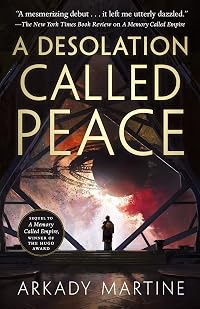
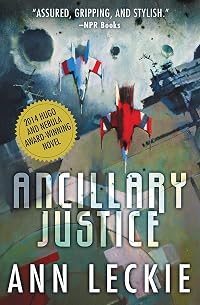
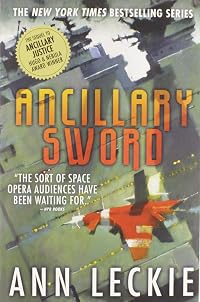
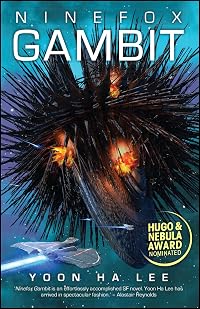












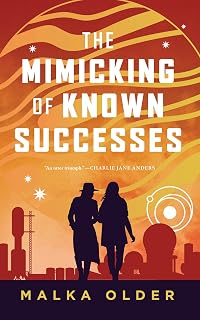
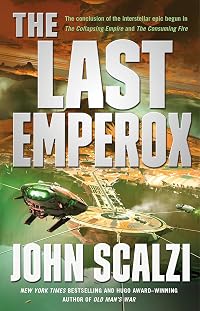
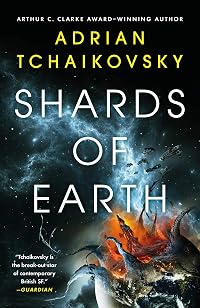

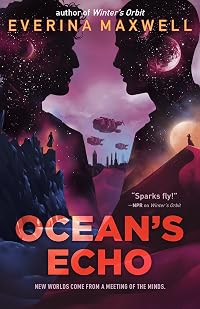

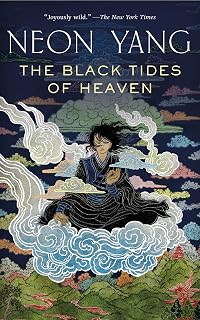
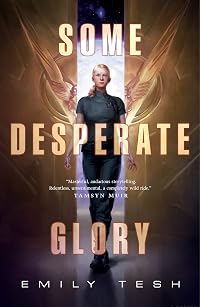
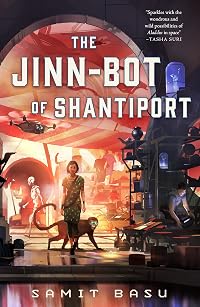

Member Recommendations

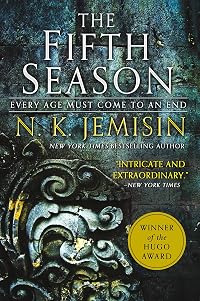
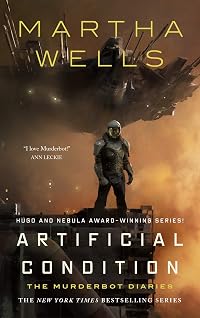
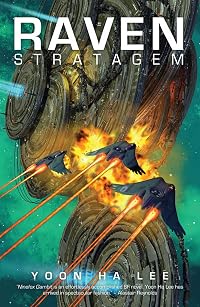
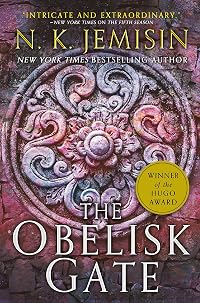
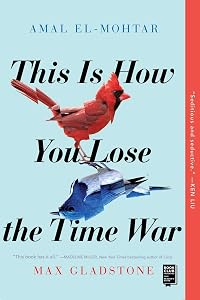
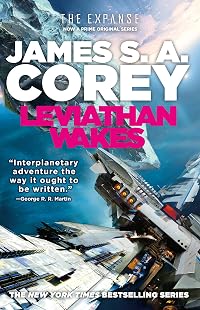
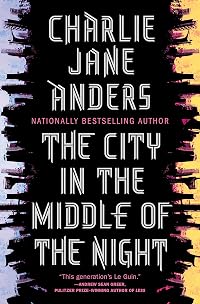
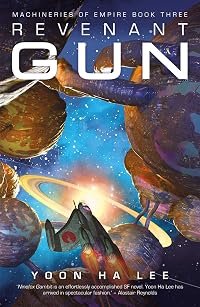
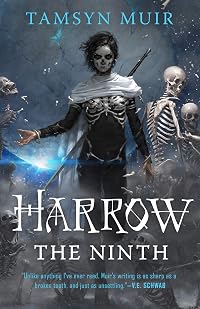
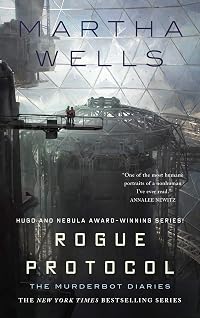
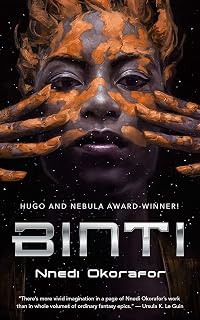
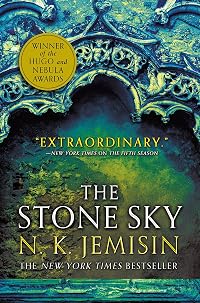
g33kgrrl Both books feature complex, political space sci-fi with amazing characters and world-building.
112
g33kgrrl Complex worlds, political machinations, and cutting edge sci-fi. This is the evolution of sci-fi and space opera.
12
Sammelsurium Another book about an imperial outsider arriving in the imperial core to fulfill a political role there, and the complex feelings that necessarily ensue.

Member Reviews
Incredibly strong debut about an ambassodor from a tiny independant mining station sent to the heart of a great empire where she discovers that her predecessor was murdered, there is a potential conflict of succession and calls for a war of expansion. She has to struggle with her own affinity for the culture of the empire and the danger it represents as an all-devouring beast. I can't imagine why the fraught and tangled idea of falling in love with the culture of an evil empire would be so appealing in this day and age, particularly from the point of view of a post-colonial country whpse native language has been relegated to fringe status in daily life and whose native culture has mingled with imperial cultur to create something show more distinct and not altogether untroubled. If you enjoyed Ann Leckie's thoughtful and exciting explorations of the ideas of empire and colonialism, you'll very much like this. show less
This is a top-notch political thriller, all the more remarkable for being a first novel.
When a small mining station receives an urgent request from the Teixcalaanli Empire to send a new ambassador, they send Mahit Dzmare. Mahit is less well prepared for the job than she should be. It's been fifteen years since her predecessor updated his imago -- a brain implant containing his consciousness -- and she hasn't been given enough time to fully integrate his memories and personality into her own psyche.
Upon arrival, she finds that the previous ambassador is dead, and though no one will say so officially, probably murdered. That shock snaps her already tenuous imago connection to his memories, and Mahit is left to make her way through show more Teixcalaan on her own. She's been assigned a Teixcalaanli liaison to help her acclimate to her new postion, but how much trust can she place in one of the Empire's bureaucrats, especially in a moment of political instability?
Martine gives us an exciting story, vivid characters, and a fascinating world. Teixcalaan is a society in which politics and literature are inseparable; political statements are made in poetry, packed with symbolic references and allusions to the great political poetry of the past. A Teixcalaanli diplomat practically needs a degree in literature.
It's a world so fully developed that even the background details raise intriguing questions that you want to see addressed in another book, and you know that Martine has already thought about them and has answers to all of those questions. show less
When a small mining station receives an urgent request from the Teixcalaanli Empire to send a new ambassador, they send Mahit Dzmare. Mahit is less well prepared for the job than she should be. It's been fifteen years since her predecessor updated his imago -- a brain implant containing his consciousness -- and she hasn't been given enough time to fully integrate his memories and personality into her own psyche.
Upon arrival, she finds that the previous ambassador is dead, and though no one will say so officially, probably murdered. That shock snaps her already tenuous imago connection to his memories, and Mahit is left to make her way through show more Teixcalaan on her own. She's been assigned a Teixcalaanli liaison to help her acclimate to her new postion, but how much trust can she place in one of the Empire's bureaucrats, especially in a moment of political instability?
Martine gives us an exciting story, vivid characters, and a fascinating world. Teixcalaan is a society in which politics and literature are inseparable; political statements are made in poetry, packed with symbolic references and allusions to the great political poetry of the past. A Teixcalaanli diplomat practically needs a degree in literature.
It's a world so fully developed that even the background details raise intriguing questions that you want to see addressed in another book, and you know that Martine has already thought about them and has answers to all of those questions. show less
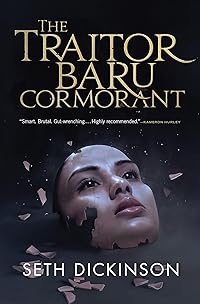
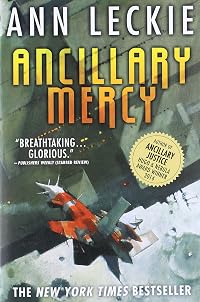
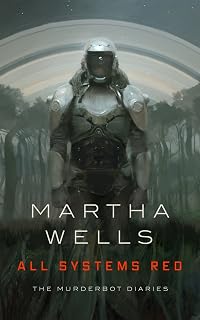
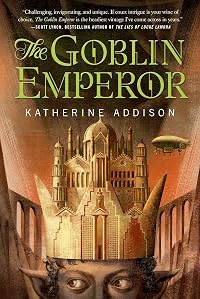
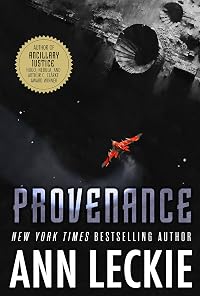
I enjoyed this from the start. Me being me, I was immediately classifying it in terms of genre: it reminds me of both the Imperial Radch and Baru Cormorant books in its attention to the functioning of empire. These books aren't about empires as military juggernauts (though that's in there), but as political and cultural forces. A friend read Ancillary Justice and The Traitor Baru Cormorant and pointed out they were both about "evil meritocracies"; A Memory Called Empire is about one as well! The focus on empire isn't the only similarity (both even feature empires with elaborate tea ceremonies, and a language where the name of the empire is synonymous with civilization), as there's an interesting correlation between the leaders of both show more empire, even. The acknowledgements say that this book was begun in 2014; Ancillary Justice came out in 2013. I say all this not to criticize A Memory Called Empire, but to triangulate it. I think these books are all doing something that really appeals to me, and clearly also appeals to readers, taking many of the tropes of sf, but invigorating them with new life by thinking through their complexities. (I need a name for this subgenre, which I would also add The Goblin Emperor and the Hexarchate books to. It obviously connects to space opera, but is not limited to it. "Imperial sf" seems to be taken. "Post-imperial sf"?) A Memory Called Empire is also interested in the production and consumption of narratives, something I've seen in other recent sf (it comes up a lot in the Murderbot stories, for example, and I seem to recall there's something of it in the Wayfarers novels, too), which feels natural in a genre landscape where many writers would have been involved heavily in media fandom. And, like in The City of the Middle of the Night, there's a big focus on the languages of the different cultures, and how they shape thought: one has a lot of case markers.
Mahit Dzmare is the ambassador from the tiny polity of Lsel Station to the homeworld of the powerful Teixcalaanli Empire. But even though Teixcalaan's might threatens her station's sovereignty, she's grown up reading poetry and novels and watching tv shows from Teixcalaan. She loves and is fascinated it, even as she understands its dangers-- but reading about it is no substitute for being there. This was one of my favorite parts of Memory: empire is cruel, but also seductive, and it provides great stories. In the nineteenth century you would have grown up reading about the virtues of Rome even if Rome's virtues actually weren't your nation's virtues. I really liked the book's attention to the nuances of empire; as I said above, it really feels as though it builds on Ancillary Justice in terms of that.
I enjoyed it from the start, but it got better as it went. It's a good political thriller (and it makes sense); it has some neat sf ideas; it has strong worldbuilding (the Teixcalaanli naming system is fun, even if I kept getting distracted by the name "Six Direction" at first). It gets you invested in its characters and their struggles. Mahit is a great, believable protagonist, but I had a soft spot for Twelve Azalea, a friend of Mahit's cultural liaison, a goofy guy who comes through in a pinch. Some aspects of the climax really got me emotionally, and by the end, I loved it, and I can't wait for book two (which isn't out until March 2021 in hardcover, so God knows when it will hit paperback). show less
Mahit Dzmare is the ambassador from the tiny polity of Lsel Station to the homeworld of the powerful Teixcalaanli Empire. But even though Teixcalaan's might threatens her station's sovereignty, she's grown up reading poetry and novels and watching tv shows from Teixcalaan. She loves and is fascinated it, even as she understands its dangers-- but reading about it is no substitute for being there. This was one of my favorite parts of Memory: empire is cruel, but also seductive, and it provides great stories. In the nineteenth century you would have grown up reading about the virtues of Rome even if Rome's virtues actually weren't your nation's virtues. I really liked the book's attention to the nuances of empire; as I said above, it really feels as though it builds on Ancillary Justice in terms of that.
I enjoyed it from the start, but it got better as it went. It's a good political thriller (and it makes sense); it has some neat sf ideas; it has strong worldbuilding (the Teixcalaanli naming system is fun, even if I kept getting distracted by the name "Six Direction" at first). It gets you invested in its characters and their struggles. Mahit is a great, believable protagonist, but I had a soft spot for Twelve Azalea, a friend of Mahit's cultural liaison, a goofy guy who comes through in a pinch. Some aspects of the climax really got me emotionally, and by the end, I loved it, and I can't wait for book two (which isn't out until March 2021 in hardcover, so God knows when it will hit paperback). show less
I can see why A Memory Called Empire won the 2020 Hugo Best Novel Award. As a feat of imagination, it's quite stunning.
The world-building, the technology ideas and the social structures are clever and vividly described.
It poses questions about the nature of self and whether we can stay truly human once we're able to augment our bodies and or share the memories and thoughts of our predecessors.
It shows how an empire, any empire, taints anything it touches because it's built on the corrupt self-serving premise that citizens of the empire are people and everyone else is a barbarian. It gives insights into how the poetry and art and culture that a great empire produces over generations of dominance, attract the conquered and the show more not-yet-conquered like beautiful, scented blooms hiding the thorns of a parasitic plant that will eventually strangle them.
In the Teixcalaan Empire, Arkady Martine has created something complex, beautiful and terrifying. A multi-system-spanning Empire won through conquest, held for thousands of years and still expanding, it is completely assured of the primacy of not just its military capability but its culture. From its roots in a blood-sacrifice culture similar to the Aztecs, it has grown into an elaborate culture of duty and sacrifice and artistic expression that drives constant expansion through military might.
We see this empire through the eyes of Ambassador Mahit Dzmare, newly arrived at the Emperor's court, hastily dispatched to take up her post after the sudden and unexpected death of her predecessor. Her mission is to maintain the independence of the mining space stations that she represents. This mission is made harder by the fact that the secret technology which should have given her access to her predecessor's memory and personality seems to have been sabotaged and by the refusal of the Teixcalaan authorities to disclose the circumstances of her predecessor's death.
It seems to me that Ambassador Mahit Dzmare embodies the strengths and the limits of this book. She's from the privileged elite of her own society. She is in love with the culture of the Teixcalaan Empire and could be an accomplished citizen of it had she not been a born a barbarian. She has one foot out the door of her own society but knows that she will never be anything but an outsider in the Teixcalaan Empire.
She is a diplomat, not a spy. She is on her first mission and is working in the dark thanks to apparent sabotage at home and secrecy at Court. She is more prone to introspection, insight and empathy than purposeful and decisive action. She is more of an observer than a doer. She is at the centre of the action but has very little agency.
She is a perfect example of how the Teixcalaan Empire preys on the talented amongst its enemies.
She's also the reason why the book feels so static, the action so bloodless and why the main emotion is a sort of regretful ambivalence.
This is a book about how empires absorb and enrol but never really empower the elites of those they colonise or plan to colonise.
In those terms, it's a very successful book but it's also a 'first world problems' kind of book that never really engaged my emotions.
This was brought home to me when, immediately after reading this, I read The Space Between Worlds which showed me a privileged elite from the point of view of the marginalised and the oppressed.
Nevertheless, there was more than enough in this book to make me glad to have read it and to make me want to pick up the sequel.
I listened to the audiobook version, which helped me with the new-to-me pronunciations and added life to the art and culture of the Empire. Click on the SoundCloud link below to hear a sample.
https://soundcloud.com/macaudio-2/a-memory-called-empire-by-arkady-martine-audio...
Arkady Martine is An American writer, historian, city planner and environmental activist, based out of Santa Fe. Her doctorate was in medieval Byzantine, global, and comparative history.
Her debut novel A Memory Of Empire won the 2020 Hugo Award for Best Novel. The second book in the series, A Desolation Called Peace was published in 2021. show less
A masterpiece. An exhilarating epic poem that drops a pebble called Mahit Dzmare into a pool called the Jewel of the World and uses the ripples to reveal an entire civilization.
Mahit is the new, green Lsel ambassador to the Teixcalaan empire sent to, above all, keep Lsel independent from an empire that likes to acquire new planets and stations, and keep their imago technology a secret. Mahit herself should have the imago of the previous ambassador, Yskandr, basically the memory installed in a machine allowing their personalities to merge neurologically. But the one she has is 15 years out of date, and when she sees the body of Yskandr, dead, something begins malfunctioning and she loses access to her imago. Left alone, with only her liaison, Three Seagrass, to help her navigate a culture she loves but that regards her as a barbarian, Mahit must use all her ingenuity and political prowess to work for the good show more of her planet.
If you enjoy space operas with details of politics, culture, and complex characters, this is the story for you. I enjoyed everything about this book, from following Mahit and Three Seagrass's adventures, to learning about both cultures (props to the author for creating not one but two distinct cultures of humans not quite like each other our our own earth), to reflecting on empire and what it means to love a culture that's not your own. I won't wait long to read the sequel. show less
If you enjoy space operas with details of politics, culture, and complex characters, this is the story for you. I enjoyed everything about this book, from following Mahit and Three Seagrass's adventures, to learning about both cultures (props to the author for creating not one but two distinct cultures of humans not quite like each other our our own earth), to reflecting on empire and what it means to love a culture that's not your own. I won't wait long to read the sequel. show less
In the hands of a less capable, passionate author I think the story would have fallen flat. Instead, it's a master class of world building, mostly through a single narration which I find is extremely tricky to do. The concept of a dominating/colonializing culture and what that means for cultures/civilizations they absorb is a really interesting theme here, and through language Martine really deepens the mystery and adventure Mahit goes through. I felt similarities with the Goblin Emperor, in that dialogue exchanges are almost treated like action and that makes for a really lean experience, despite the book being about 450 pages. Excited to read the sequel, definitely one of the stronger sci-fi/space opera stories I've read.
Members
- Recently Added By
Published Reviews
ThingScore 100
Behind the cloak-and-dagger maneuvers that drive the foreground action lies a consideration of the ways cultures maintain themselves and how individuals navigate “belonging” to such frameworks. It’s an absorbing and sometimes challenging blend of intrigue and anthropological imagination... It is also often quite funny, in a gentle and sneaky way.
added by g33kgrrl
Arkady Martine has created a stunning accomplishment with her debut novel; A Memory Called Empire is a success by every metric possible.
added by g33kgrrl
A scholar of Byzantine history brings all her knowledge of intricate political maneuvering to bear in her debut space opera.
added by g33kgrrl
Lists

Best Science Fiction Novels
816 works; 426 members

Favorite Science Fiction by Women Authors
737 works; 202 members

2020 Hugo Eligible Novels
71 works; 12 members

Hugo Awards - Best Novel
69 works; 10 members

NPR Summer 2021: 50 Favorite Sci-Fi And Fantasy Books Of The Past Decade
50 works; 8 members

ALA The Reading List
490 works; 28 members

BbBooBooks
28 works; 2 members

Top Five Books of 2022
736 works; 272 members

Top Five Books of 2021
604 works; 181 members

Top Five Books of 2019
387 works; 111 members

Female Author
1,234 works; 64 members
LGBTQ+ Speculative Fiction
821 works; 51 members

Speculative Fiction to Read
706 works; 32 members

Books Read in 2023
5,638 works; 147 members

Top Five Books of 2024
795 works; 264 members

Maybe This Year? Books to Look Forward To
412 works; 9 members

Kirkus Starred Fiction Reviews of Books Published in 2019
411 works; 12 members

Linguistics in Science Fiction
27 works; 4 members
Books We Couldn't Put Down
443 works; 197 members

Poly Sci Fi
23 works; 2 members

hypatian_kat to-read
429 works; 3 members

Books We Want To Read Again For The First Time
384 works; 160 members

Books Read in 2025
4,128 works; 98 members

Books We Discovered On LibraryThing
530 works; 130 members

2023 Update: The Best Twenty Books You've Read in the Past Five Years
40 works; 3 members

Books Read in 2022
5,226 works; 115 members

Books With the Most Memorable Titles
478 works; 158 members

Speculative Oppression
7 works; 2 members

Recommended Science-Fiction Books
40 works; 3 members

Books for a Queer Valentine's Day
46 works; 6 members

Books Mentioned in the A+ Autostraddle Pop Up Discords Nov 2022 & Dec 2022
223 works; 3 members
Female Protagonist
1,056 works; 57 members

Best Lesbian Fiction (And Narrative Non-Fiction)
155 works; 36 members

First Novels
373 works; 17 members

Books Read in 2021
5,361 works; 114 members

Arthur C. Clarke Award Winners and Shortlisted Books
219 works; 14 members

Books Read in 2020
4,379 works; 123 members

Books Read in 2019
4,052 works; 108 members
Favorite Science Fiction
456 works; 218 members
Author Information

12+ Works 6,094 Members
Some Editions
Awards and Honors
Awards
Distinctions
Series

Work Relationships
Is contained in
Is abridged in
Has as a study
Common Knowledge
- Canonical title
- A Memory Called Empire
- Original title
- A Memory Called Empire
- Original publication date
- 2019-03-26
- People/Characters
- Mahit Dzmare; Three Seagrass; Yskander Aghavn; Twelve Azalea; Aknel Amnardbat; Aragh Chtel (show all 47); Darj Tarats; Dekakel Onchu; Eight Antidote; Eight Loop; Eight Penknife; Eighteen Turbine; Eleven Conifer; Fifteen Engine; Five Agate; Five Portico; Forty-Five Sunset; Four Lever; Four Sycamore; Fourteen Spire; Gelak Lerants; Gorlaeth; Jirpardz; Nine Maize; Nine Propulsion; Nineteen Adze; One Conifer; One Lightning; Seven Scale; Shrja Torel; Six Direction; Six Helicopter; Ten Pearl; Thirty Larkspur; Thirty-Six All-Terrain Tundra Vehicle; Three Lamplight; Three Nasturtium; Three Sumac; Tsagkel Ambak; Twenty-Nine Bridge; Twenty-Nine Infograph; Twenty-Two Graphite; Two Calendar; Two Cartograph; Two Lemon; Two Rosewood; Vardza Ndun
- Important places
- Lsel Station; the City, the Jewel of the World
- Epigraph
- Our memory is a more perfect world than the universe; it gives life back to those who no longer exist. - Guy de Maupassant, "Suicides"
- Dedication
- This book is dedicated to anyone who has ever fallen in love with a culture that was devouring their own. (And for Grigor Pahlavuni and Petros Getadarj, across the centuries.)
- First words
- In Texicalaan, these things are ceaseless: star-charts and disembarkments.
- Last words
- (Click to show. Warning: May contain spoilers.)Not, in the end, quite home.
- Publisher's editor
- Pillai, Devi
- Blurbers
- Leckie, Ann; Anders, Charlie Jane; Walton, Jo; Gregory, Daryl; Older, Malka; Wells, Martha (show all 12); Dawson, Delilah S.; Baxter, Stephen; MacLeod, Ken; North, Claire; de Bodard, Aliette; Lee, Yoon Ha
- Original language
- English
- Canonical DDC/MDS
- 813.6
- Canonical LCC
- PS3613.A786325
Classifications
Statistics
- Members
- 3,967
- Popularity
- 3,961
- Reviews
- 164
- Rating
- (4.03)
- Languages
- 9 — English, French, German, Hungarian, Italian, Portuguese, Romanian, Spanish, Turkish
- Media
- Paper, Audiobook, Ebook
- ISBNs
- 25
- ASINs
- 8