On This Page
Description
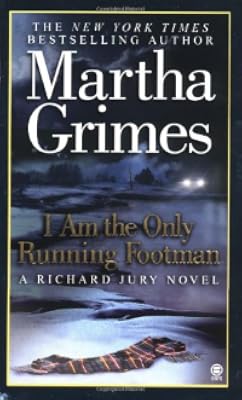
In a rainy ditch in a Devon wood, a hitchhiker is found dead. Almost a year later, on another rainy night, another murder; this time, however, the victim is found just outside a pub called I Am the Only Running Footman, near Berkeley Square in London's fashionable Mayfair District. Devon policeman Brian Macalvie is convinced that the two murders are connected. And thus, in his eighth case, Richard Jury is drawn into the so-called Porphyria killings. A particularly elusive pair of murders. show more From the streets of London to the village of Somers Abbas, Jury and Macalvie are joined by the stolid if hypochondriac Sergeant Wiggins and the reluctant Melrose Plant. They meet in another pub, the Mortal Man, and, amidst the clatter and cry of the Warboys family, they ponder a labyrinthine set of clues. show lessTags
Recommendations



Member Reviews
The latest book in the Martha Grimes series (well, for me, anyway, as I slowly read them in order). I truly love Richard Jury and Melrose Plant and all the other assorted characters, but, as in most series, there are up books and down books. This wasn't a bad little story, but it didn't hold up to the level of some of her truly phenomenal mysteries.
Two young women are murdered, ten months and different cities separating their deaths. No connection might have been made except for the method of murder: strangled by their own scarves. Jury is drawn together again with Macalvie, divisional commander in Devon, who first appeared in the last book in the series and looks to be a new recurring character. His fiery temperament and bullying show more interrogation methods are a sharp contrast to the calm and charming Jury. Of course, they have become hostile friends by now, and their dynamic is fun to watch in this novel. Melrose Plant must also have a say in the matter, as he is friends with friends of the accused murderer (it's a small world for those rich nobles).
The only clue they have is from the second woman, Ivy Childess, who met her boyfriend, David Marr, in the pub where she was murdered hours later. Through Marr they are drawn into the Winslow family and start to uncover various skeletons hidden in the closet as they scramble to find the truth. As with any fun British manor mystery of the Agatha Christie sort (a kind I particularly enjoy), the surface is deceptive, and the relationships are more twisted than the family would like to present. A couple of smaller subplot mysteries must be unraveled before the truth is revealed.
Grimes writes such delightful characters. Jury, and his hypochondriac sergeant Wiggins, are fantastic. Plant is a great comic relief character and Macalvie's gruff demeanor is a new change of pace. I even love the minor characters that often crop up in only one or two chapters, the other tenants in Jury's apartment, Mrs. Wasserman and Carol-Anne. Their stories are slowly evolving over the course of every novel, and I was delighted to see Mrs. Wasserman starting to relax her fear and paranoia. Good work, Carol-Anne!
Why was this just a mediocre read, then, when all the characters continue to be wondrous? The mystery was much thinner this time around. Usually we delve a lot deeper into the backgrounds of the main suspects, whereas this time it felt like we just scratched the surface. Also, Plant was really a useless character as far as the mystery was concerned (although his hazardous stay at the local pub was laugh-out-loud funny). I even predicted the outcome of the subplot mysteries; speaking of which, there was really only one to speak of, and usually Grimes weaves in a few more. She didn't even bother with the astrology connection which could have been an excellent red herring.
Not to say that this novel was bad - I did give it three starts for a good read - it was a fast read and I was curious about the outcome. It just wasn't as good as Grimes can be. More like a small slice of Jury goodness. Actually, I expected it might be less than her meatier books when I first started, because the font was so much smaller. Just to vent a moment: I don't really care about font sizes, but when every book in the series uses the same font, and then all of a sudden the next book's font size is noticeably larger than the rest, but the thickness of the book is the same, and you know that they changed the font just so that they could have the same number of pages even though it should be a shorter book! ... well, that annoys me. show less
Two young women are murdered, ten months and different cities separating their deaths. No connection might have been made except for the method of murder: strangled by their own scarves. Jury is drawn together again with Macalvie, divisional commander in Devon, who first appeared in the last book in the series and looks to be a new recurring character. His fiery temperament and bullying show more interrogation methods are a sharp contrast to the calm and charming Jury. Of course, they have become hostile friends by now, and their dynamic is fun to watch in this novel. Melrose Plant must also have a say in the matter, as he is friends with friends of the accused murderer (it's a small world for those rich nobles).
The only clue they have is from the second woman, Ivy Childess, who met her boyfriend, David Marr, in the pub where she was murdered hours later. Through Marr they are drawn into the Winslow family and start to uncover various skeletons hidden in the closet as they scramble to find the truth. As with any fun British manor mystery of the Agatha Christie sort (a kind I particularly enjoy), the surface is deceptive, and the relationships are more twisted than the family would like to present. A couple of smaller subplot mysteries must be unraveled before the truth is revealed.
Grimes writes such delightful characters. Jury, and his hypochondriac sergeant Wiggins, are fantastic. Plant is a great comic relief character and Macalvie's gruff demeanor is a new change of pace. I even love the minor characters that often crop up in only one or two chapters, the other tenants in Jury's apartment, Mrs. Wasserman and Carol-Anne. Their stories are slowly evolving over the course of every novel, and I was delighted to see Mrs. Wasserman starting to relax her fear and paranoia. Good work, Carol-Anne!
Why was this just a mediocre read, then, when all the characters continue to be wondrous? The mystery was much thinner this time around. Usually we delve a lot deeper into the backgrounds of the main suspects, whereas this time it felt like we just scratched the surface. Also, Plant was really a useless character as far as the mystery was concerned (although his hazardous stay at the local pub was laugh-out-loud funny). I even predicted the outcome of the subplot mysteries; speaking of which, there was really only one to speak of, and usually Grimes weaves in a few more. She didn't even bother with the astrology connection which could have been an excellent red herring.
Not to say that this novel was bad - I did give it three starts for a good read - it was a fast read and I was curious about the outcome. It just wasn't as good as Grimes can be. More like a small slice of Jury goodness. Actually, I expected it might be less than her meatier books when I first started, because the font was so much smaller. Just to vent a moment: I don't really care about font sizes, but when every book in the series uses the same font, and then all of a sudden the next book's font size is noticeably larger than the rest, but the thickness of the book is the same, and you know that they changed the font just so that they could have the same number of pages even though it should be a shorter book! ... well, that annoys me. show less
Martha Grimes builds interesting characters and the setting glistens, but many times too many red herrings creep into the narrative. Blonde women of a certain appearance have been strangled and many police division stumble along attempting to find the killer. Enter the stage with Richard Jury and his cast of detectives. Before the killer can strangle Dolly, Jury and his crew of amateur detectives discover the killer’s identity. The reader learns about many English pubs and food and spirits and the minor personality traits of the characters: Fiona, the secretary of Chief Superintendent Racer, the devilish cat Cyril, the hypochondriac Sergeant Alfred Wiggins, and many others. What baffled me dealt with a character named Ned and also show more called Edward. Why this difference? The detail provides a better picture, but at times teeters at too much description. show less
Eighth in the Richard Jury series.
A young woman is strangled on a lonely highway pulloff--on Brian Macalvie's turf. 10 months later, another young woman is strangled the same way outside a Mayfair pub of the title, bringing in Richard Jury. suspicion falls on the latter woman's lover, David Marr, a member of a very wealthy and very close knit family. Melrose Plant becomes involved when another young woman, in love with Marr, pleads with Melrose to visit Marr and his family--neighbors--to see for himself that David could not be the killer. Encouraged as always by Jury to be a mole, Plant travels to Somers Abbas and stays at The Mortal Man, a local inn.
Which allows Grimes to invent yet another of her wildly eccentric families, the show more Warboys, owners and operators of the inn. More "normal" than the Cripps family of London's Catchcoach St, that still leaves enormous leeway for bizarre behavior and relationships within the Warboys family, resulting in an excruciatingly funny chapter in the book.
In addition, Grimes introduces a number of other characters who will recur in the series, and a new job for Carole-anne Palutski as a fortune-teller in an occult shop in Covent Garden--a location that will recur as well.
That said, there isn't much more to recommend the book. Grimes gives a fairly good look at the Royal Pavilion in Brighton as local color backdrop for the climax of the book. The plot is pretty pedestrian and not very interesting. Normally, at least one child plays a crucial role in the series; in the 6th and 7th books of the series, the plot actually revolves around a young person. In this book, as in the first book, Man With a Load of Mischief, 2 young children have critical information for Jury and Macalvie, but in cameo roles.
Grimesism: "Wiggens, thought Jury, would have taken shock treatments to ward off the flu."
While Grimes' wit and inventiveness with characters enlivens this book, it can't cover the plodding story. show less
A young woman is strangled on a lonely highway pulloff--on Brian Macalvie's turf. 10 months later, another young woman is strangled the same way outside a Mayfair pub of the title, bringing in Richard Jury. suspicion falls on the latter woman's lover, David Marr, a member of a very wealthy and very close knit family. Melrose Plant becomes involved when another young woman, in love with Marr, pleads with Melrose to visit Marr and his family--neighbors--to see for himself that David could not be the killer. Encouraged as always by Jury to be a mole, Plant travels to Somers Abbas and stays at The Mortal Man, a local inn.
Which allows Grimes to invent yet another of her wildly eccentric families, the show more Warboys, owners and operators of the inn. More "normal" than the Cripps family of London's Catchcoach St, that still leaves enormous leeway for bizarre behavior and relationships within the Warboys family, resulting in an excruciatingly funny chapter in the book.
In addition, Grimes introduces a number of other characters who will recur in the series, and a new job for Carole-anne Palutski as a fortune-teller in an occult shop in Covent Garden--a location that will recur as well.
That said, there isn't much more to recommend the book. Grimes gives a fairly good look at the Royal Pavilion in Brighton as local color backdrop for the climax of the book. The plot is pretty pedestrian and not very interesting. Normally, at least one child plays a crucial role in the series; in the 6th and 7th books of the series, the plot actually revolves around a young person. In this book, as in the first book, Man With a Load of Mischief, 2 young children have critical information for Jury and Macalvie, but in cameo roles.
Grimesism: "Wiggens, thought Jury, would have taken shock treatments to ward off the flu."
While Grimes' wit and inventiveness with characters enlivens this book, it can't cover the plodding story. show less
Typical Grimes mystery. If you like her works, you will find this one different and fun. I didn't guess "who done it" until the last couple of chapters.
law-enforcement, murder-investigation, british, friendship, humor
Extremely convoluted and yet fractured. All of the Jury/Wiggins/Plant books are more than a bit odd, but we read and reread them anyway. Me, I like to follow the freeing of Mrs Wasserman and the antics of Carol Ann of the outrageous lies.
Steve West magnifies the drollery with his sardonic narration.
Extremely convoluted and yet fractured. All of the Jury/Wiggins/Plant books are more than a bit odd, but we read and reread them anyway. Me, I like to follow the freeing of Mrs Wasserman and the antics of Carol Ann of the outrageous lies.
Steve West magnifies the drollery with his sardonic narration.
Ugh. Another American author who thinks peppering her books with the aristocracy makes them British. I found six mistakes within the first three chapters - we don't have medical examiners in England, we have pathologists. Any good editor should have picked up on this. Glad I only paid 50p for this!
The continuing adventures of Superintendent Richard Jury of New Scotland Yard and Melrose Plant, former Earl of Caverness. When a hitchhiker, Sheila Broome is found strangled by her own scarf and 10 months later another woman, Ivy Childress is found dead in the same manner, Richard teams up with local divisional commander Brian Macalvie to solve the crimes. David Marr, related to the Winslow family is the prime suspect without much of an alibi. Richard, Macalvie, Wiggins and Plant need to find the murderer before another crime is committed.
Members
- Recently Added By
Lists

100 Mysteries and Thrillers to Read in a Lifetime
99 works; 22 members

Crime and Mysteries to Read
746 works; 31 members
British Mystery
469 works; 13 members

Best Crime Fiction
262 works; 39 members

Books Read in 2014
2,343 works; 89 members

Books With Complete Sentence Titles
374 works; 15 members
Author Information

59+ Works 29,712 Members
Martha Grimes was born on May 2, 1931 in Pittsburgh, Pennsylvania. She received a B.A. and an M.A. from the University of Maryland. The idea for Martha Grimes' first British detective novel, The Man with a Load of Mischief (1981), was inspired by the name of a British pub she noticed while leafing through a travel book. A longtime Anglophile, she show more has continued to use a British pub as both the title and part of the setting in each subsequent novel in the series which features Scotland Yard Detective Richard Jury, his assistant, Melrose Plant, and Plant's interfering Aunt Agatha. The Anodyne Necklace (1983) won her the Nero Wolfe Award. Her other works include The Stargazey, The Case Has Been Altered, The End of the Pier, Biting the Moon, and Dust. Her title, Vertigo 42, made The New York Times Best Seller List in 2014. (Bowker Author Biography) show less
Series

Belongs to Publisher Series
Work Relationships
Is contained in
Common Knowledge
- Canonical title*
- Inspektor Jury steht im Regen
- Original title
- I am the only running footman
- Original publication date
- 1986
- People/Characters
- Richard Jury (Detective Superintendent); Alfred Wiggins (Detective Sergeant); Susan Bredon-Hunt; Brian Macalvie (Division Commander/Chief Superintendent); David Marr; Dr. Phyllis Nancy (show all 28); Carole-anne Palutski; Melrose Plant; Dolly Sands; Kate Sandys; Andrew Starr; Gillie Thwaite (Sergeant); Mrs. Warboy; Nathan Warboy; Sally Warboy; William Warboy; Edward Winslow; Hugh Winslow; Marion Winslow; Chief Superintendent A. E. Racer; Fiona Clingmore; Lucinda St. Clair; Irene Childess; Trevor Childess; Agatha Ardry; Marshall Trueblood; Vivian Rivington; Dick Scroggs
- Important places
- Mayfair, London, England, UK; Somers Abbas, England, UK; The Mortal Man, Somers Abbas, England, UK; Brighton, East Sussex, England, UK; The Royal Pavilion, Brighton, East Sussex, England, UK; Starrdust, Covent Garden, London, England, UK (show all 7); The Old Penny Palace, Brighton, East Sussex, England, UK
- Dedication
- To Henry Wallace and the cat, Stripey, for only running footmen
- First words*
- Die Scheinwerfer des Wagens drangen durch Regen und Nebel und erfassten sie; sie stand etwa hundert Meter vom Café entfernt am Strassenrand.
- Last words*
- (Click to show. Warning: May contain spoilers.)Ned hörte die Explosion, fühlte nichts, sah nur ein schreckliches weisses Leuchten - Sterne, die wie Meteore niederprasselten, einen Mond, der wie ein Spiegel zerbrach, einen Regenmantel, der den Strand hinunterflog.
- Original language*
- Amerikanisch
*Some information comes from Common Knowledge in other languages. Click "Edit" for more information.
Classifications
Statistics
- Members
- 1,085
- Popularity
- 23,557
- Reviews
- 9
- Rating
- (3.61)
- Languages
- 5 — English, Estonian, French, German, Italian
- Media
- Paper, Audiobook, Ebook
- ISBNs
- 25
- ASINs
- 19