On This Page
Description
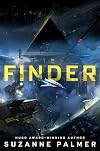
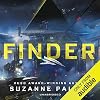
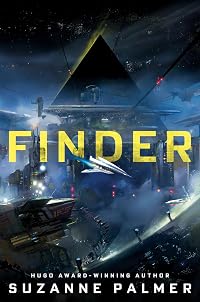
Fergus Ferguson has been called a lot of names: thief, con artist, repo man. He prefers the term finder. His latest job should be simple. Find the spacecraft Venetia's Sword and steal it back from Arum Gilger, ex-nobleman turned power-hungry trade boss. He'll slip in, decode the ship's compromised AI security, and get out of town, Sword in hand. Fergus locates both Gilger and the ship in the farthest corner of human-inhabited space, a backwater deep space colony called Cernee. But Fergus' show more arrival at the colony is anything but simple. A cable car explosion launches Cernee into civil war, and Fergus must ally with Gilger's enemies to navigate a field of space mines and a small army of hostile mercenaries. What was supposed to be a routine job evolves into negotiating a power struggle between factions. Even worse, Fergus has become increasingly--and inconveniently--invested in the lives of the locals. It doesn't help that a dangerous alien species Fergus thought mythical prove unsettlingly real, and their ominous triangle ships keep following him around. Foolhardy. Eccentric. Reckless. Whatever he's called, Fergus will need all the help he can get to take back the Sword and maybe save Cernee from destruction in the process. show lessTags
Recommendations











Member Reviews
‘Finder’ was an action-packed story following the calamitous attempts of Spaceship Repo Man and trouble magnet, Fergus Ferguson, to repossess a stolen ship. What should have been a simple, one-person, ‘Get close. Get the code. Get the ship. Get out,’ operation turned into a series of life-threatening events that included exploding cable cars, an alien abduction and a full-scale civil war that risks destroying a fragile collection of space habitats with Fergus.
The world-building takes a while at the beginning, but it was well-thought through and vividly evoked the hazards and thrills of living in a collection of tin cans in space, connected only by cables and where everyone takes for granted jetting from habitat to habitat with show more nothing but a spacesuit and a powered stick between them and the endless void.
The plot is complicated without being chaotic. Fergus’ ability to survive the challenges he faced pushed my suspension of disbelief to its limits, but his tricks and schemes were fun to watch.
Fergus was brave, resourceful, often reckless and almost always dogged by regret over past failings.
The baddies were really bad, and the good guys were only a little better (equally lethal, but they meant well),
The aliens were so alien, I still don’t know what their motivation was, but, like me, what they required of Fergus was summed up in a single sentence: “Be interesting”. He interested me enough that I’ve already bought the next book in the series.
I listened to the audiobook, narrated by Joe Hempel. If there had been an ebook version of the book available, I’d have dumped the audiobook. Joe Hemple’s voice was so gentle and relaxed that it was mildly soporific. He frequently ended paragraphs with a tone of passive resignation better suited to a sad cleric officiating at a funeral than to a man involved in a series of life-or-death struggles. Thankfully, the second book has a different narrator. show less
The world-building takes a while at the beginning, but it was well-thought through and vividly evoked the hazards and thrills of living in a collection of tin cans in space, connected only by cables and where everyone takes for granted jetting from habitat to habitat with show more nothing but a spacesuit and a powered stick between them and the endless void.
The plot is complicated without being chaotic. Fergus’ ability to survive the challenges he faced pushed my suspension of disbelief to its limits, but his tricks and schemes were fun to watch.
Fergus was brave, resourceful, often reckless and almost always dogged by regret over past failings.
The baddies were really bad, and the good guys were only a little better (equally lethal, but they meant well),
The aliens were so alien, I still don’t know what their motivation was, but, like me, what they required of Fergus was summed up in a single sentence: “Be interesting”. He interested me enough that I’ve already bought the next book in the series.
I listened to the audiobook, narrated by Joe Hempel. If there had been an ebook version of the book available, I’d have dumped the audiobook. Joe Hemple’s voice was so gentle and relaxed that it was mildly soporific. He frequently ended paragraphs with a tone of passive resignation better suited to a sad cleric officiating at a funeral than to a man involved in a series of life-or-death struggles. Thankfully, the second book has a different narrator. show less
I greatly enjoyed this book. If you look at my reading dates for it, you'll see that it took me 2 months to read, which might lead you to suspect the opposite... BUT. I enjoyed savoring this book. I read a chapter or two at a time, and took my time with it, and somehow that worked perfectly for me for this story. Even when the action ramped up, I still wanted to linger over the story instead of rushing along with the plot.
I had fun with the characters in the book. They had a nice variety to them, and even though we never leave Fergus's (3rd person) POV we still got to see a nice amount of the backstory and personality of the secondary characters. Mari and Bale probably got the most additional screen time, and there was some really fun show more interaction and dialogue between the three of them.
The setting, though very different from our real world, was nicely fleshed out and I didn't have any trouble imagining how Cernee was set up and how it worked. (I didn't exactly have a map in my head, but I understood the principle.) I appreciated getting some of the backstory of the universe without it being info-dumped, and I'm really looking forward to reading more of the series to see where else Fergus's travels take us. show less
I had fun with the characters in the book. They had a nice variety to them, and even though we never leave Fergus's (3rd person) POV we still got to see a nice amount of the backstory and personality of the secondary characters. Mari and Bale probably got the most additional screen time, and there was some really fun show more interaction and dialogue between the three of them.
The setting, though very different from our real world, was nicely fleshed out and I didn't have any trouble imagining how Cernee was set up and how it worked. (I didn't exactly have a map in my head, but I understood the principle.) I appreciated getting some of the backstory of the universe without it being info-dumped, and I'm really looking forward to reading more of the series to see where else Fergus's travels take us. show less
In this futuristic space odyssey, Palmer has created worlds and people to care about. Action is centered around the daring and reckless Fergus Ferguson, originally from Scotland, then Mars, and then homeless as he travels the universe reclaiming stolen property. His mission this time is to return a spaceship to its rightful owner, but along the way he encounters an insular community of women and one of its members who turns out to be just as daring and reckless as he is. He is caught up in a cosmic deadly power struggle among competing factions, and his creative problem-solving is tested to the hilt. The pace is fast, the characters interesting, and this reader hopes for sequels (although I was thankful that this did not end in a show more cliff-hanger). show less
In as much as I was expecting nothing more than a routine space adventure, I hate to feel as though I'm hitting a walnut with a sledgehammer, but if I had ruthlessly followed the "50-page Rule" I wouldn't have bothered finishing this novel. The one thing it has going for it is that I like the main character, the "finder" of the title; a basically decent man who is trying to live down a toxic family life and a history of bad impulse control. However, plot and pacing is everything in a caper novel and this novel's plot really didn't cohere for me; particularly once I discovered that the caper didn't seem all that relevant. As always, your mileage may differ.
Lively and fast moving and very very eventful, I found this book just a tad too eventful. The protagonist narrator may be a bit too unkinked for his kinked past and not quite credible as is, still the head space is easy to tolerate, and if yes, the loaded gun in Act 2 does get fired at the appropriate time, well that's the rule. The environment is well used and well felt and rather interesting and not terribly familiar. And the humor enhances the story.
It didn’t occur to me while reading, but when I set out to review, well, there’s this Scottish Earther-turned-Martian-rebel repo man, Fergus Feguson, far out in the farthest reaches of the human-occupied galaxy on a run to reclaim a stolen starship for some Shipmaker friends:
He meets up with a friendly, feisty, elderly lichen farmer who turns out to be a good person to know in a pinch, which leads him to her extended family and their neighbor the weapons dealer.
He’s in the wrong place at the wrong time and ends up touching off a troublesome series of events that were probably going to happen anyway.
But don’t worry, this is a good kind of book.
It was particularly fun in the use of gravity and deep space, requiring me to think show more a little harder about the spatial dynamics of what was happening. Yes, there's probably a few problems, but you don't read a book like this looking for them. You strap in and go for the ride.
Though the start seemed a bit slow the first time through, I suspect that's mostly a world-building issue, as it literally starts with a bang. Did I notice the second time through? Not in the least. Did Palmer stick the ending? I'm not entirely sure she did. Perhaps there was a bit too much suspension of disbelief required, a genre mix (general spoiler)with superhero/mutant that I'd rather have avoided, but ends up being used to great effect in the next book.
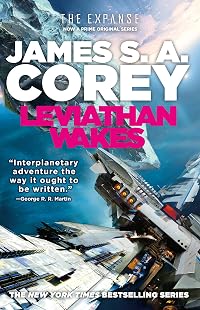
Recommended for fans of Leviathan Wakes, Locke Lamora, Kitty Jay series, Blade Runner, Star Wars–you know, fans of rogues with-a-heart-of-gold, fast action and daring heroics. show less
He meets up with a friendly, feisty, elderly lichen farmer who turns out to be a good person to know in a pinch, which leads him to her extended family and their neighbor the weapons dealer.
He’s in the wrong place at the wrong time and ends up touching off a troublesome series of events that were probably going to happen anyway.
But don’t worry, this is a good kind of book.
It was particularly fun in the use of gravity and deep space, requiring me to think show more a little harder about the spatial dynamics of what was happening. Yes, there's probably a few problems, but you don't read a book like this looking for them. You strap in and go for the ride.
Though the start seemed a bit slow the first time through, I suspect that's mostly a world-building issue, as it literally starts with a bang. Did I notice the second time through? Not in the least. Did Palmer stick the ending? I'm not entirely sure she did. Perhaps there was a bit too much suspension of disbelief required, a genre mix (general spoiler)
Recommended for fans of Leviathan Wakes, Locke Lamora, Kitty Jay series, Blade Runner, Star Wars–you know, fans of rogues with-a-heart-of-gold, fast action and daring heroics. show less
One of the biggest problems with SF is that from the 30s to the 70s the ideas are almost always better than the writing. The drive to fill the pulp magazines meant that an awful lot got accepted into print that would have not have been allowed in any other genre, except maybe cowboy stories. Even Detective fiction managed to keep respectability despite the crime pulp boom. Couple this with all the schlocky, cheap films like “It Conquered The World”, etc. and Saturday matinee serials like Flash Gordon, and the genre becomes one that true authors don't want to be associated with, regardless of books like Dune, etc., or fluctuate between rejection and acceptance (of selected works at least) - like Vonnegut, Pynchon, both generations of show more Amis. Often a good indicator of gratification versus more challenging entertainment is the attitude towards change. I like genre fiction that embraces the inevitability of transformation - not suggesting that all change should be enthusiastically welcomed for its own sake, but recognising that change will happen, and can be managed to some extent. What I don't like is fiction about restoring an old order or a natural order, as seems to be the case with a lot of fantasy (and, to be fair, probably a fair amount of space opera too). In reality there are no golden ages, there is no natural order; there is only power and negotiation and moral debate - and the future is not going to resemble the past. Should SF do more than giving us a good time This kind of question when applied to SF conjures up for me some somberly dressed parson with a cane intent on making sure your art only Serves God - or an ideologue with an AK-47 ensuring it only Serves The Party. No. There is a place for candy (or fruits), and a place for meat and potatoes (or whatever your preferred protein source). We must trust readers to balance their diets with select servings from all the food groups, not stand over them demanding political correctness in their choices. This trust must be extended to writers like Finder by Suzanne Palmer as well. If I want to write a mindless sitcom or a feel-good SF novel I should have that right. Come to think of it, the truth of that hinges on better. Not everyone agrees on what is better. Some may focus on the style of a story, the paint strokes and chiaroscuro and such. Some may focus on the substance conveyed by the style, the painted seen THROUGH the window of the painting. Different lenses are useful for different things, but no lens deserves to be celebrated if it is covered with scratches, cracks and mud. Finder is a good entertainment novel. I really don't see that entertaining doing more than that is an either or proposition. Have you never read a novel that was both entertaining and insightful or thought provoking and whatever A YouTube video of a kitten falling over is purely entertaining? In a novel of say 100K words if an author can't do more than merely entertain then I have to wonder what the point of writing it is. "Finder", in my view, seems to try to bridge the gap between grand scale wars or space operas, clashes of good vs evil, and enormous journeys of revelation, and a lot of the literary fiction today that is focused on the minutiae of daily life, beauty in microcosm, the power of a single word or action or seemingly minor deed. I repeat, surely it's not too much to ask for someone to bridge this gap - for the benefit of both genres, SF and Mundane Fiction. Palmer tries hard but it is not successful. I needed something more meat on its SFional bones...
SF = Speculative Fiction. show less
SF = Speculative Fiction. show less
Members
- Recently Added By
Lists

Favorite Science Fiction by Women Authors
737 works; 202 members

2020 Hugo Eligible Novels
71 works; 12 members

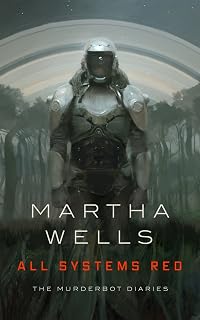
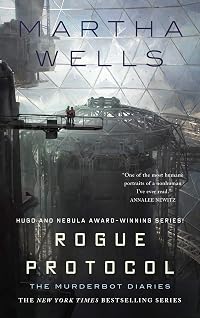
Read-alike - Murderbot Diaries, Martha Wells
22 works; 1 member

ALA The Reading List
490 works; 28 members
Author Information

35+ Works 939 Members
Suznne Palmer is the author of, The Secret Life of Bots, for which she won the 2018 Hugo Award for best Novelette. (Bowker Author Biography)
All Editions
Some Editions
Awards and Honors
Awards
Series

Belongs to Publisher Series
DAW Book Collectors (1819)
Common Knowledge
- Original publication date
- 2019-04-02
- Dedication
- To Laurie-for the dare.
- First words
- Above the airlock, in at least twenty different human and non-human languages, a faded sign read, 'Management Not Responsible For Losses Due to Depressurization or Alien Interference'.
- Last words
- (Click to show. Warning: May contain spoilers.)'Be interesting', he thought and he tapped the helm sequence to go.
- Publisher's editor
- Hoffman, Katie
Classifications
Statistics
- Members
- 427
- Popularity
- 72,392
- Reviews
- 20
- Rating
- (3.70)
- Languages
- English
- Media
- Paper, Audiobook, Ebook
- ISBNs
- 11
- ASINs
- 3