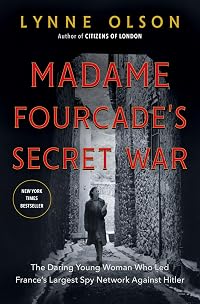
Madame Fourcade's Secret War: The Daring Young Woman Who Led France's Largest Spy Network Against Hitler
by Lynne Olson 
On This Page
Description
NEW YORK TIMES BESTSELLER • The little-known true story of Marie-Madeleine Fourcade, the woman who headed the largest spy network in occupied France during World War II, from the bestselling author of Citizens of London and Last Hope Island“Brava to Lynne Olson for a biography that should challenge any outdated assumptions about who deserves to be called a hero.”—The Washington Post
NAMED ONE OF THE BEST BOOKS OF THE YEAR BY NPR AND THE WASHINGTON POST
In 1941 a show more thirty-one-year-old Frenchwoman, a young mother born to privilege and known for her beauty and glamour, became the leader of a vast intelligence organization—the only woman to serve as a chef de résistance during the war. Strong-willed, independent, and a lifelong rebel against her country’s conservative, patriarchal society, Marie-Madeleine Fourcade was temperamentally made for the job. Her group’s name was Alliance, but the Gestapo dubbed it Noah’s Ark because its agents used the names of animals as their aliases. The name Marie-Madeleine chose for herself was Hedgehog: a tough little animal, unthreatening in appearance, that, as a colleague of hers put it, “even a lion would hesitate to bite.”
No other French spy network lasted as long or supplied as much crucial intelligence—including providing American and British military commanders with a 55-foot-long map of the beaches and roads on which the Allies would land on D-Day—as Alliance. The Gestapo pursued them relentlessly, capturing, torturing, and executing hundreds of its three thousand agents, including Fourcade’s own lover and many of her key spies. Although Fourcade, the mother of two young children, moved her headquarters every few weeks, constantly changing her hair color, clothing, and identity, she was captured twice by the Nazis. Both times she managed to escape—once by slipping naked through the bars of her jail cell—and continued to hold her network together even as it repeatedly threatened to crumble around her.
Now, in this dramatic account of the war that split France in two and forced its people to live side by side with their hated German occupiers, Lynne Olson tells the fascinating story of a woman who stood up for her nation, her fellow citizens, and herself.
“Fast-paced and impressively researched . . . Olson writes with verve and a historian’s authority. . . . With this gripping tale, Lynne Olson pays [Marie-Madeleine Fourcade] what history has so far denied her. France, slow to confront the stain of Vichy, would do well to finally honor a fighter most of us would want in our foxhole.”—The New York Times Book Review. show less
Tags
Recommendations



















Member Reviews
“How could one not be fascinated by the story of this cultured young woman from a well-connected family who had dreams of becoming a concert pianist but ended up as arguably the greatest wartime spymaster in Europe?”
Marie-Madeleine Fourcade was the leader of an espionage network across occupied France in WWII at a time when it was rare for a woman to be in charge. The book describes how she handled many challenges and narrow escapes. The title implies it is about Madame Fourcade, but it is written about many, many people in her spy network and it is often difficult to keep track of them all. Names are mentioned once or twice, sometimes never to be mentioned again. There are many digressions. It is almost as if the author decided to show more include all her research rather than only that which supports the main thesis. I applaud the author for calling attention to an unsung heroine of WWII. I wish it had been a little more focused. show less
Marie-Madeleine Fourcade was the leader of an espionage network across occupied France in WWII at a time when it was rare for a woman to be in charge. The book describes how she handled many challenges and narrow escapes. The title implies it is about Madame Fourcade, but it is written about many, many people in her spy network and it is often difficult to keep track of them all. Names are mentioned once or twice, sometimes never to be mentioned again. There are many digressions. It is almost as if the author decided to show more include all her research rather than only that which supports the main thesis. I applaud the author for calling attention to an unsung heroine of WWII. I wish it had been a little more focused. show less
Marie-Madeleine Fourcade was an amazing person. At the age of thirty-one, Fourcade became the head of France's largest Resistance intelligence group, Alliance. The fact that she was a woman made her accomplishments even harder won and more remarkable. Lynne Olson's readable narrative of Fourcade's life and years as chef de résistance brings to the attention of Western readers a woman whose story deserves to be known and honored.
Often underestimated because of her privileged upbringing and glamorous pre-war life, Fourcade was a force of determination and daring who bucked societal norms to become a pilot, get a job, and separate from her husband. When she was approached by Navarre, a former French military intelligence officer, to help show more him establish a clandestine journal trying to sway French military opinion prior to the war, she didn't hesitate. Their partnership led to the creation of Alliance, a nationwide resistance organization that provided key information to the Allies about submarine installations and movements, the V-2 rocket, the Normandy coast, and much, much more. In the last months of the war, Alliance provided information directly to General Patton as he moved his army into Germany. When Navarre was arrested in 1941, Fourcade stepped into the breach and became the head of Alliance for the rest of the war.
Fourcade had to learn as she went: how to be a spy, how to organize and run a resistance organization, and how to persuade men, many former military, to accept the leadership of a woman. Despite being separated from her children, being constantly on the run, and captured by the Nazis twice, Fourcade was unstoppable. Her personal bravery was only outshone by her organizational skills. Alliance operated over all of France, and she built cells in all the major cities, only to have them be destroyed by the capture of its agents, but would rebuild them with single-minded determination and dedication.
Despite her amazing leadership during the war, Fourcade was not named a Compagnons de la Liberation, France's highest honor for heroes of the Resistance. In fact, of the 1,038 members, 1032 were men. Perhaps now, with this book, Fourcade will receive the admiration and accolades that she should have received during her lifetime. Highly recommended. show less
Often underestimated because of her privileged upbringing and glamorous pre-war life, Fourcade was a force of determination and daring who bucked societal norms to become a pilot, get a job, and separate from her husband. When she was approached by Navarre, a former French military intelligence officer, to help show more him establish a clandestine journal trying to sway French military opinion prior to the war, she didn't hesitate. Their partnership led to the creation of Alliance, a nationwide resistance organization that provided key information to the Allies about submarine installations and movements, the V-2 rocket, the Normandy coast, and much, much more. In the last months of the war, Alliance provided information directly to General Patton as he moved his army into Germany. When Navarre was arrested in 1941, Fourcade stepped into the breach and became the head of Alliance for the rest of the war.
Fourcade had to learn as she went: how to be a spy, how to organize and run a resistance organization, and how to persuade men, many former military, to accept the leadership of a woman. Despite being separated from her children, being constantly on the run, and captured by the Nazis twice, Fourcade was unstoppable. Her personal bravery was only outshone by her organizational skills. Alliance operated over all of France, and she built cells in all the major cities, only to have them be destroyed by the capture of its agents, but would rebuild them with single-minded determination and dedication.
Despite her amazing leadership during the war, Fourcade was not named a Compagnons de la Liberation, France's highest honor for heroes of the Resistance. In fact, of the 1,038 members, 1032 were men. Perhaps now, with this book, Fourcade will receive the admiration and accolades that she should have received during her lifetime. Highly recommended. show less
As author Lynne Olson observes in her acknowledgements at the end of Madame Fourcade's Secret War, she writes of “unsung heroes—individuals of courage and conscience who helped change their country and the world but who . . . have slipped into the shadows of history.” She continues, “I found it hard to believe that [Marie-Madeleine Fourcade] was so little known in the United States, and I decided to correct that deficiency.”
I would hope that most people in the United States know at least the most basic facts of World War II: that France was one of the countries overrun by Hitler's troops, that de Gaulle led the Free French faction from exile in London, that Pétain headed the French government from Vichy in the theoretically show more unoccupied part of France after the Nazis occupied the capital of Paris, and that resistance groups did what they could to thwart the German occupiers of their country. After all, many of us born before the end of the European phase of that conflict in May 1945 are still living—and reading.
Olson's book is a marvelous way for us to extend our knowledge of those basic facts and to better understand and appreciate the valiant and often painful efforts of the résistants and résistantes during the war. Do not be misled into believing that a history book such as this must needs be dull reading; Olson's book reads like a well-executed spy novel replete with couriers, drops, code names, informers, assassinations, secret transmitters, sinister men in dark clothing and black cars, mysterious vanishings, torture, betrayals, and destructive jealousies.
Speaking of jealousies, I fear that today we tend to assume clear lines of demarcation between the “good guys” and the “bad guys,” but such is a massive oversimplification. We seldom think about (or even know of) the rivalries among different intelligence services within the same government, or the great rivalry between Charles de Gaulle and his archrival for leadership of the Free French, General Henri Giraud. Olson notes that Briton's MI6 (well known to Americans through James Bond books and movies) and the Special Operations Executive (SOE) were at each other's throats. Quoting another writer, she says that “though SOE and MI6 were nominally on the same side in the war, they were, generally speaking, more abhorrent to one another than the [Germans] were to either of them.” Such rivalries undermined much critical intelligence that résistent[e]s struggled to transmit to England, more than a few dying in the effort.
Olson's book is more than a spy-novel-like history, however. It is also a grand paean to one incredible woman, Marie-Madelaine Fourcade, who, in the face of powerful cultural bias against women, organized and led Alliance, one of the most successful spy networks in occupied France throughout the war. This historical account does a great deal to bring Mme. Fourcade out of the “shadows of history” into which she has slipped largely for a single reason, her sex. It is now up to us to fulfill the promise of the book by reading what Olson has written.
I recommend Madame Fourcade's Secret War to, well, everybody. The name of Marie-Madeleine Fourcade should roll off the tongue as readily as that of Jeanne d'Arc, the Maid of Orléans. show less
I would hope that most people in the United States know at least the most basic facts of World War II: that France was one of the countries overrun by Hitler's troops, that de Gaulle led the Free French faction from exile in London, that Pétain headed the French government from Vichy in the theoretically show more unoccupied part of France after the Nazis occupied the capital of Paris, and that resistance groups did what they could to thwart the German occupiers of their country. After all, many of us born before the end of the European phase of that conflict in May 1945 are still living—and reading.
Olson's book is a marvelous way for us to extend our knowledge of those basic facts and to better understand and appreciate the valiant and often painful efforts of the résistants and résistantes during the war. Do not be misled into believing that a history book such as this must needs be dull reading; Olson's book reads like a well-executed spy novel replete with couriers, drops, code names, informers, assassinations, secret transmitters, sinister men in dark clothing and black cars, mysterious vanishings, torture, betrayals, and destructive jealousies.
Speaking of jealousies, I fear that today we tend to assume clear lines of demarcation between the “good guys” and the “bad guys,” but such is a massive oversimplification. We seldom think about (or even know of) the rivalries among different intelligence services within the same government, or the great rivalry between Charles de Gaulle and his archrival for leadership of the Free French, General Henri Giraud. Olson notes that Briton's MI6 (well known to Americans through James Bond books and movies) and the Special Operations Executive (SOE) were at each other's throats. Quoting another writer, she says that “though SOE and MI6 were nominally on the same side in the war, they were, generally speaking, more abhorrent to one another than the [Germans] were to either of them.” Such rivalries undermined much critical intelligence that résistent[e]s struggled to transmit to England, more than a few dying in the effort.
Olson's book is more than a spy-novel-like history, however. It is also a grand paean to one incredible woman, Marie-Madelaine Fourcade, who, in the face of powerful cultural bias against women, organized and led Alliance, one of the most successful spy networks in occupied France throughout the war. This historical account does a great deal to bring Mme. Fourcade out of the “shadows of history” into which she has slipped largely for a single reason, her sex. It is now up to us to fulfill the promise of the book by reading what Olson has written.
I recommend Madame Fourcade's Secret War to, well, everybody. The name of Marie-Madeleine Fourcade should roll off the tongue as readily as that of Jeanne d'Arc, the Maid of Orléans. show less
I was watching an Instagram post by Ann Patchett from Parnassus Books and her associate recommended this book. As luck would have it, the digital audiobook from my library didn't have any holds on it so I downloaded it right away.
Really, the title says it all. Marie-Madeleine Fourcade led a large resistance organization during World War II. Initially, the organization was headed by a man with the code name of Navarre. He designated Fourcade (code name Herisson or Hedgehog) as his successor if something happened to him. When he was arrested in 1941, Fourcade stepped to the forefront. The organization worked closely with Britain's MI6 throughout the war, providing them valuable information. Before the Allied Invasion of France, members of show more her organization mapped every German placement in Normandy and got the information to Britain. Many members of the organization were arrested, often being tortured and then killed. Fourcade, herself, was arrested twice but managed to escape. After the second arrest she was flown to Britain where she continued to direct operations. She returned to France after D-day and continued to provide information to help the allies defeat the Germans.
Charles De Gaulle, who had spent the war years in England and had his own spy network, did not appreciate the work done by Fourcade and her network. After the war, when De Gaulle honoured 1, 038 resistance heroes, Fourcade was not named. Thanks to the research done by Lynne Olson her name now is recognized for the heroic work she did. show less
Really, the title says it all. Marie-Madeleine Fourcade led a large resistance organization during World War II. Initially, the organization was headed by a man with the code name of Navarre. He designated Fourcade (code name Herisson or Hedgehog) as his successor if something happened to him. When he was arrested in 1941, Fourcade stepped to the forefront. The organization worked closely with Britain's MI6 throughout the war, providing them valuable information. Before the Allied Invasion of France, members of show more her organization mapped every German placement in Normandy and got the information to Britain. Many members of the organization were arrested, often being tortured and then killed. Fourcade, herself, was arrested twice but managed to escape. After the second arrest she was flown to Britain where she continued to direct operations. She returned to France after D-day and continued to provide information to help the allies defeat the Germans.
Charles De Gaulle, who had spent the war years in England and had his own spy network, did not appreciate the work done by Fourcade and her network. After the war, when De Gaulle honoured 1, 038 resistance heroes, Fourcade was not named. Thanks to the research done by Lynne Olson her name now is recognized for the heroic work she did. show less
I am endlessly fascinated with espionage during WWII. Or, really, any major war. I blame the fascination on repeated viewings of Goldeneye when I was a child (it’s the best James Bond movie – I will fight you). While Madame Fourcade’s Secret War has a little to do with Bond’s MI-6, for the most part, it tells it’s own story. And this story was… incredibly good. It is really everything I was looking for in a narrative this type.
Marie-Madeleine Fourcade’s biography is exactly the type of strong female narrative we need in this world. Lynne Olson writes Marie-Madeleine as a strong women who fights for her right to run Alliance, who is brave and afraid and second-guessed but also empowered. Beyond anything, she is strong, true show more to her beliefs, and willing to sacrifice whatever she must for justice and right. Marie-Madeleine is the type of woman young girls should idolize, and I’m so glad I stumbled on this book while looking for information on the SOE or any WWII-era spy network.
Lynne Olson writes the story as an accessible narrative, focusing on key moments in Marie-Madeleine’s life and referencing her personal memoir often. Her voice flows well, allowing the biography to feel equal parts story and history – none of the humdrum lists of names and dates here. While I’m sure there’s a level of narrative interpretation going on, the ways in which Lynne Olson brings Marie-Madeleine to life make this biography exciting and interesting. I haven’t read any of her work before, but after reading Madame Fourcade’s Secret War, I would certainly consider her future works.
Historical biographies don’t get a lot of love, especially compared to modern celebrity memoirs, but these people have left their imprint on history. In the case of women like Marie-Madeleine Fourcade, history seems determined to forget them, and so, it is doubly important for us to drink up their stories and honor their memories and contributions. In the 1940s, there was still a lot of resistance to having women operate in any aspect of the war effort… doubly so to lead it. Those who watched the short run of Marvel’s Agent Carter have seen on screen the sort of ridiculous prejudice that world had against the minds and leadership of women. Marie-Madeleine struggled with that prejudice, but I really appreciated that Olson included men who believed in her as well. It’s too easy, culturally, to slide women into a specific category. Marie-Madeleine led the French spy network Appliance on her own for most of WWII, and was still a mother. Not one thing or the other. Both.
And that powerful feminist message is just one reason why I really liked this book.
I think it’s easy to see the trenches and the American perspective of WWII – especially as it is taught in American classroom – but so many people of so many nationalities were instrumental to the destruction of the Nazi regime. Every action led to the endgame – and it was not all violence and hate… but also a deep sense of national pride and the courage of those willing to risk their lives for a key piece of information that could save hundreds of soldiers.
Madame Fourcade’s Secret War is an excellent narrative for anyone interested in important, unknown women in history, WWII, or the history of espionage. Honestly, it was just a good read overall, and one I’d certainly like on my shelf. show less
Marie-Madeleine Fourcade’s biography is exactly the type of strong female narrative we need in this world. Lynne Olson writes Marie-Madeleine as a strong women who fights for her right to run Alliance, who is brave and afraid and second-guessed but also empowered. Beyond anything, she is strong, true show more to her beliefs, and willing to sacrifice whatever she must for justice and right. Marie-Madeleine is the type of woman young girls should idolize, and I’m so glad I stumbled on this book while looking for information on the SOE or any WWII-era spy network.
Lynne Olson writes the story as an accessible narrative, focusing on key moments in Marie-Madeleine’s life and referencing her personal memoir often. Her voice flows well, allowing the biography to feel equal parts story and history – none of the humdrum lists of names and dates here. While I’m sure there’s a level of narrative interpretation going on, the ways in which Lynne Olson brings Marie-Madeleine to life make this biography exciting and interesting. I haven’t read any of her work before, but after reading Madame Fourcade’s Secret War, I would certainly consider her future works.
Historical biographies don’t get a lot of love, especially compared to modern celebrity memoirs, but these people have left their imprint on history. In the case of women like Marie-Madeleine Fourcade, history seems determined to forget them, and so, it is doubly important for us to drink up their stories and honor their memories and contributions. In the 1940s, there was still a lot of resistance to having women operate in any aspect of the war effort… doubly so to lead it. Those who watched the short run of Marvel’s Agent Carter have seen on screen the sort of ridiculous prejudice that world had against the minds and leadership of women. Marie-Madeleine struggled with that prejudice, but I really appreciated that Olson included men who believed in her as well. It’s too easy, culturally, to slide women into a specific category. Marie-Madeleine led the French spy network Appliance on her own for most of WWII, and was still a mother. Not one thing or the other. Both.
And that powerful feminist message is just one reason why I really liked this book.
I think it’s easy to see the trenches and the American perspective of WWII – especially as it is taught in American classroom – but so many people of so many nationalities were instrumental to the destruction of the Nazi regime. Every action led to the endgame – and it was not all violence and hate… but also a deep sense of national pride and the courage of those willing to risk their lives for a key piece of information that could save hundreds of soldiers.
Madame Fourcade’s Secret War is an excellent narrative for anyone interested in important, unknown women in history, WWII, or the history of espionage. Honestly, it was just a good read overall, and one I’d certainly like on my shelf. show less
This is the biography of a fascinating woman, Marie-Madeleine Fourcade, who under the code name Hérisson (Hedgehog) ran Alliance, the largest and most successful intelligence gathering network in France during the Second World War. Not only was she the only female spy-master in Europe between 1941 and 1945, she managed to escape the Gestapo, smuggle herself across the French-Spanish border in a mailbag, help secure information vital to the D-Day landings—and did all this while managing the pain from a disability, falling in love, and giving birth to a child in 1943. There are times when I wished for a little more insight into Fourcade, and some of the digressions into the experiences of other members of her Resistance cell could have show more been trimmed down a little. Still, Lynn Olson weaves a gripping yarn here, and one which absolutely deserves to be the basis of a mini-series or movie. show less
An astounding story!
All I can say is Shame! Shame! Shame! Why has there been no over-the-top acknowledgment of Marie-Madeleine Fourcade? This woman masterminded the biggest spy ring across the length and breadth of occupied France during World War II. She controlled thousands of agents. Yet shockingly, no bright light has shone on her stupendous achievements and sacrifice for her country.
Hopefully Olson's novel will begin to rectify that.
Olson's research is outstanding. Her adherence to complexity and detail and the Bibliography gives weight to this.
But back to my opening question. Olson's 'Author's Notes' do give some guidance as to why there was a lack of recognition to the actions of women in these times. Amongst the reasons are show more the complexity of French politics after the war and post war ideas on the role of women. Further to that, "For several decades following the war, histories of the French resistance, which were written almost exclusively by men, largely ignored the contributions of women."
Hopefully a new era is opening up for these unsung women heroes.
Whilst the narrative could have been tighter the story of Marie-Madeleine Fourcade is amazing. My heart was frequently in my mouth at some of the situations Fourcade found herself in.
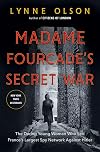
In addition I loved the cover. It's brilliant! Those darkened rough stoned buildings looming behind the woman as she walks down a narrow lane, vividly portrays an aura of brooding and hovering menace. In shaded grayish overtones it subtly elicits atmospheric references to the dangerous maze of deception and counter deception Fourcade and her precious Alliance members negotiated a path through.
This is well worth the read! For any World War II aficionados, a must read!!
A Random House ARC via NetGalley show less
All I can say is Shame! Shame! Shame! Why has there been no over-the-top acknowledgment of Marie-Madeleine Fourcade? This woman masterminded the biggest spy ring across the length and breadth of occupied France during World War II. She controlled thousands of agents. Yet shockingly, no bright light has shone on her stupendous achievements and sacrifice for her country.
Hopefully Olson's novel will begin to rectify that.
Olson's research is outstanding. Her adherence to complexity and detail and the Bibliography gives weight to this.
But back to my opening question. Olson's 'Author's Notes' do give some guidance as to why there was a lack of recognition to the actions of women in these times. Amongst the reasons are show more the complexity of French politics after the war and post war ideas on the role of women. Further to that, "For several decades following the war, histories of the French resistance, which were written almost exclusively by men, largely ignored the contributions of women."
Hopefully a new era is opening up for these unsung women heroes.
Whilst the narrative could have been tighter the story of Marie-Madeleine Fourcade is amazing. My heart was frequently in my mouth at some of the situations Fourcade found herself in.
In addition I loved the cover. It's brilliant! Those darkened rough stoned buildings looming behind the woman as she walks down a narrow lane, vividly portrays an aura of brooding and hovering menace. In shaded grayish overtones it subtly elicits atmospheric references to the dangerous maze of deception and counter deception Fourcade and her precious Alliance members negotiated a path through.
This is well worth the read! For any World War II aficionados, a must read!!
A Random House ARC via NetGalley show less
Members
- Recently Added By
Lists

THE WAR ROOM
813 works; 24 members

Club Read's Recommended Nonfiction Written by Women
618 works; 30 members
Author Information

24 Works 4,006 Members
Writer Lynne Olson graduated from the University of Arizona and began her career with the Associated Press in 1971. She was its first woman correspondent in Moscow from 1974 to 1976. She also worked as a reporter on national politics for the Baltimore Sun before becoming a freelance writer in 1981. Olson has contributed to publications including show more the Washington Post, American Heritage, Smithsonian, Working Woman, Ms., Elle, and Glamour. She taught journalism at American University in Washington for five years and has published several books of history. (Bowker Author Biography) show less
Lynne Olson is a LibraryThing Author, an author who lists their personal library on LibraryThing.
Some Editions
Awards and Honors
Distinctions
Common Knowledge
- People/Characters
- Marie-Madeleine Fourcade "Hedgehog"
- Important places
- France
- Important events
- World War II
- First words
- They appeared from out of the shadows, and suddenly you felt that you had always known them. The connection formed by a threat to one’s country is the strongest connection of all. People adopt one another, march together. O... (show all)nly capture or death can tear them apart. —Marie-Madeleine Fourcade
- Canonical DDC/MDS
- 940.548644092
- Canonical LCC
- D810.S8
Classifications
- Genres
- General Nonfiction, History, Nonfiction, Biography & Memoir
- DDC/MDS
- 940.548644092 — History & geography History of Europe History of Europe 1918- Military history of World War II Other Topics Unconventional warfare of Allies Europe France
- LCC
- D810 .S8 — History of Europe, Asia, Africa and Oceania History (General) World War II (1939-1945)
- BISAC
Statistics
- Members
- 608
- Popularity
- 48,162
- Reviews
- 21
- Rating
- (4.21)
- Languages
- English
- Media
- Paper, Audiobook, Ebook
- ISBNs
- 11
- ASINs
- 6