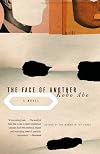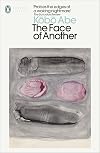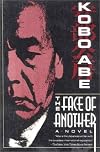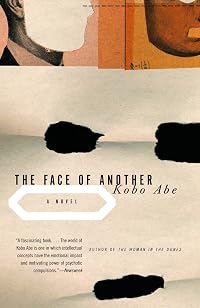
The Face of Another
by Kōbō Abe
On This Page
Description
Fantasy. Fiction. Literature. HTML:Like an elegantly chilling postscript to The Metamorphosis, this classic of postwar Japanese literature describes a bizarre physical transformation that exposes the duplicities of an entire world. The narrator is a scientist hideously deformed in a laboratory accident–a man who has lost his face and, with it, his connection to other people. Even his wife is now repulsed by him.His only entry back into the world is to create a mask so perfect as to be show more undetectable. But soon he finds that such a mask is more than a disguise: it is an alternate self–a self that is capable of anything. A remorseless meditation on nature, identity and the social contract, The Face of Another is an intellectual horror story of the highest order. show less
Tags
Recommendations
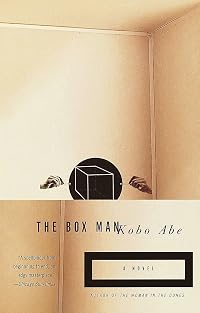


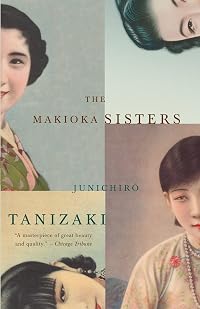
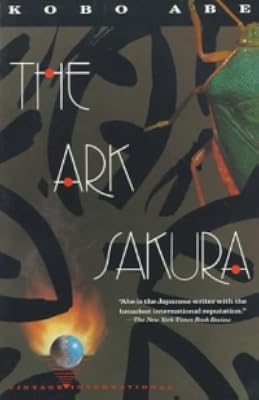

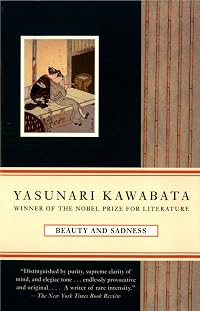

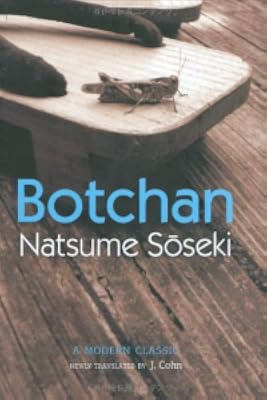

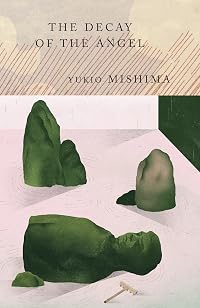
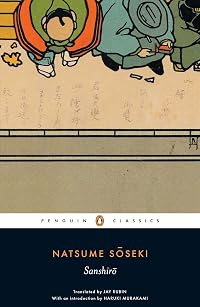
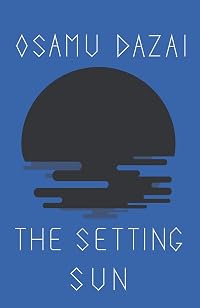
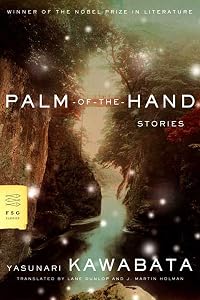
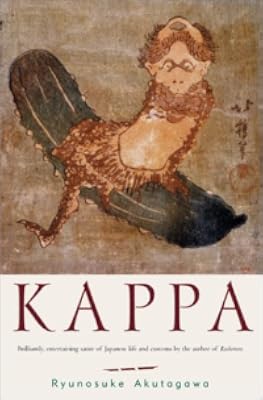
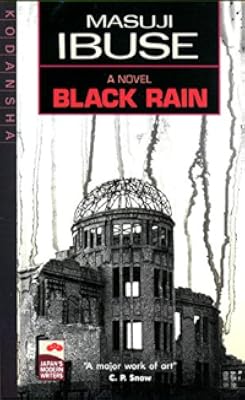
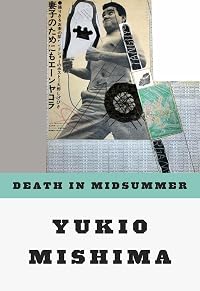
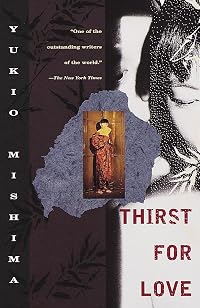
Member Recommendations
Member Reviews
Collapsed [...] like a marionette whose strings had been cut,
Abe is doing a couple interesting things here:
-Some play in the Mask Face relationship. Mask as a kind of face; face subordinated (in the animistic sense) to the mask; mask as the real self (simulacrum) and the self which is already a kind of mask.
-An attempt at technical detail that is almost believable (though reads as juvenilia compared to later accomplishments in The Box Man).
-Wearing a mask so he can date his wife, condemning her for dating him (scarred face), condemning her for dating him (mask face), condemning her for lack of prurience, condemning her for imagined prurience. condemning her for not seeing through the mask, but utterly destroyed when he realizes that show more she has seen through it/leaves him.
After a long time, I picked up this book, blindly, and thought, "this guy sounds like Kōbō Abe when he writes about women," so at least it can be said he has a style. show less
I almost don't feel like writing a review; instead, just read it. If you've read my review for his "The Box Man" then you know how I feel about this author.
Abe is just so good at sucking you in from the first page. He has even drawn you a map to his hideaway and has put tea in a thermos jug so that you may relax as you read the three notebooks that he has written just for you. But the you is not actually the reader, it's his wife, as he wishes to recount how she has come to this hideaway to read about his story.
It's the story of a scientist who has lost his face in an accident and has decided to build himself a new one; or rather, a mask. But the mask is not to be recognizable as a mask; it should instead be capable of shaping itself to show more fill out its beaten out contours. Typical of Abe we go through a very lengthy, a notebook-worth, explanation of how one constructs a mask and what one should look for. Now, this could seem like it'd be as a dull as reading a scientific paper on a topic one isn't interested in but, the notebook is filled with interesting ideas about what defines a face. Is it your bone structure? Is it the skin? What creates, or rather, what defines expression and what defines a person's identity? At first the scientist wishes to think that the face has nothing to do with identify for doesn't a blind person for example identify others via scent, the sound of a voice, the feeling of touch? And what about expression? Does our face create expression or do our expressions create our face? For with each smile, each frown, each tear, lines are slowly etched into our skin, tears show off a path of wetness down your cheek and the sun and age will change the shape of your face with time.
The second notebook delves into the role of the mask. Does a mask hide our personality or enhance it, subdue it or change it entirely? His accounts on the differences between masks that are made to look like masks versus masks that are made to deceive is fascinating. At one point he creates a world where masks become a trend where more and more begin to wear a mask. In just a few short pages it goes from a mere fancy to the bringing down of a government as he realizes there is no way one could regulate such a population of masked men. And if violence is inherent to a mask like a wrinkle sits by an eye, what becomes of a world where one can change their face at whim?
But as one is to expect from a Japanese Dr. Jekyll (or was it Mr. Hyde?), the mask begins to quickly overpower the scientist and we are subjected to his mumblings about wanting to seek revenge on his wife and how he intends on letting the mask seduce her. But as he becomes part of this strange menage-a-trois we go back to the word "mumblings" as after the third notebook, we are subjected to a very powerful letter. A letter that actually confirms our suspicions and brings out the pathetic nature of our poor scientist.
Fantastic book. Should be read.
And for those who are too confused by "The Box Man", this is a much easier read although just as fascinating. show less
Abe is just so good at sucking you in from the first page. He has even drawn you a map to his hideaway and has put tea in a thermos jug so that you may relax as you read the three notebooks that he has written just for you. But the you is not actually the reader, it's his wife, as he wishes to recount how she has come to this hideaway to read about his story.
It's the story of a scientist who has lost his face in an accident and has decided to build himself a new one; or rather, a mask. But the mask is not to be recognizable as a mask; it should instead be capable of shaping itself to show more fill out its beaten out contours. Typical of Abe we go through a very lengthy, a notebook-worth, explanation of how one constructs a mask and what one should look for. Now, this could seem like it'd be as a dull as reading a scientific paper on a topic one isn't interested in but, the notebook is filled with interesting ideas about what defines a face. Is it your bone structure? Is it the skin? What creates, or rather, what defines expression and what defines a person's identity? At first the scientist wishes to think that the face has nothing to do with identify for doesn't a blind person for example identify others via scent, the sound of a voice, the feeling of touch? And what about expression? Does our face create expression or do our expressions create our face? For with each smile, each frown, each tear, lines are slowly etched into our skin, tears show off a path of wetness down your cheek and the sun and age will change the shape of your face with time.
The second notebook delves into the role of the mask. Does a mask hide our personality or enhance it, subdue it or change it entirely? His accounts on the differences between masks that are made to look like masks versus masks that are made to deceive is fascinating. At one point he creates a world where masks become a trend where more and more begin to wear a mask. In just a few short pages it goes from a mere fancy to the bringing down of a government as he realizes there is no way one could regulate such a population of masked men. And if violence is inherent to a mask like a wrinkle sits by an eye, what becomes of a world where one can change their face at whim?
But as one is to expect from a Japanese Dr. Jekyll (or was it Mr. Hyde?), the mask begins to quickly overpower the scientist and we are subjected to his mumblings about wanting to seek revenge on his wife and how he intends on letting the mask seduce her. But as he becomes part of this strange menage-a-trois we go back to the word "mumblings" as after the third notebook, we are subjected to a very powerful letter. A letter that actually confirms our suspicions and brings out the pathetic nature of our poor scientist.
Fantastic book. Should be read.
And for those who are too confused by "The Box Man", this is a much easier read although just as fascinating. show less
I experienced this story first several years ago via the film adaptation by the great Hiroshi Teshigahara.
So, one of the things that interests me is the tandem experience of book and film; the film really explores the idea -- a man's face is destroyed in an accident and he creates (or, in the film, has created) a mask so lifelike almost nobody realizes it's a mask at all, only to find that instead of restoring him fully to his life and his humanity, it has made him more of a monster than he was when his face was a hideous mass of scars and ruined tissue -- from the exterior. The plot wanders quite a bit from that of the novel, but that's immaterial for my purposes; what interests me now is how book and film complement each other; the show more film cannot, except in voice-overs, really explore the inner man of the scientist except indirectly (hence the introduction of a sub-plot lifted mostly from a film our protagonist watches early on in the book, of a girl, her face half destroyed in the Hiroshima bombing, who does charitable work for WWII veterans despite her disfigurement, but who is ultimately too isolated by it to continue); for all its startling imagery (get a load of that doctor's office, wholly invented for the film), it does not begin to come close to what makes the book such a disturbing read.
The book is written in an extended epistolary/diary form; the first person narrator is the scientist (nameless in the book) who has lost his face, writing an extended confessional to his wife. And herein lies the creepiness, for while he believes he has fashioned the mask (in secret, all on his own, in the book) to "restore the roadway" between him and his wife, he has gotten so carried away with the sudden duality of existence it affords him that he has actually come to think of The Mask as another person, a person who quickly becomes his Mr. Hyde, all id and transgressions, all an exploration of what he can get away with when no one knows it's him. Inevitably -- and I give nothing away here that isn't given away in the very opening paragraphs of the book -- he and it decide to see about seducing his own wife; the roadway he sought to restore to her is left forgotten; he takes the long way round and comes back at her as a stranger, and then rages with jealousy when Mask Him succeeds.
Throughout this confession, he reveals that the roadway was washed out long ago; he has created a wife-emulator in his head who is much stupider than she really is, less perceptive and with no self-determination, and unwaveringly regards his real wife as that lesser being. She is trapped in his imagination, confined to the smallest possible space, surrounded on all sides by him and his limited, limiting understanding of her -- and the further we get into the novel, the more oppressive is his tendency to project onto her most, if not all, of his negative feelings about himself. It's a classic trope, but I've never seen it so elegantly, horrifyingly done as here. The build-up to the actual meeting between Mask Him and his wife treats the seduction as a fait accompli ratchets the depressing creepiness up to eleven; all the time we spend alone (except for the Mask) in the nameless man's skull dials it up to twelve.
I can't recommend this one highly enough, shattering though it is. show less
So, one of the things that interests me is the tandem experience of book and film; the film really explores the idea -- a man's face is destroyed in an accident and he creates (or, in the film, has created) a mask so lifelike almost nobody realizes it's a mask at all, only to find that instead of restoring him fully to his life and his humanity, it has made him more of a monster than he was when his face was a hideous mass of scars and ruined tissue -- from the exterior. The plot wanders quite a bit from that of the novel, but that's immaterial for my purposes; what interests me now is how book and film complement each other; the show more film cannot, except in voice-overs, really explore the inner man of the scientist except indirectly (hence the introduction of a sub-plot lifted mostly from a film our protagonist watches early on in the book, of a girl, her face half destroyed in the Hiroshima bombing, who does charitable work for WWII veterans despite her disfigurement, but who is ultimately too isolated by it to continue); for all its startling imagery (get a load of that doctor's office, wholly invented for the film), it does not begin to come close to what makes the book such a disturbing read.
The book is written in an extended epistolary/diary form; the first person narrator is the scientist (nameless in the book) who has lost his face, writing an extended confessional to his wife. And herein lies the creepiness, for while he believes he has fashioned the mask (in secret, all on his own, in the book) to "restore the roadway" between him and his wife, he has gotten so carried away with the sudden duality of existence it affords him that he has actually come to think of The Mask as another person, a person who quickly becomes his Mr. Hyde, all id and transgressions, all an exploration of what he can get away with when no one knows it's him. Inevitably -- and I give nothing away here that isn't given away in the very opening paragraphs of the book -- he and it decide to see about seducing his own wife; the roadway he sought to restore to her is left forgotten; he takes the long way round and comes back at her as a stranger, and then rages with jealousy when Mask Him succeeds.
Throughout this confession, he reveals that the roadway was washed out long ago; he has created a wife-emulator in his head who is much stupider than she really is, less perceptive and with no self-determination, and unwaveringly regards his real wife as that lesser being. She is trapped in his imagination, confined to the smallest possible space, surrounded on all sides by him and his limited, limiting understanding of her -- and the further we get into the novel, the more oppressive is his tendency to project onto her most, if not all, of his negative feelings about himself. It's a classic trope, but I've never seen it so elegantly, horrifyingly done as here. The build-up to the actual meeting between Mask Him and his wife treats the seduction as a fait accompli ratchets the depressing creepiness up to eleven; all the time we spend alone (except for the Mask) in the nameless man's skull dials it up to twelve.
I can't recommend this one highly enough, shattering though it is. show less
What happens when someone 'looses' their face. Scientist Okuyama has a terrible accident with liquid nitrogen leaving his face covered in keloid scars. His loss of face, of his identity is slowly alienating him from society, but he has a plan, all he needs is a new face.
Written as a letter & diaries we are deeply and firmly placed into the character' s head and one that is deeply unpleasant, self cantered, intellectually superior, extremely misogynistic and filled with flawed logic. We are drawn through his philosophical musing, his research and his flawed logic into watching a descent into madness and the creation of a monster.
It's an intense, interesting novel. All the better for being cold and clinical and torturous. The plot itself show more is pretty obvious early on but this is not detrimental as narrative shifts breathe life where needed (and to be honest it's all the more unsettling when you can see the end).
The diary/letter format is a clever technique: there are really just two characters the writer and the reader. Drawn unpleasantly to ride with the narrator we automatically empathise with the intended recipient since, technically this person is us. It provides a space for us to stand apart from the narrator and to mock him, giving the book its cold intensity.
Written in Japan in the 60s it could of been a terrible outdated book but although a product of its time I think it still packs a punch. The question of identity hasn't changed that much. Rather you will hate this because of it's clinical nature or the themes it concentrates, if you aren't interested in the topic or require a complex action packed horror avoid. For me it was completely refreshing. show less
Written as a letter & diaries we are deeply and firmly placed into the character' s head and one that is deeply unpleasant, self cantered, intellectually superior, extremely misogynistic and filled with flawed logic. We are drawn through his philosophical musing, his research and his flawed logic into watching a descent into madness and the creation of a monster.
It's an intense, interesting novel. All the better for being cold and clinical and torturous. The plot itself show more is pretty obvious early on but this is not detrimental as narrative shifts breathe life where needed (and to be honest it's all the more unsettling when you can see the end).
The diary/letter format is a clever technique: there are really just two characters the writer and the reader. Drawn unpleasantly to ride with the narrator we automatically empathise with the intended recipient since, technically this person is us. It provides a space for us to stand apart from the narrator and to mock him, giving the book its cold intensity.
Written in Japan in the 60s it could of been a terrible outdated book but although a product of its time I think it still packs a punch. The question of identity hasn't changed that much. Rather you will hate this because of it's clinical nature or the themes it concentrates, if you aren't interested in the topic or require a complex action packed horror avoid. For me it was completely refreshing. show less
Wow! This book was so interesting. I’m a big fan of works by Kobo Abe, and this novel did not disappoint. It’s the story of a married man whose face had been disfigured by an accident. This unnamed narrator tells the story of a mask he makes and how this mask takes on a life of its own. Very dismayed by a distressing situation over which he did have control, he is startled by the outcome of his mask project.
This is a deep book about identity, some of which was a bit over my head. However, for the most part I was fascinated not only by the turn of events in this story, but also by the fact that the author did such an amazing job writing both from the point of view of the narrator as well as that of the mask.
Although I’ve read show more several other books by Kobo Abe, I am always eager to read even more of his surreal fiction. show less
This is a deep book about identity, some of which was a bit over my head. However, for the most part I was fascinated not only by the turn of events in this story, but also by the fact that the author did such an amazing job writing both from the point of view of the narrator as well as that of the mask.
Although I’ve read show more several other books by Kobo Abe, I am always eager to read even more of his surreal fiction. show less
O fato do narrador levar o conceito de persona amalgamando-o à literalidade criando uma tensão constante que haverá uma ruptura de tabu e no exato momento que isso vai se concretizar o livro acaba. Eu diria que é de fato uma grande obra, mas passar por todas as minúcias presentes no texto é um trabalho um tanto quanto árduo, para não dizer entediante.
It's really the first part of Notes from Underground expanded to novel length with some light scifi trappings. The unnamed narrator is one of the most bitter and cynical in the history of literature. With that said, I didn't find this as invigorating as The Woman in the Dunes or The Box Man.
Members
- Recently Added By
Lists

The Guardian's 1000 Novels Everyone Must Read
1,005 works; 551 members

Troublesome bodies
110 works; 7 members
Talk Discussions
Past Discussions
The Face of Another by Kobo Abe in Author Theme Reads (April 2012)
Author Information

84+ Works 9,146 Members
Kobo Abe is the pseudonym of Kimifusa Abe, who was born in Tokyo, Japan on March 7 1924. He was brought up in Manchuria where he lived with his father, a doctor of the hosipital attached to the Imperial Medical Colledge of Manchuria. In elementary school, he was educated in the experimental way, in which a teacher trained children to debating and show more rapid reading. Abe went back to Tokyo and went to Sejo Koko High School, a famous private school. He was later admitted to the faculty of medicine of Tokyo University. In 1944, Abe heard that Japan would lose the war before long and he forged a medical certificate to get home to Manchuria. He earned his medical degree in 1948, but never practiced. After graduation he began his writing career and became a member of a literary group led by Kiyoteru Hamada. Often compared to Kafka , he treated the contemporary human predicament in a realistic yet symbolic style. In 1951 he got the Akutagawa Award by his first masterpiece, Kabe (The Walls). Among Abe's novels are Woman in the Dunes, published in 1962 and made into a film in 1964, and his best-known work, Secret Rendezvous. His plays include Friends, published in 1967. The first of his short stories to appear in English were collected in Beyond the Curve, 1944-66. Abe died in 1993. (Bowker Author Biography) show less
Some Editions
Awards and Honors
Series
Belongs to Publisher Series
Work Relationships
Has the adaptation
Common Knowledge
- Canonical title
- The Face of Another
- Original title
- 他人の顔
- Original publication date
- 1964 (original Japanese) (original Japanese); 1966 (English translation) (English translation)
- Important places
- Japan
- First words
- At last you have come, threading your way through the endless passages of the maze.
- Quotations
- Ich werde in Zukunft nichts mehr schreiben. Vielleicht ist das Schreiben nur nötig, wenn nichts geschieht.
My misfortune was forever mine alone. Anyone could disregard me completely without feeling the slightest twinge of conscience. And I was not even permitted to protest that disregard.
Basically, there is nothing new in the behavior of monsters, for the monster himself is nothing more than an invention of his victims.
For example, the use of the mask in places of employment—public offices, firm, police stations, laboratories—would doubtless be forbidden.
This was a triangular relationship with one actor playing two parts.
Make-up—making a face, is indeed a denial of the real face, but a gallant effort to get a little closer to others by transforming the expression. - Last words
- (Click to show. Warning: May contain spoilers.)Perhaps the act of writing is necessary only when nothing happens.
- Original language*
- Japans
*Some information comes from Common Knowledge in other languages. Click "Edit" for more information.
Classifications
- Genres
- Fiction and Literature, General Fiction, Horror
- DDC/MDS
- 895.635 — Literature & rhetoric Literatures of other languages Literatures of East and Southeast Asia Japanese Japanese fiction 1945–2000
- LCC
- PL845 .B4 .T313 — Language and Literature Languages and literatures of Eastern Asia, Africa, Oceania Languages of Eastern Asia, Africa, Oceania Japanese language and literature Japanese literature Individual authors and works
- BISAC
Statistics
- Members
- 862
- Popularity
- 31,665
- Reviews
- 17
- Rating
- (3.58)
- Languages
- 14 — Czech, Dutch, English, French, German, Greek, Italian, Japanese, Lithuanian, Portuguese, Romanian, Russian, Spanish, Swedish
- Media
- Paper, Audiobook, Ebook
- ISBNs
- 26
- ASINs
- 11