
Kōbō Abe (1924–1993)
Author of The Woman in the Dunes
About the Author
Kobo Abe is the pseudonym of Kimifusa Abe, who was born in Tokyo, Japan on March 7 1924. He was brought up in Manchuria where he lived with his father, a doctor of the hosipital attached to the Imperial Medical Colledge of Manchuria. In elementary school, he was educated in the experimental way, in show more which a teacher trained children to debating and rapid reading. Abe went back to Tokyo and went to Sejo Koko High School, a famous private school. He was later admitted to the faculty of medicine of Tokyo University. In 1944, Abe heard that Japan would lose the war before long and he forged a medical certificate to get home to Manchuria. He earned his medical degree in 1948, but never practiced. After graduation he began his writing career and became a member of a literary group led by Kiyoteru Hamada. Often compared to Kafka , he treated the contemporary human predicament in a realistic yet symbolic style. In 1951 he got the Akutagawa Award by his first masterpiece, Kabe (The Walls). Among Abe's novels are Woman in the Dunes, published in 1962 and made into a film in 1964, and his best-known work, Secret Rendezvous. His plays include Friends, published in 1967. The first of his short stories to appear in English were collected in Beyond the Curve, 1944-66. Abe died in 1993. (Bowker Author Biography) show less
Image credit: Kôbô Abe
Works by Kōbō Abe
Historia de las pulgas que viajaron a la luna: y otros cuentos de ficción científica cuentos de ficción científica (Spanish Edition) (2013) 14 copies
The Life of a Poet [short story] 2 copies
Härra S. Karma kuritöö : [jutustus] 2 copies
死に急ぐ鯨たち・もぐら日記 1 copy
無関係な死・時の崖 1 copy
跳蚤奔月 1 copy
" Izbrannoe". 1 copy
砂丘之女及其他 1 copy
De droomsoldaat 1 copy
Suna no onna 1 copy
The Internal Boundary 内なる边境 1 copy
Abe kobo zen sakuhin. 13 1 copy
Den fr̲str̲da kartan : roman 1 copy
Kumların kadını 1 copy
The Double of Human Being 1 copy
A Máscara 1 copy
Избранное 1 copy
Associated Works
Other Voices, Other Vistas: Short Stories from Africa, China, India, Japan, and Latin America (1992) — Contributor — 212 copies, 2 reviews
自然読本 夢・眠り 夜明かしする人悩む人、夢見る人は眠る人 — Contributor — 1 copy
石の文学館 ――鉱物の眠り、砂の思考 — Contributor — 1 copy
日本SFベスト集成〈1975〉 (1984年) (徳間文庫) — Contributor — 1 copy
Tagged
Common Knowledge
- Canonical name
- Abe, Kōbō
- Legal name
- Abe, Kimifusa
- Other names
- 安部公房
- Birthdate
- 1924-03-07
- Date of death
- 1993-01-22
- Gender
- male
- Education
- University of Tokyo (MD | 1948)
- Occupations
- poet
novelist
playwright
businessman
inventor - Organizations
- American Academy of Arts and Letters (Foreign Honorary, Literature, 1992)
- Awards and honors
- American Academy of Arts and Letters (Foreign Honorary ∙ Literature ∙ 1992)
- Relationships
- Teshigahara, Hiroshi (collaborator)
Mishima, Yukio (friend) - Cause of death
- heart failure
- Nationality
- Japan
- Birthplace
- Tokyo, Japan
- Places of residence
- Shenyang, Liaoning, China
Tokyo, Japan - Place of death
- Chofu-shi, Tokyo, Japan
- Burial location
- Kamikawa Reien, 1520 Kamikawa-machi, Hachioji City, Tokyo, 192-0151, Japan
- Map Location
- Japan
Members
Discussions
The Box Man by Kobo Abe in Author Theme Reads (May 2015)
Secret Rendezvous by Kobo Abe in Author Theme Reads (May 2013)
The Woman in the Dunes by Kōbō Abé in Author Theme Reads (May 2012)
The Face of Another by Kobo Abe in Author Theme Reads (April 2012)
Reviews
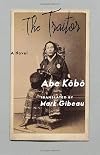
Fascinating and rewarding
I am very pleased that I decided to request this arc! This is Kōbō Abe’s only historical novel and its very first English translation. The Traitor is not a historical novel in a traditional sense; the author is looking at the past with a very critical eye, writing in the 1960’s, when post-WWII Japan was yet again trying to come to terms with its WWII past.
This is a framed narrative – there is a mysterious manuscript found by a man who did terrible things show more during WWII. He hopes the events of the 1860’s will somehow justify him. The events in question being the chaos of the fall of the Tokugawa shogunate and the beginning of Meiji era. (I highly recommend at least a quick perusal of a few Wikipedia articles before starting the book. I am glad I thought of doing just that.)
We are looking at the actions of Enomoto Takeaki – samurai and admiral of the Tokugawa, a rebel fighting against the Meiji government, a president and founder of the Republic of Ezo, a prisoner… and then an influential member of the Meiji government. What a biography, indeed.
The book a mixture of mystery, memoir, a list of historical events, philosophical and moral musings, newspaper clippings, possibly unreliable narrators and dialogues that cut deep if you read them closely. All the historical details are very interesting. Kōbō Abe makes the reader work for it – everything is slow and intricate, you need to focus and have your wits about you. I did want to go back to the book when I wasn’t reading! The people and the setting were very clear to me and I had to remember to breathe when following Enomoto Takeaki.
What is betrayal, what does it mean to be betrayed? What is loyalty? Should loyalty exist? Does bravery have any value? Are you allowed to change your beliefs? How do we settle scores after wars end? This is not the kind of book that will give you clear answers. The readers are free to think and decide for themselves.
Mark Gibeau’s translation is beautiful and immaculate. I am very impressed.
Quotes:
”It doesn’t matter which age you’re talking about, the only acceptable beliefs are the beliefs of the current age.”
”They were men who refused to feel remorse or regret simply because old beliefs ceased to hold sway. They were true samurai, don’t you think?”
”Tell me, Sensei, does the changing of the times make one’s loyalty worth less than than a handful of copper coins?”
”No, it seems we were too late. Too late in becoming samurai.”
”Any honor that forces you to puzzle over whether you should stand by this or by that is no true honor at all.”
Many thanks to NetGalley and the publisher for the free e-book! show less
I am very pleased that I decided to request this arc! This is Kōbō Abe’s only historical novel and its very first English translation. The Traitor is not a historical novel in a traditional sense; the author is looking at the past with a very critical eye, writing in the 1960’s, when post-WWII Japan was yet again trying to come to terms with its WWII past.
This is a framed narrative – there is a mysterious manuscript found by a man who did terrible things show more during WWII. He hopes the events of the 1860’s will somehow justify him. The events in question being the chaos of the fall of the Tokugawa shogunate and the beginning of Meiji era. (I highly recommend at least a quick perusal of a few Wikipedia articles before starting the book. I am glad I thought of doing just that.)
We are looking at the actions of Enomoto Takeaki – samurai and admiral of the Tokugawa, a rebel fighting against the Meiji government, a president and founder of the Republic of Ezo, a prisoner… and then an influential member of the Meiji government. What a biography, indeed.
The book a mixture of mystery, memoir, a list of historical events, philosophical and moral musings, newspaper clippings, possibly unreliable narrators and dialogues that cut deep if you read them closely. All the historical details are very interesting. Kōbō Abe makes the reader work for it – everything is slow and intricate, you need to focus and have your wits about you. I did want to go back to the book when I wasn’t reading! The people and the setting were very clear to me and I had to remember to breathe when following Enomoto Takeaki.
What is betrayal, what does it mean to be betrayed? What is loyalty? Should loyalty exist? Does bravery have any value? Are you allowed to change your beliefs? How do we settle scores after wars end? This is not the kind of book that will give you clear answers. The readers are free to think and decide for themselves.
Mark Gibeau’s translation is beautiful and immaculate. I am very impressed.
Quotes:
”It doesn’t matter which age you’re talking about, the only acceptable beliefs are the beliefs of the current age.”
”They were men who refused to feel remorse or regret simply because old beliefs ceased to hold sway. They were true samurai, don’t you think?”
”Tell me, Sensei, does the changing of the times make one’s loyalty worth less than than a handful of copper coins?”
”No, it seems we were too late. Too late in becoming samurai.”
”Any honor that forces you to puzzle over whether you should stand by this or by that is no true honor at all.”
Many thanks to NetGalley and the publisher for the free e-book! show less

4.5/5
One of the highest candidates on my 'to be re-read' list. I don't know if I was fully prepared or invested enough to properly dissect the layers of The Woman in the Dunes, even though it has a simple premise. An entomology teacher takes a vacation to a sandy beach on the hunt for new insects for his collection. In doing so, he discovers a small village that is in the process of being swallowed up by the dunes. He is invited to stay the night at a woman's home by some of the villagers, a show more home that is at the bottom of a forty foot pit of sand. Soon, the man discovers that he has been trapped with/by her with the explicit purpose of helping the woman, and thus the village, prevent the sand from destroying her home.
There's a strong sense of ambiguity that obfuscates the facts behind the story that I enjoyed greatly. Is the woman a victim of the villagers imprisonment, or a willing accomplice in the man's? Is the man actually trapped as he appears, or is his prison more mental than physical? How much time passes between events? How does the village benefit from the sand removal, really? All of these questions could be argued multiple ways, and convincingly so. This is a mysterious world, one where magic almost feels at work, and yet is so grounded in human emotions that it retains it's sobriety.
How the man handles his circumstances is where Abe focuses most of the attention. The story goes to some extremely dark places rather quickly as the man experiences the full range of possible responses to his predicament. Both him and the woman feel detailed and intimately written, both struggling to cope in their own ways. Abe's prose has a similar flavor to Yoko Ogawa's The Memory Police in it's surface level simplicity, and yet Abe also provides some really vivid and ornate passages that jumped off the page. He can write beautifully, but does so as points of emphasis against the rest of the writing.
The Woman in the Dunes is an exploration of how our emotions effect our outlook on the world more than our circumstances. It implies that even with 'meager' means and purpose, great happiness and satisfaction can be accomplished. This is one of those novels that greatly rewards deep study and analysis. The harder you look, the more questions you find to ponder over. I'm sure that I will find more appreciation for it when I revisit it with more space to do so. show less
One of the highest candidates on my 'to be re-read' list. I don't know if I was fully prepared or invested enough to properly dissect the layers of The Woman in the Dunes, even though it has a simple premise. An entomology teacher takes a vacation to a sandy beach on the hunt for new insects for his collection. In doing so, he discovers a small village that is in the process of being swallowed up by the dunes. He is invited to stay the night at a woman's home by some of the villagers, a show more home that is at the bottom of a forty foot pit of sand. Soon, the man discovers that he has been trapped with/by her with the explicit purpose of helping the woman, and thus the village, prevent the sand from destroying her home.
There's a strong sense of ambiguity that obfuscates the facts behind the story that I enjoyed greatly. Is the woman a victim of the villagers imprisonment, or a willing accomplice in the man's? Is the man actually trapped as he appears, or is his prison more mental than physical? How much time passes between events? How does the village benefit from the sand removal, really? All of these questions could be argued multiple ways, and convincingly so. This is a mysterious world, one where magic almost feels at work, and yet is so grounded in human emotions that it retains it's sobriety.
How the man handles his circumstances is where Abe focuses most of the attention. The story goes to some extremely dark places rather quickly as the man experiences the full range of possible responses to his predicament. Both him and the woman feel detailed and intimately written, both struggling to cope in their own ways. Abe's prose has a similar flavor to Yoko Ogawa's The Memory Police in it's surface level simplicity, and yet Abe also provides some really vivid and ornate passages that jumped off the page. He can write beautifully, but does so as points of emphasis against the rest of the writing.
The Woman in the Dunes is an exploration of how our emotions effect our outlook on the world more than our circumstances. It implies that even with 'meager' means and purpose, great happiness and satisfaction can be accomplished. This is one of those novels that greatly rewards deep study and analysis. The harder you look, the more questions you find to ponder over. I'm sure that I will find more appreciation for it when I revisit it with more space to do so. show less

Niki Jumpei, an amateur entomologist, seeks a rare beetle in the desert. The day ends, and he is lost in the sand dunes. In desperation, he agrees to assistance from another man who finds the entomologist shelter for the night. He is taken to a sand cliff from which he is lowered by rope ladder to a small house, partially covered by sand and inhabited by a lone woman. In the morning, the rope is gone but the woman remains.
The story was terrifying and engrossing all at once. It had the show more essence of one person being alone, yet not being alone; disappearing and yet not disappearing. Thinking of a person placed in a captive situation, it made me question whether it would be better to remain aloof or to befriend a captor. Presenting just as many questions as answers, this book turned out to be an incredible mind trip. I kept on trying to figure out what it all meant, whether it was a metaphor for anything at all or just a bizarre tale meant for entertainment. It was a story, complete with perfectly situated pen-and-ink drawings, about the meaning of being held captive and containing sequences of events and scenery which made for surreal and fascinating reading. show less
The story was terrifying and engrossing all at once. It had the show more essence of one person being alone, yet not being alone; disappearing and yet not disappearing. Thinking of a person placed in a captive situation, it made me question whether it would be better to remain aloof or to befriend a captor. Presenting just as many questions as answers, this book turned out to be an incredible mind trip. I kept on trying to figure out what it all meant, whether it was a metaphor for anything at all or just a bizarre tale meant for entertainment. It was a story, complete with perfectly situated pen-and-ink drawings, about the meaning of being held captive and containing sequences of events and scenery which made for surreal and fascinating reading. show less
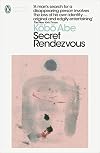
A woman is taken away in the middle of the night by ambulance, although she is not ill. Her husband traces her to a huge, underground hospital and finds that she disappeared from reception before being officially admitted. No one is prepared to tell the man where his wife has gone. Is she lost or imprisoned in the labyrinths of the hospital? Is she dead? Has she escaped? Has she arranged her own disappearance? The man is employed by a bizarre individual, who seems to be half man, half horse, show more to find the woman. The man must report his investigation in a journal, which has to be written in the third person. The book consists of the man's three journals.
Secret Rendezvous seems to be operating on many levels. (I say "seems' because I'm not at all sure what I've just read.) There's the aspect of surveillance, with the hospital full of bugs and hidden cameras that send data to a central security system. There's an indictment of a hospital system where patients enter and cannot leave, doctors tout for business and recruit patients to specialties without reference to their symptoms, doctors and nurses use patients for their own entertainment and perform strange sexual experiments on them; the head of security sells the tapes for profit. There's a confusion of identities, an inability to know who people really are: a man who acts as though he is a horse, who is actually a doctor and the deputy director; doctors who are patients and patients who are doctors; a girl whose shape changes because of a bone disease; the man's wife, who might not be the woman he thought he knew. There's a thread about masculinity and erections, femininity and orgasms, and an awful lot of masturbation. Some reviews describe this as an erotic novel, but with all this sex being about violent experimentation and power machinations, it didn't seem that way to me.
Reading Secret Rendezvous was like being plunged into someone's nightmare. I felt the claustrophobia, the panic, the confusion and the powerlessness, but I didn't quite understand what was going on. show less
Secret Rendezvous seems to be operating on many levels. (I say "seems' because I'm not at all sure what I've just read.) There's the aspect of surveillance, with the hospital full of bugs and hidden cameras that send data to a central security system. There's an indictment of a hospital system where patients enter and cannot leave, doctors tout for business and recruit patients to specialties without reference to their symptoms, doctors and nurses use patients for their own entertainment and perform strange sexual experiments on them; the head of security sells the tapes for profit. There's a confusion of identities, an inability to know who people really are: a man who acts as though he is a horse, who is actually a doctor and the deputy director; doctors who are patients and patients who are doctors; a girl whose shape changes because of a bone disease; the man's wife, who might not be the woman he thought he knew. There's a thread about masculinity and erections, femininity and orgasms, and an awful lot of masturbation. Some reviews describe this as an erotic novel, but with all this sex being about violent experimentation and power machinations, it didn't seem that way to me.
Reading Secret Rendezvous was like being plunged into someone's nightmare. I felt the claustrophobia, the panic, the confusion and the powerlessness, but I didn't quite understand what was going on. show less
Lists
Awards


You May Also Like


Associated Authors
Statistics
- Works
- 82
- Also by
- 15
- Members
- 9,078
- Popularity
- #2,648
- Rating
- 3.7
- Reviews
- 161
- ISBNs
- 250
- Languages
- 22
- Favorited
- 59