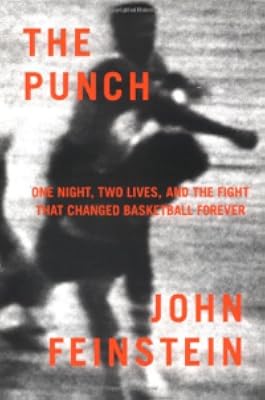
The Punch: One Night, Two Lives, And The Fight That Changed Basketball Forever
by John Feinstein
On This Page
Description
When an on-court fight broke out between the Houston Rockets and the LA Lakers just before Christmas 1977, Rudy Tomjanovitch raced to break it up. He was met by Kermit Washington's fist. This is the story of how one punch changed two lives, the NBA and how we think about basketball, forever.Tags
Recommendations











Member Reviews
December 9, 1977; Los Angeles Forum. Straight into a game between the Lakers and the Houston Rockets, a fight breaks out. Rudy Tomjanovich (Rockets) runs in to try and calm things down, separate the guys involved. He will be brutally stopped by Kermit Washington (Lakers) who, seeing him coming from the back and assuming he would assault him, threw him a punch straight into the face. It's an horrible image, well-known by NBA fans: Tomajanovich flinch, then collapse on the court. He curl himself up. Blood is spilling all around him. A eerie silence pervades the arena. It's a shock, and, following these barely 10 seconds of violence, the face of American basketball will never be the same again. The NBA will never be known as it was until show more then.
Fights, back then, were common. We were still in the dark age of the league. Born in 1946, the big names usually associated with the NBA (Larry Bird, Magic Johnson, Michael Jordan...) were not playing yet. Games were physical and aggressive, leading to constant and recurring fights (41 in 1976 alone!). Violence, in fact, was doing more than giving a bad reputation to the sport, it was also such a problem that drastic measures had been implemented to address these players having a reputation for being brawlers on the court (e.g. fees increased from $500 to $10,000, suspensions were extended from 5 days only to undetermined period -Washington will receive 60 days).
However, the episode Tomjanovich-Washington, by its brutality, went beyond, way beyond, a mere fist fight. The powerfulness of the punch remains difficult to grasp: Tomajanovich will be rushed to A&E, with his face so deformed by the impact (his skull was dislocated, spinal fluid dripping into his mouth) that he will necessitate 5 surgical operations to have it back. If, two decades later, he would make history as the coach who will lead the Houston Rockets to win their first NBA championship (in 1994, with Hakeem Olajuwon...) the punch will also mark the end of his career as a player. Kermit Washington, him, would be no less affected. Living under constant threat, as a player he would be considered a burden, shipped from team to team like an unwelcomed parcel no one wants to deal with, until his retirement, when no one would want to employ him as coach or assistant either, the punch he threw that night having turned him into a pariahs for the league.
John Feinstein, sports journalist and writer, does more that retelling the event. He gives us to see its consequences, moving and surprising, for the two men involved. He doesn't spare difficult questions either -for instance, in tackling the racism which will invite itself into the affair (Tomjanovich was White, Washington was Black, and this was a nasty cocktail in the 1970s' USA...). He retells, also, how such punch would radically change the NBA, a league which became since then extremely severe against any form of violence. Thing is, if violence is never acceptable in sports, when it involves athletes of such physical strength it's more than intolerable, it's very dangerous too.
Here's a nice read, then, too detailed maybe, repetitive at times, but, rich in interviews and point of views which will fascinate sports fans, even beyond basketball. There are some other sports, for sure, that could learn a great deal from such harrowing history... show less
Fights, back then, were common. We were still in the dark age of the league. Born in 1946, the big names usually associated with the NBA (Larry Bird, Magic Johnson, Michael Jordan...) were not playing yet. Games were physical and aggressive, leading to constant and recurring fights (41 in 1976 alone!). Violence, in fact, was doing more than giving a bad reputation to the sport, it was also such a problem that drastic measures had been implemented to address these players having a reputation for being brawlers on the court (e.g. fees increased from $500 to $10,000, suspensions were extended from 5 days only to undetermined period -Washington will receive 60 days).
However, the episode Tomjanovich-Washington, by its brutality, went beyond, way beyond, a mere fist fight. The powerfulness of the punch remains difficult to grasp: Tomajanovich will be rushed to A&E, with his face so deformed by the impact (his skull was dislocated, spinal fluid dripping into his mouth) that he will necessitate 5 surgical operations to have it back. If, two decades later, he would make history as the coach who will lead the Houston Rockets to win their first NBA championship (in 1994, with Hakeem Olajuwon...) the punch will also mark the end of his career as a player. Kermit Washington, him, would be no less affected. Living under constant threat, as a player he would be considered a burden, shipped from team to team like an unwelcomed parcel no one wants to deal with, until his retirement, when no one would want to employ him as coach or assistant either, the punch he threw that night having turned him into a pariahs for the league.
John Feinstein, sports journalist and writer, does more that retelling the event. He gives us to see its consequences, moving and surprising, for the two men involved. He doesn't spare difficult questions either -for instance, in tackling the racism which will invite itself into the affair (Tomjanovich was White, Washington was Black, and this was a nasty cocktail in the 1970s' USA...). He retells, also, how such punch would radically change the NBA, a league which became since then extremely severe against any form of violence. Thing is, if violence is never acceptable in sports, when it involves athletes of such physical strength it's more than intolerable, it's very dangerous too.
Here's a nice read, then, too detailed maybe, repetitive at times, but, rich in interviews and point of views which will fascinate sports fans, even beyond basketball. There are some other sports, for sure, that could learn a great deal from such harrowing history... show less
What makes the Punch such a fascinating read is not only the play by play of the punch and the events leading up to it, but Feinstein is adament about making the reader understand these two players as people. Sports writing meets biography. There is an urgency to make one understand that both of these men were passionate people before they were passionate players. Feinstein carefully illustrates the tough beginnings, the drive and potential each of these basketball stars demonstrated at an early age, including their schooling, family lives and social circles. Even black and white photgraphs help bring Kermit and Rudy into reality.
It has been almost thirty years now (December 9, 1977) since a single ten-second snippet of NBA history forever changed the way that the game of professional basketball is played. On that evening in Los Angeles, Houston Rockets star Rudy Tomjanovich was almost killed by a single punch thrown by Kermit Washington of the Los Angeles Lakers. In the immediate aftermath of the incident, no one realized the tremendous impact that Tomjanovich’s injury would have, not only on the lives of the two men directly involved, but on the league itself. John Feinstein’s The Punch explains how the paths of Rudy Tomjanovich and Kermit Washington crossed that night in what was really more an accident than a fight and how they have become forever linked show more in the minds of basketball fans, something about which neither man is happy.
In one very important sense, the NBA of the 1970s resembled the game of hockey as it is played in the NHL. NBA teams depended on superstars to score points and to convince people to buy tickets. Team owners and managers realized that those superstars needed to be protected because their injury or ejection would make or break a team’s whole season. For that reason, NBA teams almost always had someone on the floor to serve as the team’s enforcer, someone who would make sure that their superstar was not injured in a fight, someone who would often fight the superstar’s fight in his place, in fact. Kermit Washington, a fine player in his own right, also served as enforcer for the Los Angeles Lakers and Kareem Abdul-Jabbar.
Washington found himself coming to Abdul-Jabbar’s rescue again on that fateful night, something he was used to doing on a regular basis for the hot tempered Abdul-Jabbar. As the players were running from one end of the basketball court to the other, Washington noticed that Abdul-Jabbar was becoming frustrated with the pushing and shoving he was receiving under the basket at the hands of Houston’s Kevin Kunnert so he stayed close to the two men rather than running to the other end of the floor. Tomjanovich, Houston’s team captain, noticed from his end of the court that his teammate was being manhandled by two Lakers and rushed in to break up the fight. As he approached Washington from behind, with his hands down, Washington turned suddenly and threw a single punch at Tomjanovich. The combination of Washington’s strength, the speed at which Tomjanovich was approaching Washington’s fist, and the exact location of the punch left Tomjanovich on the floor in a huge pool of blood.
Tomjanovich, who doctors say was lucky to survive the kind of punch that dislodged his skull, did not play again that season. Washington was suspended without pay for sixty days and his career was never really the same again. NBA rules governing player fights grew out of what happened that night because it made league officials aware of the great danger of letting men the size of professional basketball players take swings at each other. The league tightened up to such an extent that even players on the periphery of a fight were subject to fines and suspensions, especially those coming off the bench to involve themselves.
Just as importantly, the lives of Kermit Washington and Rudy Tomjanovich would never be the same. No matter what either player ever achieved on or off the court, each would always be remembered first for “the punch.” Each of the men played for several more seasons, and Tomjanovich even coached the Houston Rockets to two NBA championships in the nineties, but both of them are still haunted by what happened during ten seconds of one of the thousands of basketball games they played during their lives.
John Feinstein was able to get both men, their families, and many of the players and coaches who were on the floor that night to share their memories. Rudy Tomjanovich, try as he might, cannot get over the feeling that everyone he meets thinks of him as the player “who got nailed.” Kermit Washington has spent his life trying to convince people that he is not a thug who almost killed someone with a sucker punch in a fit of anger.
Feinstein gives equal time to both men, exploring their childhoods, their days as amateur basketball stars, and their professional careers. He does not take sides or make excuses for what happened that night. Instead, he lets both men tell their versions of what happened and how that has affected their lives ever since. Strangely enough, it is Kermit Washington who seems to be having the hardest time dealing with the whole thing. Washington seems to have become somewhat paranoid about what he did and still blames the hit his reputation took that night for everything bad that has happened to him since then. As pointed out by John Lucas, an ex-player who made plenty mistakes of his own, Washington needs to finally just say, “I’m sorry. I screwed up.” He will never find the closure that Tomjanovich seems to have found until he stops saying, “I’m sorry, but…”
Rated at: 4.0 show less
In one very important sense, the NBA of the 1970s resembled the game of hockey as it is played in the NHL. NBA teams depended on superstars to score points and to convince people to buy tickets. Team owners and managers realized that those superstars needed to be protected because their injury or ejection would make or break a team’s whole season. For that reason, NBA teams almost always had someone on the floor to serve as the team’s enforcer, someone who would make sure that their superstar was not injured in a fight, someone who would often fight the superstar’s fight in his place, in fact. Kermit Washington, a fine player in his own right, also served as enforcer for the Los Angeles Lakers and Kareem Abdul-Jabbar.
Washington found himself coming to Abdul-Jabbar’s rescue again on that fateful night, something he was used to doing on a regular basis for the hot tempered Abdul-Jabbar. As the players were running from one end of the basketball court to the other, Washington noticed that Abdul-Jabbar was becoming frustrated with the pushing and shoving he was receiving under the basket at the hands of Houston’s Kevin Kunnert so he stayed close to the two men rather than running to the other end of the floor. Tomjanovich, Houston’s team captain, noticed from his end of the court that his teammate was being manhandled by two Lakers and rushed in to break up the fight. As he approached Washington from behind, with his hands down, Washington turned suddenly and threw a single punch at Tomjanovich. The combination of Washington’s strength, the speed at which Tomjanovich was approaching Washington’s fist, and the exact location of the punch left Tomjanovich on the floor in a huge pool of blood.
Tomjanovich, who doctors say was lucky to survive the kind of punch that dislodged his skull, did not play again that season. Washington was suspended without pay for sixty days and his career was never really the same again. NBA rules governing player fights grew out of what happened that night because it made league officials aware of the great danger of letting men the size of professional basketball players take swings at each other. The league tightened up to such an extent that even players on the periphery of a fight were subject to fines and suspensions, especially those coming off the bench to involve themselves.
Just as importantly, the lives of Kermit Washington and Rudy Tomjanovich would never be the same. No matter what either player ever achieved on or off the court, each would always be remembered first for “the punch.” Each of the men played for several more seasons, and Tomjanovich even coached the Houston Rockets to two NBA championships in the nineties, but both of them are still haunted by what happened during ten seconds of one of the thousands of basketball games they played during their lives.
John Feinstein was able to get both men, their families, and many of the players and coaches who were on the floor that night to share their memories. Rudy Tomjanovich, try as he might, cannot get over the feeling that everyone he meets thinks of him as the player “who got nailed.” Kermit Washington has spent his life trying to convince people that he is not a thug who almost killed someone with a sucker punch in a fit of anger.
Feinstein gives equal time to both men, exploring their childhoods, their days as amateur basketball stars, and their professional careers. He does not take sides or make excuses for what happened that night. Instead, he lets both men tell their versions of what happened and how that has affected their lives ever since. Strangely enough, it is Kermit Washington who seems to be having the hardest time dealing with the whole thing. Washington seems to have become somewhat paranoid about what he did and still blames the hit his reputation took that night for everything bad that has happened to him since then. As pointed out by John Lucas, an ex-player who made plenty mistakes of his own, Washington needs to finally just say, “I’m sorry. I screwed up.” He will never find the closure that Tomjanovich seems to have found until he stops saying, “I’m sorry, but…”
Rated at: 4.0 show less
As a reader that is not a basketball fan, maybe I am giving this a biased rating. It was an interesting story. Feinstein does a good job illustrating the difference in the rules and regulations, and even the culture, before and after the fateful Punch. Unfortunately he circles around the event over and over, repeating many of the same facts. He focuses more on Washington's side of the story--but then, he does mention in the introduction that Washington was much more willing to talk about the event than Tomjanovich. Feinstein did a very good job relaying their early biographies, but the whole book comes off as unpolished.
John Feinstein, a fabulous sports writer, recounts one of the ugliest nights in NBA history. A game between the Houston Rockets and the LA Lakers erupted into a fist fight. During this fight, Kermit Washington threw a punch that hit Rudy Tomjanovich so hard that it dislodged his skull and nearly killed him. After the fight - neither man was ever the same again.
Feinstein looks at the aftermath of what happened to these two men. He takes us up close and personal inside the lives of these two great athletes and shows us how this one punch changed two lives, the sport of basketball, and society from that point.
Feinstein looks at the aftermath of what happened to these two men. He takes us up close and personal inside the lives of these two great athletes and shows us how this one punch changed two lives, the sport of basketball, and society from that point.
"Do you have any kind of funny taste in your mouth?" the doctor asks, his voice soft. He is peering into the face of Rudy Tomjanovich, 29-year-old starting forward for the Houston Rockets. The four-time all-star is lying in the emergency room of a Los Angeles hospital. The date is Dec. 9, 1977.
Yes, Tomjanovich says. It's very bitter. What is it?
"Spinal fluid," comes the soft reply. "You're leaking spinal fluid from your brain."
That's simultaneously awesome and awful!
Yes, Tomjanovich says. It's very bitter. What is it?
"Spinal fluid," comes the soft reply. "You're leaking spinal fluid from your brain."
That's simultaneously awesome and awful!
Feinstein is a great writer, this book was FILLED with information and anecdotes, but it flowed very nicely. However, I felt that there were parts that were really repetitious. Also, I felt that there was a skew towards Kermitt's side of things. I kinda started to get bored towards the end but I am glad that I pushed through to the end.
Members
- Recently Added By
Published Reviews
ThingScore 38
Feinstein's unconditional endorsement of the conventional wisdom causes problems; the book lacks narrative tension and presents little in the way of new interpretations. What Feinstein offers, instead, is a labor-intensive accumulation of information surrounding the incident -- for example, the history of the Houston Rockets franchise, which, perhaps you did not know, started in San Diego.
added by stephmo
As it is, ''The Punch'' carries more padding than an N.F.L. quarterback, repeats itself regularly and rarely makes close contact with its two central figures. Both shared their stories with Mr. Feinstein, but their memories of 25-year-old events have little remaining spontaneity. And the author shows scant ability to make larger sense of what he learns.
added by stephmo
Author Information

52+ Works 9,504 Members
John Feinstein was born in New York City on July 28, 1956. He graduated from Duke University. He is a sportswriter, author, and sports commentator. He was on the staff at the Washington Post and wrote for Sports Illustrated. He is the author of several books including A Season on the Brink, Where Nobody Knows Your Name, A Good Walk Spoiled, and show more The Legends Club: Dean Smith, Mike Krzyzewski, Jim Valvano, and the Story of an Epic College Basketball Rivalry. (Bowker Author Biography) show less
Common Knowledge
- Canonical title
- The Punch: One Night, Two Lives, And The Fight That Changed Basketball Forever
- Original publication date
- 2002
- People/Characters
- Tom Tomjanovich; Kermit Washington
- First words
- It was a comfortable June afternoon and I was in my car en route to a meeting in downtown Washington D.C. (Introduction)
He had always worried about the scoreboards. - Last words
- (Click to show. Warning: May contain spoilers.)"Because," he said, "we're brothers."
- Blurbers
- Greenya, John; Tresniowski, Alex; DeCourcy, Mike; Ford, Bob
Classifications
- Genres
- Sports and Leisure, Nonfiction, General Nonfiction, Biography & Memoir
- DDC/MDS
- 796.32364 — Arts & recreation Recreation, sports, and performing arts Athletic and outdoor sports and games Ball sports Ball and net sports Basketball By type or level Professional
- LCC
- GV706.7 .F45 — Geography, Anthropology and Recreation Recreation. Leisure Recreation. Leisure Sports
- BISAC
Statistics
- Members
- 361
- Popularity
- 87,754
- Reviews
- 10
- Rating
- (3.66)
- Languages
- English
- Media
- Paper, Audiobook, Ebook
- ISBNs
- 12
- ASINs
- 5