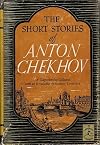
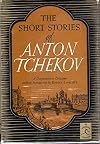
The Short Stories of Anton Chekhov
by Anton Tchekov
On This Page
Description
The Short Stories of Anton Chekhov (Anton Tchekhov) Translated by Constance Garnett Anton Pavlovich Chekhov; 29 January 1860 - 15 July 1904, was a Russian playwright and short story writer, who is considered to be among the greatest writers of short fiction in history. His career as a playwright produced four classics and his best short stories are held in high esteem by writers and critics. Along with Henrik Ibsen and August Strindberg, Chekhov is often referred to as one of the three show more seminal figures in the birth of early modernism in the theatre. Chekhov practiced as a medical doctor throughout most of his literary career: "Medicine is my lawful wife", he once said, "and literature is my mistress." Easter Eve A Nightmare Uprooted The Chorus Girl Verotchka At A Country House A Father On the Road Lermontov Rothschilds Fiddle Ivan Matveyitch Zinotchka Bad Weather A Gentleman Friend The Cooks Wedding Sleepy Children The Runaway Grisha Oysters Home A Classical Student Vanka Excellent people show lessTags
Recommendations



















Member Reviews
Short Stories by Anton Chekhov 1. Yes, a book on CD but it's Chekov! hence you know the stories recorded for this project will be good or interesting at least - (he is a master after all). And don't worry: it sounds like Tchekov. The translation by Constance Garnett seems adequate - the style is the Russian's: deceptively simple, sometimes simply terse, always descriptively sparse. The six stories in this volume range from excellent to passable; some display Checkoff's ironic humor, others his critique of class, but all are sociologically probing and psychologically complex. Though these works might be deemed "lesser-known" - (you won't hear The Lady with the Dog, or Gooseberries, for example) - each seems chosen because it lends itself show more to imagery through sound rather than idea through word play.
They are read by Max Bollinger, a Russian-born English actor whose voice is clear, whose pronunciation is precise. (There are occasional sound effects which neither add nor detract. It is Anton after all, and Anton holds your attention without need of pyrotechnics) It is Bollinger, however, who colors the images. And herein lies the wrong-way-rub (a problem whenever literature is transmuted into another format): if you have read any of these stories, the voice you hear will not be the voice you heard - the tones will be altered, especially where dialogue is concerned - and said voice often seems somehow inaccurate: not a tune played off-key, but one with an abnormal instrumentation. This is probably due in part to a need for vocal clarity, but sometimes it feels like a misreading, because yours is the only precise rendering. What was a shriek in your mind's ear has become a whimper. Lines full of pathos are delivered without affect. (And Bollinger often seems to trip over punctuation, or decides to pause where no such slowdown appears in the original text - you can almost see the commas and semi-colons floating before your eyes.)
If you are not familiar with these stories, there is the potential for a superimposition of Bollinger's voice upon your own if you subsequently choose to take the leap and read them for yourself. His tincture could stain your images; his dialogue could jump from the mouths of your imagined actors. And your images, your voice, your ideas are essential. For Chekov does not supply easy answers, his ambivalence allows the reader to dig in, to think about what is being proposed; yet one does not necessarily draw a definitive conclusion. (Like, I said - a master.)
Literature is a collaboration between reader and writer. What we get with a story being read to us is an interpretation, and here, an interpretation of a translation, which is itself an interpretation. We are, therefore, thrice removed from the original and I can see Plato smiling and nodding. Bollinger emphasizes words you would not, shades characters as you would not. It’s as if there is an interloper in the mix - you’ve bought a used paperback with the wrong passages underlined.
This is not to say there is anything absolutely immoral with a book on CD. It's fine as long as you accept the aforementioned before hitting the remote, and acquiesce to a lesser experience than you would have had if you'd got together with Anton and read the damn stories as intended. show less
They are read by Max Bollinger, a Russian-born English actor whose voice is clear, whose pronunciation is precise. (There are occasional sound effects which neither add nor detract. It is Anton after all, and Anton holds your attention without need of pyrotechnics) It is Bollinger, however, who colors the images. And herein lies the wrong-way-rub (a problem whenever literature is transmuted into another format): if you have read any of these stories, the voice you hear will not be the voice you heard - the tones will be altered, especially where dialogue is concerned - and said voice often seems somehow inaccurate: not a tune played off-key, but one with an abnormal instrumentation. This is probably due in part to a need for vocal clarity, but sometimes it feels like a misreading, because yours is the only precise rendering. What was a shriek in your mind's ear has become a whimper. Lines full of pathos are delivered without affect. (And Bollinger often seems to trip over punctuation, or decides to pause where no such slowdown appears in the original text - you can almost see the commas and semi-colons floating before your eyes.)
If you are not familiar with these stories, there is the potential for a superimposition of Bollinger's voice upon your own if you subsequently choose to take the leap and read them for yourself. His tincture could stain your images; his dialogue could jump from the mouths of your imagined actors. And your images, your voice, your ideas are essential. For Chekov does not supply easy answers, his ambivalence allows the reader to dig in, to think about what is being proposed; yet one does not necessarily draw a definitive conclusion. (Like, I said - a master.)
Literature is a collaboration between reader and writer. What we get with a story being read to us is an interpretation, and here, an interpretation of a translation, which is itself an interpretation. We are, therefore, thrice removed from the original and I can see Plato smiling and nodding. Bollinger emphasizes words you would not, shades characters as you would not. It’s as if there is an interloper in the mix - you’ve bought a used paperback with the wrong passages underlined.
This is not to say there is anything absolutely immoral with a book on CD. It's fine as long as you accept the aforementioned before hitting the remote, and acquiesce to a lesser experience than you would have had if you'd got together with Anton and read the damn stories as intended. show less
These are slice of life stories, they aren’t complete tales, they don’t always have obvious points, beginnings or endings. Many times it feels like you’ve just read a chapter from another book. They’re not happy stories for the most part and aren’t going to leave a smile on your face. But they’re really, really good. Simple, direct, and straight to the heart of the characters, the people of Russia of 100 years ago.
Now I need to find more.
Now I need to find more.
Boring at times, piquant at others.
Ratings
Members
- Recently Added By
Lists

F. Scott Fitzgerald's 22 Essential Books (1936)
22 works; 3 members
Author Information

Anton Pavlovich Chekhov was born in the provincial town of Taganrog, Ukraine, in 1860. In the mid-1880s, Chekhov became a physician, and shortly thereafter he began to write short stories. Chekhov started writing plays a few years later, mainly short comic sketches he called vaudvilles. The first collection of his humorous writings, Motley show more Stories, appeared in 1886, and his first play, Ivanov, was produced in Moscow the next year. In 1896, the Alexandrinsky Theater in St. Petersburg performed his first full- length drama, The Seagull. Some of Chekhov's most successful plays include The Cherry Orchard, Uncle Vanya, and Three Sisters. Chekhov brought believable but complex personalizations to his characters, while exploring the conflict between the landed gentry and the oppressed peasant classes. Chekhov voiced a need for serious, even revolutionary, action, and the social stresses he described prefigured the Communist Revolution in Russia by twenty years. He is considered one of Russia's greatest playwrights. Chekhov contracted tuberculosis in 1884, and was certain he would die an early death. In 1901, he married Olga Knipper, an actress who had played leading roles in several of his plays. Chekhov died in 1904, spending his final years in Yalta. (Bowker Author Biography) show less
All Editions
Some Editions
Series
Belongs to Publisher Series
Modern Library (50.3)
Work Relationships
Common Knowledge
- Original language
- Russian
- Canonical LCC
- PG3456.A13 L56
Classifications
- Genres
- General Fiction, Fiction and Literature
- DDC/MDS
- 891.7 — Literature & rhetoric Literatures of other languages East Indo-European and Celtic literatures Russian and East Slavic languages
- LCC
- PG3456 .A13 .L56 — Language and Literature Slavic languages and literatures. Baltic languages. Albanian language Slavic. Baltic. Albanian Russian literature Individual authors and works 1870-1917 Chekhov
- BISAC
Statistics
- Members
- 269
- Popularity
- 120,147
- Reviews
- 3
- Rating
- (4.22)
- Languages
- English
- Media
- Paper
- ISBNs
- 3
- ASINs
- 15