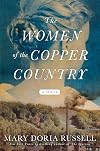
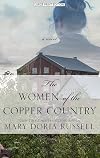
The Women of the Copper Country: A Novel
by Mary Doria Russell
On This Page
Description
"In July 1913, twenty-five-year-old Annie Clements had seen enough of the world to know that it was unfair. She's spent her whole life in the coal-mining town of Calumet, Michigan where men risk their lives for meager salaries--and had barely enough to put food on the table and clothes on their backs. The women labor in the houses of the elite, and send their husbands and sons deep underground each day, dreading the fateful call of the company man telling them their loved ones aren't coming show more home. When Annie decides to stand up for herself, and the entire town of Calumet, nearly everyone believes she may have taken on more than she is prepared to handle"-- show lessTags
Recommendations














Member Recommendations

Member Reviews
This book tells the story of Anna Klobuchar Clements, who was the driving force behind a months-long strike at the Calumet & Hecla copper mining company in Calumet, Michigan, in 1913. The strike was galvanized by the Women’s Auxiliary, comprising the wives and female relatives of the copper miners, who saw firsthand the physical and mental toll taken by the mining. It is a story filled with compelling characters, most real, some a combination of multiple real people. Russell’s author note at the end gives the full details of what has been changed and what hasn’t. In fact this book is full of details, and these really made the story. The contrast between how coddled and cosy the mining company manager was versus how weary and show more worn-down the miners themselves were was very effective indeed. And sadly this book is also relevant in a different way: the company management hires strike-breakers and thugs to stage riots and arrest strikers and generally make them look like the villains in the eyes of the general public.
This is an excellent book and I very much recommend it if you liked Russell’s books about the West (Doc and Epitaph), or perhaps if you like the Kopp Sisters series by Amy Stewart; the historical note in this one reminded me of Stewart’s. show less
This is an excellent book and I very much recommend it if you liked Russell’s books about the West (Doc and Epitaph), or perhaps if you like the Kopp Sisters series by Amy Stewart; the historical note in this one reminded me of Stewart’s. show less
Tomorrow Americans will be celebrating the Labor Day holiday. I’ll be donning my kilt and going to the annual Scottish Highland Games nearby. Others will be camping, picnicking, shopping, or just enjoying some much-needed time off from work. In all the bustle, it is easy to forget that our enjoyment of this day was paid for with the tremendous sacrifice and suffering of those in the labor movement. Because of their efforts, we all enjoy this holiday and other benefits that we take for granted such as 8-hour work days, 40-hour work weeks, minimum wages, employer sponsored health insurance, paid sick days and vacations. The list goes on.
So why should we spend our precious time away from the salt mines reading a book about organized show more labor? To those who haven’t read her books, Mary Doria Russell’s previous novels could fit in some commonly accepted genre. Doc and Epitaph could be called westerns, The Sparrow and Children of God are science fiction and A Thread of Grace is a war story. But where do you put a book about people in the back of beyond who go out on strike? More to the point, why should you read it?
The bottom line is that Russell’s books are not what you think they will be. The Sparrow was first recommended to me by a friend and I put off reading it because I’m not that into sci-fi. Ten years and my friend had passed before I finally picked it up and I have kicked myself ever since for not having read it sooner. It may be a story about first contact with an alien species but couched within it readers will find a wealth of information about religion, philosophy, science, music, current affairs, sociology and human relationships. It is still one of my all-time favorites.
Russell herself admits that a book about a miners’ strike in the far northern reaches of Michigan is not an easy sell for either publishers or readers. Fortunately, I have read most of her previous books and she has made it onto the very small list of authors whose books I will buy sight unseen. I also recall once hearing an enigmatic protest song by Woody Guthrie called 1913 Massacre that has stuck with me over the years more for its confusing description of events that left me wanting to know more about what happened in Calumet, Michigan in 1913 and what role women played in it.
As to why others should read her book my best response is that if you haven’t read her books yet, you are in for a treat. If you have, you know what I mean. There are few authors who have never disappointed me. Russell is one. Her research is impeccable and her prose is inspiring. She brings the past back to life so adroitly that its easy to forget that many of her characters have been dead for a century or that they never existed at all. Whether it was the subject matter of The Women of the Copper Country or the current political climate, she has added a fire to her voice that I don't recall being there in her earlier works. I have been a union member for a grand total of one day in my life but in reading this book I felt inspired to get up and get out there and march and to learn all I can about such women as Mother Jones, Ella Bloor and Big Annie Clemenc, the star of this tale.
I highly recommend this book. I also want to thank the author for introducing me to the poem The Mask of Anarchy by Percy Bysshe Shelley and for including this memorable stanza in her book.
Rise like Lions after slumber
In unvanquishable number--
Shake your chains to earth like dew
We are many -- they are few.
*Quotations are cited from an advanced reading copy and may not be the same as appears in the final published edition. The review was based on an advanced reading copy obtained at no cost from the publisher in exchange for an unbiased review. While this does take any ‘not worth what I paid for it’ statements out of my review, it otherwise has no impact on the content of my review.
FYI: On a 5-point scale I assign stars based on my assessment of what the book needs in the way of improvements:
*5 Stars – Nothing at all. If it ain’t broke, don’t fix it.
*4 Stars – It could stand for a few tweaks here and there but it’s pretty good as it is.
*3 Stars – A solid C grade. Some serious rewriting would be needed in order for this book to be considered great or memorable.
*2 Stars – This book needs a lot of work. A good start would be to change the plot, the character development, the writing style and the ending.
*1 Star – The only thing that would improve this book is a good bonfire. show less
So why should we spend our precious time away from the salt mines reading a book about organized show more labor? To those who haven’t read her books, Mary Doria Russell’s previous novels could fit in some commonly accepted genre. Doc and Epitaph could be called westerns, The Sparrow and Children of God are science fiction and A Thread of Grace is a war story. But where do you put a book about people in the back of beyond who go out on strike? More to the point, why should you read it?
The bottom line is that Russell’s books are not what you think they will be. The Sparrow was first recommended to me by a friend and I put off reading it because I’m not that into sci-fi. Ten years and my friend had passed before I finally picked it up and I have kicked myself ever since for not having read it sooner. It may be a story about first contact with an alien species but couched within it readers will find a wealth of information about religion, philosophy, science, music, current affairs, sociology and human relationships. It is still one of my all-time favorites.
Russell herself admits that a book about a miners’ strike in the far northern reaches of Michigan is not an easy sell for either publishers or readers. Fortunately, I have read most of her previous books and she has made it onto the very small list of authors whose books I will buy sight unseen. I also recall once hearing an enigmatic protest song by Woody Guthrie called 1913 Massacre that has stuck with me over the years more for its confusing description of events that left me wanting to know more about what happened in Calumet, Michigan in 1913 and what role women played in it.
As to why others should read her book my best response is that if you haven’t read her books yet, you are in for a treat. If you have, you know what I mean. There are few authors who have never disappointed me. Russell is one. Her research is impeccable and her prose is inspiring. She brings the past back to life so adroitly that its easy to forget that many of her characters have been dead for a century or that they never existed at all. Whether it was the subject matter of The Women of the Copper Country or the current political climate, she has added a fire to her voice that I don't recall being there in her earlier works. I have been a union member for a grand total of one day in my life but in reading this book I felt inspired to get up and get out there and march and to learn all I can about such women as Mother Jones, Ella Bloor and Big Annie Clemenc, the star of this tale.
I highly recommend this book. I also want to thank the author for introducing me to the poem The Mask of Anarchy by Percy Bysshe Shelley and for including this memorable stanza in her book.
Rise like Lions after slumber
In unvanquishable number--
Shake your chains to earth like dew
We are many -- they are few.
*Quotations are cited from an advanced reading copy and may not be the same as appears in the final published edition. The review was based on an advanced reading copy obtained at no cost from the publisher in exchange for an unbiased review. While this does take any ‘not worth what I paid for it’ statements out of my review, it otherwise has no impact on the content of my review.
FYI: On a 5-point scale I assign stars based on my assessment of what the book needs in the way of improvements:
*5 Stars – Nothing at all. If it ain’t broke, don’t fix it.
*4 Stars – It could stand for a few tweaks here and there but it’s pretty good as it is.
*3 Stars – A solid C grade. Some serious rewriting would be needed in order for this book to be considered great or memorable.
*2 Stars – This book needs a lot of work. A good start would be to change the plot, the character development, the writing style and the ending.
*1 Star – The only thing that would improve this book is a good bonfire. show less
"And we aren't going to wait around for the Second Coming, are we! We won't wait for Jesus to come back and make things right. We aren't going to beg for a decent life, a good life, a healthy life. We are going to demand those things--for ourselves! For our neighbors! For our children! And for all the working stiffs who come after us."
"And that, children, is how you by-God raise some hell."
The setting is 1913, in a copper-mining town in the upper-peninsula of Michigan. Annie Clements spent her whole life in this town and saw the mining industry destroy her loved ones and weaken the community, forcing them to completely depend on the mining company, to survive. The conditions were abysmal, to say the least.
With the help of a union show more organizer, Annie takes on the arrogant mine owners, calling for a strike, knowing it will, most likely destroy her marriage and threaten her life. I normally don't fall for the female main characters, in the novels I read but I had to say I found, twenty-five old Annie Clements quite appealing and not only for her looks and stature but also for her sharp mind, her fearlessness, and unflagging dedication. Team that up this author's deft research skills and her robust writing chops and you have a terrific, hard-hitting story, that also happens to be based on actual characters and events. Yep, MDR has delivered again. show less
"And that, children, is how you by-God raise some hell."
The setting is 1913, in a copper-mining town in the upper-peninsula of Michigan. Annie Clements spent her whole life in this town and saw the mining industry destroy her loved ones and weaken the community, forcing them to completely depend on the mining company, to survive. The conditions were abysmal, to say the least.
With the help of a union show more organizer, Annie takes on the arrogant mine owners, calling for a strike, knowing it will, most likely destroy her marriage and threaten her life. I normally don't fall for the female main characters, in the novels I read but I had to say I found, twenty-five old Annie Clements quite appealing and not only for her looks and stature but also for her sharp mind, her fearlessness, and unflagging dedication. Team that up this author's deft research skills and her robust writing chops and you have a terrific, hard-hitting story, that also happens to be based on actual characters and events. Yep, MDR has delivered again. show less
This fictional account of the 1913 strike against the Michigan copper mining giant C&H Mining, is told primarily from the point of view of "Big Annie" Klobuchar Clements, a woman of great physical presence and a mighty will to improve the lives of the families of Calumet, Michigan. Annie became the icon of the labor movement for a time, through photographs and articles featuring her carrying a huge American flag at the front of parade after parade of striking miners and their families, despite the fact that her own husband was one of a fairly large contingent of miners who did not approve of the work stoppage. This is a grand tale, featuring Mother Jones and other strong women of the era, as well as the nastiest coldest villain since show more Ebenezer Scrooge, James MacNaughton, owner of everything. The detail of life in the paternalistic society of industrial America at its most unbridled is vivid and unnerving. In the book, as in history, the ending is sad beyond belief, but Russell added a couple twists of poetic justice to soften it a bit. As totally engrossing as every other novel of hers that I have read. Russell gives us an author's note at the end, explaining where she has taken the most liberty with the historical record. show less
In the early 1900s, the Calumet and Hecla Mining Company was one of the most profitable copper mines in the United States. But they got there on the backs of their workforce, comprised almost entirely of immigrants, who were seen as expendable by the “real American” mine owner, James MacNaughton. While C&H prided itself on building a company town that provided housing and amenities for its workers, MacNaughton’s top priority was worker productivity. He had little care for the dangerous nature of the work and the inevitable injuries and fatalities.
Enter Annie Clements, the wife of a miner and a natural leader. When a miner is killed while working with the new “one man drill,” Annie mobilizes the women into a force for change. show more They begin holding daily marches, asking “what price copper?” by calling attention to the many lives lost in pursuit of profits. Their activism built support for unionization, which ultimately led to a strike. The way the strike unfolded, its impact on management and miners alike, and the way in which the strike came to an end, make for fascinating reading, all the more so since the story is told almost entirely from a female perspective.
Mary Doria Russell is known for writing meticulously researched historical fiction, and this is yet another example. Since women’s stories are less well documented, she often had to infer or extrapolate, but the Author’s Note helpfully acknowledges where this was required. Russell’s characters are well developed, and the story is well-paced, especially in its portrayal of the dramatic events which ultimately ended the strike. I can’t say enough about this book: just go read it, already! show less
Enter Annie Clements, the wife of a miner and a natural leader. When a miner is killed while working with the new “one man drill,” Annie mobilizes the women into a force for change. show more They begin holding daily marches, asking “what price copper?” by calling attention to the many lives lost in pursuit of profits. Their activism built support for unionization, which ultimately led to a strike. The way the strike unfolded, its impact on management and miners alike, and the way in which the strike came to an end, make for fascinating reading, all the more so since the story is told almost entirely from a female perspective.
Mary Doria Russell is known for writing meticulously researched historical fiction, and this is yet another example. Since women’s stories are less well documented, she often had to infer or extrapolate, but the Author’s Note helpfully acknowledges where this was required. Russell’s characters are well developed, and the story is well-paced, especially in its portrayal of the dramatic events which ultimately ended the strike. I can’t say enough about this book: just go read it, already! show less
The Women of the Copper Country - Russell
4.5 stars
I look forward to any book by Mary Doria Russell. This one did not disappoint. It takes place in Calumet, Michigan in July of 1913. It follows a year long wildcat copper miners’ strike. The ‘wildcat’ is the female instigator and leader, Anna Klobuchar Clemens.
It’s a hard story. Russell is good at depicting brutal conditions, physical suffering, and extreme poverty. In the set up to the story, it becomes easy to see why the miners may need to strike. At the same time, Russell is able to easily and naturally, disclose all of the political and social threats that impede the growth of labor unions. She doesn’t spend a lot of time on state and national issues in any way that slows show more the story arc. There’s just enough historical background to give a wider context to an ill-advised wildcat strike.
This is an immigrant story. The town of Calumet is populated with first and second generation European immigrants; Swedes, Finns, Pole and Italians. One of the inspired organizational strategies of the Women’s Auxiliary was to translate informational pamphlets into 33 different languages. There’s no escaping the exploitation and bigotry at work in crushing the strike. It’s not at all difficult to see current day parallels, as I’m sure the author intended.
Most of all, this is a feminist story. Anna Clemons was a crusader. She inspired the other wives. She instigated the strike vote. She lead the marches. She organized the food and clothing drives. She paid the price, and was jailed with the elected union leaders. Russell took some fictional liberties with Annie’s personal history. She becomes an interesting, complex character.
This strike happened seven years before the ratification of the 19th amendment. Anna CLemons had very few legal protections from the rich mine owners or her own abusive husband. The book draws a clear connecting line between workers’ rights and women’s rights. (Cue a chorus of Bread and Roses).
This story was interesting, even inspiring. It was also very sad. Russell used quotes from Romeo and Juliet as epigrams to each chapter. The year ended in tragedy, not victory. show less
4.5 stars
I look forward to any book by Mary Doria Russell. This one did not disappoint. It takes place in Calumet, Michigan in July of 1913. It follows a year long wildcat copper miners’ strike. The ‘wildcat’ is the female instigator and leader, Anna Klobuchar Clemens.
It’s a hard story. Russell is good at depicting brutal conditions, physical suffering, and extreme poverty. In the set up to the story, it becomes easy to see why the miners may need to strike. At the same time, Russell is able to easily and naturally, disclose all of the political and social threats that impede the growth of labor unions. She doesn’t spend a lot of time on state and national issues in any way that slows show more the story arc. There’s just enough historical background to give a wider context to an ill-advised wildcat strike.
This is an immigrant story. The town of Calumet is populated with first and second generation European immigrants; Swedes, Finns, Pole and Italians. One of the inspired organizational strategies of the Women’s Auxiliary was to translate informational pamphlets into 33 different languages. There’s no escaping the exploitation and bigotry at work in crushing the strike. It’s not at all difficult to see current day parallels, as I’m sure the author intended.
Most of all, this is a feminist story. Anna Clemons was a crusader. She inspired the other wives. She instigated the strike vote. She lead the marches. She organized the food and clothing drives. She paid the price, and was jailed with the elected union leaders. Russell took some fictional liberties with Annie’s personal history. She becomes an interesting, complex character.
This strike happened seven years before the ratification of the 19th amendment. Anna CLemons had very few legal protections from the rich mine owners or her own abusive husband. The book draws a clear connecting line between workers’ rights and women’s rights. (Cue a chorus of Bread and Roses).
This story was interesting, even inspiring. It was also very sad. Russell used quotes from Romeo and Juliet as epigrams to each chapter. The year ended in tragedy, not victory. show less
I'm glad that someone finally took the time to write a fictionalized account of the Italian Hall Disaster/Massacre of 1913. Having traveled through Calumet a couple of times on my way to other points of the Keweenaw Peninsula, I can attest to the fact that it is a town that has not forgotten its history. Unfortunately, the same cannot be said for other Michiganders further south (including myself prior to my first trip through Calumet as a teenager.)
What Russell does here is shed light on the strike leading up to the Christmas Disaster in a way that brings the social injustice to light, unlike a textbook recitation of numbers and statistics. When Big Annie carries her flag for the first time, I cheered, and when the bodies of children show more literally began to pile atop one another, I wept bitterly.
Am I always pro-union? Not necessarily - I do think that there are some instances that could have benefited from more compromise on both sides of the negotiation table. What I can say is that having taken a Labor History course as part of my history degree, I think it is a shame that the Calumet Copper Strike wasn't even mentioned at all. If I ever happen to have a conversation with that particular professor again, I'll be recommending this book to him. And the next time I go to Calumet, I'll be saying an extra prayer for Big Annie Clemencs and the rest of those who fought for fair wages and better working conditions, not to mention the innocents who died along the way. show less
What Russell does here is shed light on the strike leading up to the Christmas Disaster in a way that brings the social injustice to light, unlike a textbook recitation of numbers and statistics. When Big Annie carries her flag for the first time, I cheered, and when the bodies of children show more literally began to pile atop one another, I wept bitterly.
Am I always pro-union? Not necessarily - I do think that there are some instances that could have benefited from more compromise on both sides of the negotiation table. What I can say is that having taken a Labor History course as part of my history degree, I think it is a shame that the Calumet Copper Strike wasn't even mentioned at all. If I ever happen to have a conversation with that particular professor again, I'll be recommending this book to him. And the next time I go to Calumet, I'll be saying an extra prayer for Big Annie Clemencs and the rest of those who fought for fair wages and better working conditions, not to mention the innocents who died along the way. show less
Members
- Recently Added By
Lists

Books Read in 2021
5,361 works; 114 members
Author Information

8+ Works 17,829 Members
Awards and Honors
Awards
Notable Lists
Common Knowledge
- Original publication date
- 2019-08-06
- People/Characters
- Annie Clements; James MacNaughton; Charlie Miller; Michael Sweeney; Eva Savicki; Jack Kivisto
- Important events
- Copper Country Strike (1913-1914)
- Dedication
- For Agnes Shanklin and Richard Cima, of blessed memory, and for all the union thugs who teach high school English
- First words
- The dream is always simple. The memory never is.
Classifications
Statistics
- Members
- 483
- Popularity
- 63,069
- Reviews
- 50
- Rating
- (4.12)
- Languages
- English
- Media
- Paper, Audiobook, Ebook
- ISBNs
- 12
- ASINs
- 2