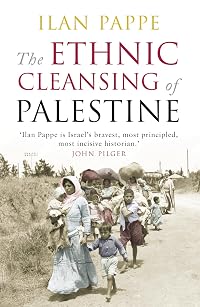
The Ethnic Cleansing of Palestine
by Ilan Pappé
On This Page
Description
Renowned Israeli historian Ilan Pappe's groundbreaking book revisits the formation of the State of Israel. Between 1947 and 1949, over 400 Palestinian villages were deliberately destroyed, civilians were massacred, and around a million men, women, and children were expelled from their homes at gunpoint. Denied for almost six decades, had it happened today it could only have been called "ethnic cleansing." Decisively debunking the myth that the Palestinian population left of their own accord show more in the course of this war, Ilan Pappe offers impressive archival evidence to demonstrate that, from its very inception, a central plank in Israel's founding ideology was the forcible removal of the indigenous population. This is an indispensable book for anyone interested in the current crisis in the Middle East. show lessTags
Recommendations
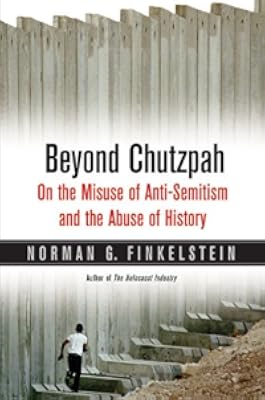

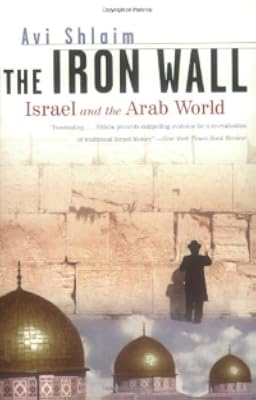
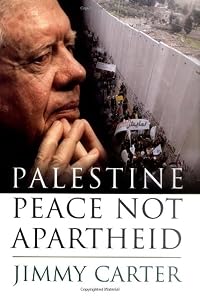
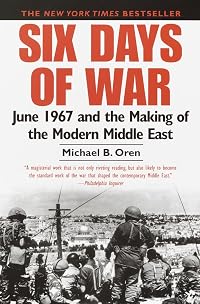



Member Recommendations
Member Reviews
I thought when I picked up this book it would take about a week to read. It took most of my summer because I had to put it down for days at a time to come to grips with the subject matter. Beyond the killings, beatings, rapes and cultural destruction of the Palestinian people hard to stomach, but the 'whitewashing' of the facts for so many years is yet another dishonor to the innocent people who suffered during the Nakba. Ilan Pappe has done a masterful job of research with details and accounts that have to be told for peace to ever transpire in the Middle East. As we witness this genocide now in 2023-24 in Gaza, nearly all the history that has led up to this point can be traced back to the ethic cleansing and crimes against humanity in show more Palestine from late 1947 to the early 1950s. show less
a comprehensive and painstaking examination of the history of israel, which was predicated on the eradication of the palestinian peoples and nation. making use of first-hand accounts, archival israeli documents (most of which have been heavily censored), and juxtaposing them with past and existing propaganda, pappe does his part to highlight the cruel and selfish foundation upon which israel exists. major points of blame lie on balfour of britain for claiming ownership on behalf of britain and later bestowing palestinian land to an abstract jewish population; the jordanian agreement which prioritized the king's claim to land over indigenous people's right to their land (thus betraying the ummah); the apathy the british troops stationed show more in palestine had regarding the ongoing nakba for as long as they were stationed there and their lack of retroactive protest upon pulling out of the region; the lack of action on behalf of the surrounding so-called muslim arab nations, which arguably were too weak at the time to intervene but certainly grew enough manpower and influence to step in (to this day, they remain immobile); the american and ussr armament of the israeli military forces, and the continued political support america shields israel with to this day. while there are first-hand palestianian accounts in this book, it mostly rigorously covers each and every systemic atrocity israeli military forces enacted in their seizure of palestinian lands. with detailed accounts of specific propaganda employed, this book dispels the myths israel still uses to justify their supposed ancient connection to the land at the expense of the palestinians who had been peacefully co-existing with other religious and ethnic groups in the region for centuries. while it doesn't comprehensively speak for the palestinian perspective, this book is a robust rebuttal against the israeli narrative used to continue justify ethnic cleansing. show less
The Ethnic Cleansing of Palestine by Ilan Pappe came highly recommended by several sources. After I watched a few interviews with Pappe, I finally found the book available and immediately ordered it. It is a fascinating, must-read book for anyone who wants to better understand how Israel came into existence on land inhabited by Palestinians and known as Palestine. Pappe is an Israeli historian who used Israel's historical documents to expose the history that has been obfuscated and manipulated to manufacture a narrative more palatable to much of the world than the truth. The Ethnic Cleansing of Palestine explores the atrocities of the Nakba and the years leading up to the Nakba as well as the invention of Zionism. Pappe explores and show more explains attitudes, behaviors, and decisions made by those in charge using their own diaries and official records in a way that brings the people of the time and the moments they experienced to life. The Ethnic Cleansing of Palestine is well-researched, well-written and accessible to anyone wanting to better understand what brought us to the world as it currently stands because it demonstrates how the ethnic cleansing of Palestine has always reached far beyond Palestine. show less
*.5
Part of the challenge of historians is to resolve the discrepancies between competing stories of events. In one of the most contentious examples, the foundation of the modern state in Israel and resulting War of Independence was viewed as a righteous triumph by one side, and a catastrophe (Nakba) by the other.
For decades, the conventional Israeli narrative was that the Arabs rejected all proposals for peaceful coexistence and attacked the nascent state as soon as its independence was announced. In the inevitable chaos of war, the local Arab residents fled their homes on a temporary basis at the behest of the invading armies to make it easier for them to defeat the Jews. The Palestinians meanwhile claim that they never even had a show more chance to live in peace, and were forced from their homes by the Jewish army and then not allowed to return, their homes and land confiscated and occupied by Zionist settlers.
As can be gleaned by the provocative title, Pappé fully embraces the latter viewpoint, but takes it even further. He argues that not only were the Jews the aggressors, but they undertook a methodical premeditated plan to ethnically cleanse the land of its rightful owners. He then spins this further into a twisted alternate history almost completely divorced from reality, often relying on debunked accusations and speculation.
While modern research has definitely demonstrated that the Israeli behaviour was not always quite as squeaky clean as the stories would have us believe (to put it mildly), Pappé attributes the worst possible motivation for every decision and action, cherry-picking data, taking quotes out of context, accepting second hand accounts of alleged Israeli atrocities as gospel, resorting to unsubstantiated conjecture and misleading comparisons, often leaping to conclusions and disregarding any inconvenient facts or potential alternate interpretations. Thus, although his arguments are couched in the language of earnest academic scholarship, he twists the definitions (e.g. "volunteer defenders" vs "bloodthirsty killers") to support his a priori conclusion of Israel's guilt.
It's too bad that he resorts to brazenly outright nonsense and antisemitic tropes like comparing Israeli soldiers to dogs, because such dehumanizing language is a big part of the problem. And it detracts from the legitimate point that Israelis should at least question the validity of the narrative they've accepted without a second thought. And regardless of whose fault it was, there is no question that the uprooted Palestinians did undoubtedly suffer a Nakba that needs to be acknowledged in order for any chance of reconciliation.
Audiobook: the narrator puts on an offensively racist accent whenever he reads a direct quote, making the Jews in particular sound sinister and sneering, arguably antisemitic. show less
Part of the challenge of historians is to resolve the discrepancies between competing stories of events. In one of the most contentious examples, the foundation of the modern state in Israel and resulting War of Independence was viewed as a righteous triumph by one side, and a catastrophe (Nakba) by the other.
For decades, the conventional Israeli narrative was that the Arabs rejected all proposals for peaceful coexistence and attacked the nascent state as soon as its independence was announced. In the inevitable chaos of war, the local Arab residents fled their homes on a temporary basis at the behest of the invading armies to make it easier for them to defeat the Jews. The Palestinians meanwhile claim that they never even had a show more chance to live in peace, and were forced from their homes by the Jewish army and then not allowed to return, their homes and land confiscated and occupied by Zionist settlers.
As can be gleaned by the provocative title, Pappé fully embraces the latter viewpoint, but takes it even further. He argues that not only were the Jews the aggressors, but they undertook a methodical premeditated plan to ethnically cleanse the land of its rightful owners. He then spins this further into a twisted alternate history almost completely divorced from reality, often relying on debunked accusations and speculation.
While modern research has definitely demonstrated that the Israeli behaviour was not always quite as squeaky clean as the stories would have us believe (to put it mildly), Pappé attributes the worst possible motivation for every decision and action, cherry-picking data, taking quotes out of context, accepting second hand accounts of alleged Israeli atrocities as gospel, resorting to unsubstantiated conjecture and misleading comparisons, often leaping to conclusions and disregarding any inconvenient facts or potential alternate interpretations. Thus, although his arguments are couched in the language of earnest academic scholarship, he twists the definitions (e.g. "volunteer defenders" vs "bloodthirsty killers") to support his a priori conclusion of Israel's guilt.
It's too bad that he resorts to brazenly outright nonsense and antisemitic tropes like comparing Israeli soldiers to dogs, because such dehumanizing language is a big part of the problem. And it detracts from the legitimate point that Israelis should at least question the validity of the narrative they've accepted without a second thought. And regardless of whose fault it was, there is no question that the uprooted Palestinians did undoubtedly suffer a Nakba that needs to be acknowledged in order for any chance of reconciliation.
Audiobook: the narrator puts on an offensively racist accent whenever he reads a direct quote, making the Jews in particular sound sinister and sneering, arguably antisemitic. show less
There is a bloc of humanity that will never read this book based on the title alone, and there is another bloc, that if they did read it, would immediately find great fault with it, assuming they didn't just write it all off as pure fictional propaganda. I read a lot of non-fiction and histories in particular, and this did not come across to me at any level as inflated hype, but rather as extremely well-researched journalism based on documents from "both sides" of the issues discussed, including the personal diaries of the main architect of what occurred. In short, I find it much easier to believe the bulk of what it reports than to discount it. Is the author biased at some level about his subject? Perhaps, but a ton of facts often lead show more to bias toward what those facts reveal. The premise of this book is really quite simple. The nation of Israel did not come to being around 1948, because a bunch of Palestinians in the territory decided to just nicely move out of the area. The author reports how the Jews in the area systemically "cleansed" hundreds of villages and hundreds of thousands of non-Jewish residents often in deadly and almost always ruthless fashion. In fact, I had to knock a point off my rating because the author insisted on somewhat tediously reporting nearly each and every "cleansing" drip by drip to avoid any criticisms of cherry-picking a couple "mistakes" in an attempt to obscure how peacefully the Israelis claim this massive vacating of Arabs in what is now Israel and the occupied territories. Perhaps more importantly, the book provides a solid basis for understanding why the Israeli-Palestinian issue may never become peaceful because of Israel's actions rather than that of any Arabs. Is there more that could have been reported in the book. Yes, how did the Israelis, not yet even a nation, obtain and get trained in advanced military weaponry that allowed them to so easily achieve this cleansing, including the blocking of any significant outside Arab intervention. Why were the united "nations" so specific about being "fair" to the Palestinians with UN resolutions and the like, but did so very little to make sure their wishes were followed? Or perhaps, an entirely different book: why is the Jewish holocaust regarded as so much more terrible than the genocide in Rwanda or the massive deaths from the Khmer Rouge in Cambodia, or any other despicable crime against humanity...such as those mentioned in this book? Finally, it should be noted that the purpose of this book was not to be balanced in what it reported but to use what it reported to balance what others have reported. show less
This book is a revelation, though not one that totally surprises. The book documents in relentless detail the treatment of the Palestinian people from the 1920's through to today with a focus on 1947 to 8. It describes the ethnic cleansing that went on along with the successful burying of that fact. It sadly reveals that populations are no different from people. Those who are abused are likely to abuse once in power. To do differently takes a self awareness and understanding which is unusual.
It is obvious that any solution will have to involve addressing the acts of 1948. If it is not done the prognosis for peace in the area (or the world) is low. Given the Western, particularly US, present demonization of Muslims, this scenario seem show more unlikely. Admittedly, any solution which treats Palestinians justly, will create a different Israel. show less
It is obvious that any solution will have to involve addressing the acts of 1948. If it is not done the prognosis for peace in the area (or the world) is low. Given the Western, particularly US, present demonization of Muslims, this scenario seem show more unlikely. Admittedly, any solution which treats Palestinians justly, will create a different Israel. show less
A powerful book, The Ethnic Cleansing of Palestine challenges the narrative of Israel as a democratic refuge of a persecuted people and suggests, instead, the birth of the nation was the death of a homeland for Palestinians eternally exiled. I was most moved reading his accounts of Arab villages destroyed in the Nakba, the "catastrophe" Palestinians refer to as the 1948 birth of Israel. Read this book and you will see the world through a different prism.
Members
- Recently Added By
Lists

You Couldn't Pay Me to Read That (Take 2)
203 works; 80 members

r/History Recommended Reading List
603 works; 12 members

Decolonize Palestine's Reading List
126 works; 3 members

Books Referenced by Khalidi's The Hundred Years' War on Palestine
181 works; 1 member

Palestine / Israel
17 works; 1 member
Author Information

30+ Works 3,693 Members
Common Knowledge
- Canonical title*
- De etnische zuivering van Palestina
- Original title
- The Ethnic Cleansing of Palestine
- Original publication date
- 2006-12-01
- Important places
- Palestine
- Important events
- 1948 Palestinian Exodus; 1948 Arab-Israel War
- Blurbers
- Pilger, John
- Original language*
- Engels
*Some information comes from Common Knowledge in other languages. Click "Edit" for more information.
Classifications
- Genres
- History, Nonfiction, General Nonfiction
- DDC/MDS
- 956.9405 — History & geography History of Asia Middle East Asia: Turkey, Iraq, Syria, Lebanon, Israel, Jordan The Levant Israel and Palestine
- LCC
- DS119.7 .P28882 — History of Europe, Asia, Africa and Oceania Asia History of Asia Israel (Palestine). The Jews
- BISAC
Statistics
- Members
- 1,035
- Popularity
- 25,059
- Reviews
- 16
- Rating
- (4.45)
- Languages
- 10 — Czech, Dutch, English, French, German, Italian, Polish, Spanish, Swedish, Portuguese (Portugal)
- Media
- Paper, Audiobook, Ebook
- ISBNs
- 33
- ASINs
- 7