On This Page
Description
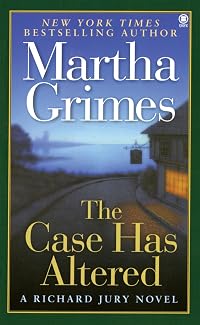
The sun, smoking behind a haze of cloud, threw off a light of burnished pewter. Mysteriously lit, it was as if the watery, colorless land refused drabness, stood determinedly against dimishment. This is a landscape that can easily deceive, the fens, a landscape that volunteers nothing, as if to say, a landscape that volunteers nothing, as to say, You're on your own, mate-much like the habitues of the only pub for miles around called The Case Has Altered. The Lincolnshire fens are the right show more setting for Richard Jury's latest case, a mystifying double murder. The body of one woman is found on the wash; another woman lies floating in a canal in Windy Fen. Both women are connected with Fengate: Dorcas Reese, a servant; Verna Dunn, the louche ex-wife of the owner, Max Owen, a man with a passion for antiques. So when the principal suspect turns out to be Jenny Kennington, a woman Jury has long loved, he decides he needs someone inside Fengate, someone who can impersonate an antiques expert… show lessTags
Recommendations



Member Reviews
Number 14 in the Richard Jury series.
The Lincolnshire fens are the scene of two murders within two weeks. Lady Jenny Kensington, in whom Jury has had a semi-romantic but unexpressed interest for nearly 10 years, is the chief suspect. Jury, much to the resentment of the local constabulary, insinuates himself into the investigation although on an unofficial basis in an attempt to clear Jenny of the charges. The case is puzzling, since no one doubts that there is just one murderer but the connection between the two victims is remote.
As usual, Jury enlists the aid of that undercover agent par excellence, Melrose Plant. This time Plant poses as an amateur antiques appraiser to gain access to and the confidence of the people in whose house show more Jenny and one of the victims were guests and who employed the second as kitchen help. Melrose, who knows next to nothing about antiques, takes a crash course from Marshall Trueblood; in true Plant fashion, he picks up a weird little book about antique scams which, if not helpful in identification, certainly provides enlightenment and amusement about the many ways to fleece suckers in the antiques trade.
Of course there is the requisite appearance of a precocious pre-teen; this wouldn’t be a Richard Jury book without one. Although Zell plays a minor role in solving the mystery, she is yet another of Grimes’ young chefs-in-the making.
Also making a recurring appearance is Pete Apsted, Queen’s counselor, in a dandy little courtroom scene in which a play on words is a crucial element in Jenny’s trial for the double murder.
Long Piddleton, however, is well represented in this installment. There are new tenants at Watermeadows, the estate adjoining that of Plant’s Ardry End. Small towns all over the world being what they are, Melrose and the regulars at the Jack and Hammer are agog to find out who the new occupants are; they have had a bizarre sort of pool going to see who can come closest to the makeup of the new family. Melrose actually meets one of them—who turns out to be nothing like the weekenders that the town had been expecting, and who provides Melrose with a romantic interest.
That, however, is not the only contribution Long Piddleton has to make to this excellent book. We are treated to yet a different trial, one that could not be more opposite in character from the one that took place in the fen country. Lady Agatha, with the connivance and collaboration of the wretched Theo Wrenn Browne, is suing Miss Ada Crisp over the perils of Miss Crisp’s second-hand shop in Long Piddleton; in an accident reminiscent of Charlie Chan, Agatha has “sprained” her ankle by putting her foot in one of Miss Crisp’s 2nd hand chamber pots and claims she was attacked by Miss Crisp’s Jack Russell terrier. Marshall Trueblood rises to the occasion and represents Miss Crisp in a trial that is a hilarious and fitting climax to the book.
Highly recommended. show less
The Lincolnshire fens are the scene of two murders within two weeks. Lady Jenny Kensington, in whom Jury has had a semi-romantic but unexpressed interest for nearly 10 years, is the chief suspect. Jury, much to the resentment of the local constabulary, insinuates himself into the investigation although on an unofficial basis in an attempt to clear Jenny of the charges. The case is puzzling, since no one doubts that there is just one murderer but the connection between the two victims is remote.
As usual, Jury enlists the aid of that undercover agent par excellence, Melrose Plant. This time Plant poses as an amateur antiques appraiser to gain access to and the confidence of the people in whose house show more Jenny and one of the victims were guests and who employed the second as kitchen help. Melrose, who knows next to nothing about antiques, takes a crash course from Marshall Trueblood; in true Plant fashion, he picks up a weird little book about antique scams which, if not helpful in identification, certainly provides enlightenment and amusement about the many ways to fleece suckers in the antiques trade.
Of course there is the requisite appearance of a precocious pre-teen; this wouldn’t be a Richard Jury book without one. Although Zell plays a minor role in solving the mystery, she is yet another of Grimes’ young chefs-in-the making.
Also making a recurring appearance is Pete Apsted, Queen’s counselor, in a dandy little courtroom scene in which a play on words is a crucial element in Jenny’s trial for the double murder.
Long Piddleton, however, is well represented in this installment. There are new tenants at Watermeadows, the estate adjoining that of Plant’s Ardry End. Small towns all over the world being what they are, Melrose and the regulars at the Jack and Hammer are agog to find out who the new occupants are; they have had a bizarre sort of pool going to see who can come closest to the makeup of the new family. Melrose actually meets one of them—who turns out to be nothing like the weekenders that the town had been expecting, and who provides Melrose with a romantic interest.
That, however, is not the only contribution Long Piddleton has to make to this excellent book. We are treated to yet a different trial, one that could not be more opposite in character from the one that took place in the fen country. Lady Agatha, with the connivance and collaboration of the wretched Theo Wrenn Browne, is suing Miss Ada Crisp over the perils of Miss Crisp’s second-hand shop in Long Piddleton; in an accident reminiscent of Charlie Chan, Agatha has “sprained” her ankle by putting her foot in one of Miss Crisp’s 2nd hand chamber pots and claims she was attacked by Miss Crisp’s Jack Russell terrier. Marshall Trueblood rises to the occasion and represents Miss Crisp in a trial that is a hilarious and fitting climax to the book.
Highly recommended. show less
The real murder mystery is well done and does highlight the need for investigators to avoid preconceptions. The real courtroom work is rather good, but the courtroom drama involving Agatha's scam is positively brilliant!
Steve West deserves an award for not losing it in the funny parts!
Steve West deserves an award for not losing it in the funny parts!
One of my more favored of the Richard Jurys . . . While he still has some sort of complicated connection to a woman who (choose one: is involved with/a witness to/guilty of) the crime (and his angst can be so bloody boring), the story is excellent and the extra characters are for the most part, well developed and fun - even the inevitable child who has none of the irritating quirks of childhood, but is as mature as an adult, and has conversation to match (and who is thusly, quite irritating).
Never boring, Martha Grimes delivers yet again in the Richard Jury series. This time Superintendent Jury is helping out a friend, Jenny Kennington who is accused of murder. Only problem is, Jenny isn't talking and all the evidence points to her as the assailant when her cousin, Verna Dunn is shot through the heart. Two weeks later, an unnoticeable kitchen maid, Dorcas Reese is garroted out on the fens. What is the motivation for these killings? Why isn't Jenny talking? Why does Richard care so much? And what's up with Agatha suing Ada Crisp in Long Piddlington? Marshall Trueblood moves out of his comfort zone as an antiques dealer to represent Ada in defense of Lady Ardry.
Some humor, some sorrow, and another engaging child creates yet show more another Richard Jury novel that delivers. show less
Some humor, some sorrow, and another engaging child creates yet show more another Richard Jury novel that delivers. show less
Slow plotline, slow pace. Grey and wet. Much like the geography of the scenery. This one can not, I think, be read as a stand alone. Too many threads are linked to other books. Jenny Kensington, Jury not smoking, Melrose's obsession with his new neighour. The mystery is one of perception and once the reader is clued in, it's really not a mystery. The 'tour de force' Grimes did is to make the reader not see it at first.
Not unhappy to have read it but its an in-between book.
Not unhappy to have read it but its an in-between book.
#14 in the Chief Supt. Richard Jury and Melrose Plant mystery series, in which Jury’s friend Jenny Kennington is arrested for two murders that occurred on the fens of Lincolnshire. The first victim was a cousin of Jenny’s that she’d long had conflicts with but had not had any contact with for several years—yet she was the last person to see the woman alive and they had argued. It’s believed the second murder was committed to keep the victim, a young local woman, quiet because she saw something. Jury can’t believe that Jenny has had anything to do with it, but of course he then begins questioning himself as to how well he really knows her—which is, apparently, not well at all. Melrose gets to play the part of an antiques show more appraiser in this book, as the house where Jenny and the first murder victim were staying is owned by a man who is a collector. That man, Max, was also previously married to Verna Dunn, the first murder victim, and employed the second victim, Dorcas Reese, as a kitchen helper, so Jury wants someone ‘inside’ the house to see how things lie. The reveal isn’t really terribly surprising, but as usual, I enjoyed this entry in Grimes’ long-lived series for the visit with not only Jury and company, but Melrose and his cadre of friends in Northants as well. This one was, once again, a bit bloated with a bit too much in the ‘extraneous’ department, but certainly not as bad as a couple of previous books which looked like they’d not seen an editor’s desk at all! Nothing spectacular here, just a nice comfy visit. show less
Another in the Richard Jury series. There's quite a wait until the obligatory girl (and dog) show up, and I guessed the culprit long before Jury did. On the other hand, there are important things happening between Jury and Jenny Kennington, so it's required series reading.
Members
- Recently Added By
Lists

Crime and Mysteries to Read
746 works; 31 members

Books Read in 2014
2,343 works; 89 members

Books With Complete Sentence Titles
374 works; 15 members
Author Information

59+ Works 29,732 Members
Martha Grimes was born on May 2, 1931 in Pittsburgh, Pennsylvania. She received a B.A. and an M.A. from the University of Maryland. The idea for Martha Grimes' first British detective novel, The Man with a Load of Mischief (1981), was inspired by the name of a British pub she noticed while leafing through a travel book. A longtime Anglophile, she show more has continued to use a British pub as both the title and part of the setting in each subsequent novel in the series which features Scotland Yard Detective Richard Jury, his assistant, Melrose Plant, and Plant's interfering Aunt Agatha. The Anodyne Necklace (1983) won her the Nero Wolfe Award. Her other works include The Stargazey, The Case Has Been Altered, The End of the Pier, Biting the Moon, and Dust. Her title, Vertigo 42, made The New York Times Best Seller List in 2014. (Bowker Author Biography) show less
Series

Belongs to Publisher Series
Work Relationships
Common Knowledge
- Canonical title
- The Case Has Altered
- Original publication date
- 1997
- People/Characters
- Richard Jury; Melrose Plant; Dorcas; Jenny Kennington
- Important places
- Lincolnshire, England, UK
- Dedication
- To the memory of Lucille Holland
and to Christine, whose case has altered
Classifications
Statistics
- Members
- 1,015
- Popularity
- 25,625
- Reviews
- 9
- Rating
- (3.53)
- Languages
- 5 — Dutch, English, French, German, Portuguese
- Media
- Paper, Audiobook, Ebook
- ISBNs
- 30
- ASINs
- 19