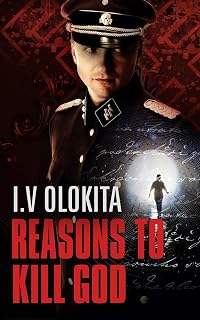
Reasons to Kill God
by I. V. Olokita 
On This Page
Description
If you are able to write 180 pages of your memoir without putting the pen down, I might let you live... Klaus Holland loves no one other than himself. He victimizes people for being Jews or for just being alive. He is an old Nazi criminal who escaped to Brazil and was caught and prosecuted. He is now forced to write his memoirs as part of his punishment - the same punishment he used to give Jews at the concentration camp. This punishment makes him remember and re-live his cruelty as the show more concentration camp commander and as a man. Deus Esperanca learns from his mother that what he believed to be his family's history, was just a bunch of lies. He discovers that his real father is Klaus Holland - the sadistic Nazi fugitive. Having this information and his father being aware of what he knows, their lives intertwine and create chaos. show lessTags
Recommendations








Member Recommendations
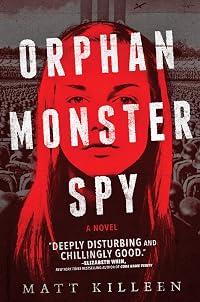
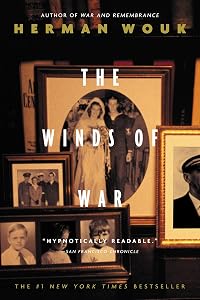
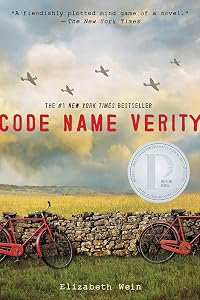
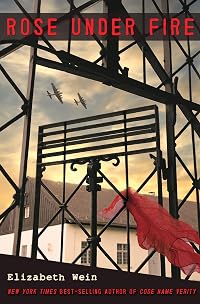
Lithamerrsmith Although these are different places and time axes that overlap at one particular point, yet the two books correlate on both sides of a barricade and complement one another (beyond the fact that both are excellent.)
anonymous user A controlled look at the other side of crime.
Member Reviews
"For those who smile, wherever they may be."
This is the dedication of Reasons to Kill God, one of the most fascinating and thought-provoking books I've read recently.
To begin with, this is the most original dedication I have ever read. Instead of dedicating his book to one's ever-loving wife, supportive friends, or trusty editor, the writer prefers to convey a heartwarming message to all humankind, while slightly hinting about the plot.
I read this book twice in a row. At first, I had to read it very, very slowly. Not especially long, this book is nevertheless as deep, powerful and surprising as an ocean. Just like an ocean, its seemingly calm surface conceals turbulent deep. Like an ocean, it will make you gape for air, only to stand show more all the twists in the plot. Reading it, I recalled Columbus' saying, "you can never cross the ocean unless you have the courage to lose sight of the shore.” In other words, to fully understand this book, you must open your mind and forget all your conventions regarding good and evil, love and hate, and even God. All its characters, even those hard to sympathize with, like the main character, are unconventional, richly described, and intriguing.
Its very title, "Reasons to Kill God," provokes a variety of emotions, ranging from fear and resistance to acceptance. But it mostly generates a response which is beyond words.
It is a masterpiece written in a fluent, fascinating way. It just "feels real," which is what I appreciate the most in books. show less
This is the dedication of Reasons to Kill God, one of the most fascinating and thought-provoking books I've read recently.
To begin with, this is the most original dedication I have ever read. Instead of dedicating his book to one's ever-loving wife, supportive friends, or trusty editor, the writer prefers to convey a heartwarming message to all humankind, while slightly hinting about the plot.
I read this book twice in a row. At first, I had to read it very, very slowly. Not especially long, this book is nevertheless as deep, powerful and surprising as an ocean. Just like an ocean, its seemingly calm surface conceals turbulent deep. Like an ocean, it will make you gape for air, only to stand show more all the twists in the plot. Reading it, I recalled Columbus' saying, "you can never cross the ocean unless you have the courage to lose sight of the shore.” In other words, to fully understand this book, you must open your mind and forget all your conventions regarding good and evil, love and hate, and even God. All its characters, even those hard to sympathize with, like the main character, are unconventional, richly described, and intriguing.
Its very title, "Reasons to Kill God," provokes a variety of emotions, ranging from fear and resistance to acceptance. But it mostly generates a response which is beyond words.
It is a masterpiece written in a fluent, fascinating way. It just "feels real," which is what I appreciate the most in books. show less
27/1 is the International Holocaust Remembrance Day, and I would like to recommend a book that most of you probably don't know (it was translated only a month or two ago from Hebrew into English, and I have already reread it in English.)
This is the review I published in Israel a year ago when I read the book for the first time, and at the end of the report, I added a few more insights after a second English reading. In both cases, my review will not be able to explain how much this book has caused me a profound shock, especially of myself. This is my recommendation for International Holocaust Remembrance Day.
***
When I was twelve, my mother, like all mothers, wanted me to have a party. I also wanted a big party and gifts. "It's not right show more to grow differently in a group of equals," she said, and I agreed with her.
My mother worked hard. For almost a year she worked in several jobs to raise enough money to produce the event. But, at the end of that year, she got sick, and things got complicated with daddy, so we both forgot about it, and there was no party.
Later on, she and I would talk about the days of that time, about daddy and high school, and about this party that never came true. A party she had admitted she planned for herself.
Did I ask her why?
Hell yea!
Yet she only replied that there were lies that one could not explain. "When you have children of your own, you will understand." that's what mother said.
Olokita's Reasons to kill God is a book that made of lies that adults tell themselves and their children. Like Olokita's other book, "Wicked girl," (which I read in Hebrew) this one also moves back and forth in time and plays the reader as if he too part of the story. With excellent writing, Olokita tells a story through the eyes of an escaped Nazi criminal who was forced to bear the raising of Dios, a six-year-old boy who forced on him by brazilin law as a result of pleasures he had spent with a prostitute in Brazil. As the plot reveals, we exposed to life stories of many people, so different from each other, and they all intersect at the end of the book into one extraordinary tale.
Reasons to kill God is a surprising and addictive book that read at once, like Olokita's previous book; This book is not easy to grasp regarding content, the horrific heroes and the high level of writing.
I must admit that at first, I thought it was a book that talked about God, a guide like or a book about life. Not, This is a book about the most despicable people, as well as the good ones and the lies we all tell ourselves in our way of life.
In short, this is a book suitable for anyone planning one day to grow up.
*** After rereading the book in English I managed to get some new insights about the war, the Holocaust and people in general. And most disturbingly for me - this book made me for the first time in life to identify with the worst side of human beings, and I am shocked by myself. show less
This is the review I published in Israel a year ago when I read the book for the first time, and at the end of the report, I added a few more insights after a second English reading. In both cases, my review will not be able to explain how much this book has caused me a profound shock, especially of myself. This is my recommendation for International Holocaust Remembrance Day.
***
When I was twelve, my mother, like all mothers, wanted me to have a party. I also wanted a big party and gifts. "It's not right show more to grow differently in a group of equals," she said, and I agreed with her.
My mother worked hard. For almost a year she worked in several jobs to raise enough money to produce the event. But, at the end of that year, she got sick, and things got complicated with daddy, so we both forgot about it, and there was no party.
Later on, she and I would talk about the days of that time, about daddy and high school, and about this party that never came true. A party she had admitted she planned for herself.
Did I ask her why?
Hell yea!
Yet she only replied that there were lies that one could not explain. "When you have children of your own, you will understand." that's what mother said.
Olokita's Reasons to kill God is a book that made of lies that adults tell themselves and their children. Like Olokita's other book, "Wicked girl," (which I read in Hebrew) this one also moves back and forth in time and plays the reader as if he too part of the story. With excellent writing, Olokita tells a story through the eyes of an escaped Nazi criminal who was forced to bear the raising of Dios, a six-year-old boy who forced on him by brazilin law as a result of pleasures he had spent with a prostitute in Brazil. As the plot reveals, we exposed to life stories of many people, so different from each other, and they all intersect at the end of the book into one extraordinary tale.
Reasons to kill God is a surprising and addictive book that read at once, like Olokita's previous book; This book is not easy to grasp regarding content, the horrific heroes and the high level of writing.
I must admit that at first, I thought it was a book that talked about God, a guide like or a book about life. Not, This is a book about the most despicable people, as well as the good ones and the lies we all tell ourselves in our way of life.
In short, this is a book suitable for anyone planning one day to grow up.
*** After rereading the book in English I managed to get some new insights about the war, the Holocaust and people in general. And most disturbingly for me - this book made me for the first time in life to identify with the worst side of human beings, and I am shocked by myself. show less
I almost abandoned this book at the end of the third chapter. It was just too much for me. I am a third generation Holocaust survivor, and as a lover of historical literature (mainly fiction), I am always eagerly reading books about the period of Second World War including the crimes of the Nazis. But this book opens with a violent blow - the hero of the book is the commander of a Nazi extermination camp that manages to escape, and years later when he stands on the stand in court, he tells from his perspective the story of his life. As I wrote, the beginning was not easy for me, at least not until I remembered it wasn't a real story. And so, because the story itself is fascinating and the writing is good, I kept reading until the end. show more And I'm so glad I acted this way. This book is excellent! show less
Usually, I recommend Historical fiction/nonfiction books. This time, however, I felt like sharing with you something else, a book which has its share of history, yet feels, so to speak…different. A book with slightly more profound meaning and message than those I usually read. It is shorter than the books I often read, but I was surprised at the writer's clear and economical use of language, in unfolding a plot full of passion, drama, and suspense. Most importantly, it is full of twists on every single page, from start to finish.
It is historical fiction by definition, yet it is more likely to be cataloged as a physiologic thriller; the main character of which is Klaus Holland, a man with a traumatic childhood who grows up to become a show more Nazi concentration camp commandant and escapes to Brazil towards the end of WW II, where he lives under an alias.
As part of his new life, he associates with a local prostitute named Carmela, who later dies while giving birth to his child. Just before dying she names her son Deus, Portuguese for God.
Six years later, Holland retrieves Deus from an orphanage. By then, Holland already lives with another local prostitute, Klara, who becomes Deus' stepmother.
One day, Klara happens to tell her stepson she is a Holocaust survivor. Shortly before her death, she gives him two photos of her and Holland but dies without explaining him their significance.
Eager to learn more about the photos, Dues, now a distinguished history student goes on a quest which brings him to American Professor Gabriel Balaguer, an expert on Nazi atrocities. From now onwards, the plot thickens as more disturbing facts revealed, about all characters.
This book is a shocking, mesmerizing tale about interracial loves, hates, and acts of revenge, masterfully intertwined, which keeps intriguing you, challenging your presumption, all the way to the main character's climactic transformation. Despite being fiction, it depicts the Nazi atrocities with blood-curdling realism.
P.S
The "God" referred to in the title is nothing like what you might have ever imagined it to be, so even true believers, of any religion whatsoever, will not find it offensive. show less
It is historical fiction by definition, yet it is more likely to be cataloged as a physiologic thriller; the main character of which is Klaus Holland, a man with a traumatic childhood who grows up to become a show more Nazi concentration camp commandant and escapes to Brazil towards the end of WW II, where he lives under an alias.
As part of his new life, he associates with a local prostitute named Carmela, who later dies while giving birth to his child. Just before dying she names her son Deus, Portuguese for God.
Six years later, Holland retrieves Deus from an orphanage. By then, Holland already lives with another local prostitute, Klara, who becomes Deus' stepmother.
One day, Klara happens to tell her stepson she is a Holocaust survivor. Shortly before her death, she gives him two photos of her and Holland but dies without explaining him their significance.
Eager to learn more about the photos, Dues, now a distinguished history student goes on a quest which brings him to American Professor Gabriel Balaguer, an expert on Nazi atrocities. From now onwards, the plot thickens as more disturbing facts revealed, about all characters.
This book is a shocking, mesmerizing tale about interracial loves, hates, and acts of revenge, masterfully intertwined, which keeps intriguing you, challenging your presumption, all the way to the main character's climactic transformation. Despite being fiction, it depicts the Nazi atrocities with blood-curdling realism.
P.S
The "God" referred to in the title is nothing like what you might have ever imagined it to be, so even true believers, of any religion whatsoever, will not find it offensive. show less
This book deserves a prize as the most different and surprising book I've ever read.
I think it doesn't matter what I'll write here as a review since I'll never be able to convey the feeling that I currently contain.
This book is a 140-pages of drama describes the perspective of its hero life from a Nazi criminal point of view. It is a story about a person whose life alienated him and turned into a monster. It is a horrible man that took his place among other beasts in Nazi party rule. Immediately after losing the war, he tries to deal with a world whose values have changed and is no longer part of the customs. The hero tells us his life story while he is on trial in the shadow of a U.S court long after World War II ended. He show more doesn't renounce his actions and doesn't even understand what was wrong with it nor regret his evil deeds. During reading, the hero tells the reader about the history of his family life.
Ostensibly, the story supposed to cause the reader a deep shock or at least a rejection of the continuation of reading because it presents the Nazi criminal as the hero of the book and thus turns him from a cruel bastard sadist to a man deserve in living, which one can identify with. But the book won't make you feel this way, OH NO! It did everything many other books I read couldn't do; It retaliated my mind with feelings I thought I should never have. And yes, it is permissible to believe so, because once you do that, one realizes how much we can all be right there - walking in this evil monster's footsteps. Once finished reading you can finally understand how easy it is to depend on circumstances to replace one set of values with another and for a moment to confuse your role as a human being with that of other mortals God.
I am now still overwhelmed by my thoughts. These are mainly philosophies about what is permitted and what is forbidden and about the price that we and our future generations will pay for our actions. show less
I think it doesn't matter what I'll write here as a review since I'll never be able to convey the feeling that I currently contain.
This book is a 140-pages of drama describes the perspective of its hero life from a Nazi criminal point of view. It is a story about a person whose life alienated him and turned into a monster. It is a horrible man that took his place among other beasts in Nazi party rule. Immediately after losing the war, he tries to deal with a world whose values have changed and is no longer part of the customs. The hero tells us his life story while he is on trial in the shadow of a U.S court long after World War II ended. He show more doesn't renounce his actions and doesn't even understand what was wrong with it nor regret his evil deeds. During reading, the hero tells the reader about the history of his family life.
Ostensibly, the story supposed to cause the reader a deep shock or at least a rejection of the continuation of reading because it presents the Nazi criminal as the hero of the book and thus turns him from a cruel bastard sadist to a man deserve in living, which one can identify with. But the book won't make you feel this way, OH NO! It did everything many other books I read couldn't do; It retaliated my mind with feelings I thought I should never have. And yes, it is permissible to believe so, because once you do that, one realizes how much we can all be right there - walking in this evil monster's footsteps. Once finished reading you can finally understand how easy it is to depend on circumstances to replace one set of values with another and for a moment to confuse your role as a human being with that of other mortals God.
I am now still overwhelmed by my thoughts. These are mainly philosophies about what is permitted and what is forbidden and about the price that we and our future generations will pay for our actions. show less
According to Olokita's Facebook page, he's been a well-known Israeli writer for several years but prefers to write under an alias. This is all the info I managed to gather about him.
Nevertheless, I decided to give this book a shot, because the plot intrigued me, and, to be honest Because I got the book from author as a gift.
In a nutshell, it's the story of Deus Esperanca, son of Matheus Esperanca, the alias of Klaus Holland, a Nazi fugitive hiding in Brazil. It starts with Holland's trial, where he's presented as an utterly immoral person, who suffers no pangs of conscience at his victims' fates, after playing God as a concentration camp commander.
Far from following the Nazi War Criminal's stereotype, Holland never tries to win show more sympathy by pretending to have "acted under orders." To the contrary-he proudly and remorselessly described the ingeniously cruel ways with which he killed his victims. His atrocities seem to be a perfect manifestation of selfish and megalomaniac nature, which the book presents in unsettling yet so fascinating way.
Deus' mother was a Brazilian prostitute that Klaus was her regular client. Shortly after giving birth to Deus, she died, leaving him to an orphanage. It is only when his son, Deus, is six that Holland finds about him when the orphanage offers Klaus to take him home.
As an adolescent, Deus starts uncovering family secrets. Eager to find out the whole bitter truth, Deus eventually gets acquainted with Professor Balaguer, an expert on Nazi Fugitives, and especially with his wife, And she also has a significant role in the story. From that moment onwards to the surprisingly bitter end, their fates intertwined.
Starting somewhere in the 1960s, where Holland stands trial, the plot moves back and forth in time, letting all the numerous character contact each other, to reveal to Deus' his terrible family secret.
I was driven to read this book by another book I read dealing with Nazism, namely In the Garden of Beasts, which portrays prewar Nazi Germany through the story of US Ambassador to Berlin. Opposed to this book, Reasons to Kill God tells the evil guys' story, in the form of a Nazi War Criminal's biography. Klaus Holland, just like Hannibal Lecter, the main character of Silence of the Lambs, is an anti-social psychopath who mocks the readers' conventional morality. Just like Lecter, Holland turns out to be a character you'd love to hate.
This is a page-turner, written in a uniquely unsettling style. Despite being told mostly as a first-person life-story of a Nazi sadist, this story will attract you from cover to cover. show less
Nevertheless, I decided to give this book a shot, because the plot intrigued me, and, to be honest Because I got the book from author as a gift.
In a nutshell, it's the story of Deus Esperanca, son of Matheus Esperanca, the alias of Klaus Holland, a Nazi fugitive hiding in Brazil. It starts with Holland's trial, where he's presented as an utterly immoral person, who suffers no pangs of conscience at his victims' fates, after playing God as a concentration camp commander.
Far from following the Nazi War Criminal's stereotype, Holland never tries to win show more sympathy by pretending to have "acted under orders." To the contrary-he proudly and remorselessly described the ingeniously cruel ways with which he killed his victims. His atrocities seem to be a perfect manifestation of selfish and megalomaniac nature, which the book presents in unsettling yet so fascinating way.
Deus' mother was a Brazilian prostitute that Klaus was her regular client. Shortly after giving birth to Deus, she died, leaving him to an orphanage. It is only when his son, Deus, is six that Holland finds about him when the orphanage offers Klaus to take him home.
As an adolescent, Deus starts uncovering family secrets. Eager to find out the whole bitter truth, Deus eventually gets acquainted with Professor Balaguer, an expert on Nazi Fugitives, and especially with his wife, And she also has a significant role in the story. From that moment onwards to the surprisingly bitter end, their fates intertwined.
Starting somewhere in the 1960s, where Holland stands trial, the plot moves back and forth in time, letting all the numerous character contact each other, to reveal to Deus' his terrible family secret.
I was driven to read this book by another book I read dealing with Nazism, namely In the Garden of Beasts, which portrays prewar Nazi Germany through the story of US Ambassador to Berlin. Opposed to this book, Reasons to Kill God tells the evil guys' story, in the form of a Nazi War Criminal's biography. Klaus Holland, just like Hannibal Lecter, the main character of Silence of the Lambs, is an anti-social psychopath who mocks the readers' conventional morality. Just like Lecter, Holland turns out to be a character you'd love to hate.
This is a page-turner, written in a uniquely unsettling style. Despite being told mostly as a first-person life-story of a Nazi sadist, this story will attract you from cover to cover. show less
Disturbing, different and thought-provoking. It is a book that describes history as an imaginative story but is much more than that. It is the first time for me to hate and love a book hero and instead of being ashamed of it I am proud to have read it.
If ignoring the background noise of the translation and the jumps between periods - this book is essential to humankind survival efforts in so many ways.
If ignoring the background noise of the translation and the jumps between periods - this book is essential to humankind survival efforts in so many ways.
Members
- Recently Added By
Author Information

3 Works 40 Members
I. V. Olokita is a LibraryThing Author, an author who lists their personal library on LibraryThing.
Common Knowledge
- Canonical title
- Reasons to Kill God
Classifications
- Genres
- General Fiction, Historical Fiction, Fiction and Literature
- BISAC
Statistics
- Members
- 20
- Popularity
- 1,281,677
- Reviews
- 15
- Rating
- (4.67)
- Languages
- English
- Media
- Paper, Ebook
- ISBNs
- 2
- ASINs
- 1