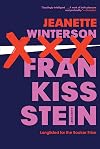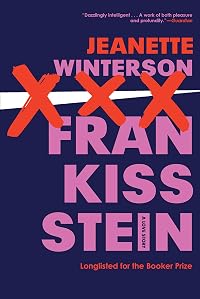
Frankissstein
by Jeanette Winterson
On This Page
Description
"Lake Geneva, 1816. Nineteen-year-old Mary Shelley is inspired to write a story about a scientist who creates a new life-form. In Brexit Britain, a young transgender doctor called Ry is falling in love with Victor Stein, a celebrated professor leading the public debate around AI and carrying out some experiments of his own in a vast underground network of tunnels. Meanwhile, Ron Lord, just divorced and living with his mom again, is set to make his fortune launching a new generation of sex show more dolls for lonely men everywhere. Across the Atlantic, in Phoenix, Arizona, a cryogenics facility houses dozens of bodies of men and women who are medically and legally dead... but waiting to return to life. What will happen when homo sapiens is no longer the smartest being on the planet? In fiercely intelligent prose, Jeanette Winterson shows us how much closer we are to that future than we realize. Funny and furious, bold and clear-sighted, Frankissstein is a love story about life itself"-- show lessTags
Recommendations



Member Reviews
“Night has come with her starry sky. Sleep and the silent hours of dreams. The others dream and sleep.
The house itself breathes in and out like a phantom. I lie awake with the stars as my cold companions. I think of my monster, lying thus, outside and alone.”
“We destroy out of hatred. We destroy out of love.”
“How strange is life; this span that is our daily reality, yet daily countermanded by the stories we tell.”
In modern day Britain, a young transgender doctor, named Ry, meets and falls in love with Victor Stein, a famous professor, as they attend an AI expo. The narrative then shifts to the maker of advanced sex dolls and then explores the mysterious process called cryogenics. The reader then, is propelled back to1816, show more where a young woman, named Mary Shelley, is creating her horror classic, Frankenstein, in the company of her poet husband, with Lord Byron, in attendance.
How these threads are seamlessly woven together, is the magic behind this smart and inventive novel. I have only read Winterson's wonderful memoir, but her latest, reminded me, that I need to go back and read more of her fiction. This is terrific stuff! show less
The house itself breathes in and out like a phantom. I lie awake with the stars as my cold companions. I think of my monster, lying thus, outside and alone.”
“We destroy out of hatred. We destroy out of love.”
“How strange is life; this span that is our daily reality, yet daily countermanded by the stories we tell.”
In modern day Britain, a young transgender doctor, named Ry, meets and falls in love with Victor Stein, a famous professor, as they attend an AI expo. The narrative then shifts to the maker of advanced sex dolls and then explores the mysterious process called cryogenics. The reader then, is propelled back to1816, show more where a young woman, named Mary Shelley, is creating her horror classic, Frankenstein, in the company of her poet husband, with Lord Byron, in attendance.
How these threads are seamlessly woven together, is the magic behind this smart and inventive novel. I have only read Winterson's wonderful memoir, but her latest, reminded me, that I need to go back and read more of her fiction. This is terrific stuff! show less
Despite not liking her memoir [Oranges are not the only fruit], something about the description of this new novel by Winterson drew my attention. I'm so glad I read it. This is a smart, timely novel that is a great balance of progressive ideas, humor, and history.
Winterson parallels the story of Mary Shelley's creation of the novel, Frankenstein, and the friends vacationing together in Switzerland with a modern-day setting exploring robots (more specifically sexbots!), artificial intelligence, and a transgender character. The parallels are subtly drawn but also gave me a lot to think about. I loved that there wasn't any preachiness to her ideas about the current state of human affairs or where we might be headed. It seemed more like an show more exploration of what could be - or not.
I also loved the transgender character whose feelings were explored but again not preached about. It was nice to see novel include a transgender character where that topic didn't have to be the whole motive of the novel.
Anyway, I really liked this and it was just what I was in the mood for. Well thought out and great connections, but not at all overwrought. show less
Winterson parallels the story of Mary Shelley's creation of the novel, Frankenstein, and the friends vacationing together in Switzerland with a modern-day setting exploring robots (more specifically sexbots!), artificial intelligence, and a transgender character. The parallels are subtly drawn but also gave me a lot to think about. I loved that there wasn't any preachiness to her ideas about the current state of human affairs or where we might be headed. It seemed more like an show more exploration of what could be - or not.
I also loved the transgender character whose feelings were explored but again not preached about. It was nice to see novel include a transgender character where that topic didn't have to be the whole motive of the novel.
Anyway, I really liked this and it was just what I was in the mood for. Well thought out and great connections, but not at all overwrought. show less
Jeanette Winterson’s modern take on Mary Shelley’s Frankenstein is an unusual blend of genres (literary fiction, science fiction, historical fiction). Winterson employs the familiar dual plot-line, one set in the early 1800’s and the other in contemporary times. The historical thread follows Mary Shelley’s life, starting at Lake Geneva, Switzerland, as she begins to create her famous work while married to poet Percy Bysshe Shelley and engaging in intellectual conversations with Lord Byron, his physician, Dr. Polidori, and Mary’s stepsister, Claire. The contemporary thread employs parallel characters: Ry Shelley, a transgender doctor, legally supplies body parts to Victor Stein, a scientist experimenting with cryonic show more reanimation and digitizing the contents of the human brain. They interact with Ron Lord, an entrepreneur in the sexbot industry, Claire, an evangelical Christian working as a guide and assistant, and Polly D, a pushy journalist in search of a story. The book opens with a technology conference, where Stein delivers a lecture on artificial intelligence (AI) and robotics, and Ron Lord engages in a darkly humorous regaling of the “benefits” of sexbots.
At times bizarre, and always inventive, I found this book intellectually stimulating, just thinking of all the implications of AI and how it could be used or abused. The historical storyline, a contemplative look at Mary Shelley’s life, appealed to me more than the contemporary, which read more like a fast-paced farce, complete with outlandish characters, exotic settings, and salacious humor. She uses humor to ridicule sexism, while not downplaying its destructiveness. She inserts social commentary via satire, and pokes fun at both the UK and US. While not required, a familiarity with the Shelley’s Frankenstein is helpful. It is interesting that many of the concerns of the 19th century are still relevant in the 21st: worker obsolescence through technological innovation (back then it was the loom), a woman’s place in the world, how to create a more equitable society, the mysteries of the soul, the drive for creativity, class divides, and what makes life worthwhile. I sensed the story losing a bit of its cohesion as it approaches the ending, which may be interpreted in a number of ways. Be aware that it includes a number of sexually explicit scenes, profuse profanity, and a potentially triggering scene of trans assault.
Winterson has produced an entertaining, occasionally disturbing, and thought-provoking work about the human experience. I was surprised by how much I enjoyed this book and plan to investigate the author’s other works. This book has been longlisted for the 2019 Booker Prize. I received a copy from the publisher via NetGalley. show less
At times bizarre, and always inventive, I found this book intellectually stimulating, just thinking of all the implications of AI and how it could be used or abused. The historical storyline, a contemplative look at Mary Shelley’s life, appealed to me more than the contemporary, which read more like a fast-paced farce, complete with outlandish characters, exotic settings, and salacious humor. She uses humor to ridicule sexism, while not downplaying its destructiveness. She inserts social commentary via satire, and pokes fun at both the UK and US. While not required, a familiarity with the Shelley’s Frankenstein is helpful. It is interesting that many of the concerns of the 19th century are still relevant in the 21st: worker obsolescence through technological innovation (back then it was the loom), a woman’s place in the world, how to create a more equitable society, the mysteries of the soul, the drive for creativity, class divides, and what makes life worthwhile. I sensed the story losing a bit of its cohesion as it approaches the ending, which may be interpreted in a number of ways. Be aware that it includes a number of sexually explicit scenes, profuse profanity, and a potentially triggering scene of trans assault.
Winterson has produced an entertaining, occasionally disturbing, and thought-provoking work about the human experience. I was surprised by how much I enjoyed this book and plan to investigate the author’s other works. This book has been longlisted for the 2019 Booker Prize. I received a copy from the publisher via NetGalley. show less
It's difficult to write a "review" that does this novel justice. For one who generally believes the earth might benefit from human extinction, it was a fascinating and enjoyable read (it's not *about* human extinction in any sense but the existential theme is relevant).
Shifting back and forth in time, between the voice of Mary Shelley and that of Ry, our modern-day transgender hero who escorts us through his love affair with Victor, a scientist set on extending human life indefinitely, it explores themes of existentialism, artificial intelligence, identity, and the filmy cloth separating reality from fantasy, possibility from outrageousness.... Ultimately, it challenges all we know about what is, and what might be. It reconsiders show more Shelley's horror story and notes how close we are to that incomprehensible possibility. Humorous and mind-bending, it's a worthy Booker nominee for 2019. I loved it. show less
Shifting back and forth in time, between the voice of Mary Shelley and that of Ry, our modern-day transgender hero who escorts us through his love affair with Victor, a scientist set on extending human life indefinitely, it explores themes of existentialism, artificial intelligence, identity, and the filmy cloth separating reality from fantasy, possibility from outrageousness.... Ultimately, it challenges all we know about what is, and what might be. It reconsiders show more Shelley's horror story and notes how close we are to that incomprehensible possibility. Humorous and mind-bending, it's a worthy Booker nominee for 2019. I loved it. show less
Jeanette Winterson’s modern take on Mary Shelley’s Frankenstein is an unusual blend of genres (literary fiction, science fiction, historical fiction). Winterson employs the familiar dual plot-line, one set in the early 1800’s and the other in contemporary times. The historical thread follows Mary Shelley’s life, starting at Lake Geneva, Switzerland, as she begins to create her famous work while married to poet Percy Bysshe Shelley and engaging in intellectual conversations with Lord Byron, his physician, Dr. Polidori, and Mary’s stepsister, Claire. The contemporary thread employs parallel characters: Ry Shelley, a transgender doctor, legally supplies body parts to Victor Stein, a scientist experimenting with cryonic show more reanimation and digitizing the contents of the human brain. They interact with Ron Lord, an entrepreneur in the sexbot industry, Claire, an evangelical Christian working as a guide and assistant, and Polly D, a pushy journalist in search of a story. The book opens with a technology conference, where Stein delivers a lecture on artificial intelligence (AI) and robotics, and Ron Lord engages in a darkly humorous regaling of the “benefits” of sexbots.
At times bizarre, and always inventive, I found this book intellectually stimulating, just thinking of all the implications of AI and how it could be used or abused. The historical storyline, a contemplative look at Mary Shelley’s life, appealed to me more than the contemporary, which read more like a fast-paced farce, complete with outlandish characters, exotic settings, and salacious humor. She uses humor to ridicule sexism, while not downplaying its destructiveness. She inserts social commentary via satire, and pokes fun at both the UK and US. While not required, a familiarity with the Shelley’s Frankenstein is helpful. It is interesting that many of the concerns of the 19th century are still relevant in the 21st: worker obsolescence through technological innovation (back then it was the loom), a woman’s place in the world, how to create a more equitable society, the mysteries of the soul, the drive for creativity, class divides, and what makes life worthwhile. I sensed the story losing a bit of its cohesion as it approaches the ending, which may be interpreted in a number of ways. Be aware that it includes a number of sexually explicit scenes, profuse profanity, and a potentially triggering scene of trans assault.
Winterson has produced an entertaining, occasionally disturbing, and thought-provoking work about the human experience. I was surprised by how much I enjoyed this book and plan to investigate the author’s other works. This book has been longlisted for the 2019 Booker Prize. I received a copy from the publisher via NetGalley. show less
At times bizarre, and always inventive, I found this book intellectually stimulating, just thinking of all the implications of AI and how it could be used or abused. The historical storyline, a contemplative look at Mary Shelley’s life, appealed to me more than the contemporary, which read more like a fast-paced farce, complete with outlandish characters, exotic settings, and salacious humor. She uses humor to ridicule sexism, while not downplaying its destructiveness. She inserts social commentary via satire, and pokes fun at both the UK and US. While not required, a familiarity with the Shelley’s Frankenstein is helpful. It is interesting that many of the concerns of the 19th century are still relevant in the 21st: worker obsolescence through technological innovation (back then it was the loom), a woman’s place in the world, how to create a more equitable society, the mysteries of the soul, the drive for creativity, class divides, and what makes life worthwhile. I sensed the story losing a bit of its cohesion as it approaches the ending, which may be interpreted in a number of ways. Be aware that it includes a number of sexually explicit scenes, profuse profanity, and a potentially triggering scene of trans assault.
Winterson has produced an entertaining, occasionally disturbing, and thought-provoking work about the human experience. I was surprised by how much I enjoyed this book and plan to investigate the author’s other works. This book has been longlisted for the 2019 Booker Prize. I received a copy from the publisher via NetGalley. show less
Even though the name and the cover blurb might give you the feeling that you’re about to read Frankenstein fanfiction (and you might not be half-wrong), this was astounding in its scope and boldness. Taking place in two time periods – the 19th and the 21st centuries – Winterson narrates the tale of a behind-the-scenes story of the writing of Frankenstein (in the former), the rise of AI and sex-bots (in the latter), and manages to merge the disparate aspects so beautifully that you feel as if you’re not reading glorified fanfiction.
Mary and Percy Shelley are merged to form the trans protagonist Ry Shelley; Lord Byron becomes a flamboyant entrepreneur called Ron Lord, and so on – only the tragic Dr Frankenstein remains the same. show more The juxtaposition of characters should not have worked so well, but here we are.
To give you an idea of the sheer scope of the novel, some issues that Frankissstein tackles with aplomb are - feminism in the Victorian era compared to the modern era; how different the lives of cis and trans people are (the refrain ‘What are you’ in the 21st century used for Ry is surprising, but considering many people are of this mind-set, not that unexpected); the debate on the value of a woman as more than her body (Ron Lord’s USP for his sex-bots is that ‘they don’t say no’); and the age-old debate on automation, AI and Luddites. All of this takes place in paragraphs which are so densely packed with witty information that you have to read some twice before it strikes you how good Winterson is as an author and as a conveyor of ideas.
This is one of those stories with a premise that is as outrageous as it sounds, but it works so well that you cannot help but wait to reread it. Would highly recommend. show less
Mary and Percy Shelley are merged to form the trans protagonist Ry Shelley; Lord Byron becomes a flamboyant entrepreneur called Ron Lord, and so on – only the tragic Dr Frankenstein remains the same. show more The juxtaposition of characters should not have worked so well, but here we are.
To give you an idea of the sheer scope of the novel, some issues that Frankissstein tackles with aplomb are - feminism in the Victorian era compared to the modern era; how different the lives of cis and trans people are (the refrain ‘What are you’ in the 21st century used for Ry is surprising, but considering many people are of this mind-set, not that unexpected); the debate on the value of a woman as more than her body (Ron Lord’s USP for his sex-bots is that ‘they don’t say no’); and the age-old debate on automation, AI and Luddites. All of this takes place in paragraphs which are so densely packed with witty information that you have to read some twice before it strikes you how good Winterson is as an author and as a conveyor of ideas.
This is one of those stories with a premise that is as outrageous as it sounds, but it works so well that you cannot help but wait to reread it. Would highly recommend. show less
3. [22725156::Frankissstein: A Love Story] by [[Jeanette Winterson]]
readers: [[John Sackville, Perdita Weeks]]
published: 2019
format: 7:10 audiobook (352 pages in paperback - must be a lot of white space)
acquired: Jan 6
listened: Jan 7-15
rating: 4
locations: 19th-century Geneva, Italy and London, modern Memphis TN, Scottsdale AZ, Manchester, 1920's something or other...forgot
Sex bots. If you haven't thought about having sex with a machine, maybe this a book for you. Ok, I kid, but before I fully understood where this was going, a Winterson character gives us the most eloquent and kind of beautiful advertisement of them - seriously. Yes, he's repulsive.
This is my first Winterson, although I know of her memoirs (or are they fictionalized - show more I don't know). Headlines tell me she's been spending a lot of time looking into AI and thinking about it philosophically. And that leads to this thoroughly entertaining play on Frankenstein. Winterson digs into the fascinating world of Mary Shelley (her husband Percy Bysshe Shelley, Lord Byron, her unmet mother, Mary Wollenstonecraft, and Byron's rejected daughter, Ava Lovelace - and more. What a world!...what a tragic world) and then links it, playfully, to a story taking place now. These stories, then and now, are filled with sex, selfishness, the quest for eternal life and the philosophical mess it all makes.
If that interests you at all, read this. Because she pulls it off. It's fun, it's heady and makes you think and smile, maybe gag a few times at the synthetic sexual implications...and it's moving and curious and quite beautiful and terrible. And, at least on audio, it has a light touch. I haven't been dwelling on this book. I finished it and moved on. But I'm glad I read it and I'm considering looking into Winterson's other books.
My kind thanks to the Booker Long List, without which I almost certainly don't read this.
2020
https://www.librarything.com/topic/315313#7038599 show less
readers: [[John Sackville, Perdita Weeks]]
published: 2019
format: 7:10 audiobook (352 pages in paperback - must be a lot of white space)
acquired: Jan 6
listened: Jan 7-15
rating: 4
locations: 19th-century Geneva, Italy and London, modern Memphis TN, Scottsdale AZ, Manchester, 1920's something or other...forgot
Sex bots. If you haven't thought about having sex with a machine, maybe this a book for you. Ok, I kid, but before I fully understood where this was going, a Winterson character gives us the most eloquent and kind of beautiful advertisement of them - seriously. Yes, he's repulsive.
This is my first Winterson, although I know of her memoirs (or are they fictionalized - show more I don't know). Headlines tell me she's been spending a lot of time looking into AI and thinking about it philosophically. And that leads to this thoroughly entertaining play on Frankenstein. Winterson digs into the fascinating world of Mary Shelley (her husband Percy Bysshe Shelley, Lord Byron, her unmet mother, Mary Wollenstonecraft, and Byron's rejected daughter, Ava Lovelace - and more. What a world!...what a tragic world) and then links it, playfully, to a story taking place now. These stories, then and now, are filled with sex, selfishness, the quest for eternal life and the philosophical mess it all makes.
If that interests you at all, read this. Because she pulls it off. It's fun, it's heady and makes you think and smile, maybe gag a few times at the synthetic sexual implications...and it's moving and curious and quite beautiful and terrible. And, at least on audio, it has a light touch. I haven't been dwelling on this book. I finished it and moved on. But I'm glad I read it and I'm considering looking into Winterson's other books.
My kind thanks to the Booker Long List, without which I almost certainly don't read this.
2020
https://www.librarything.com/topic/315313#7038599 show less
Members
- Recently Added By
Lists

Booker Prize
491 works; 62 members

Top Five Books of 2019
387 works; 111 members

Writers as Characters in Fiction
120 works; 19 members

Kirkus Starred Fiction Reviews of Books Published in 2019
411 works; 12 members

Transgender Characters
55 works; 4 members

Books Read in 2020
4,379 works; 124 members

Books Read in 2022
5,166 works; 114 members

Books Read in 2021
5,361 works; 114 members

Trans/Queer Lit
48 works; 5 members
Author Information

54+ Works 37,078 Members
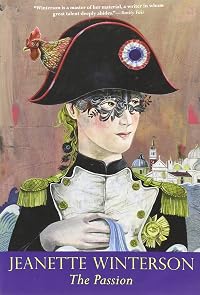
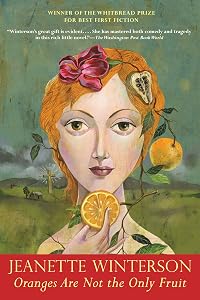
Jeanette Winterson was born in Manchester, England in 1959 and graduated from St. Catherine's College, Oxford. Her book, Oranges Are Not the Only Fruit, is a semi-autobiographical account of her life as a child preacher (she wrote and gave sermons by the time she was eight years old). The book was the winner of the Whitbread Prize for best first show more fiction and was made into an award-winning TV movie. The Passion won the John Llewelyn Rhys Memorial Prize for best writer under thirty-five, and Sexing the Cherry won the American Academy of Arts and Letters' E. M. Forster Award. (Bowker Author Biography) Jeanette Winterson lives in London & the Cotswolds. (Publisher Provided) show less
Some Editions
Awards and Honors
Work Relationships
Was inspired by
Common Knowledge
- Canonical title
- Frankissstein
- Alternate titles
- Frankissstein
- Original publication date
- 2019-10
- People/Characters
- Mary Shelley; Percy Shelley; Lord Byron; John William Polidori; Clair Clairmont; Samuel Taylor Coleridge (show all 28); Mary Wollstonecraft Shelley; Mary Wollstonecraft; Mary Wollstonecraft Godwin; William Godwin; Ry Shelley; Ron Lord; Conrad Dippel; Victor Frankenstein; Victor Stein; Max More; James H. Bedford; Frankenstein's Monster; Polly D; Robert Walton (captain); I. J. Good (Isadore Jacob Gudak, Jack Good); Isadore Jacob Gudak (I.J. Good, Jack Good); Alan Turing; Dr. Wakefield; Jane Williamson; Charles Babbage; Ada Byron Lovelace; Claire
- Important places
- Manchester, Lancashire, England, UK; Lake Geneva, Switzerland; Memphis, Tennessee, USA; France; London, England, UK; Phoenix, Arizona, USA (show all 12); Sonoran Desert, USA; Bedlam, London, England, UK; Bethlem Royal Hospital, London, England, UK; Italy; Florence, Italy; Rome, Italy
- Important events
- Peterloo Massacre
- Epigraph
- We may lose and we may win though we will never
be here again.
&n... (show all)bsp; Eagles, ‘Take It Easy’ - First words
- Lake Geneva, 1816
Reality is water-soluble.
What we could see, the rocks, the shore, the trees, the boats on the lake, had lost their usual definition and blurred into the long grey of a week’s r... (show all)ain. - Quotations
- Is Donald Trump getting his brain frozen? asks Ron.
Max explains that the brain has to be fully functioning at clinical death. - Last words
- (Click to show. Warning: May contain spoilers.)The human dream.
- Publisher's editor
- Elisabeth Schmitz
- Original language
- English UK
- Canonical DDC/MDS
- 823.914
- Canonical LCC
- PR6073.I558
Classifications
Statistics
- Members
- 892
- Popularity
- 30,126
- Reviews
- 43
- Rating
- (3.69)
- Languages
- 9 — Catalan, Dutch, English, French, German, Italian, Portuguese, Spanish, Swedish
- Media
- Paper, Audiobook, Ebook
- ISBNs
- 37
- ASINs
- 5