
On This Page
Description
Alan Garner's exciting and atmospheric tale of magic and evil which began with The Weirdstone of Brisingamen continues with the Moon of Gomrath. Colin and Susan are not safe from the evil Morrigan and once more find themselves back in Fundindelve with the wizard Cadellin..
Tags
Recommendations













Member Reviews
I always preferred this ever so slightly to Weirdstone, and one of the reasons may be that Colin and Susan have a little more agency in this book, while at the same time having less. More stuff happens to them directly and they do things and even have opinions, but they remain, sadly, ciphers, albeit ciphers on the cusp of change. More than that, though, it was the idea of wild magic, magic that exists purely for its own sake, savage and emotional and dangerous, set against the more ordered, courtly magic of Cadellin, which anticipates a lot of modern fantasy magic with rules and systems, but of course, it is the wild magic that breaks Susan's heart at the end, and leaves the reader haunted too.
Gomrath is a wilder, more formless book as show more opposed to the rather tidy chase narrative of Weirdstone. The magic comes out of the very landscape, and the danger from the shadowy Brollachain and the shape-changing Morrigan while Colin and Susan's relationship with their allies is more uneasy, and strained to the point of bitterness with the lios-alfar. Futhermore, much is left unsettled at the end, unless I missed some details, with the Morrigan still on the loose and whatever was bothering the lios-alfar unresolved. In retrospect, the set-up for a third volume was always there, but Garner resisted or refused, and many years later we got Boneland, something of an entirely different order. show less
Gomrath is a wilder, more formless book as show more opposed to the rather tidy chase narrative of Weirdstone. The magic comes out of the very landscape, and the danger from the shadowy Brollachain and the shape-changing Morrigan while Colin and Susan's relationship with their allies is more uneasy, and strained to the point of bitterness with the lios-alfar. Futhermore, much is left unsettled at the end, unless I missed some details, with the Morrigan still on the loose and whatever was bothering the lios-alfar unresolved. In retrospect, the set-up for a third volume was always there, but Garner resisted or refused, and many years later we got Boneland, something of an entirely different order. show less
Continuing my re-reading of these least child-like of children's books by Alan Garner. My memory of reading this is that I turned the page, expecting to find more, only to realise I'd reached the end of the book. Is that a bad thing? Not really. The book is demanding for children, and that demanding nature - the ambiguity, the sense of nearly but not quite grasping something important about the story - is what has kept his books in my mind for over 35 years. Re-reading them was no disappointment, I'm glad to say.
Moon of Gomrath is darker, even less straight adventure, and more ambiguous than Weirdstone of Brisingamen. Together with the Viking stories of Henry Treece, probably these two are my favourite kids books.
Moon of Gomrath is darker, even less straight adventure, and more ambiguous than Weirdstone of Brisingamen. Together with the Viking stories of Henry Treece, probably these two are my favourite kids books.
Like the previous, a mad hodgepodge of Scandinavian and Celtic mythology. Constant, inexplicable action, and some new dwarfs. The elves in this book are far different from Tokien elves, they are not tall, handsome, loquacious, long-lived, and melancholy; instead they are small, somewhat murderous, and sick of human-induced lung diseases.
I think if I listened to it, I would enjoy it vastly more, as if it were a music video, full of nonsense and pleasing images.
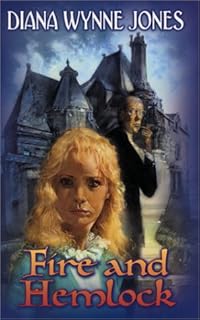
The cover image on the version I read was probably the worst available: the children are wooden, and Alcenor has a very funny hat.
What would have been really nice, and what this book sadly lacks, is a glossary of the names, indicating what source they were derived from, what they show more might have referred to, and how to pronounce them. show less
I think if I listened to it, I would enjoy it vastly more, as if it were a music video, full of nonsense and pleasing images.
The cover image on the version I read was probably the worst available: the children are wooden, and Alcenor has a very funny hat.
What would have been really nice, and what this book sadly lacks, is a glossary of the names, indicating what source they were derived from, what they show more might have referred to, and how to pronounce them. show less
This tale picks up soon after the events in The Weirdstone of Brisingamen when 12-year-old twins Colin and Susan are still staying in Cheshire whilst their parents are abroad. Evil witch the Morrigan has, along with her allies, finally been defeated, but Susan no longer has the teardrop heirloom, the weirdstone of the title. In its place is a curious silver bracelet, its shape echoing the young moon, and it is the moon -- from the title of this sequel to Susan's crucial role -- which runs as one of the leitmotivs throughout this dark tale.
It's hard to tell, but I'm guessing that these events take place sometime in the late 1950s; the date is immaterial but helps to get a handle on the narrative. Air pollution has driven a group of show more travellers from North Wales to Alderley Edge in Cheshire. No ordinary travellers these: they are lios-alfar, what we humans would call elves, and they are resting in the caves underneath the Edge before going on to the Northlands, where they hope to defeat whatever is destroying their kin there. They are let into the heart of the Edge by Cadellin, the wizard who befriended Colin and Susan in The Weirdstone and who still guards the sleeping knights under the hill.
Meanwhile a pit has been accidentally opened by workmen outside the Trafford Arms Hotel in the village, in which apparently in the 17th century a 'devil' had been bound by local clergymen. This we later find is a brollachan, a Gaelic name for a shapeless thing; this being is able to transform itself into an each uisge, a water-horse which bears any unsuspecting rider into a lake where the human is eaten. Colin and Susan are to come across this dangerous creature, but first they are to encounter -- in very close succession -- Atlendor the elf-lord, Uthecar a one-eyed dwarf and Albanac, who first appears to be merely a tall horseman cloaked in black but who is more than that. Along with Cadellin they are all concerned about the evil gathering in the area; taken in conjunction with the news that the Morrigan is still alive and heading down from the Northlands it's clear that the twins' lives are again at risk.
I found this a terribly confusing book when I first read it in the 70s, much less attractive than The Weirdstone and with an even less conclusive ending. First the action switches, seemingly at random, back and forth from the Edge to the Peak District a few miles to the east. The maps by Charles Green are beautifully drawn but more allusive than cartographically helpful -- perhaps in keeping with the fantastical happenings of the story. We meet a bewildering and formidable array of adversaries: not just the brollachan and the Morrigan but also the chillingly creepy bodachs (Katharine Briggs describes the bodach as a 'Celtic bugbear' whose appearance betokened death) and palug cats (the Welsh cath palug or 'clawing cat' was a large wildcat, maybe even a lynx; one also featured in Diana Wynne Jones' The Islands of Chaldea).
More ambiguous in nature are members of the Wild Hunt. Garner draws in names and traditions from Scandinavia, England, France and Wales to create his huntsmen: the Einheriar, Scandinavian bodyguards to the gods who are also the horsemen of the Welsh deity Donn; the English Herlathing (similar to the French Harlequin) who accompany the ancient British king Herla across the land and through the centuries; and their leader the Hunter, a horned deity who goes by the name Garanhir, in Welsh 'tall crane' or perhaps 'longshanks' from his sheer height and stride. Why such a complicated cast list with borrowed names from every which where? In a note Garner tell us that he re-used existing ones simply because to him 'a made-up name feels wrong'.
It's impossible to detail all the plot, the hows and whys of Susan's coma and Colin's later abduction, the nature of the Morrigan's enmity, the differences between the Old Magic, High Magic and Old Evil, what exactly comes about in the final page after the final confrontation. I can only make some sense by referencing two contentious books that I remember reading in the 60s and early 70s and which profoundly influence the action and themes: Alfred Watkins' The Old Straight Track and Robert Graves' The White Goddess. I still have these on my shelves, the first in the third edition of 1945, the second in a paperback edition from 1961. The Watkins book I remember being all about a sense of place and local traditions, and this is certainly characteristic of The Moon of Gomrath -- especially when Colin has to use the old straight track to retrieve the antidote to Susan's worrying absence from her body. What I draw most from The White Goddess is Graves' hypothesis of the universal belief a Triple Moon Goddess. It turns out that Susan has a part to play as the representative of the young moon, just as the lady of the lake Angharad Goldenhand stands for the full moon and the Morrigan symbolises the old moon.
It is of no small importance that Angharad gave Susan an ancient silver bracelet, emblematic of the moon, at the end of The Weirdstone to replace the teardrop stone that had been destroyed. In some ways both books are the opposite of the masculine stories of the quest for the grail: in Garner's novels the object is presented to Susan at or near the start of each tale, and the quest is to find its particular virtues. The three phases of the moon seem also to be related to Susan's existence in three worlds: her own flesh-and-blood world, then a state of unformed life called Abred when she is in a coma, and finally Angharad's world of the Shining Ones called the Threshold of the Summer Stars.
And it's also no coincidence that a turning point in this novel happens on the Eve of Gomrath, a time when beacon fires are lit to mark either the quarter-days (the beginning of February, May, August or November) or the equinoxes and solstices. It's difficult to tell when the action happens -- probably not the dead of winter or the height of summer -- but one of the ancient Celtic quarter-days seems likeliest to me: in any case all are dangerous times of year, moments of transition from one period to another when anything can happen.
I've talked at length about the ideas in this book, which is largely all one can do. Colin and Susan are more differentiated in this second book, but Susan turns out to have a role in which character has little part. The human adult figures, Gowther and Bess Mossack, fret and worry in the background but are largely irrelevant; all the other individuals are non-human, even if some of them are in human form. The test comes when the reader identifies with either Colin or Susan, and it's clear that many readers did so; I however never did, and The Moon of Gomrath was always an enigma to me.
What is more interesting to me is whether Garner invested more of himself in either one or other sibling. That he has had deep emotional attachments to protagonists as well as place is clear from his breakdown following The Owl Service, a breakdown which was detailed in a talk he gave to a science fiction convention and which was later republished in The Voice that Thunders. It is the nature of that investment that is key to understanding the Weirdstone trilogy, and that key is I suspect only to be revealed in Boneland, the final part of the trilogy, which was published nearly half a century after The Moon of Gomrath.
http://wp.me/s2oNj1-gomrath show less
It's hard to tell, but I'm guessing that these events take place sometime in the late 1950s; the date is immaterial but helps to get a handle on the narrative. Air pollution has driven a group of show more travellers from North Wales to Alderley Edge in Cheshire. No ordinary travellers these: they are lios-alfar, what we humans would call elves, and they are resting in the caves underneath the Edge before going on to the Northlands, where they hope to defeat whatever is destroying their kin there. They are let into the heart of the Edge by Cadellin, the wizard who befriended Colin and Susan in The Weirdstone and who still guards the sleeping knights under the hill.
Meanwhile a pit has been accidentally opened by workmen outside the Trafford Arms Hotel in the village, in which apparently in the 17th century a 'devil' had been bound by local clergymen. This we later find is a brollachan, a Gaelic name for a shapeless thing; this being is able to transform itself into an each uisge, a water-horse which bears any unsuspecting rider into a lake where the human is eaten. Colin and Susan are to come across this dangerous creature, but first they are to encounter -- in very close succession -- Atlendor the elf-lord, Uthecar a one-eyed dwarf and Albanac, who first appears to be merely a tall horseman cloaked in black but who is more than that. Along with Cadellin they are all concerned about the evil gathering in the area; taken in conjunction with the news that the Morrigan is still alive and heading down from the Northlands it's clear that the twins' lives are again at risk.
I found this a terribly confusing book when I first read it in the 70s, much less attractive than The Weirdstone and with an even less conclusive ending. First the action switches, seemingly at random, back and forth from the Edge to the Peak District a few miles to the east. The maps by Charles Green are beautifully drawn but more allusive than cartographically helpful -- perhaps in keeping with the fantastical happenings of the story. We meet a bewildering and formidable array of adversaries: not just the brollachan and the Morrigan but also the chillingly creepy bodachs (Katharine Briggs describes the bodach as a 'Celtic bugbear' whose appearance betokened death) and palug cats (the Welsh cath palug or 'clawing cat' was a large wildcat, maybe even a lynx; one also featured in Diana Wynne Jones' The Islands of Chaldea).
More ambiguous in nature are members of the Wild Hunt. Garner draws in names and traditions from Scandinavia, England, France and Wales to create his huntsmen: the Einheriar, Scandinavian bodyguards to the gods who are also the horsemen of the Welsh deity Donn; the English Herlathing (similar to the French Harlequin) who accompany the ancient British king Herla across the land and through the centuries; and their leader the Hunter, a horned deity who goes by the name Garanhir, in Welsh 'tall crane' or perhaps 'longshanks' from his sheer height and stride. Why such a complicated cast list with borrowed names from every which where? In a note Garner tell us that he re-used existing ones simply because to him 'a made-up name feels wrong'.
It's impossible to detail all the plot, the hows and whys of Susan's coma and Colin's later abduction, the nature of the Morrigan's enmity, the differences between the Old Magic, High Magic and Old Evil, what exactly comes about in the final page after the final confrontation. I can only make some sense by referencing two contentious books that I remember reading in the 60s and early 70s and which profoundly influence the action and themes: Alfred Watkins' The Old Straight Track and Robert Graves' The White Goddess. I still have these on my shelves, the first in the third edition of 1945, the second in a paperback edition from 1961. The Watkins book I remember being all about a sense of place and local traditions, and this is certainly characteristic of The Moon of Gomrath -- especially when Colin has to use the old straight track to retrieve the antidote to Susan's worrying absence from her body. What I draw most from The White Goddess is Graves' hypothesis of the universal belief a Triple Moon Goddess. It turns out that Susan has a part to play as the representative of the young moon, just as the lady of the lake Angharad Goldenhand stands for the full moon and the Morrigan symbolises the old moon.
It is of no small importance that Angharad gave Susan an ancient silver bracelet, emblematic of the moon, at the end of The Weirdstone to replace the teardrop stone that had been destroyed. In some ways both books are the opposite of the masculine stories of the quest for the grail: in Garner's novels the object is presented to Susan at or near the start of each tale, and the quest is to find its particular virtues. The three phases of the moon seem also to be related to Susan's existence in three worlds: her own flesh-and-blood world, then a state of unformed life called Abred when she is in a coma, and finally Angharad's world of the Shining Ones called the Threshold of the Summer Stars.
And it's also no coincidence that a turning point in this novel happens on the Eve of Gomrath, a time when beacon fires are lit to mark either the quarter-days (the beginning of February, May, August or November) or the equinoxes and solstices. It's difficult to tell when the action happens -- probably not the dead of winter or the height of summer -- but one of the ancient Celtic quarter-days seems likeliest to me: in any case all are dangerous times of year, moments of transition from one period to another when anything can happen.
I've talked at length about the ideas in this book, which is largely all one can do. Colin and Susan are more differentiated in this second book, but Susan turns out to have a role in which character has little part. The human adult figures, Gowther and Bess Mossack, fret and worry in the background but are largely irrelevant; all the other individuals are non-human, even if some of them are in human form. The test comes when the reader identifies with either Colin or Susan, and it's clear that many readers did so; I however never did, and The Moon of Gomrath was always an enigma to me.
What is more interesting to me is whether Garner invested more of himself in either one or other sibling. That he has had deep emotional attachments to protagonists as well as place is clear from his breakdown following The Owl Service, a breakdown which was detailed in a talk he gave to a science fiction convention and which was later republished in The Voice that Thunders. It is the nature of that investment that is key to understanding the Weirdstone trilogy, and that key is I suspect only to be revealed in Boneland, the final part of the trilogy, which was published nearly half a century after The Moon of Gomrath.
http://wp.me/s2oNj1-gomrath show less
This is the sequel to the author's Weirdstone of Brisingamen, continuing the adventures of Colin and Susan in encountering magic creatures in the Alderley Edge area of Cheshire. Again, while well written, this just didn't grip me emotionally and I found the plot more rambling and unclear than Weirdstone. Not sure if I'll bother with Boneland, the third book in the series, written much more recently than the first two.
Why did I choose this book? Because I had listened to The Weirdstone of Brisingamen and enjoyed it very much.
What did I like? The pace of the adventure was faster than The Weirdstone of Brisingamen and the same characters gained some depth.
I love the seamless weaving of celtic and local myth, and folklore into the storyline as well as the concept of old and new magic. I appreciated the way Alan Garner chose to describe occurrences and, more importantly, feelings ascribed to the afterlife or in-between; it was almost beautiful.
What didn't I like? Unfortunately, I was not as enthralled as I was with The Weirdstone of Brisingamen, and I found myself losing attention despite the wonderful narration of Mr Madoc. At certain points, I lost show more the any concept what was happening and I feel I may need a second listen, when not driving, to better appreciate this sequel.
I never heard an explanation as to how the Morrigan returned. As others have said, it felt more contrived with certain events seeming to happen at precisely the right moment purely to set-off another, and to provide the story with momentum.
So, despite the increase in pace, the further exploration of characters, and the fusion of folklore, myth, and landscape The Moon of Gomrath fell short of the standard set by The Weirdstone of Brisingamen.
Would I recommend it? Yes, but only because it is the sequel to a fine book. show less
What did I like? The pace of the adventure was faster than The Weirdstone of Brisingamen and the same characters gained some depth.
I love the seamless weaving of celtic and local myth, and folklore into the storyline as well as the concept of old and new magic. I appreciated the way Alan Garner chose to describe occurrences and, more importantly, feelings ascribed to the afterlife or in-between; it was almost beautiful.
What didn't I like? Unfortunately, I was not as enthralled as I was with The Weirdstone of Brisingamen, and I found myself losing attention despite the wonderful narration of Mr Madoc. At certain points, I lost show more the any concept what was happening and I feel I may need a second listen, when not driving, to better appreciate this sequel.
I never heard an explanation as to how the Morrigan returned. As others have said, it felt more contrived with certain events seeming to happen at precisely the right moment purely to set-off another, and to provide the story with momentum.
So, despite the increase in pace, the further exploration of characters, and the fusion of folklore, myth, and landscape The Moon of Gomrath fell short of the standard set by The Weirdstone of Brisingamen.
Would I recommend it? Yes, but only because it is the sequel to a fine book. show less
Wonderful.
Lots of names, lots of local detail, particularly weird, but wonderful. Doesn't have a solid, exact, ending as most modern books, but doesn't suffer for it.
It is much better written than The Wierdstone of Brisingamen, Garners writing has matured significantly, but doesn't have that huge wash of nostalgia for me.
Lots of names, lots of local detail, particularly weird, but wonderful. Doesn't have a solid, exact, ending as most modern books, but doesn't suffer for it.
It is much better written than The Wierdstone of Brisingamen, Garners writing has matured significantly, but doesn't have that huge wash of nostalgia for me.
Members
- Recently Added By
Lists

Modern Arthurian Fiction
237 works; 16 members

The Seven-League Shelf
57 works; 3 members

Books Read in 2021
5,361 works; 114 members

Books Read in 2022
5,164 works; 111 members
Author Information

49+ Works 10,975 Members
Some Editions
Awards and Honors
Awards
Series

Belongs to Publisher Series
Work Relationships
Common Knowledge
- Canonical title
- The Moon of Gomrath
- Original title
- The Moon of Gomrath
- Original publication date
- 1963
- People/Characters
- Colin Whisterfield; Susan Whisterfield; Albanac; Uthecar Hornskin; The Morrigan; Gowther Mossock (show all 27); Bess Mossock; Cadellin Silverbrow; Selina Place; Brollachan; Celemon; Angharad Goldenhand (the Lady of the Lake); Horsemen of Don; Ulmrig; Ulmor; Ulmbeg; Fiorn; Falloman; Bagda; Maedoc; Midhir; Mathramil; Garanhir Gorlassar; Pelis the False; Cath Palug; Bodach; Ossair (the Hound of Conaire)
- Important places
- Alderley Edge, Cheshire, England, UK; Highmost Redmanhey, Hocker Lane, Macclesfield, Cheshire, England, UK; Fundindelve; Shining Tor, Cheshire, England, UK; Caer Rigor, Annwn; Errwood Hall, Goyt's Bridge, Derbyshire, England, UK (show all 7); Cheshire, England, UK
- Important events
- Wild Hunt
- Epigraph
- "And for to passe the tyme thys book shal be plesaunte to rede in, but for to gyve fayth and byleve that al is trewe that is conteyned herein, ye be at your lyberté."
William Caxton
31 July 1485 - Dedication
- For Ellen, Adam and Katharine
- First words
- It was bleak on Mottram road under the Edge, the wooded hill of Alderley.
- Last words
- (Click to show. Warning: May contain spoilers.)And away they rode together across the night, over the waves, and beyond the isles, and the Old Magic was free forever, and the moon was new.
- Original language
- English
Classifications
Statistics
- Members
- 1,226
- Popularity
- 20,061
- Reviews
- 20
- Rating
- (3.90)
- Languages
- 5 — Danish, Dutch, English, German, Portuguese
- Media
- Paper, Audiobook, Ebook
- ISBNs
- 32
- ASINs
- 35