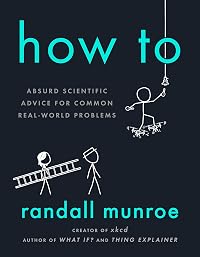
How To: Absurd Scientific Advice for Common Real-World Problems
by Randall Munroe
On This Page
Description
The world's most entertaining and useless self-help guide, from the brilliant mind behind the wildly popular webcomic xkcd and the #1 New York Times bestsellers What If? and Thing ExplainerFor any task you might want to do, there's a right way, a wrong way, and a way so monumentally complex, excessive, and inadvisable that no one would ever try it. How To is a guide to the third kind of approach. It's full of highly impractical advice for everything from landing a plane to digging a show more hole.
Bestselling author and cartoonist Randall Munroe explains how to predict the weather by analyzing the pixels of your Facebook photos. He teaches you how to tell if you're a baby boomer or a 90's kid by measuring the radioactivity of your teeth. He offers tips for taking a selfie with a telescope, crossing a river by boiling it, and powering your house by destroying the fabric of space-time. And if you want to get rid of the book once you're done with it, he walks you through your options for proper disposal, including dissolving it in the ocean, converting it to a vapor, using tectonic plates to subduct it into the Earth's mantle, or launching it into the Sun.
By exploring the most complicated ways to do simple tasks, Munroe doesn't just make things difficult for himself and his listeners. As he did so brilliantly in What If?, Munroe invites us to explore the most absurd reaches of the possible. How To is a delightfully mind-bending way to better understand the science and technology underlying the things we do every day. show less
Tags
Recommendations
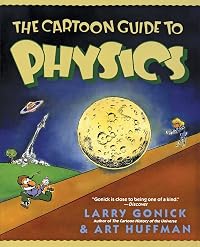
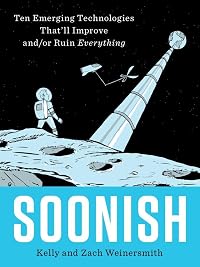
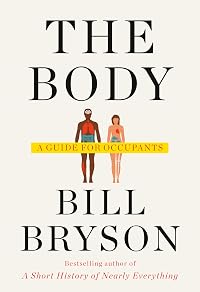
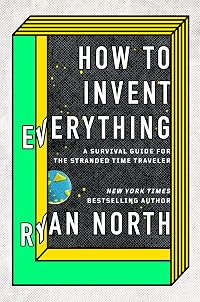
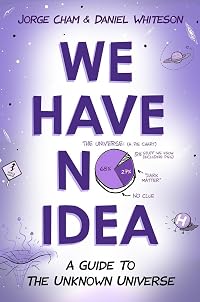
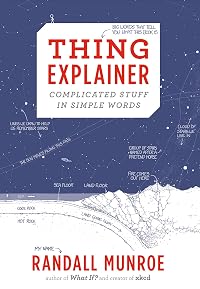
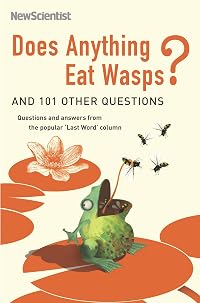

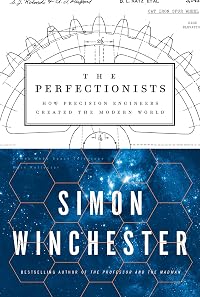
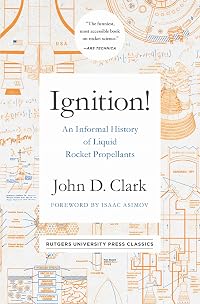
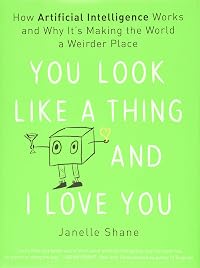
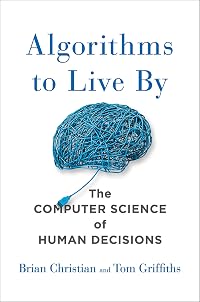

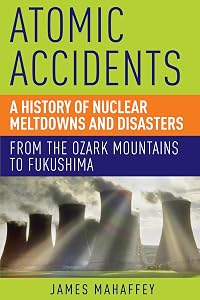
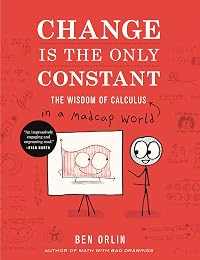
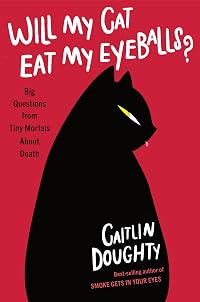
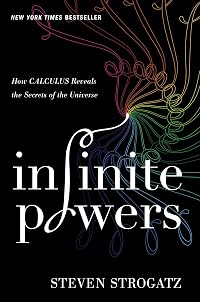

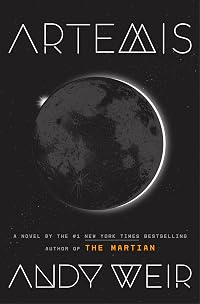
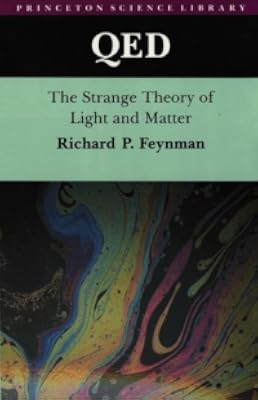
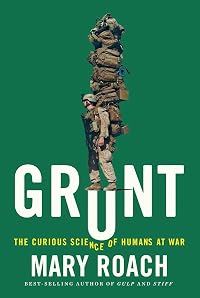
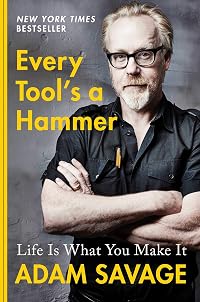
Member Recommendations
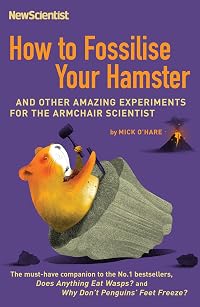
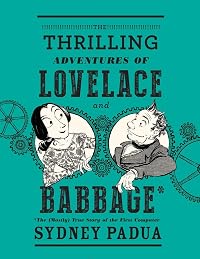
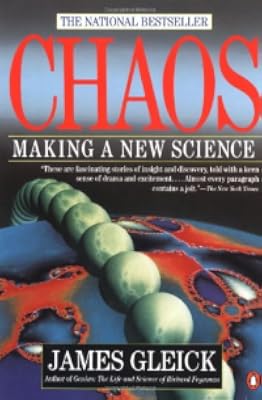
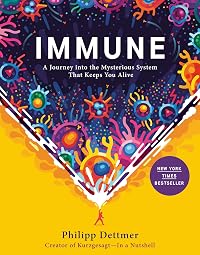
CGlanovsky Both are extensively researched, mathematically-grounded descriptions of kluged solutions to "real-world" problems by web comic authors with backgrounds in STEM careers.
30
Member Reviews
The latest work of scientific insanity by xkcd cartoonist Randall Munroe purports to offer up "absurd scientific advice for common real-world problems." Some chapters do precisely that, such as the one that suggests filling a swimming pool by purchasing hundreds of thousands of dollars worth of bottled water and then opening the bottles using a nuclear weapon. Some -- OK, a very few -- might actually be kind of handy, such as the chapter that offers up a fairly simple formula for estimating how far anyone can throw any object. (You can play around with that one a bit here.) Others -- lots of others -- illustrate interesting scientific principles by contemplating ridiculous extreme possibilities. Pretty much all of them are very much Do show more Not Try This at Home. Seriously, please do not destroy any moons of Mars in an attempt to power your house. Thank you.
As always with Randall Munroe, it's a lot of whimsical, deeply nerdy, and occasionally slightly alarming fun. show less
As always with Randall Munroe, it's a lot of whimsical, deeply nerdy, and occasionally slightly alarming fun. show less
Randall Munroe’s book contains wildly impractical but scientifically rooted advice on how to jump really high, move house, cross a river, or take the best selfie. Some chapters feature advice from experts such as Serena Williams (who illustrated how to take down a drone with a tennis ball) and Chris Hadfield (who gamely answered questions about all sorts of emergency landings). All of the advice is illustrated with Munroe’s traditional stick-figure drawings that make the book even funnier (the “Nutrition facts” for lava nearly made me choke on my lunch). And best of all, every chapter contains references that you can follow for more information about the equations and research that were used to put the book together. I show more thoroughly enjoyed this book, with the chapter on emergency landings being my favourite. And I admired how much fun this book makes physics—plugging variables into an equation allows us to ask, for example, how thick a pool made of Gruyère cheese would need to be in order to hold all the water in.
Highly recommended if you like xkcd and/or weird science. show less
Highly recommended if you like xkcd and/or weird science. show less
Ever wonder what it takes to land a plane on top of a train? Or what's the best way to send nuclear waste to the sun? Or how to take a selfie with yourself and the moon? Well, Randall Munroe has answers, filled in a humorous tone.
The beauty of how science generalizes - particularly, physics - is how it applies to all sorts of absurd situations. Munroe understands how to create such situations in his mind and explain how science can address our craziest imaginations.
I give this book my endorsement, but my biggest endorsement comes from my child. They heard me listening to it in the car and demanded that I look up other books by the author so that we can listen to them from the beginning in the car together. Both a science geek and their show more freshman-level child give Munroe's work a huge thumb's up. We start the What If? series tomorrow. show less
The beauty of how science generalizes - particularly, physics - is how it applies to all sorts of absurd situations. Munroe understands how to create such situations in his mind and explain how science can address our craziest imaginations.
I give this book my endorsement, but my biggest endorsement comes from my child. They heard me listening to it in the car and demanded that I look up other books by the author so that we can listen to them from the beginning in the car together. Both a science geek and their show more freshman-level child give Munroe's work a huge thumb's up. We start the What If? series tomorrow. show less
In the vein of What If, short absurd thought experiments that demonstrate scientific thinking and its usefulness in solving problems that will never, ever, be encountered (like how to cool your house when you've surrounded it with a lava moat). Munroe's use of relentless physics extrapolation is very effective and affecting: we start for example with a magic scooter that can accelerate at 1G (forever) so we make our doctor's appointment on time, and finish, unexpectedly, at the end of the universe. Delightful.
If you've ever read Randall Munroe's xkcd website, or his first book, What If? you know what to expect from How To...
If you haven't, and you like physics, or imagining really weird scenarios and outrageous, possibly dangerous or lethal solutions to ordinary problems, or both, I definitely recommend checking this book out. It's exactly what it says on the tin: common problems that the author has unleashed his imagination (or the imagination of others) on to create the most absurd possible solutions. We're talking level 10 absurdity, but there's also a lot of excellent science in these absurd solutions and solid explanations why these solutions wouldn't work that range from "it would take more money than you'd save" (digging for show more treasure), to "this will likely kill you" (surviving re-entry of the ISS), to "the end of life - and the universe - as we know it" (triggering vacuum decay to power your house).
I kept thinking as I was reading this that it would make a really fun supplementary text in high school physics. Want to increase uptake of STEM subjects? Show kids how to figure out the end of the universe, or how much fuel it would take to send their house into space. show less
If you haven't, and you like physics, or imagining really weird scenarios and outrageous, possibly dangerous or lethal solutions to ordinary problems, or both, I definitely recommend checking this book out. It's exactly what it says on the tin: common problems that the author has unleashed his imagination (or the imagination of others) on to create the most absurd possible solutions. We're talking level 10 absurdity, but there's also a lot of excellent science in these absurd solutions and solid explanations why these solutions wouldn't work that range from "it would take more money than you'd save" (digging for show more treasure), to "this will likely kill you" (surviving re-entry of the ISS), to "the end of life - and the universe - as we know it" (triggering vacuum decay to power your house).
I kept thinking as I was reading this that it would make a really fun supplementary text in high school physics. Want to increase uptake of STEM subjects? Show kids how to figure out the end of the universe, or how much fuel it would take to send their house into space. show less
As always, when I read a funny book, BUT I'm also listening to a narration by Wil Wheaton, I'm suddenly nearly incapable of figuring out whether I love the book for its content or presentation.
Gaaaah!
Fortunately, I had a great time with both, seamlessly upping my chuckle factor by a few magnitudes as I learn how wrong it would be to make a really, really huge teakettle. *hint* (the rivers of lava might make your homeowner's association a bit upset.)
The most fascinating feature, other than just enjoying the ride when it comes to science explaining how to do the most ABSURD things imaginable, such as transmitting data across long distances by one of the most efficient forces of nature... such as BUTTERFLIES... is how much I was able to show more learn, regardless of the humor. :)
So, two thumbs up for a very, very enjoyable science book.
Um, why isn't this required reading in school? It should be. If only for every single possible reason in the universe. :) show less
Gaaaah!
Fortunately, I had a great time with both, seamlessly upping my chuckle factor by a few magnitudes as I learn how wrong it would be to make a really, really huge teakettle. *hint* (the rivers of lava might make your homeowner's association a bit upset.)
The most fascinating feature, other than just enjoying the ride when it comes to science explaining how to do the most ABSURD things imaginable, such as transmitting data across long distances by one of the most efficient forces of nature... such as BUTTERFLIES... is how much I was able to show more learn, regardless of the humor. :)
So, two thumbs up for a very, very enjoyable science book.
Um, why isn't this required reading in school? It should be. If only for every single possible reason in the universe. :) show less
I received a free copy of this book from the publisher in exchange for an honest review.
From the mind that brought us What If? we now are treated to his absurd scientific answers to your everyday problems. Need to cross a river? Want to have a pool party? Want to jump really far? Your answers are here!
I must admit I nearly laughed myself silly at the section featuring a Q&A with Astronaut Chris Hadfield. His willingness to answer totally absurd questions with serious answers is just amazing.
I recommend reading this in smaller bites, as to avoid getting overwhelmed. Overall, an excellent choice for the scientifically inclined, or those who balk at conventional wisdom and practices.
From the mind that brought us What If? we now are treated to his absurd scientific answers to your everyday problems. Need to cross a river? Want to have a pool party? Want to jump really far? Your answers are here!
I must admit I nearly laughed myself silly at the section featuring a Q&A with Astronaut Chris Hadfield. His willingness to answer totally absurd questions with serious answers is just amazing.
I recommend reading this in smaller bites, as to avoid getting overwhelmed. Overall, an excellent choice for the scientifically inclined, or those who balk at conventional wisdom and practices.
Members
- Recently Added By
Lists

Youth: Science, Miscellaneous
34 works; 1 member

Science
28 works; 1 member

Books Read in 2020
4,379 works; 124 members

Penguin Random House
458 works; 4 members

Books Read in 2022
5,226 works; 115 members

Youth: Earth Science
205 works; 1 member

Books Read in 2023
5,638 works; 147 members
Author Information

12+ Works 16,003 Members
Randall Munroe was born in Easton, Pennsylvania on October 17, 1984. He received a degree in physics from Christopher Newport University. He got a job building robots at NASA Langley Research Center. In 2006, he left NASA to draw comics on the internet full-time. He is the author of the popular webcomic xkcd, the science question-and-answer blog show more What If, and the New York Times bestseller What If?: Serious Scientific Answers to Absurd Hypothetical Questions. (Bowker Author Biography) show less
Some Editions
Awards and Honors
Common Knowledge
- Canonical title*
- 這麼做,就對了!:最ㄎㄧㄤ的生活科學指南
- Original publication date
- 2019-09
- First words
- Do not try any of this at home.
- Last words
- (Click to show. Warning: May contain spoilers.)Hey, what about this switch?
- Original language
- English
- Canonical DDC/MDS
- 502
- Canonical LCC
- Q173 .M962
*Some information comes from Common Knowledge in other languages. Click "Edit" for more information.
Classifications
- Genres
- Science & Nature, General Nonfiction, Nonfiction
- DDC/MDS
- 502 — Natural sciences & mathematics Science Miscellany
- LCC
- Q173 .M962 — Science Science (General) General
- BISAC
Statistics
- Members
- 2,349
- Popularity
- 8,413
- Reviews
- 52
- Rating
- (4.11)
- Languages
- 11 — Czech, Dutch, English, German, Hungarian, Korean, Polish, Portuguese, Spanish, Swedish, Chinese, traditional
- Media
- Paper, Audiobook, Ebook
- ISBNs
- 31
- ASINs
- 9