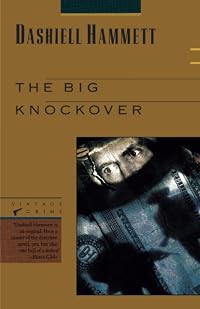
The Big Knockover: Selected Stories and Short Novels
by Dashiell Hammett
The Continental Op (Collections and Selections — short stories)
On This Page
Description
Short, thick-bodied, mulishly stubborn, and indifferent to physical pain, Dashiell Hammett's Continental Op was the prototype for generations of tough-guy detectives. He is also the hero of most of the nine stories in this volume. The Op's one enthusiasm is doing his job, and in The Big Knockover the jobs entail taking on a gang of modern-day freebooters, a vice-ridden hell's acre in the Arizona desert, and the bank job to end all bank jobs, along with such assorted grifters as Babe McCloor, show more Bluepoint Vance, Alphabet Shorty McCoy, and the Dis-and-Dat Kid. show lessTags
Recommendations
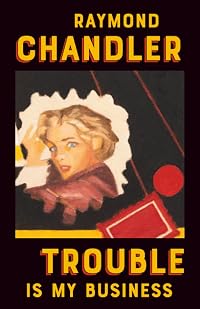
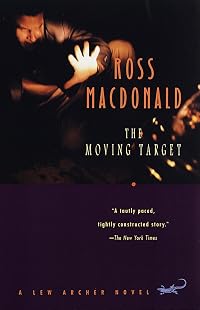
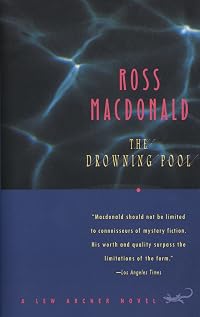
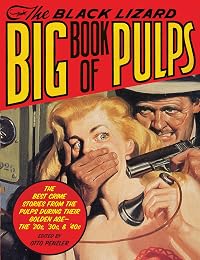
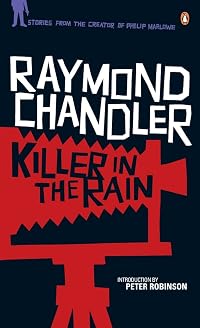


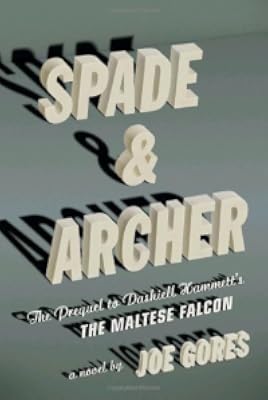
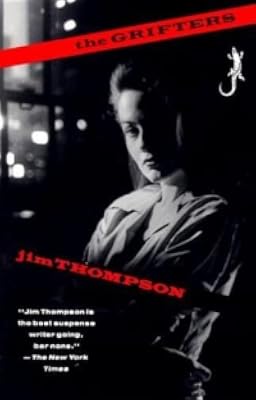
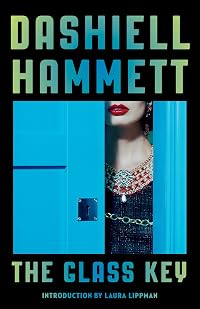








Member Recommendations
Thomas64 Paul Cain and Hammett were two of the major Black Mask writers.
Member Reviews
Big (451 pages) collection of Continental Op stories plus Tulip, Hammett's unfinished novel. Most of the Op tales are novella-length, while Tulip runs just under 50 pages. It's a sad, meandering fragment, as shockingly unfocused as the author's finished works are masterpieces of precision; the reader never even learns why the title character calls himself Tulip.
But let's get to the good stuff. Hammett was firing on all cylinders when he wrote the Continental Op stories: they're action-packed, grimly funny and unafraid to depict human beings as the very fallible creatures they are, usually acting from less than noble motives. The title story and its sequel, "$106,000 Blood Money," are the best of the bunch, their frenetic pace and high show more body count foreshadowing Hammett's first novel Red Harvest. Only "This King Business" (in which the Op travels to the fictional Balkan republic of Muravia to track down a young American expatriate) fell flat for me. show less
But let's get to the good stuff. Hammett was firing on all cylinders when he wrote the Continental Op stories: they're action-packed, grimly funny and unafraid to depict human beings as the very fallible creatures they are, usually acting from less than noble motives. The title story and its sequel, "$106,000 Blood Money," are the best of the bunch, their frenetic pace and high show more body count foreshadowing Hammett's first novel Red Harvest. Only "This King Business" (in which the Op travels to the fictional Balkan republic of Muravia to track down a young American expatriate) fell flat for me. show less
This is a book of shortish stories, five of them. Four are Continental Op adventures, with all the ingredients of tough guy, early twentieth century noir, delivered by one of the genre's best writers. My favorite was the title story ("The Big Knockover"). The fifth story ("Tulip") is an unfinished fragment that is hard to believe is by the same author. It's just boring, meaningless dialogue. No real direction, no action, no real plot. A rough draft of a novel, perhaps?
The introduction to this collection is written by Lillian Hellman, Dashiell Hammett's long-time friend/romantic partner. I thought it was, perhaps, the best part of this book.
The introduction to this collection is written by Lillian Hellman, Dashiell Hammett's long-time friend/romantic partner. I thought it was, perhaps, the best part of this book.
I liked 4 out of the 5 stories herein, therefore, 4 stars! I've always liked the Continental Op a lot, and the four tales of his in this book do not disappoint! I like that we don't get his name, nor his boss', the "Old Man", he isn't in the best shape, and he isn't afraid to shoot! Or steal a crutch! The title story was fun, with lots of old timey crook nicknames and double crosses! The story I didn't like, "Tulip", was not a Continental Op story, and honestly, I'm not sure what it really was. Sort of a meandering tale, and one I wasn't into. But the other 4 are good, and well worth reading!
The Continental Op is my favorite Hammett detective, partly for his unpretentious professionalism. He is short and fat and no-one would mistake him for a glamorous private eye, but he does his job very effectively. Odd;y enough the story i think of in this collection as being "the Big Knockover" is not testory that really bears that title, but "The Gutting of Couffignol" in which the Op is guarding wedding presents at the house of a wealthy man who is one of a select few owning houses on Couffignol, an island off the California coast. Hoever, in the night to whole island full of rich mansions is looted by a desperate gang of alleged White Russians led by an alleged White Russian princess. Possibly the fact that Hammet's White Russians show more are villains, not attractive crooks like Poirot's Countess Vera or admirable victims like the ones in Buchan's Huntingtower says something about Hammett''s politicl commitments. show less
The Continental Ops stories by Dashiell Hammett, originally published in the various pulp mystery magazines of the 1920s through 1950s, are collected in four different books, with some overlap. There is The Continental Op, The Return of the Continental Op, Nightmare Town and this volume, The Big Knockover.
BigKnockover
Having read the first, I stumbled across the last at The Strand bookstore and decided it was worth a try since I liked the stories I’ve read. But I agree with Lillian Hellman’s comment in the introduction to the extent that some of the writing is good and some not so good. The good thing about the book is Hellman’s introduction from which we learn a bit about their relationship.
Regarding the 10 stories in the book, show more however, one in particular, Tulip, was indeed strange. Tulip, is actually an unfinished novella to which Hammett apparently wrote the last paragraph but left a big gap in the middle. A rambling conversation between two ‘friends’, it goes nowhere. If it’s a Continental Op story (which I thought all the stories were going to be), I’m stymied, since detecting is not mentioned once.. It sounds more like a semi-autobiographical story aimed at the glossy, ‘literary’ magazines to which Hammett aspired, than a mystery.ContinentalOps
The namesake story, The Big Knockover is an imaginative, intricate story about a huge, coordinated bank heist. It contains Hammett’s typical, descriptive prose and a gaggle of gangster names reminiscent of the era. The story merits kudos. However, the followup story, $106,000 Blood Money, seems like an afterthought, with a strange ending that comes out of nowhere. It’s almost like nowadays when sequel upon sequel is issued to squeeze every last nickel out of a story.TheLostDetective
There’s Corkscrew, a ‘western’ in which the Continental Op is hired as sheriff of a small desert town. The story has horses and shoot ’em ups. The Scorched Face, which I read before and liked, is about two missing daughters, and This King Business is an odd story taking place in a foreign land. The remaining stories are relatively ‘normal’ Continental Op stories.
If you’re a Dashiell Hammett fan or a Continental Op fan, be sure to read both books, The Continental Op and The Big Knockover. If you have to choose one, or you want to whet your teeth and get a taste, The Continental Op is the better book.
Other good books on the subject of Hammett include The Lost Detective: Becoming Dashiell Hammett (which is up for an Edgar Award this year) and The Hunter and Other Stories, which tends more towards his literary writings. The first is definitely worth the read as it goes into Hammett’s days as a Pinkerton Detective and how it might have influenced his works, especially the Continental Op writings.
And of course, you can always fall back on Hammett’s classics, The Maltese Falcon and The Thin Man series.
In conclusion, you can’t go wrong reading Hammett. It’s that simple. show less
BigKnockover
Having read the first, I stumbled across the last at The Strand bookstore and decided it was worth a try since I liked the stories I’ve read. But I agree with Lillian Hellman’s comment in the introduction to the extent that some of the writing is good and some not so good. The good thing about the book is Hellman’s introduction from which we learn a bit about their relationship.
Regarding the 10 stories in the book, show more however, one in particular, Tulip, was indeed strange. Tulip, is actually an unfinished novella to which Hammett apparently wrote the last paragraph but left a big gap in the middle. A rambling conversation between two ‘friends’, it goes nowhere. If it’s a Continental Op story (which I thought all the stories were going to be), I’m stymied, since detecting is not mentioned once.. It sounds more like a semi-autobiographical story aimed at the glossy, ‘literary’ magazines to which Hammett aspired, than a mystery.ContinentalOps
The namesake story, The Big Knockover is an imaginative, intricate story about a huge, coordinated bank heist. It contains Hammett’s typical, descriptive prose and a gaggle of gangster names reminiscent of the era. The story merits kudos. However, the followup story, $106,000 Blood Money, seems like an afterthought, with a strange ending that comes out of nowhere. It’s almost like nowadays when sequel upon sequel is issued to squeeze every last nickel out of a story.TheLostDetective
There’s Corkscrew, a ‘western’ in which the Continental Op is hired as sheriff of a small desert town. The story has horses and shoot ’em ups. The Scorched Face, which I read before and liked, is about two missing daughters, and This King Business is an odd story taking place in a foreign land. The remaining stories are relatively ‘normal’ Continental Op stories.
If you’re a Dashiell Hammett fan or a Continental Op fan, be sure to read both books, The Continental Op and The Big Knockover. If you have to choose one, or you want to whet your teeth and get a taste, The Continental Op is the better book.
Other good books on the subject of Hammett include The Lost Detective: Becoming Dashiell Hammett (which is up for an Edgar Award this year) and The Hunter and Other Stories, which tends more towards his literary writings. The first is definitely worth the read as it goes into Hammett’s days as a Pinkerton Detective and how it might have influenced his works, especially the Continental Op writings.
And of course, you can always fall back on Hammett’s classics, The Maltese Falcon and The Thin Man series.
In conclusion, you can’t go wrong reading Hammett. It’s that simple. show less
Lillian Hellman's introduction/eulogy of Hammett is one of the most beautifully written things I've ever read. The rest of the book is pretty goddamn good, too.
Wonderful introduction by Lillian Hellman. This collection was the weakest of the Hammet that I've read. Some fun moments. Tulip, a semi-autobiographical story, didn't fit with the Continental Op stories.
Members
- Recently Added By
Lists

Noirvember: The Best Noir
113 works; 56 members

Best Noir Fiction
160 works; 14 members
Author Information

362+ Works 32,336 Members
Samuel Dashiell Hammett was born on May 27, 1894 in St Mary's County, Maryland. Raised in Baltimore and Philadelphia, he attended Baltimore Polytechnic until he was 13 years old, but was forced to drop out and work a series of jobs to help support his family. At the age of 21 Hammett was hired by the Pinkerton National Detective Agency as an show more operative. After a stint in the United States Army during World War II, he married a nurse named Josephine Annas Dolan, whom he met when he fell ill with tuberculosis. In 1922, Hammett began writing for Black Mask magazine. Using his background in detective work, he created the tough guy detective characters Sam Spade and the Continental Op, as well as debonair sleuths Nick and Nora Charles. By 1927, Hammett had written the Poisonville series, which later became the novel Red Harvest. He wrote more than 85 short stories and five novels during his lifetime. The novels include The Dain Curse, The Glass Key, The Thin Man, and The Maltese Falcon, which was later adapted into a classic movie starring Humphrey Bogart. He also wrote an autobiography entitled Beams Falling: The Art of Dashiell Hammett. After his marriage faltered in the late 1920s, Hammett met Lillian Hellman, then a married 24-year-old aspiring playwright. In 1930, Hellman left her husband for Hammett. Eventually they both divorced their spouses and, although the two never married, they remained together until Hammett's death on January 10, 1961. (Bowker Author Biography) show less
All Editions
Series

Belongs to Publisher Series
Work Relationships
Contains
Common Knowledge
- Canonical title
- The Big Knockover: Selected Stories and Short Novels
- Original title
- The Big Knockover
- Original publication date
- 1943
- People/Characters
- Continental Op
- Important places
- San Francisco, California, USA
- First words
- Wedge-shaped Couffignal is not a large island, and not far from the mainland, to which it is linked by a wooden bridge. [The Gutting of Couffignal]
- Last words
- (Click to show. Warning: May contain spoilers.)I felt tired, washed out. [$106,000 Blood Money]
- Original language
- English
- Disambiguation notice
- Contents: Introduction by Lillian Hellman -- The Gutting of Couffignal -- Fly Paper -- The Scorched Face -- This King Business -- The Gatewood Caper [a/k/a Crooked Souls] -- Dead Yellow Women -- Corkscrew -- Tulip -- The Big ... (show all)Knockover -- $106,000 Blood Money
Do not combine with the original novella/short story of the same title or other Hammett collections with a similar title but a different selection of stories.
Classifications
Statistics
- Members
- 1,044
- Popularity
- 24,735
- Reviews
- 16
- Rating
- (4.05)
- Languages
- 7 — Catalan, Dutch, English, French, German, Portuguese, Spanish
- Media
- Paper, Ebook
- ISBNs
- 18
- UPCs
- 1
- ASINs
- 23