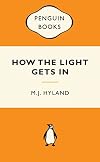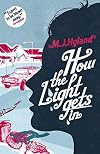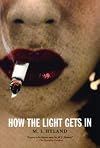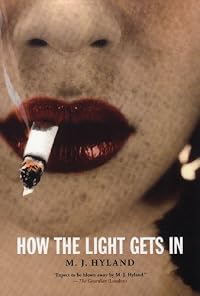
How the Light Gets In
by M. J. Hyland
On This Page
Description
Lou Connor wants to escape her emotionally crass family and life of poverty, so she travels from Sydney to the USA as an exchange student. But her host-family, the Hardings - who live in a prefabricated mansion in a nameless Chicago suburb - are in suffocating pursuit of a particular form of suburban perfection. From the very beginning, nothing is as it seems.Tags
Recommendations













Member Recommendations
lucyknows How the Light Gets In by M. J. Hyland may also be paired with Girl, Interrupted by Susanna Kaysen
Member Reviews
Lou is a decidedly unlikable character: self-centered, disrespectful, unaware and withdrawn. In other words, she is a typical teenager, seeing life through her narrow lens and unable to open her eyes to the impacts of her own actions, only the impacts of others unto her. She has reason to have a chip of her shoulder, but so concentrated is she on her own perceptions and goals that she fails to see how she sabotages herself.
It is only in second part of the story, when she is finally able to connect to Gita and Lishny that she realizes that she is not alone - and thus the light starts to get in. She learns her final lesson when she, herself, becomes a victim of someone else's selfish act.
This is what makes this book so interesting and show more compelling: young Lou, who is far from perfect and still has so much to learn, does change even in an infinitesimal way to grow toward adulthood. The quintessential coming of age novel. show less
It is only in second part of the story, when she is finally able to connect to Gita and Lishny that she realizes that she is not alone - and thus the light starts to get in. She learns her final lesson when she, herself, becomes a victim of someone else's selfish act.
This is what makes this book so interesting and show more compelling: young Lou, who is far from perfect and still has so much to learn, does change even in an infinitesimal way to grow toward adulthood. The quintessential coming of age novel. show less
“The gap between who we think we are, what we’d like to say, how we’d like to behave, and then how we in fact behave, who we in fact are. This gap, this dissonance is fascinating. I want to nail this in a book. I want to create a character that shows this problem in interesting and dramatic ways. I think we all suffer from this quotidian dissonance, we all—to varying degrees—have experienced this gap between our thoughts, desires, and our actions, deeds.” —M.J. Hyland
(3.5) This is the first of Hyland's three novels (to date) and the third one I've read. It focuses on 16-year-old, Australian exchange student, "Lou"(Louise) Connor, who believes that she can somehow transform herself and her life by coming to America. Louise show more is the youngest child in an amoral family of grifters: her parents are frequently unemployed; her sisters are superficial, loose, and crass; their low-life boyfriends are barely this side of criminal, and all of them tumble together in a squalid council flat in Sydney. Lou is intelligent, driven, sharply observant, reliably hypercritical, frequently untruthful, morbid, and deeply uncomfortable in her own skin. Hyland's depiction of her protagonist’s profound shame and intense anxiety is second to none. There are hints of OCD, as well. All of this makes How the Light Gets In a perceptive but uncomfortable read. Surprisingly, however, there are uproariously funny moments—the most notable being Lou’s first encounter with Lishny, a Russian exchange student. (Sadly, humour is entirely lacking in Hyland’s subsequent two novels.)
Lou's host family, the Hardings, are upper middle-class, and initially the girl revels in the the polished floors, the clean bed linens, and the tastefully appointed rooms of their house in the Chicago suburbs. On first arriving, Lou lies—easily but not exactly shamelessly—about her family back in Australia. (Yes, she used to have a pet kangaroo named Skippy; no, they can't phone her parents: they're on vacation in Spain.) Lou's intense self-consciousness and anxiety soon have her reaching for the bottle. Alcohol softens life’s sharp edges, pacifies her harsh internal critic, and seems to bestow confidence on her. It also causes trouble. Ultimately, the Harding parents (ironically and naively) find her influence on their own (less-than-angelic) teenage children so "corrupting" that they call in representatives of "The Organisation", the group responsible for exchange students, to have her removed from their home. The girl is taken to a house for wayward exchange students (yes, really) in downtown Chicago. There, Lou does undergo a transformation of sorts, but Hyland intimates that true transformation of the self is very hard to achieve. Basically: wherever you go, there you are. Maybe, too, it’s not wise to discard all of one’s defence mechanisms.
Lou's infractions are far less serious in nature than those of the young men in Hyland’s later novels. Nevertheless, I found her less sympathetic than those male protagonists. Lou Connor is certainly interesting, but her self-centredness and persistent unease might wear on some readers. Also, the resolution Hyland provides for her main character is abrupt and it feels rather contrived. Even so, How the Light Gets In is a perceptive and mostly compelling portrait of a young girl. show less
(3.5) This is the first of Hyland's three novels (to date) and the third one I've read. It focuses on 16-year-old, Australian exchange student, "Lou"(Louise) Connor, who believes that she can somehow transform herself and her life by coming to America. Louise show more is the youngest child in an amoral family of grifters: her parents are frequently unemployed; her sisters are superficial, loose, and crass; their low-life boyfriends are barely this side of criminal, and all of them tumble together in a squalid council flat in Sydney. Lou is intelligent, driven, sharply observant, reliably hypercritical, frequently untruthful, morbid, and deeply uncomfortable in her own skin. Hyland's depiction of her protagonist’s profound shame and intense anxiety is second to none. There are hints of OCD, as well. All of this makes How the Light Gets In a perceptive but uncomfortable read. Surprisingly, however, there are uproariously funny moments—the most notable being Lou’s first encounter with Lishny, a Russian exchange student. (Sadly, humour is entirely lacking in Hyland’s subsequent two novels.)
Lou's host family, the Hardings, are upper middle-class, and initially the girl revels in the the polished floors, the clean bed linens, and the tastefully appointed rooms of their house in the Chicago suburbs. On first arriving, Lou lies—easily but not exactly shamelessly—about her family back in Australia. (Yes, she used to have a pet kangaroo named Skippy; no, they can't phone her parents: they're on vacation in Spain.) Lou's intense self-consciousness and anxiety soon have her reaching for the bottle. Alcohol softens life’s sharp edges, pacifies her harsh internal critic, and seems to bestow confidence on her. It also causes trouble. Ultimately, the Harding parents (ironically and naively) find her influence on their own (less-than-angelic) teenage children so "corrupting" that they call in representatives of "The Organisation", the group responsible for exchange students, to have her removed from their home. The girl is taken to a house for wayward exchange students (yes, really) in downtown Chicago. There, Lou does undergo a transformation of sorts, but Hyland intimates that true transformation of the self is very hard to achieve. Basically: wherever you go, there you are. Maybe, too, it’s not wise to discard all of one’s defence mechanisms.
Lou's infractions are far less serious in nature than those of the young men in Hyland’s later novels. Nevertheless, I found her less sympathetic than those male protagonists. Lou Connor is certainly interesting, but her self-centredness and persistent unease might wear on some readers. Also, the resolution Hyland provides for her main character is abrupt and it feels rather contrived. Even so, How the Light Gets In is a perceptive and mostly compelling portrait of a young girl. show less
I enjoyed this book immensely, but less for the story, characters, or conclusion than for the writing. Lou's perspective is so often thought provoking. She isn't necessarily right, yet her assessments ring true clearly with some things while she appears oblivious about others. It is stated that Lou has a high IQ, yet she fails to be smart over and over again in the ways that would benefit her, more out of childish beliefs than due to self-destructive impulses. Hyland captures that contrast in a way that is fair and believable.
Several times while reading, I paused to savor a passage or paragraph. I laughed often with pleasure at this novel's wit. It has a crushingly bitter ending, however, managing to be both inevitable and unexpected at show more the same time. show less
Several times while reading, I paused to savor a passage or paragraph. I laughed often with pleasure at this novel's wit. It has a crushingly bitter ending, however, managing to be both inevitable and unexpected at show more the same time. show less
Like many teenagers, I read The Catcher In The Rye repeatedly while growing up. Holden Caulfield's paranoia, cynicism and self-reproach speak clearly to you at that age. I've read many books since that attempt to capture the same suffocating sense of teenage alienation, some more successful than others, but MJ Hyland's How The Light Gets In comes closer than most. Loneliness, self-delusion (and destruction), and doomed inevitability play a large part in the story of Louise, a foreign exchange student from a poor Australian background who goes to stay with a wealthy American family for a year. Hyland achieves a fine balance in making us both sympathise with Louise and want to give her a good slap. Still, she has a way of looking at the show more world which proves entrancing at times, making you see things from a perspective you might never have considered - or offering observations (as in the extract above) that had me nodding in agreement.
Read the full review at my blog. show less
Read the full review at my blog. show less
This was very readable in terms of the writing style, and the theme was interesting enough – a gifted Australian teenager from a deprived background travels to Chicago to live with a family on some kind of exchange scheme. I didn’t enjoy it as much as I expected to though – it was a bit like driving down a long, straight road where the scenery doesn’t change. However much you don’t want to, you find yourself drifting off. In the novel, protagonist Lou makes various social faux pas, mostly by thinking the correct thing to say then saying something inappropriate. She drinks/smokes/takes drugs, alienates her foster parents, is given another chance, then messes up again, and the circle goes on. There didn’t seem to be the normal show more plot trajectory where everything builds up to a moment of drama. When the game changer occurs, which sends the plot ricocheting to its conclusion, it was something so minor and unconnected with the previous events that I wasn’t sure what to make of it. Having spent a couple of hundred pages feeling as though Lou largely brought her problems on herself, was I supposed to suddenly forget that and sympathise totally? I’m just not sure – about that, and about the novel as a whole. show less
I've knocked off a lot of good books over the last couple of weeks including David Cohen's Disappearing off the face of the earth, Per Petterson's It's Fine By Me and Graeme Simsion's The Rosie Project. Despite this competition, I expected How The Light Gets In to be the star and I have not been disappointed.
Like Gail Jones' Black Mirror, it's a first novel by an Australian. The similarities stop there. How the Light Gets In is a perfect novel. Utterly gripping, with a creepy flawed main character who nonetheless engages our sympathies from the start and never loses them, it must be right up there with best first novels ever. It'd make a great movie.
Highly recommended.
For the author's comments on her disconcertingly similar life, go show more here: https://alittleteaalittlechat.wordpress.com/2018/01/13/how-the-light-gets-in-by-... show less
Like Gail Jones' Black Mirror, it's a first novel by an Australian. The similarities stop there. How the Light Gets In is a perfect novel. Utterly gripping, with a creepy flawed main character who nonetheless engages our sympathies from the start and never loses them, it must be right up there with best first novels ever. It'd make a great movie.
Highly recommended.
For the author's comments on her disconcertingly similar life, go show more here: https://alittleteaalittlechat.wordpress.com/2018/01/13/how-the-light-gets-in-by-... show less
I've knocked off a lot of good books over the last couple of weeks including David Cohen's Disappearing off the face of the earth, Per Petterson's It's Fine By Me and Graeme Simsion's The Rosie Project. Despite this competition, I expected How The Light Gets In to be the star and I have not been disappointed.
Like Gail Jones' Black Mirror, it's a first novel by an Australian. The similarities stop there. How the Light Gets In is a perfect novel. Utterly gripping, with a creepy flawed main character who nonetheless engages our sympathies from the start and never loses them, it must be right up there with best first novels ever. It'd make a great movie.
Highly recommended.
For the author's comments on her disconcertingly similar life, go show more here: https://alittleteaalittlechat.wordpress.com/2018/01/13/how-the-light-gets-in-by-... show less
Like Gail Jones' Black Mirror, it's a first novel by an Australian. The similarities stop there. How the Light Gets In is a perfect novel. Utterly gripping, with a creepy flawed main character who nonetheless engages our sympathies from the start and never loses them, it must be right up there with best first novels ever. It'd make a great movie.
Highly recommended.
For the author's comments on her disconcertingly similar life, go show more here: https://alittleteaalittlechat.wordpress.com/2018/01/13/how-the-light-gets-in-by-... show less
Members
- Recently Added By
Lists

Books Featured on Gilmore Girls
307 works; 21 members

Best Australian Books of the 21st Century
88 works; 2 members

The Complete Rory Gilmore Reading List
506 works; 5 members
Author Information

7+ Works 1,974 Members
Awards and Honors
Awards
Notable Lists
Common Knowledge
- Original publication date
- 2003
- Important places
- Chicago, Illinois, USA; Australia
- Dedication
- For Richard Clements 1951-1999
- First words
- In less than two hours this aeroplane will land at Chicago's O'Hare airport.
- Last words
- (Click to show. Warning: May contain spoilers.)I'll watch the people walking in the street below, and wonder which of them I might like to follow home.
Classifications
Statistics
- Members
- 630
- Popularity
- 45,782
- Reviews
- 17
- Rating
- (3.40)
- Languages
- Dutch, English, French, German
- Media
- Paper, Ebook
- ISBNs
- 18
- ASINs
- 6