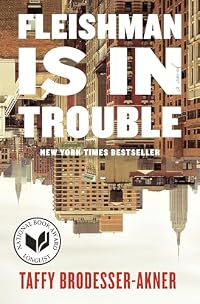
Fleishman Is in Trouble
by Taffy Brodesser-Akner
On This Page
Description
NEW YORK TIMES BESTSELLER • NATIONAL BOOK AWARD LONGLIST • “A masterpiece” (NPR) about marriage, divorce, and the bewildering dynamics of ambitionNow an Emmy Award–nominated FX limited series on Hulu, starring Claire Danes, Jesse Eisenberg, Lizzy Caplan, and Adam Brody
ONE OF THE TEN BEST BOOKS OF THE YEAR: Entertainment Weekly, The New York Public Library
ONE OF THE BEST BOOKS OF THE YEAR: The New York Times Book Review, Time, The Washington Post, USA Today Vanity Fair, Vogue, show more NPR, Chicago Tribune, GQ, Vox, Refinery29, Elle, The Guardian, Real Simple, Financial Times, Parade, Good Housekeeping, New Statesman, Marie Claire, Town & Country, Evening Standard, Thrillist, Booklist, Kirkus Reviews, BookPage, BookRiot, Shelf Awareness
Toby Fleishman thought he knew what to expect when he and his wife of almost fifteen years separated: weekends and every other holiday with the kids, some residual bitterness, the occasional moment of tension in their co-parenting negotiations. He could not have predicted that one day, in the middle of his summer of sexual emancipation, Rachel would just drop their two children off at his place and simply not return. He had been working so hard to find equilibrium in his single life. The winds of his optimism, long dormant, had finally begun to pick up. Now this.
As Toby tries to figure out where Rachel went, all while juggling his patients at the hospital, his never-ending parental duties, and his new app-assisted sexual popularity, his tidy narrative of the spurned husband with the too-ambitious wife is his sole consolation. But if Toby ever wants to truly understand what happened to Rachel and what happened to his marriage, he is going to have to consider that he might not have seen things all that clearly in the first place.
A searing, utterly unvarnished debut, Fleishman Is in Trouble is an insightful, unsettling, often hilarious exploration of a culture trying to navigate the fault lines of an institution that has proven to be worthy of our great wariness and our great hope.
Alma’s Best Jewish Novel of the Year • Finalist for the National Book Critics Circle’s John Leonard Prize for Best First Book. show less
Tags
Recommendations




Member Recommendations

Member Reviews
It's hard to believe that Taffy Brodesser-Akner's FLEISHMAN IS IN TROUBLE is her first novel, because it's just so damn GOOD! I mean, from page one it so totally sucked me in, which is probably a good description, because her style is very (Philip)Roth-ian, or Roth-esque, or whatever. Meaning there's lots of sex, of all kinds. Like she spent her younger years peering over Roth's shoulder as he wrote some of his juiciest old-white-guy material. Because she certainly knows Roth, who even gets a token mention, as one of the authors (along with Bellow) that her protagonist, Dr Toby Fleishman, imagined his ideal woman might be reading when he would first meet her. Which didn't happen, of course. Instead he met Rachel, fell in love and show more married her. And now, fifteen years and two kids later, their marriage is almost over. They are separated. She got everything. He gets the kids every other weekend. The Fleishmans are in trouble. Yes, both of them. Because this is a book about the dissolution of a marriage, about how hard it is to stay in love, about differing goals and dreams and ambitions, about parenting by the seat of your pants, social climbing, and about starting over, at forty-one, in the age of smart phones and dating apps - and pornographic pics sent from interested women. Toby is wallowing in all of this fresh fleish, er, flesh, and still trying to be a responsible father to his eleven year-old daughter, Hannah, who is already feeling prepubescent pangs of puppy love, and sensitive nine year-old Solly.
So yeah, initially you think this story is all about Toby, with an omniscient narrator. Then suddenly this narrator becomes Libby, Toby's longtime friend from college, who might have been his girlfriend, except for the fact that Toby is only five foot four, a disadvantage he is all too aware of. Toby and Libby and Seth, still a libertine bachelor, were a tight threesome in college, and have stayed in touch intermittently. Libby, we learn, married with children, has given up her job as a writer for a men's magazine to be a stay-at-home mom. Discontented, she wants to be a writer, but, after some false starts, she discovers -
"My voice only came alive when I was talking about someone else; my ability to see the truth and to extrapolate human emotion based on what I saw and was told didn't extend to myself.
Hence, voila! She becomes the voice of Toby's story and Rachel's, and Seth's. And her story is dropped in there too, eventually. It's complicated. And much of Libby's discontent comes from her realization that -
"There were so many ways of being a woman in the world, but all of them still rendered her just a woman, which is to say: a target."
Toby's story - and Rachel's too - as Libby presents them, are sad and painful, and hard to look away from. And the effects on the children are equally tragic. Because all the Fleishmans are in trouble. Marriage is hard, but separation and divorce are even harder.
I've read a lot of Philip Roth over the years, and so, apparently, has Brodesser-Akner. One of my favorite Roth novels is his first, the often overlooked coming-of-age LETTING GO. It is very similar to this book in that it alternates between an omniscient narrator and a first-person in the voice of protagonist Gabe Wallach. And a major female character in LETTING GO, is named Libby, a married woman Gabe is more than a little in love with. So yeah, I suspect Taffy Brodesser-Akner is very much a student of Philip Roth's work, and, as a result, she has crafted a multi-faceted masterpiece on the pleasures and perils of men and women falling in love and out of love, marriage and divorce, lust and longing and so many other things. I loved this book. My very highest recommendation.
- Tim Bazzett, author of the memoir, BOOKLOVER show less
So yeah, initially you think this story is all about Toby, with an omniscient narrator. Then suddenly this narrator becomes Libby, Toby's longtime friend from college, who might have been his girlfriend, except for the fact that Toby is only five foot four, a disadvantage he is all too aware of. Toby and Libby and Seth, still a libertine bachelor, were a tight threesome in college, and have stayed in touch intermittently. Libby, we learn, married with children, has given up her job as a writer for a men's magazine to be a stay-at-home mom. Discontented, she wants to be a writer, but, after some false starts, she discovers -
"My voice only came alive when I was talking about someone else; my ability to see the truth and to extrapolate human emotion based on what I saw and was told didn't extend to myself.
Hence, voila! She becomes the voice of Toby's story and Rachel's, and Seth's. And her story is dropped in there too, eventually. It's complicated. And much of Libby's discontent comes from her realization that -
"There were so many ways of being a woman in the world, but all of them still rendered her just a woman, which is to say: a target."
Toby's story - and Rachel's too - as Libby presents them, are sad and painful, and hard to look away from. And the effects on the children are equally tragic. Because all the Fleishmans are in trouble. Marriage is hard, but separation and divorce are even harder.
I've read a lot of Philip Roth over the years, and so, apparently, has Brodesser-Akner. One of my favorite Roth novels is his first, the often overlooked coming-of-age LETTING GO. It is very similar to this book in that it alternates between an omniscient narrator and a first-person in the voice of protagonist Gabe Wallach. And a major female character in LETTING GO, is named Libby, a married woman Gabe is more than a little in love with. So yeah, I suspect Taffy Brodesser-Akner is very much a student of Philip Roth's work, and, as a result, she has crafted a multi-faceted masterpiece on the pleasures and perils of men and women falling in love and out of love, marriage and divorce, lust and longing and so many other things. I loved this book. My very highest recommendation.
- Tim Bazzett, author of the memoir, BOOKLOVER show less
This was an intense read, the inner monologues, the anxiety is just unrelenting for page after page after page. I was engaged, and intrigued but it did start to weigh on me, maybe that's the point. I mean, it's also entirely brilliant because the specifics of the thoughts, of the feelings that you are peering into is so well observed. If you read it, I wonder what you felt at the end, what's the takeaway? There's certainly a lot to reflect on and discuss here, and I'm still not sure how to process where the story took me as the book concluded.
Toby, Libby, and Seth meet on their Junior year abroad in Israel. There they form a bond that, despite distance and forgetfulness, holds firm and brings them back together in the year of Toby’s divorce, of Seth’s engagement, and Libby’s estrangement from her suburban existence. Toby is going through hell. Or he’s putting himself through hell. Or he’s putting everyone else through hell. In any case, this appears to be a novel about Toby — close third-person narration, so close it’s inside Toby’s thoughts. Or it seems to be about Toby until the narration switches to first-person from Libby’s perspective and you realize that she’s the one who has been writing Toby’s life. It’s disorienting. I assume it’s meant to show more be. And then the first-person narrative just drifts off and you get thoroughly immersed again in that close third-person view of Toby’s disastrous marriage. And then back. Breathe in, breathe out. Relax.
This is a fascinating read. And not just because of the narrative complexity (though, yes, mostly). There is a withering view of the current state of male-female relations and the negotiations that facilitate our compromises. Withering but also at times optimistic. Or is that optimism just optimistic? It’s hard to know. At times things seem excruciatingly real. But at others the narrator just seems to be ranting. Which narrator? See, I told you it was confusing. But also exhilarating.
Ultimately the problems of these excessively wealthy New Yorkers (Toby is the poor man of the bunch, a medical specialist who only brings in $268,000 per year!) can seem distant and self-inflicted. But then maybe all of our problems are like that.
Warmly recommended. show less
This is a fascinating read. And not just because of the narrative complexity (though, yes, mostly). There is a withering view of the current state of male-female relations and the negotiations that facilitate our compromises. Withering but also at times optimistic. Or is that optimism just optimistic? It’s hard to know. At times things seem excruciatingly real. But at others the narrator just seems to be ranting. Which narrator? See, I told you it was confusing. But also exhilarating.
Ultimately the problems of these excessively wealthy New Yorkers (Toby is the poor man of the bunch, a medical specialist who only brings in $268,000 per year!) can seem distant and self-inflicted. But then maybe all of our problems are like that.
Warmly recommended. show less
This glorious mess of a novel, about 100 pages too long, needs to be read, but you'll be forgiven if you run out of patience and if the overwhelming prurience does you in. If you are a person who says, “There wasn’t one redeeming character in the whole book”, then run, don’t walk. The main one in trouble (there are oh so many) is Manhattanite Toby Fleishman, MD specializing in livers. He and wife Rachel, wealthy owner of a talent agency, are divorcing, and much of the narrative is the overly familiarly navel-gazing of Horrible Rich White People With Tiny Rich White People Problems.
Toby's astonishment at the lush pickings of available horny, self-obsessed women in his dating apps gets very wearying. His sole positive trait is show more his love for his kids, the spoiled and despicable 11 year old Hannah, running the private school mean girl marathon to an extent that must be unheard of outside of NYC or LA; and little Solly, who’s chunky, smart, and lonely. Rachel herself is completely crippled by lack of love from her hypercritical grandmother, who reluctantly raised her from age three with no kindness, interest, or love. And just her luck: a horrible c-section by a brutal on-call ob-gyn causes lack of attachment to the children.
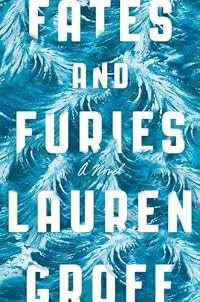
There's also an extraneous narrator, Toby's college friend Libby, and another college friend Seth, who seems to be around just to show everyone what a mess unmarried people are too. Both should have been eliminated by a good editor. Libby's view of her own marriage and career may have been meant to provide the woman's rebuttal to Toby's thoughts, but it just doesn't work here, like it did so brilliantly in Lauren Groff's Fates and Furies.
In almost every page, there's the opportunity for the reader to scream LEAVE MANHATTAN NOW AND SAVE YOURSELVES. What makes it all bearable is the hilariously snarky jabs at all aspects of the lives of almost all the characters. It's also got plot swerves and dead ends that leave the reader in agonized suspense. I’m glad I read it, just for the experience, but you probably won’t want to, so I’m sharing the best lines.
Quotes: “I was so far apart from my life in New York that it was like I’d been sent to another planet to breed and colonize.”
“You can only desire something you don’t have.”
“He’s linear and infers rules from onetime behaviors, which drives me crazy.”
“She was golden and tan, like an Oscar with hair.”
“The men hadn’t had any external troubles. They were born knowing they belonged, and they were reassured at every turn just in case they’d forgotten.” show less
Toby's astonishment at the lush pickings of available horny, self-obsessed women in his dating apps gets very wearying. His sole positive trait is show more his love for his kids, the spoiled and despicable 11 year old Hannah, running the private school mean girl marathon to an extent that must be unheard of outside of NYC or LA; and little Solly, who’s chunky, smart, and lonely. Rachel herself is completely crippled by lack of love from her hypercritical grandmother, who reluctantly raised her from age three with no kindness, interest, or love. And just her luck: a horrible c-section by a brutal on-call ob-gyn causes lack of attachment to the children.
There's also an extraneous narrator, Toby's college friend Libby, and another college friend Seth, who seems to be around just to show everyone what a mess unmarried people are too. Both should have been eliminated by a good editor. Libby's view of her own marriage and career may have been meant to provide the woman's rebuttal to Toby's thoughts, but it just doesn't work here, like it did so brilliantly in Lauren Groff's Fates and Furies.
In almost every page, there's the opportunity for the reader to scream LEAVE MANHATTAN NOW AND SAVE YOURSELVES. What makes it all bearable is the hilariously snarky jabs at all aspects of the lives of almost all the characters. It's also got plot swerves and dead ends that leave the reader in agonized suspense. I’m glad I read it, just for the experience, but you probably won’t want to, so I’m sharing the best lines.
Quotes: “I was so far apart from my life in New York that it was like I’d been sent to another planet to breed and colonize.”
“You can only desire something you don’t have.”
“He’s linear and infers rules from onetime behaviors, which drives me crazy.”
“She was golden and tan, like an Oscar with hair.”
“The men hadn’t had any external troubles. They were born knowing they belonged, and they were reassured at every turn just in case they’d forgotten.” show less
Toby Fleishman is in trouble. He and his wife, Rachel, are in the middle of a divorce and while on-line hook-up apps have provided him with plenty to distract him, he's left with caring for two kids who aren't doing well with the divorce when his wife drops them off at his new apartment and disappears. He's also the financially disadvantaged spouse, being only a well-established specialist at a prestigious hospital which, in the wealthy enclaves of Manhattan, makes him contemptuously low-income. This is the challenge that debut author Taffy Brodesser-Akner has set for herself; how do you write a scathing send-up of an Upper East Side family in which the reader is invited to feel sorry for the handsome doctor who is getting laid show more regularly, but who has to make do with a bare third of a million a year to live on? There's only so much sympathy that can be pulled from Toby's below-average height and chronic insecurity.
For the most part, though, Brodesser-Akner pulls it off. The writing is smooth and having the narrator be an old friend of Toby's, who is now a New Jersey housewife, does ground the story somewhat. The final chapters of the novel are also far more nuanced and better written than the first three quarters, making me wish that the author had included the portions telling Rachel's story throughout the novel. One's enjoyment of this novel will depend entirely on one's tolerance for reading about the troubles of people living wealthy lives in Manhattan, but this does look like the literary vacation novel of the summer. It's an impressive debut that reads like the work of a seasoned author. show less
For the most part, though, Brodesser-Akner pulls it off. The writing is smooth and having the narrator be an old friend of Toby's, who is now a New Jersey housewife, does ground the story somewhat. The final chapters of the novel are also far more nuanced and better written than the first three quarters, making me wish that the author had included the portions telling Rachel's story throughout the novel. One's enjoyment of this novel will depend entirely on one's tolerance for reading about the troubles of people living wealthy lives in Manhattan, but this does look like the literary vacation novel of the summer. It's an impressive debut that reads like the work of a seasoned author. show less
Author Taffy (did her parents really name her Taffy?) Brodesser-Akner has a very salty tongue, which probably suggests to me that if we became friends, the friendship wouldn’t last very long.
But her humorous novel, “Fleishman is in Trouble” I must admit made me laugh out loud. There are just too many things in the marriage of Toby and Rachel that I can relate to.
What really touched me — and I hope I’m not spoiling this — are the very real differences in how the partners see each other, how they interpret their marriage, and what they hope for themselves.
Although there are many allusions to #MeToo I don’t consider this a MeToo book but a philosophical meditation on the means of society to shape our expectations of life.I show more tend to view such stories as a chapter in the war between complexity (life giving) and entropy (life destroying), what older writers might have seen as the struggle between good and evil, but which I don’t believe in anymore.
Rachel is a busy bee trying very hard not to let the forces of entropy swallow her whole, as in her upbringing by a grandmother who showed her no affection. She envied the family Toby grew up in which, while smothering, at least gave focus to one’s affections.
Fleishman may be in trouble, but its Rachel’s suffering that gives shape to this story.
And Brodesser-Acker’s skillful shifting of the narration makes the story consuming. show less
But her humorous novel, “Fleishman is in Trouble” I must admit made me laugh out loud. There are just too many things in the marriage of Toby and Rachel that I can relate to.
What really touched me — and I hope I’m not spoiling this — are the very real differences in how the partners see each other, how they interpret their marriage, and what they hope for themselves.
Although there are many allusions to #MeToo I don’t consider this a MeToo book but a philosophical meditation on the means of society to shape our expectations of life.I show more tend to view such stories as a chapter in the war between complexity (life giving) and entropy (life destroying), what older writers might have seen as the struggle between good and evil, but which I don’t believe in anymore.
Rachel is a busy bee trying very hard not to let the forces of entropy swallow her whole, as in her upbringing by a grandmother who showed her no affection. She envied the family Toby grew up in which, while smothering, at least gave focus to one’s affections.
Fleishman may be in trouble, but its Rachel’s suffering that gives shape to this story.
And Brodesser-Acker’s skillful shifting of the narration makes the story consuming. show less
4 / 5
i’m giving this what is, in my eyes, a generous score. i’m doing this for 2 reasons: 1. the writing is fabulous and engaging and wonderfully modern, and 2. i love an unreliable / intrusive narrator.
the narrator, libby, is extremely mystifying. it’s unclear whether this book’s biting, acerbic, and shrewd tone is toby’s or libby’s - we only see toby’s world through libby’s voice - and it is difficult to delineate between libby’s personal opinions about what toby is feeling and what he is actually feeling.
toby and libby aren’t good friends - they might talk a lot and share their emotional worlds with each other (really, toby just talks about himself and libby represses her own emotional world), they’re still not show more actually close. they kind of hate each other. at the very least, libby has some kind of obsession with toby. the thing is, they’re OLD friends. and this is what connects them so strongly.
in this novel about the dissolution of a marriage, we basically ONLY hear toby’s perspective. in fact, we never really hear the perspective that would matter the most to me: rachel’s. why did she leave? how did the end of her marriage impact her? what demons is she fighting that toby refuses to acknowledge? i want to understand from HER side of things. then i think: having libby (a woman who is unhappy in her own marriage) narrate this tale of the aggrieved husband is definitely intentional. i’m really interested in the way that seth and toby treat libby - they treat her as “hysterical” or “crazy” or “difficult,” which are all typical signifiers of a dismissed and ignored wife. they absolutely shit on libby, and we don’t really get enough of libby to understand why (at least, not until about halfway through).
i had a lot of trouble liking this book, but for reasons which i now believe are intentional. it’s heavily male-dominated - libby says something to the effect of “the only way to listen to a woman’s story is to hear it through a man’s” and this is like, the whole entire fulcrum of the book. Brodesser-Akner purposefully obscures rachel’s experiences to make a point about the way we prioritize the stories of fathers / men / husbands over those of wives, mothers, and women.
i just - I DIDN’T PERSONALLY LIKE IT. without a doubt, it’s well-written. but it’s boring sometimes, too, especially if you (like me) hate toby. the shift between perspectives happens slowly… arguably too slowly. you don’t see the other side of things until you’re almost done with the book, and by then, who cares? i can’t critique this book’s craft or prose, as they’re unimpeachable and nigh-genius, but i can very well say: i didn’t like this book one bit! maybe it’s that i lack a personal connection to it. i’ve never been married, i’ve never been divorced, i have no experience with divorce in my family, and i spend exactly 0% of my time around kids.
this novel is definitely doing something. i KNOW it’s trying (and maybe succeeding) to say something about the drowned out tales of wives - i know it’s saying something about child care and domestic labor but GEEz. i honestly didn’t enjoy the experience of reading this enough to glean those lessons from it. i genuinely didn’t look forward to picking this up. if i’m being honest, i flew through the last 20% because i was so bored and done with it. but this isn’t to say that this book isn’t great - it’s clearly great. it’s clearly impressive. it’s maybe feminist. and if it’s not feminist, it’s PURPOSEFULLY not feminist. but holy hell. i haven’t been this excited to not have to return to a book in years.
four stars, because Brodesser-Akner did a fabulous job with the prose. but if you’re asking me … that’s a generous rating. show less
i’m giving this what is, in my eyes, a generous score. i’m doing this for 2 reasons: 1. the writing is fabulous and engaging and wonderfully modern, and 2. i love an unreliable / intrusive narrator.
the narrator, libby, is extremely mystifying. it’s unclear whether this book’s biting, acerbic, and shrewd tone is toby’s or libby’s - we only see toby’s world through libby’s voice - and it is difficult to delineate between libby’s personal opinions about what toby is feeling and what he is actually feeling.
toby and libby aren’t good friends - they might talk a lot and share their emotional worlds with each other (really, toby just talks about himself and libby represses her own emotional world), they’re still not show more actually close. they kind of hate each other. at the very least, libby has some kind of obsession with toby. the thing is, they’re OLD friends. and this is what connects them so strongly.
in this novel about the dissolution of a marriage, we basically ONLY hear toby’s perspective. in fact, we never really hear the perspective that would matter the most to me: rachel’s. why did she leave? how did the end of her marriage impact her? what demons is she fighting that toby refuses to acknowledge? i want to understand from HER side of things. then i think: having libby (a woman who is unhappy in her own marriage) narrate this tale of the aggrieved husband is definitely intentional. i’m really interested in the way that seth and toby treat libby - they treat her as “hysterical” or “crazy” or “difficult,” which are all typical signifiers of a dismissed and ignored wife. they absolutely shit on libby, and we don’t really get enough of libby to understand why (at least, not until about halfway through).
i had a lot of trouble liking this book, but for reasons which i now believe are intentional. it’s heavily male-dominated - libby says something to the effect of “the only way to listen to a woman’s story is to hear it through a man’s” and this is like, the whole entire fulcrum of the book. Brodesser-Akner purposefully obscures rachel’s experiences to make a point about the way we prioritize the stories of fathers / men / husbands over those of wives, mothers, and women.
i just - I DIDN’T PERSONALLY LIKE IT. without a doubt, it’s well-written. but it’s boring sometimes, too, especially if you (like me) hate toby. the shift between perspectives happens slowly… arguably too slowly. you don’t see the other side of things until you’re almost done with the book, and by then, who cares? i can’t critique this book’s craft or prose, as they’re unimpeachable and nigh-genius, but i can very well say: i didn’t like this book one bit! maybe it’s that i lack a personal connection to it. i’ve never been married, i’ve never been divorced, i have no experience with divorce in my family, and i spend exactly 0% of my time around kids.
this novel is definitely doing something. i KNOW it’s trying (and maybe succeeding) to say something about the drowned out tales of wives - i know it’s saying something about child care and domestic labor but GEEz. i honestly didn’t enjoy the experience of reading this enough to glean those lessons from it. i genuinely didn’t look forward to picking this up. if i’m being honest, i flew through the last 20% because i was so bored and done with it. but this isn’t to say that this book isn’t great - it’s clearly great. it’s clearly impressive. it’s maybe feminist. and if it’s not feminist, it’s PURPOSEFULLY not feminist. but holy hell. i haven’t been this excited to not have to return to a book in years.
four stars, because Brodesser-Akner did a fabulous job with the prose. but if you’re asking me … that’s a generous rating. show less
Members
- Recently Added By
Published Reviews
ThingScore 25
Many of its 373-pages seemed like padding, much of which consists of… sex.
Or sexting.
Or thinking about sex.
Or thinking about sexting.
Or sexting.
Or thinking about sex.
Or thinking about sexting.
added by MarthaJeanne
Lists

2020 Tournament of Books
18 works; 18 members

2020 Women's Prize for Fiction Longlist
16 works; 12 members

Top Five Books of 2019
387 works; 107 members

Kirkus Starred Fiction Reviews of Books Published in 2019
411 works; 12 members

Books Read in 2020
4,379 works; 124 members

First Novels
373 works; 16 members

Books Read in 2019
4,052 works; 108 members

Books recommended by Calgary Public Library staff
1,588 works; 4 members
Author Information

3+ Works 2,296 Members
Some Editions
Awards and Honors
Common Knowledge
- Canonical title
- Fleishman Is in Trouble
- Original title
- Fleishman Is In Trouble
- Original publication date
- 2019
- People/Characters
- Toby Fleishman; Rachel Fleishman; Hannah Fleishman; Solly Fleishman; Libby; Seth (show all 7); Sam Rothberg
- Important places
- New York, New York, USA
- Epigraph
- Summon your witnesses.
—Aeschylus - Dedication
- For Claude
- First words
- Toby Fleishman awoke one morning inside the city he'd lived in all his adult life and which was suddenly somehow now crawling with women who wanted him.
- Last words
- (Click to show. Warning: May contain spoilers.)He stood staring with this thought for he didn't know how long until he heard a key in the lock and a hinge creak open and he turned to see Rachel standing in the doorway.
- Blurbers
- Gilbert, Elizabeth; Semple, Maria; Sweeney, Cynthia D'Aprix; Perrotta, Tom; Straub, Emma; Nicholls, David (show all 16); Alderton, Dolly; Keyes, Marian; Lawson, Nigella; Curtis, Scarlett; Ball, Zoe; Lippman, Laura; Stibbe, Nina; Baddiel, David; Sykes, Pandora; Samadder, Rhik
- Original language
- English
Classifications
Statistics
- Members
- 1,712
- Popularity
- 12,911
- Reviews
- 87
- Rating
- (3.54)
- Languages
- Dutch, English, French, Italian
- Media
- Paper, Audiobook, Ebook
- ISBNs
- 19
- ASINs
- 6