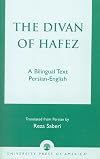
The Divan
by Hafiz
On This Page
Description
Connoisseurs of world literature need to spend some time acquainting themselves with the Divan of Hafiz, one of the foremost collections of Persian verse. Scholars agree this volume has exerted a singularly important influence on Middle Eastern culture, akin to Shakespeare's role in the sphere of Western letters..
Tags
Recommendations










Member Reviews
There are books you read, and there are books that read you. The Divan of Hafez belongs firmly to the second category.
Written in 14th-century Shiraz, these ghazals move effortlessly between earthly love and metaphysical longing. Wine, taverns, roses, nightingales, the beloved’s curl—Hafez uses familiar images only to subvert them. What appears sensual becomes spiritual; what sounds devotional may conceal satire. His language is layered, ironic, and deliberately elusive. Each poem feels like a polished mirror reflecting different meanings depending on the reader’s state of mind.
What distinguishes Hafez from many mystical poets is his fearless ambiguity. He resists rigid piety and challenges hypocrisy, often cloaking sharp social show more critique in lyrical beauty. The tension between orthodoxy and ecstasy, restraint and intoxication, form and rebellion gives the Divan its enduring vitality.
The musicality of the ghazal form is central to the experience. Even in translation, one senses the rhythm and internal rhyme that made these poems unforgettable in Persian. In the original language, the effect is even more profound: the verses feel incanted rather than written.
This is not a book to rush. It rewards slow reading—one or two ghazals at a time—allowing their paradoxes to unfold. The Divan does not offer systematic theology or linear narrative. Instead, it offers flashes of insight: moments where irony dissolves into clarity.
For readers interested in Persian literature, Sufi symbolism, or poetry that walks the line between devotion and defiance, the Divan of Hafez is indispensable. It is not merely a collection of poems; it is a living conversation across centuries. show less
Written in 14th-century Shiraz, these ghazals move effortlessly between earthly love and metaphysical longing. Wine, taverns, roses, nightingales, the beloved’s curl—Hafez uses familiar images only to subvert them. What appears sensual becomes spiritual; what sounds devotional may conceal satire. His language is layered, ironic, and deliberately elusive. Each poem feels like a polished mirror reflecting different meanings depending on the reader’s state of mind.
What distinguishes Hafez from many mystical poets is his fearless ambiguity. He resists rigid piety and challenges hypocrisy, often cloaking sharp social show more critique in lyrical beauty. The tension between orthodoxy and ecstasy, restraint and intoxication, form and rebellion gives the Divan its enduring vitality.
The musicality of the ghazal form is central to the experience. Even in translation, one senses the rhythm and internal rhyme that made these poems unforgettable in Persian. In the original language, the effect is even more profound: the verses feel incanted rather than written.
This is not a book to rush. It rewards slow reading—one or two ghazals at a time—allowing their paradoxes to unfold. The Divan does not offer systematic theology or linear narrative. Instead, it offers flashes of insight: moments where irony dissolves into clarity.
For readers interested in Persian literature, Sufi symbolism, or poetry that walks the line between devotion and defiance, the Divan of Hafez is indispensable. It is not merely a collection of poems; it is a living conversation across centuries. show less
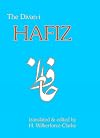
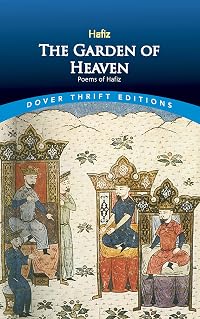
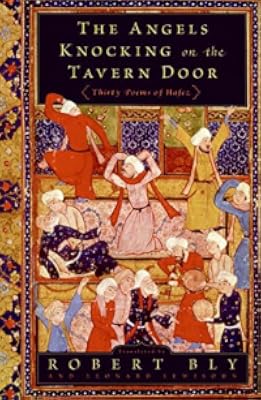
An exquisite example of illuminated calligraphy illustrations place this work on a higher visual level than most translations of Hafez. Forty-three poems are in English and the remainder of the book is in Persian.
Ratings
Members
- Recently Added By
Lists

Philip Ward's Lifetime Reading Plan
592 works; 22 members

readingList
38 works; 1 member
Author Information

118+ Works 3,295 Members
Some Editions
Awards and Honors
Notable Lists
Common Knowledge
- Canonical title
- The Divan
- Original publication date
- 1897 (English collection) (English collection)
Classifications
- Genres
- Poetry, Fiction and Literature
- DDC/MDS
- 891.5511 — Literature & rhetoric Literatures of other languages East Indo-European and Celtic literatures Iranian literatures Modern Persian / Farsi literature (8th century CE to present) Persian poetry ca. 1000–1389
- LCC
- PK6465 .Z32 .C5 — Language and Literature Indo-Iranian languages and literatures Indo-Iranian philology and literature Iranian philology and literature New Persian Literature Individual authors or works H. a_fiz.
- BISAC
Statistics
- Members
- 157
- Popularity
- 208,714
- Reviews
- 2
- Rating
- (4.10)
- Languages
- 6 — English, French, German, Old Persian, Farsi/Persian, Urdu
- Media
- Paper, Ebook
- ISBNs
- 26
- ASINs
- 6