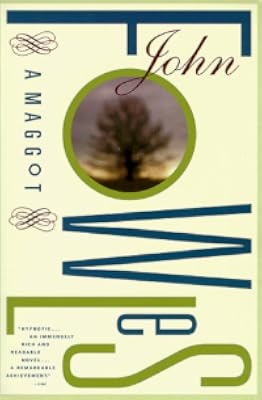
A Maggot
by John Fowles
On This Page
Description
A novel of the eighteenth century in which mysterious events surround a journey undertaken by five unrelated but interconnected individuals.Tags
Recommendations




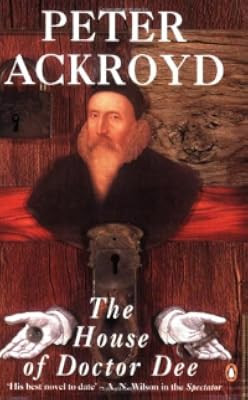
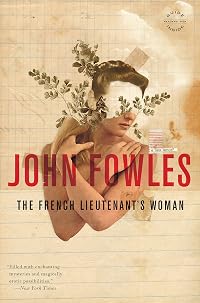
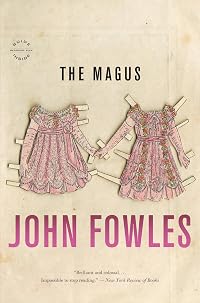
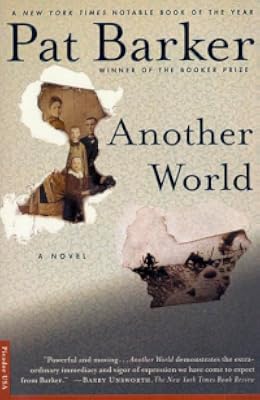





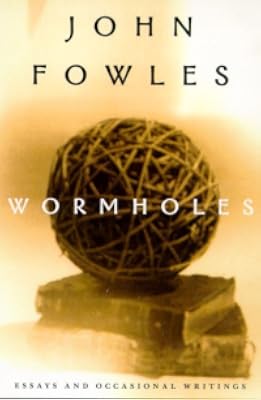
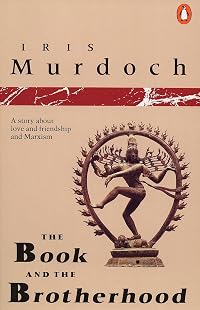


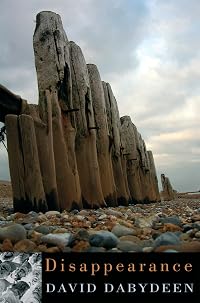


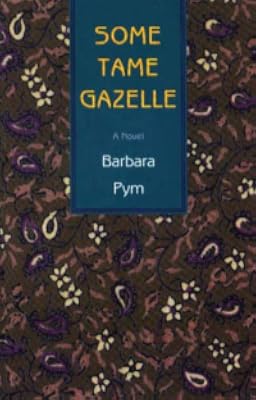


Member Recommendations

Member Reviews
The score so far -
Win Loss Tie
1 1 1
That’s how it’s been between John Fowles and me. French Lieutenant’s Woman - win. The Magus - loss. A Maggot - tie.
It begins with a straightforward narrative about a group of travelers who arrive at a rural inn and have lots of cryptic conversations and a mysterious rendezvous. Books are burned, servants are suspicious, confidences are exchanged and strange sex is had. It’s very intriguing in the story itself, but also the way it’s told and Fowles’s execution. If you don’t know anything about Fowles I’ll tell you this, he incorporates authorial asides and speaks directly to you as reader. He provides historical context or a view or opinion of the events of the past from the present. I show more enjoy that about his work and was glad he used the technique here, too. Some dislike these intrusions, but I think they feel as though you’re receiving an educational lecture of sorts. That in addition to the story, you get a historical frame and comparison to modern times. Here’s an example -
Rebecca gets to her room at an inn and needs to use the chamberpot so she lifts skirts and -
“She did not have to remove any other garment for the very simple reason that no Englishwoman, of any class, had ever worn anything beneath her petticoats up to this date, nor was to do so for at least another sixty years. One might write an essay on this incomprehensible and little-known fact about their under-clothing, or lack of it. French and Italian women had long remedied the deficiency, and English men also; but not English women. All those graciously elegant and imposing upper-class ladies in their fashionable or court dresses, whose image has been so variously left us by the eighteenth-century painters, are - to put it brutally - knickerless. And what is more, when the breach was finally made - or rather, covered - and the first female drawers, and soon after pantalettes, appeared at the beginning of the nineteenth century, they were considered grossly immodest, an unwarranted provocation upon a man, which is no doubt why they so swiftly became de rigueur.”
OMG! What was that all about? It’s probably the most blatant (and hilariously puzzling), example, but there are others. I don’t know the whims and wherefores of why Fowles included them, but they are different. Offhand I can’t think of another writer who does it.
So we’ve got an essential mystery of exactly what Lord B is up to and what this whole charade is for. Just when we’re getting somewhere and secrets are being revealed, that narrative ends abruptly and we move to the bulk of the novel which is made up of transcripts of a deposition. It seems the leader of the traveling group is a nobleman's son and His Grace wants to know what happened to him. He gets a lawyer (who is a colossal jerk) to track down the remaining travelers and get the truth out of them.
The thing is, their truths conflict and stretch the bounds of believability; for characters and readers alike. What starts out as an intriguing mystery soon turns into a treatise on how expectations shape perception and how social position dictates expectation. Each of our witnesses has a particular world-view that dictates how something fantastical and obscure is interpreted.
It takes an imaginative and conscientious author to wring personality from straight Q & A and Fowles does it. Each of the people giving testimony is distinct and I especially liked the pretentious cleric, Beckford. He brought some needed humor to the book. At first, so did Ayscough, but pretty soon his ugliness wore through politeness and he got to be pretty loathsome. Especially in the way he kept insulting Rebecca and holding her in contempt for being a whore, but in the next breath asking her for every salacious detail about her sexual encounters. I was glad she stood up to him so perfectly. In the end he was so disgusted at what he could not understand that he basically was happy to be old, so he could not be associated with the feckless young. Vicious hypocrite. And not a terribly effective direct examiner either; always leading the witness.
In the end I was baffled. The story Rebecca gives (started by Jones, but he only knew part of it and her attempts to throw him off the scent) is starkly unbelievable unless you invoke some kind of time travel or aliens (are you from the future?). Flying machines and cars, scythes and robes, none of it meshes into anything believable, but Rebecca is convinced of it. And there are people who are dead and missing, so something significant happened, but it doesn’t really matter since it was only a vehicle for the very end of the story. Here he lost me again in the sense that I can’t understand why the upshot of what he wanted to illustrate with the story was so quickly done with. That is to detail circumstances leading up to the birth of a religious innovator. A person so conditioned by her mother’s inexplicable experience and her Quaker roots. The combination begat the Shakers. I know, right? What? All that smoke and mirrors for some religious whackjobbery? Yep, apparently so.
The writing is fine though, assuming you can cope with the archaic language and spelling (and the weird newspaper reproductions, which I assume were also fictitious, but that I couldn't make heads or tails of and couldn’t find connections to the main story; weird). The fact that he used archaic language seemed at odds with the way he breaks the fourth wall and expounds on details and background and I was irritated that he used the antiquated convention of making certain people and places anonymous. Like Lord B________ or in the town of C_________. The anonymity seemed unnecessary since this tale was basically one long legal deposition, but now I’m thinking about it, the archaic speech would be appropriate. Anyway, I can’t really say anymore without either confusing myself more, misinterpreting things or giving away the plot. If you’re in the mood for a real brain twister, this is the book for you.
“Come nephew. Enough being the cynosure of nowhere.” show less
Win Loss Tie
1 1 1
That’s how it’s been between John Fowles and me. French Lieutenant’s Woman - win. The Magus - loss. A Maggot - tie.
It begins with a straightforward narrative about a group of travelers who arrive at a rural inn and have lots of cryptic conversations and a mysterious rendezvous. Books are burned, servants are suspicious, confidences are exchanged and strange sex is had. It’s very intriguing in the story itself, but also the way it’s told and Fowles’s execution. If you don’t know anything about Fowles I’ll tell you this, he incorporates authorial asides and speaks directly to you as reader. He provides historical context or a view or opinion of the events of the past from the present. I show more enjoy that about his work and was glad he used the technique here, too. Some dislike these intrusions, but I think they feel as though you’re receiving an educational lecture of sorts. That in addition to the story, you get a historical frame and comparison to modern times. Here’s an example -
Rebecca gets to her room at an inn and needs to use the chamberpot so she lifts skirts and -
“She did not have to remove any other garment for the very simple reason that no Englishwoman, of any class, had ever worn anything beneath her petticoats up to this date, nor was to do so for at least another sixty years. One might write an essay on this incomprehensible and little-known fact about their under-clothing, or lack of it. French and Italian women had long remedied the deficiency, and English men also; but not English women. All those graciously elegant and imposing upper-class ladies in their fashionable or court dresses, whose image has been so variously left us by the eighteenth-century painters, are - to put it brutally - knickerless. And what is more, when the breach was finally made - or rather, covered - and the first female drawers, and soon after pantalettes, appeared at the beginning of the nineteenth century, they were considered grossly immodest, an unwarranted provocation upon a man, which is no doubt why they so swiftly became de rigueur.”
OMG! What was that all about? It’s probably the most blatant (and hilariously puzzling), example, but there are others. I don’t know the whims and wherefores of why Fowles included them, but they are different. Offhand I can’t think of another writer who does it.
So we’ve got an essential mystery of exactly what Lord B is up to and what this whole charade is for. Just when we’re getting somewhere and secrets are being revealed, that narrative ends abruptly and we move to the bulk of the novel which is made up of transcripts of a deposition. It seems the leader of the traveling group is a nobleman's son and His Grace wants to know what happened to him. He gets a lawyer (who is a colossal jerk) to track down the remaining travelers and get the truth out of them.
The thing is, their truths conflict and stretch the bounds of believability; for characters and readers alike. What starts out as an intriguing mystery soon turns into a treatise on how expectations shape perception and how social position dictates expectation. Each of our witnesses has a particular world-view that dictates how something fantastical and obscure is interpreted.
It takes an imaginative and conscientious author to wring personality from straight Q & A and Fowles does it. Each of the people giving testimony is distinct and I especially liked the pretentious cleric, Beckford. He brought some needed humor to the book. At first, so did Ayscough, but pretty soon his ugliness wore through politeness and he got to be pretty loathsome. Especially in the way he kept insulting Rebecca and holding her in contempt for being a whore, but in the next breath asking her for every salacious detail about her sexual encounters. I was glad she stood up to him so perfectly. In the end he was so disgusted at what he could not understand that he basically was happy to be old, so he could not be associated with the feckless young. Vicious hypocrite. And not a terribly effective direct examiner either; always leading the witness.
In the end I was baffled. The story Rebecca gives (started by Jones, but he only knew part of it and her attempts to throw him off the scent) is starkly unbelievable unless you invoke some kind of time travel or aliens (are you from the future?). Flying machines and cars, scythes and robes, none of it meshes into anything believable, but Rebecca is convinced of it. And there are people who are dead and missing, so something significant happened, but it doesn’t really matter since it was only a vehicle for the very end of the story. Here he lost me again in the sense that I can’t understand why the upshot of what he wanted to illustrate with the story was so quickly done with. That is to detail circumstances leading up to the birth of a religious innovator. A person so conditioned by her mother’s inexplicable experience and her Quaker roots. The combination begat the Shakers. I know, right? What? All that smoke and mirrors for some religious whackjobbery? Yep, apparently so.
The writing is fine though, assuming you can cope with the archaic language and spelling (and the weird newspaper reproductions, which I assume were also fictitious, but that I couldn't make heads or tails of and couldn’t find connections to the main story; weird). The fact that he used archaic language seemed at odds with the way he breaks the fourth wall and expounds on details and background and I was irritated that he used the antiquated convention of making certain people and places anonymous. Like Lord B________ or in the town of C_________. The anonymity seemed unnecessary since this tale was basically one long legal deposition, but now I’m thinking about it, the archaic speech would be appropriate. Anyway, I can’t really say anymore without either confusing myself more, misinterpreting things or giving away the plot. If you’re in the mood for a real brain twister, this is the book for you.
“Come nephew. Enough being the cynosure of nowhere.” show less
The year was 1736. Five people rode westward from London, led by one who appeared to be a gentleman. This person had recruited three of the other four to travel with him. His pretext for the trip was that he was going to meet up with his beloved and elope with her against both families’ wishes. They would then take a ship to Europe, travel, and return to their families, by which time they would be forgiven.
One of the party he took with him was a lady’s maid to attend to his intended immediately.
There was an actor, whom he had hired to appear to be his uncle, to give yet another story to anyone along the road, saying he feared news of the intended elopement reaching the lady’s house. The actor was asked to hire a likely person to show more deal with any ruffians or obstacles along the route. Accordingly, he found a Welshman, then in London, whom he knew from odd jobs around town. He wasn’t a particularly likeable person, a braggart, but one who knew how to handle weapons.
The final person in the group was the gentleman’s manservant, a deaf mute who had been with him many years.
Only some of the party were who they purported to be. One would be found hanged in the woods: murder or suicide? One would disappear completely, never to be seen again. Was foul play involved there? One would be changed forever. Two basically returned to their previous lives.
The tale is told through a series of depositions taken by one Henry Ayscough. His mission was to determine the true reason for the trip, and to discover the fate of the missing person. Each surviving member of the party was interviewed in turn, as were innkeepers and others along their route who had come in contact with them.
Fowles intersperse the depositions with excerpts from Historical Chronicle, 1736*, a newsletter reporting from around England, and to a lesser extent, Scotland and Wales. These are important to the tale, showing as they do the number of crimes against property, an area of law which was receiving a great deal of attention as property rights became increasingly enshrined in law, at a time when punishment for offences was all too often capital or transport.
The idea of property, and who is and who should be entitled to it, is one which preoccupies both Ayscough and his deponents. Another major theme to emerge is the state of religion in that time of transition. Although educated people no longer believed the Devil walked among the population, some of those Ayscough questioned gave accounts which came close to suggesting this might be the case. Ayscough makes it clear that for him on religious matters, no dissenters, no women, no evangelists wanted.
Fowles says at the beginning of the novel that “maggot” at that time had other meanings than the ones commonly used today. He defines it as a whim or a quirk, saying further that it could also be applied to a light dance tune in the early eighteenth century, for instance, “My Lord Byron’s Maggot”. Both these definitions are apt to the story he wrote. The whim of idea of the travellers had been in his mind for some time, and so he finally came to write about them. However, maggot in the sense of a larval stage is also present in an image reported to Ayscough, and it is around this image that he must tailor his entire report. This image appears toward the end of the novel. It feels somewhat forced, and probably too much attention is paid to it. However, Fowles is able to recover by skilfully showing how the barrister is led to his final conclusion over time through all these depositions, and the struggle it costs him. All in all it’s an interesting microcosm of an era in flux.
____________________
The Gentleman’s Magazine and Historical Chronicle was published once a month, initially by Edward Cave, in London from 1736 - 1833. The excerpts in this book are from 1736, Vol. 6
Cave’s initial magazine ( a term he was the first to use) was titled The Gentleman’s Magazine or Monthly Intelligencer , running from 1731 - 1735
The index for 1731 - 1786 was compiled by one Samuel Ayscough of the British Museum, so it looks as if Fowles was having some fun with his barrister’s name.
Samuel Johnson was a regular contributor show less
One of the party he took with him was a lady’s maid to attend to his intended immediately.
There was an actor, whom he had hired to appear to be his uncle, to give yet another story to anyone along the road, saying he feared news of the intended elopement reaching the lady’s house. The actor was asked to hire a likely person to show more deal with any ruffians or obstacles along the route. Accordingly, he found a Welshman, then in London, whom he knew from odd jobs around town. He wasn’t a particularly likeable person, a braggart, but one who knew how to handle weapons.
The final person in the group was the gentleman’s manservant, a deaf mute who had been with him many years.
Only some of the party were who they purported to be. One would be found hanged in the woods: murder or suicide? One would disappear completely, never to be seen again. Was foul play involved there? One would be changed forever. Two basically returned to their previous lives.
The tale is told through a series of depositions taken by one Henry Ayscough. His mission was to determine the true reason for the trip, and to discover the fate of the missing person. Each surviving member of the party was interviewed in turn, as were innkeepers and others along their route who had come in contact with them.
Fowles intersperse the depositions with excerpts from Historical Chronicle, 1736*, a newsletter reporting from around England, and to a lesser extent, Scotland and Wales. These are important to the tale, showing as they do the number of crimes against property, an area of law which was receiving a great deal of attention as property rights became increasingly enshrined in law, at a time when punishment for offences was all too often capital or transport.
The idea of property, and who is and who should be entitled to it, is one which preoccupies both Ayscough and his deponents. Another major theme to emerge is the state of religion in that time of transition. Although educated people no longer believed the Devil walked among the population, some of those Ayscough questioned gave accounts which came close to suggesting this might be the case. Ayscough makes it clear that for him on religious matters, no dissenters, no women, no evangelists wanted.
Fowles says at the beginning of the novel that “maggot” at that time had other meanings than the ones commonly used today. He defines it as a whim or a quirk, saying further that it could also be applied to a light dance tune in the early eighteenth century, for instance, “My Lord Byron’s Maggot”. Both these definitions are apt to the story he wrote. The whim of idea of the travellers had been in his mind for some time, and so he finally came to write about them. However, maggot in the sense of a larval stage is also present in an image reported to Ayscough, and it is around this image that he must tailor his entire report. This image appears toward the end of the novel. It feels somewhat forced, and probably too much attention is paid to it. However, Fowles is able to recover by skilfully showing how the barrister is led to his final conclusion over time through all these depositions, and the struggle it costs him. All in all it’s an interesting microcosm of an era in flux.
____________________
The Gentleman’s Magazine and Historical Chronicle was published once a month, initially by Edward Cave, in London from 1736 - 1833. The excerpts in this book are from 1736, Vol. 6
Cave’s initial magazine ( a term he was the first to use) was titled The Gentleman’s Magazine or Monthly Intelligencer , running from 1731 - 1735
The index for 1731 - 1786 was compiled by one Samuel Ayscough of the British Museum, so it looks as if Fowles was having some fun with his barrister’s name.
Samuel Johnson was a regular contributor show less
Dazzling. Stunning. The best I've read of him.
On second reading, the novel holds up remarkably well. It seems at first a study in the perpetuation of literary suspense. The book jumps between third-person narration; a kind of mock-legal deposition which permits multiple narrative voices; essayistic asides, and epistolary elements. The third-person voice often refers to the gap between events at the time of the story--the 1730s--and our present day. For example: "Closer,...groups of children noisily played lamp-loo and tutball, those primitive forms of tag and baseball. Modern lovers of the second game would have been shocked to see that here it was preponderantly played by girls (and perhaps to know that its traditional prize, for the show more most skilled, was not the million-dollar contract, but a mere tansy pudding.)" The novel begins with a tableau of five individuals, four of them male, of varying ages, who make a journey to the west of England on horseback. There is an uncle, his nephew, and three servants, one female. We come across them as they travel a muddy road to a bleak village. It is there at the musty inn, and later in a nearby cave, that much of the action occurs; action that will later be dissected by way of a series of legal depositions run by the dwarfish (and hateful) London lawyer, Henry Ayscough. We learn a few things during the interrogations: that nephew and uncle are in fact unrelated; that the nephew is the true leader of the excursion; that the uncle is an actor by profession; that the maid is a prostitute; that one of the servants is deaf and dumb; and so forth. Only the nephew who is not a nephew knows the true purpose of the trip, which for most of the book remains a mystery. We also know that the nephew believes he has hit on a mathematical device or formula that once fully developed will allow him to foretell the future. That is to say, he's crazy as a loon. Still, what can it mean? Why the trip? Why the subsequent investigation? And where has everyone gone? Slowly, one by one, at the behest of the nephew's aristocratic father, the lawyer tracks down all of the participants save one. And in a question and answer format that allows no room for description, or authorial commentary, he painstakingly gets a story. But is it the story? That's a very good question, and in large part the novel's point, questioning narrative constructs as it does. It is the prostitute's deposition that for this reader was the most engrossing. For since her excursion to the cave she has given up whoring and has returned to the Quaker community of her parents in Manchester, fully forgiven. What she undergoes she interprets, perhaps the only way she knows how, as an ecstatic Christian experience. She has been vouchsafed a vision of heaven and hell. Christianity is the only tool she has for interpreting such a fantastic experience. And there's no doubt that she thinks her story genuine. Lawyer Ayscough can not shake her from it. Nor can he believe it. And in the end is shaken himself. Like her, he is limited, by virtue of his place in time, to viewing it as nothing more than religious hysteria. The 21st century reader, however, sees what has happened in the cave as something quite different. I'll stop there. Like Fowles' FRENCH LIEUTENANT'S WOMAN, the narrative toys with metafictional devices, but never to the point where they distract. Oh, yes, you'll have to read this one. show less
On second reading, the novel holds up remarkably well. It seems at first a study in the perpetuation of literary suspense. The book jumps between third-person narration; a kind of mock-legal deposition which permits multiple narrative voices; essayistic asides, and epistolary elements. The third-person voice often refers to the gap between events at the time of the story--the 1730s--and our present day. For example: "Closer,...groups of children noisily played lamp-loo and tutball, those primitive forms of tag and baseball. Modern lovers of the second game would have been shocked to see that here it was preponderantly played by girls (and perhaps to know that its traditional prize, for the show more most skilled, was not the million-dollar contract, but a mere tansy pudding.)" The novel begins with a tableau of five individuals, four of them male, of varying ages, who make a journey to the west of England on horseback. There is an uncle, his nephew, and three servants, one female. We come across them as they travel a muddy road to a bleak village. It is there at the musty inn, and later in a nearby cave, that much of the action occurs; action that will later be dissected by way of a series of legal depositions run by the dwarfish (and hateful) London lawyer, Henry Ayscough. We learn a few things during the interrogations: that nephew and uncle are in fact unrelated; that the nephew is the true leader of the excursion; that the uncle is an actor by profession; that the maid is a prostitute; that one of the servants is deaf and dumb; and so forth. Only the nephew who is not a nephew knows the true purpose of the trip, which for most of the book remains a mystery. We also know that the nephew believes he has hit on a mathematical device or formula that once fully developed will allow him to foretell the future. That is to say, he's crazy as a loon. Still, what can it mean? Why the trip? Why the subsequent investigation? And where has everyone gone? Slowly, one by one, at the behest of the nephew's aristocratic father, the lawyer tracks down all of the participants save one. And in a question and answer format that allows no room for description, or authorial commentary, he painstakingly gets a story. But is it the story? That's a very good question, and in large part the novel's point, questioning narrative constructs as it does. It is the prostitute's deposition that for this reader was the most engrossing. For since her excursion to the cave she has given up whoring and has returned to the Quaker community of her parents in Manchester, fully forgiven. What she undergoes she interprets, perhaps the only way she knows how, as an ecstatic Christian experience. She has been vouchsafed a vision of heaven and hell. Christianity is the only tool she has for interpreting such a fantastic experience. And there's no doubt that she thinks her story genuine. Lawyer Ayscough can not shake her from it. Nor can he believe it. And in the end is shaken himself. Like her, he is limited, by virtue of his place in time, to viewing it as nothing more than religious hysteria. The 21st century reader, however, sees what has happened in the cave as something quite different. I'll stop there. Like Fowles' FRENCH LIEUTENANT'S WOMAN, the narrative toys with metafictional devices, but never to the point where they distract. Oh, yes, you'll have to read this one. show less
Historical novels, burdened by yards of fustian, are so often less than satisfying. John Fowles's A Maggot is an exception. Rather than piling on detail after detail in an attempt to impress us with the research he has done, Fowles offers only items that actually illuminate the period about which he is writing, the 1730s. His plot, told largely in testimonies by various characters to a lawyer commissioned to investigate the disappearance of a young lord, moves right along, but it is the voices that compel us to keep turning the pages. And the most beguiling voice of all is that of the author who, in the fashion of novelists working in the years of which he is writing, is not hesitant to intrude, and his intrusions, with a bit of show more fiddling, would often work fine as stand-alone historical essays. Those who treasure the works of Daniel Defoe, and find the idea of a novel in the manner of that master intriguing, will find a lot of pleasure here. show less
_A Maggot_ is an interesting novel. It can be approached as an historical mystery, a meta-fictional experiment of mixed narrative form and genre, and a meditation on the injustices inherent in the 18th century social, political and religious mindset. The story proper details a mysterious journey undertaken by five individuals across the English landscape whose destination and purpose is unknown. In addition to this each of the individuals is not what they appear, and may not even be what they themselves think they are. This ‘simple’ mystery plot form is expressed with a variety of narrative techniques: a somewhat distant 3rd person with occasional authorial asides taking place “now” interspersing longer passages of first person show more question-and-answer that are occurring in the “then” of 18th century England. As the story progresses the reader begins to see that even the genre boundaries of mystery and historical fiction are being crossed and significant possible elements of science fiction begin to creep into the tale.
Accepting this novel at face value as a historical mystery would be a mistake, especially since it seems to be a mystery whose whole purpose is not to be unravelled. Rather the mystery ‘plot’ is the vehicle which allows Fowles to show how each character’s own conception of this mystery of which they are a part, and its possible solutions, is determined by their own social standing and personal background, by the hidebound preconceptions they each bring to their experience of the world. These disparate characters allow Fowles to put on display a particular aspect of human society that he perceives as having been distinctly strong in 18th century society due to its make-up, but that still exists today: that we are determined by our perceptions and expectations. The question and answer segments are particularly useful in this regard for making explicit how differently each character interprets the same events; how they look to the expected, the known, or the conventional, in order to explain something that is beyond their experience. Even the visionary falls back onto traditional (to her) paradigms in order to be able to interpret her life-changing experience.
The juxtaposition of perceptions and assumptions of the modern era (as witnessed in the 3rd person intrusions) with those of the 18th century when the novel takes place are well done, and seem central to the novel. These are characters who very much feel like authentic inhabitants of their era. Their modes of speaking and even of thought are truly alien to the modern reader in many ways. As a result Fowles is able to use these differences to indulge in his thematic hobby-horses of free will vs. pre-destination, the fear of change vs. the need to progress, and unthinking acceptance vs. the belief that change can and must be effected. These are ideas that many of us take for granted, but Fowles shows how new and strange many of these concepts were when the novel takes place and they were still in their larval stages. Another major cultural difference between the reader and those whom the book purports to represent is seen in Fowles’ notion that their sense of individuality is not even close to our own (would not even be considered as “individuality” at all by our standards). Fowles goes so far as to draw comparisons between the constraints of people from this era and those of a character in a book, the “plot” of their lives pre-determined according to their role and function in society (certainly if born below a certain social level), and harps on the fact that this was utterly natural to them, something which the vast majority of the people of the day would not even consider an issue worth considering. It is an intriguing idea and allows the more obvious meta aspects of the narrative to gain a further level of depth. Ironically Fowles notes both explicitly and implicitly that that the “birth” of the individual, one of the key elements that broke up the injustices inherent in the 18th century social, political and religious mindset, was as much a blessing as a curse.
All that being said I still found the book to be one I felt more obliged to finish than one that carried me along with the rush of its passage. At times the question and answer sections of the novel seemed to carry on too long and the 3rd person narrative parts could perhaps have been more liberally interspersed into the text than they were. I can accept that not all mysteries have to have a solution, but the utter lack of any real understanding of what happened in that cave in western England, and the impenetrable nature of the young lord’s real purpose and end, is certainly frustrating. In the end I guess I would consider this a highly successful meditation on the birth of modernity and the ways in which we have both learned from, and ignored to our peril, the lessons of the past, but only a moderately successful novel. I think David Mitchell would have written something on the same subject and with the same elements with just as much depth, but that was much more interesting. show less
Accepting this novel at face value as a historical mystery would be a mistake, especially since it seems to be a mystery whose whole purpose is not to be unravelled. Rather the mystery ‘plot’ is the vehicle which allows Fowles to show how each character’s own conception of this mystery of which they are a part, and its possible solutions, is determined by their own social standing and personal background, by the hidebound preconceptions they each bring to their experience of the world. These disparate characters allow Fowles to put on display a particular aspect of human society that he perceives as having been distinctly strong in 18th century society due to its make-up, but that still exists today: that we are determined by our perceptions and expectations. The question and answer segments are particularly useful in this regard for making explicit how differently each character interprets the same events; how they look to the expected, the known, or the conventional, in order to explain something that is beyond their experience. Even the visionary falls back onto traditional (to her) paradigms in order to be able to interpret her life-changing experience.
The juxtaposition of perceptions and assumptions of the modern era (as witnessed in the 3rd person intrusions) with those of the 18th century when the novel takes place are well done, and seem central to the novel. These are characters who very much feel like authentic inhabitants of their era. Their modes of speaking and even of thought are truly alien to the modern reader in many ways. As a result Fowles is able to use these differences to indulge in his thematic hobby-horses of free will vs. pre-destination, the fear of change vs. the need to progress, and unthinking acceptance vs. the belief that change can and must be effected. These are ideas that many of us take for granted, but Fowles shows how new and strange many of these concepts were when the novel takes place and they were still in their larval stages. Another major cultural difference between the reader and those whom the book purports to represent is seen in Fowles’ notion that their sense of individuality is not even close to our own (would not even be considered as “individuality” at all by our standards). Fowles goes so far as to draw comparisons between the constraints of people from this era and those of a character in a book, the “plot” of their lives pre-determined according to their role and function in society (certainly if born below a certain social level), and harps on the fact that this was utterly natural to them, something which the vast majority of the people of the day would not even consider an issue worth considering. It is an intriguing idea and allows the more obvious meta aspects of the narrative to gain a further level of depth. Ironically Fowles notes both explicitly and implicitly that that the “birth” of the individual, one of the key elements that broke up the injustices inherent in the 18th century social, political and religious mindset, was as much a blessing as a curse.
All that being said I still found the book to be one I felt more obliged to finish than one that carried me along with the rush of its passage. At times the question and answer sections of the novel seemed to carry on too long and the 3rd person narrative parts could perhaps have been more liberally interspersed into the text than they were. I can accept that not all mysteries have to have a solution, but the utter lack of any real understanding of what happened in that cave in western England, and the impenetrable nature of the young lord’s real purpose and end, is certainly frustrating. In the end I guess I would consider this a highly successful meditation on the birth of modernity and the ways in which we have both learned from, and ignored to our peril, the lessons of the past, but only a moderately successful novel. I think David Mitchell would have written something on the same subject and with the same elements with just as much depth, but that was much more interesting. show less
A Maggot. How should I put this? I am a fan of J. Sheridan LeFanu and Algernon Blackwood. (And Wilkie Collins). If you like these authors, you really should give this book a shot. Try and find the hardback if you can. The paperback (pictured here) is so small that it's really hard to read certain parts. Fowles has somehow (I still haven't quite figured out how) insinuated a UFO abduction scene into this book. UFOs, by the way, *were* seen in various places (including swamps in Massachusetts) at the time this book is set (1736). It's a pretty good read.
The name and the format of the book were off-putting. It presents a story from multiple points of view that don't always agree with each other. This is a book that rewards patience, but doesn't give clear cut answers. So don't start this book if you want a tidy ending. Yes, it's a bit meta, but that doesn't mean it's not enjoyable.
Members
- Recently Added By
Lists

1001 Books You Must Read Before You Die
1,448 works; 1,134 members

Slipstream or Interstitial Fiction
160 works; 19 members

20th Century Literature
1,161 works; 55 members

Books Read in 2014
2,343 works; 89 members

I Can't Finish This Book
189 works; 22 members

Animals in the Title
498 works; 11 members
Author Information

62+ Works 26,172 Members
John Fowles was born in Essex, England, in 1926. He attended the University of Edinburgh for a short time, left to serve in the Royal Marines, and then returned to school at Oxford University, where he received a B.A. in French in 1950. Fowles taught English in France and Greece, as well as at St. Godric's College in London. Although the main show more theme in all Fowles's fiction is freedom, there are few other similarities in his books. He has deliberately chosen to explore a different style or genre for each novel: The Collector, his first novel, is an intellectual thriller; The Magus is an adolescent learning novel, tracing the emotional development of the central character; Daniel Martin tries, in the modernist style, to depict psychological reality; Mantissa is a comedic allegory that takes place entirely inside the narrator's head; Maggot combines mystery, science fiction, and history; and The Ebony Tower is a collection of short stories. Fowles explored yet another genre, historical fiction, with his best-known novel, The French Lieutenant's Woman, which received the W. H. Smith Literary Award in 1970 and was made into a movie, starring Meryl Streep and Jeremy Irons, in 1981. An intriguing feature of this novel is that it has three different endings. Fowles's nonfiction includes Aristos: A Self Portrait in Ideas; Poems; and Wormholes: Essays and Other Occasional Writings. In addition, he has written the text for several books of photographs, including The Tree, for which Fowles received the Christopher Award in 1982. He died on November 5, 2005 at the age of 79. (Bowker Author Biography) show less
Awards and Honors
Awards
Distinctions
Notable Lists
Series
Belongs to Publisher Series
Common Knowledge
- Canonical title*
- Maggot, la ninfa
- Original title
- A Maggot
- Original publication date
- 1985
- First words
- One night I was sitting on the bed in my hotel room on Bunker Hill, down in the very middle of Los Angeles.
In the late and last afternoon of an April long ago, a forlorn little group of travelers cross a remote upland in the far south-west of England. - Last words
- (Click to show. Warning: May contain spoilers.)Vive vi, vive vum, vive vi, vive vum, vive vi, vive vum… è chiaro che non sono parole razionali e che non possono avere alcun significato.
(Click to show. Warning: May contain spoilers.)I mourn not the outward form, but the lost spirit, courage and imagination of Mother Ann Lee's word, her Logos; its almost divine maggot. - Original language
- English
*Some information comes from Common Knowledge in other languages. Click "Edit" for more information.
Classifications
Statistics
- Members
- 1,511
- Popularity
- 15,320
- Reviews
- 19
- Rating
- (3.37)
- Languages
- 16 — Czech, Danish, Dutch, English, Finnish, French, German, Italian, Lithuanian, Norwegian, Polish, Romanian, Russian, Spanish, Swedish, Turkish
- Media
- Paper, Ebook
- ISBNs
- 37
- ASINs
- 15