On This Page
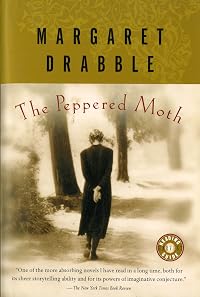
Description
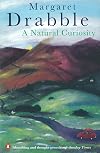
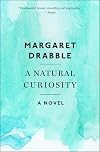
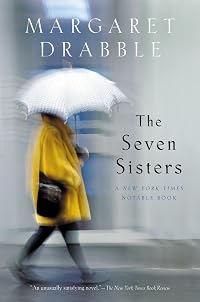
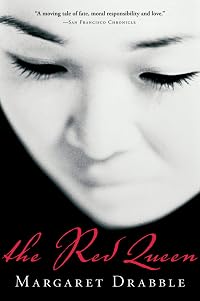
An "engrossing" novel following three women as they confront the darkness and danger of their world, by the author of The Radiant Way ( People ). Sweeping from smart London townhouses to a rundown embassy in the Middle East, from the splendors of the Muse e d'Orsay in Paris to drowsy afternoons in the hills of sunny Italy, this novel tells the intertwined stories of three Cambridge-educated women living in Margaret Thatcher's England. Whether it is a conscientious social worker's quest to show more befriend a convicted killer; an affair with a stranger after a husband's suicide; or an attempt to rescue a friend who's been kidnapped by terrorists, this is a novel rich with dramatic events and deeply intriguing characters who find the courage to persevere through trying times, in the hopes of finding some sort of justice and truth. "[Drabble] invites us to see beyond the filth and horror of modern life to the world of possibilities in our own lives, where we also have the power to write our own endings." - Winnipeg Free Press "The diverse plotlines develop amidst an abundance of social detail about 1980s Britain, providing a rich and fascinating texture. A winner." - Library Journal show lessTags
Recommendations



















Member Reviews
The story of Liz, Alix and Esther continues. Alix has moved north, to the town where Liz was raised. She is interested in understanding the motivations of the serial killer Paul Whitmore, who we met in the first book, and she is visiting him in prison. Liz, a public intellectual, finds herself mired in controversy after some comments she makes on child sexuality. Esther is still living in Italy with her female lover, but is trying to decide whether to break that off, return to England, and possibly marry a man. Liz's sister Shirley, has a prominent role as she takes off on a lark after the death of her husband.
While the novel continues the saga of life in Britain in the 1980's, I did not find it as engaging as the first novel. For one show more thing, there are seemingly dozens of peripheral characters who make briefs appearances, one or two, but really don't seem to serve any purpose other than to pontificate. To me, the book really seemed to lack focus, and even a narrative arc. Drabble seems to experiment a bit with metafiction, as well, which also didn't work for me. She randomly speaks directly to the reader, for example, asking where the book should go? Here's some of that text as she's trying to resolve the Shirley plot:
"What do you think will happen to her? Do you think our end is known in our beginning, that we are predetermined, that we endlessly repeat?"
then,
"(And anyway, what is her age? I must say I have lost track of this a little myself. Is she 48 or 49 now, as I had thought, or 50, as others tell me? And if she is 50, does that make her behaviour more or less implausible?)"
(Note this is not a first person narrative book, or a character saying this--it's the author butting in).
and then,
"Shall she resume her non-existence? Is that what you seriously expect?"
and then,
"What possible future could there be for him and Shirley? I have made him as plausible as I can, I have offered him motivation, but I have to admit that it doesn't seem possible that he and Shirley can continue to go on seeing one another."
Annoying.
The final book in the trilogy, The Gates of Ivory is on my Kindle, and I have read very good things about it. I'll be reading it soon, and I hope it is better than this one was.
2 1/2 stars. show less
While the novel continues the saga of life in Britain in the 1980's, I did not find it as engaging as the first novel. For one show more thing, there are seemingly dozens of peripheral characters who make briefs appearances, one or two, but really don't seem to serve any purpose other than to pontificate. To me, the book really seemed to lack focus, and even a narrative arc. Drabble seems to experiment a bit with metafiction, as well, which also didn't work for me. She randomly speaks directly to the reader, for example, asking where the book should go? Here's some of that text as she's trying to resolve the Shirley plot:
"What do you think will happen to her? Do you think our end is known in our beginning, that we are predetermined, that we endlessly repeat?"
then,
"(And anyway, what is her age? I must say I have lost track of this a little myself. Is she 48 or 49 now, as I had thought, or 50, as others tell me? And if she is 50, does that make her behaviour more or less implausible?)"
(Note this is not a first person narrative book, or a character saying this--it's the author butting in).
and then,
"Shall she resume her non-existence? Is that what you seriously expect?"
and then,
"What possible future could there be for him and Shirley? I have made him as plausible as I can, I have offered him motivation, but I have to admit that it doesn't seem possible that he and Shirley can continue to go on seeing one another."
Annoying.
The final book in the trilogy, The Gates of Ivory is on my Kindle, and I have read very good things about it. I'll be reading it soon, and I hope it is better than this one was.
2 1/2 stars. show less
Unpleasant characters in an unhappy life.
Ratings
Members
- Recently Added By
Author Information

68+ Works 13,814 Members
Margaret Drabble was born on June 5, 1939 in Sheffield, England. She attended The Mount School in York and Newnham College, Cambridge University. After graduation, she joined the Royal Shakespeare Company at Stratford during which time she understudied for Vanessa Redgrave. She is a novelist, critic, and the editor of the fifth edition of The show more Oxford Companion to English Literature. Her works include A Summer Bird Cage; The Millstone, which won the John Llewelyn Rhys Prize in 1966; Jerusalem the Golden, which won James Tait Black Prize in 1967; and The Witch of Exmoor. She also received the E. M. Forster award and was awarded a Society of Authors Travelling Fellowship in the 1960s and the Commander of the Order of the British Empire in 1980. (Bowker Author Biography) show less
Series

Common Knowledge
- Original publication date
- 1989
- First words
- A low pale lemon grey sun hung over the winter moor.
Classifications
Statistics
- Members
- 470
- Popularity
- 65,178
- Reviews
- 2
- Rating
- (3.47)
- Languages
- Dutch, English, German, Swedish
- Media
- Paper, Audiobook, Ebook
- ISBNs
- 20
- ASINs
- 7