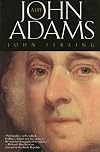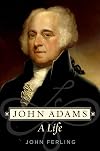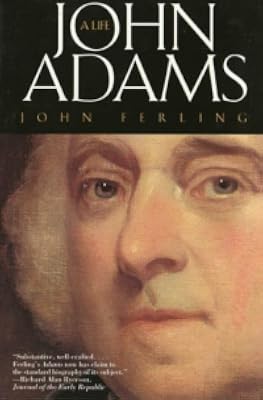
John Adams: A Life
by John Ferling
On This Page
Description
John Ferling has nearly forty years of experience as a historian of early America. The author of acclaimed histories such as A Leap into the Dark and Almost a Miracle, he has appeared on many TV and film documentaries on this pivotal period of our history. In John Adams: A Life, Ferling offers a compelling portrait of one of the giants of the Revolutionary era. Drawing on extensive research, Ferling depicts a reluctant revolutionary, a leader who was deeply troubled by the warfare that he show more helped to make, and a fiercely independent statesman. The book brings to life an exciting time, an age in which Adams played an important political and intellectual role. Indeed, few were more instrumental in making American independence a reality. He performed yeoman's service in the Continental Congress during the revolution and was a key figure in negotiating the treaty that brought peace following the long War of Independence. He held the highest office in the land and as president he courageously chose to pursue a course that he thought best for the nation, though it was fraught with personal political dangers. Adams emerges here a man full of contradictions. He could be petty and jealous, but also meditative, insightful, and provocative. In private and with friends he could be engagingly witty. He was terribly self-centered, but in his relationship with his wife and children his shortcomings were tempered by a deep, abiding love. John Ferling's masterful John Adams: A Life is a singular biography of the man who succeeded George Washington in the presidency and shepherded the fragile new nation through the most dangerous of times. show lessTags
Recommendations



Member Reviews
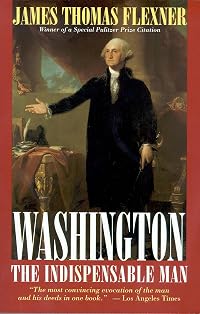
I started this biography of John Adams right after reading Flexner's biography of George Washington. I said in that review that no doubt reading a biography of a different American founder by another author would complicate the picture. Boy, did it ever!
This is a well-written, erudite biography, and in some ways it's stronger than Flexner's. I liked how Ferling, unlike Flexner in his one-volume work, constantly referred to other historians and biographers of the leading figures, airing the various controversies among them. It made Ferling's account seem all the more reliable that he pointed to where others' disagreed. Flexner also is obviously very admiring of George Washington, and I think that often in biographers that can be a show more dangerous thing. Ferling, on the other hand, while admitting to also feeling "profound admiration" for Washington, for Adams claimed he felt only "esteem and affinity." And that mirrors how I felt about Adams by the end of this biography--not so much admiration as sympathy and respect. If the theme of Flexner's biography of Washington is that we owe to him the success of a republican form of government, the theme of Ferling's take on Adams is that Americans owe their independence to him, as he was crucial in the push toward breaking from the "parent state," and then in steering the young nation between the Scylla and Charybdis of British or French domination in his roles as diplomat and United States president.
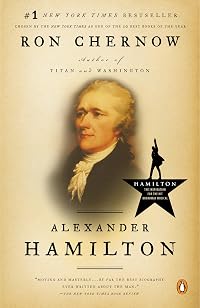
If anything in the picture Ferling painted made me skeptical, it's his take on Alexander Hamilton. Ferling unequivocally stated that Hamilton's Federalists served to "enrich the few" and did much to "foster corruption" and described Hamilton as having a "low, cunning dishonesty," and Washington (among others) as "but a puppet of Hamilton." Flexner's picture seemed more balanced and without the evident rancor of Ferling, who seemed to base his view of Hamilton and the Federalists entirely on their political opponents. Flexner warned against seeing the Federalists and Democratic-Republicans in terms of today's parties or simplifying them as one being the party of the rich and the other of the poor--a trap Ferling seemed to fall into. Flexner's account didn't make either Jefferson or Hamilton look good. But Flexner certainly made a case for a Hamilton much more loyal than Ferling admits, and a Jefferson much, much more dishonest, even treacherous, than Ferling ever hints at. At times Ferling's account seemed contradictory. He claimed the Federalists' survival depended on war with France, yet admitted Hamilton urgently advised against war with France. Ferling cited plenty of evidence that Adams was an advocate of monarchy, that he considered "hereditary rule inevitable" then excoriated Hamilton and others as unfair for attacking Adams on that basis.
In the end, Ferling's John Adams: A Life was a thought-provoking and entertaining biography--even moving in parts. Never more so than at its end when relating the rapprochement and friendship of Adams and Jefferson in retirement, both struggling to live until the 50th anniversary of the Declaration of Independence. My next read is a biography of Thomas Jefferson by Cunningham. If the Stockholm Syndrome-like attachment of biographers for their subjects holds there, I somehow doubt Alexander Hamilton is going to fare any better. It makes me want to read a biography of that much maligned man. Certainly the biographies of Washington and Adams so far reveals a much more complex picture of history than the plaster saint pablum served up about the "founding fathers" suggests. show less
This is a well-written, erudite biography, and in some ways it's stronger than Flexner's. I liked how Ferling, unlike Flexner in his one-volume work, constantly referred to other historians and biographers of the leading figures, airing the various controversies among them. It made Ferling's account seem all the more reliable that he pointed to where others' disagreed. Flexner also is obviously very admiring of George Washington, and I think that often in biographers that can be a show more dangerous thing. Ferling, on the other hand, while admitting to also feeling "profound admiration" for Washington, for Adams claimed he felt only "esteem and affinity." And that mirrors how I felt about Adams by the end of this biography--not so much admiration as sympathy and respect. If the theme of Flexner's biography of Washington is that we owe to him the success of a republican form of government, the theme of Ferling's take on Adams is that Americans owe their independence to him, as he was crucial in the push toward breaking from the "parent state," and then in steering the young nation between the Scylla and Charybdis of British or French domination in his roles as diplomat and United States president.
If anything in the picture Ferling painted made me skeptical, it's his take on Alexander Hamilton. Ferling unequivocally stated that Hamilton's Federalists served to "enrich the few" and did much to "foster corruption" and described Hamilton as having a "low, cunning dishonesty," and Washington (among others) as "but a puppet of Hamilton." Flexner's picture seemed more balanced and without the evident rancor of Ferling, who seemed to base his view of Hamilton and the Federalists entirely on their political opponents. Flexner warned against seeing the Federalists and Democratic-Republicans in terms of today's parties or simplifying them as one being the party of the rich and the other of the poor--a trap Ferling seemed to fall into. Flexner's account didn't make either Jefferson or Hamilton look good. But Flexner certainly made a case for a Hamilton much more loyal than Ferling admits, and a Jefferson much, much more dishonest, even treacherous, than Ferling ever hints at. At times Ferling's account seemed contradictory. He claimed the Federalists' survival depended on war with France, yet admitted Hamilton urgently advised against war with France. Ferling cited plenty of evidence that Adams was an advocate of monarchy, that he considered "hereditary rule inevitable" then excoriated Hamilton and others as unfair for attacking Adams on that basis.
In the end, Ferling's John Adams: A Life was a thought-provoking and entertaining biography--even moving in parts. Never more so than at its end when relating the rapprochement and friendship of Adams and Jefferson in retirement, both struggling to live until the 50th anniversary of the Declaration of Independence. My next read is a biography of Thomas Jefferson by Cunningham. If the Stockholm Syndrome-like attachment of biographers for their subjects holds there, I somehow doubt Alexander Hamilton is going to fare any better. It makes me want to read a biography of that much maligned man. Certainly the biographies of Washington and Adams so far reveals a much more complex picture of history than the plaster saint pablum served up about the "founding fathers" suggests. show less
A very interesting look at the people of the revolutionary era, through the eyes of a non-soldier, and a fascinating insight into how the popular press had a huge effect on how events turned out.
Thorough biography that reveals John Adams as a man and as a politician - the balance that not every biographical work manages to keep. It presents a man with all his strong and weak sides. The author found a fine line providing just enough of background information to better understand John Adams' action - if this work would contain more it would become much less readable. Many biographical works fail to find that line but this makes a difference for me between mediocre and excellent historical biography.
3/5
Too Dry. Doesn’t get to who Adams was just tells the facts.
Too Dry. Doesn’t get to who Adams was just tells the facts.
Ratings
Members
- Recently Added By
Lists

John Adams Books
12 works; 1 member
Presidential Books
15 works; 2 members

Founding Father
104 works; 11 members

Best U.S. History Books (1754-1828)
363 works; 18 members
Author Information

20+ Works 4,368 Members
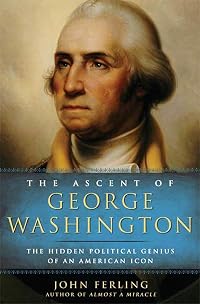
John Ferling is professor emeritus of history at the University of West Georgia. He is the author of many books on American Revolutionary history, including Independence; The Ascent of George Washington; Almost a Miracle, the acclaimed military history of the War of Independence; the award-winning A Leap in the Dark; and Setting the World Ablaze. show more He and his wife, Carol, live near Atlanta, Georgia. show less
Some Editions
Common Knowledge
- Original publication date
- 1992
- People/Characters
- John Adams; Abigail Adams; George Washington; Thomas Jefferson; Samuel Adams; Benjamin Franklin (show all 10); John Dickinson; Alexander Hamilton; Thomas Boylston Adams; James A. Otis, Jr.
- Important places
- Braintree, Massachusetts, USA; Boston, Massachusetts, USA; Philadelphia, Pennsylvania, USA; Pennsylvania, USA; Massachusetts, USA; USA
- First words
- Life , for most Americans, did not change significantly between 1735, the year of John Adams's birth, and 1826, the year of his death.
- Last words
- (Click to show. Warning: May contain spoilers.)For the duration of his public career, he remained committed to the quest for that "ravishing Light and Glory."
- Original language
- English
Classifications
- Genres
- Nonfiction, Biography & Memoir, History, General Nonfiction
- DDC/MDS
- 973.4 — History & geography History of North America United States Constitutional period (1789-1809)
- LCC
- E322 .F47 — History of the United States United States Revolution to the Civil War, 1775/1783-1861 By period 1789-1809. Constitutional period John Adams' administration, 1797-1801
- BISAC
Statistics
- Members
- 330
- Popularity
- 95,568
- Reviews
- 4
- Rating
- (4.08)
- Languages
- English
- Media
- Paper, Audiobook, Ebook
- ISBNs
- 9
- UPCs
- 1
- ASINs
- 5