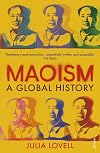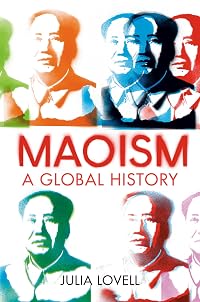
Maoism: A Global History
by Julia Lovell
On This Page
Description
"Since the heyday of Mao Zedong, there has never been a more crucial time to understand Maoism. Although to Western eyes it seems that China has long abandoned the utopian turmoil of Maoism in favour of authoritarian capitalism, Mao and his ideas remain central to the People' Republic and the legitimacy of its communist government. As disagreements and conflicts between China and the West are likely to mount, the need to understand the political legacy of Mao will only become more urgent. show more Yet during Mao's lifetime and beyond, the power and appeal of Maoism has always extended beyond China. Across the globe, Maoism was a crucial motor of the Cold War: it shaped the course of the Vietnam War (and the international youth rebellion it triggered) and brought to power the murderous Khmer Rouge in Cambodia; it aided, and sometimes handed victory to, anti-colonial resistance movements in Africa; it inspired terrorism in Germany and Italy, and wars and insurgencies in Peru, India and Nepal, some of which are still with us today - more than forty years after the death of Mao. In this new history, acclaimed historian Julia Lovell revaluates Maoism, analysing both China's engagement with the movement and its legacy on a global canvas. It's a story that takes us from the tea plantations of north India to the sierras of the Andes, from Paris's 5th Arrondissement to the fields of Tanzania, from the rice paddies of Cambodia to the terraces of Brixton. Starting from the movement's birth in northwest China in the 1930s and unfolding right up to its present-day violent rebirth, this is the definitive history of global Maoism"-- "The untold story of how Maoist ideology spread throughout the world during the Cold War, playing a major role in shaping politics from Asia to Africa to the American left. This revelatory new work of world history challenges our understanding of the geopolitics of the twentieth century. While the Cold War is traditionally seen as a competition between Soviet communism and American capitalism, Maoism: A Global History shows for the first time how China played a central role in the struggle. Julia Lovell takes us to the movement's birth in northwest China in the 1930s and makes clear how, across the globe, Maoism was a crucial motor of the Cold War, shaping the course of the Vietnam War (and the international youth rebellion it triggered) and bringing to power the Khmer Rouge in Cambodia. Maoism also inspired anti-colonial resistance movements in Africa; terrorism in Germany and Italy, and wars and insurgencies in Peru, India, and Nepal, some of which are still with us today--more than forty years after Mao's death. Moving from the tea plantations of India to the Andes, from Paris's 5th Arrondissement to Tanzania, from the rice paddies of Cambodia and the Chicago protests of 1968 to the present-day violent rebirth of the ideology, this is the definitive history of global Maoism"-- show lessTags
Recommendations

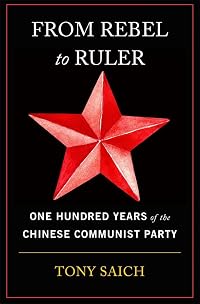
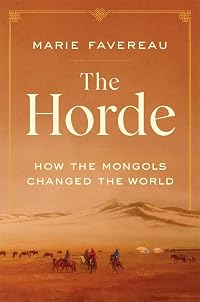
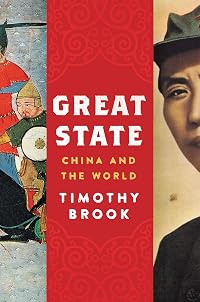

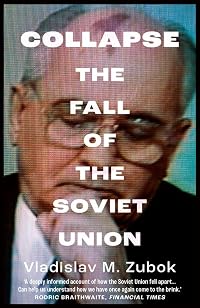
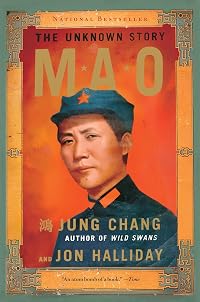
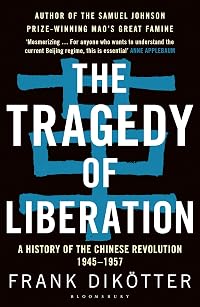

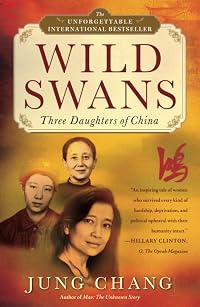
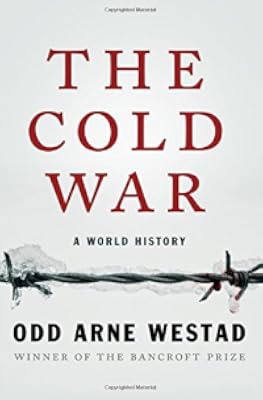


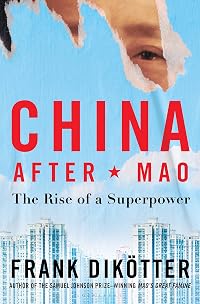
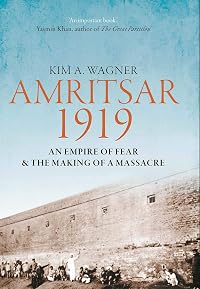
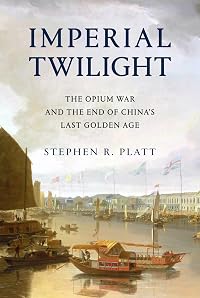
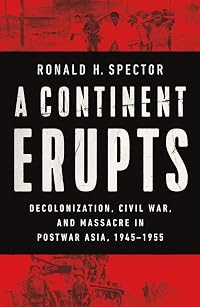

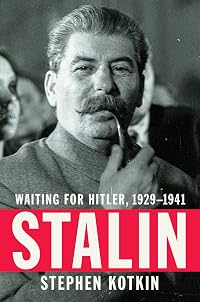
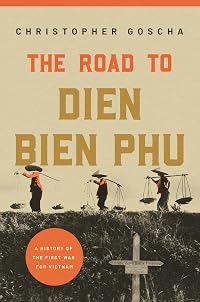
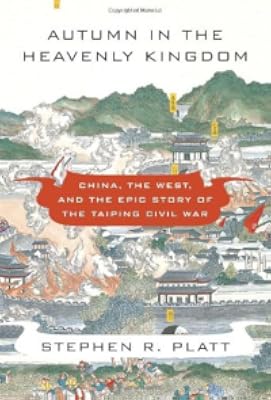

Member Recommendations

Member Reviews
This is a really interesting exploration of Maoism less as a philosophy and more as a historical phenomenon across the world. In the US, we're often taught to focus on the USSR as *the* Communist opposition, with China reduced to a secondary player, predominantly in Vietnam and Korea--so we pat ourselves on the back and say "the West won!" after 1989.
What makes this book so good is not just that Lovell shows that this is untrue, but that she does so in a nuanced way. None of the players are reduced to passive victimhood--all have made choices. Maoism had genuine appeal for people, whether or not it lived up to its promises. For itself, China has been an active exporter of ideology (and the power to back it) since before Mao took power. show more From his time in Yan'an, Mao used journalists to export a vision of himself that was what he wanted them to see: the champion of the peasantry, the man of the earth, of good humor, hard work, anti-imperialism, and equality. It worked. His beliefs--as structured for outsiders--inspired others to follow.
They had reason to. His anti-imperialism was appealing to those people just emerging from colonial rule as in Indochina, Indonesia, and Africa. His exhortations of the peasantry inspired those in deeply unequal societies in Peru and India. China worked to develop those ties--the Belt & Road Initiative is in the news now, but they were training ZANU rebels in Rhodesia (now Zimbabwe) in the 1970s and building projects in Zambia.
At the same time, though, Maoism often replicated problems in miniature: the elites, often dominated by men (despite claims to gender equality) dominated the upper ranks of revolutionary movements, talking about the masses as lesser. Naxalite leaders have profited from exploitation of natural resources, even as they criticize the Indian state for the same. Charismatic leaders like the Shining Path's Abimael Guzman led to terror and violence. At its extreme, Maoism led to the killing fields of Democratic Kampuchea and the closed personality cult of North Korea.
The book ends with a disquieting chapter: how Xi Jinping is now taking on the trappings (in a cut rate manner) of the Mao cult, looking to consolidate his power over China and, through economics, to expand his power abroad. Maoism hasn't died. show less
What makes this book so good is not just that Lovell shows that this is untrue, but that she does so in a nuanced way. None of the players are reduced to passive victimhood--all have made choices. Maoism had genuine appeal for people, whether or not it lived up to its promises. For itself, China has been an active exporter of ideology (and the power to back it) since before Mao took power. show more From his time in Yan'an, Mao used journalists to export a vision of himself that was what he wanted them to see: the champion of the peasantry, the man of the earth, of good humor, hard work, anti-imperialism, and equality. It worked. His beliefs--as structured for outsiders--inspired others to follow.
They had reason to. His anti-imperialism was appealing to those people just emerging from colonial rule as in Indochina, Indonesia, and Africa. His exhortations of the peasantry inspired those in deeply unequal societies in Peru and India. China worked to develop those ties--the Belt & Road Initiative is in the news now, but they were training ZANU rebels in Rhodesia (now Zimbabwe) in the 1970s and building projects in Zambia.
At the same time, though, Maoism often replicated problems in miniature: the elites, often dominated by men (despite claims to gender equality) dominated the upper ranks of revolutionary movements, talking about the masses as lesser. Naxalite leaders have profited from exploitation of natural resources, even as they criticize the Indian state for the same. Charismatic leaders like the Shining Path's Abimael Guzman led to terror and violence. At its extreme, Maoism led to the killing fields of Democratic Kampuchea and the closed personality cult of North Korea.
The book ends with a disquieting chapter: how Xi Jinping is now taking on the trappings (in a cut rate manner) of the Mao cult, looking to consolidate his power over China and, through economics, to expand his power abroad. Maoism hasn't died. show less
An appreciatively broad history that is too liberal in outlook to give “socialism with Chinese characteristics” (or the post-colonial African variant) its fair shake, though its scepticism is warranted for the various other perversions of Mao’s project. This book could have focused more on the Chinese context and the specifics of Tse-tung’s policies, given that these provide the entire impetus for Maoism’s global reach.
Coming soon
Ratings
Members
- Recently Added By
Lists

In Our Time books
4,934 works; 2 members
Author Information

9+ Works 998 Members
Julia Lovell is an author, translator, and academic. She is the author of the widely acclaimed The Great Wall: China Against the World 1000 BC-AD 2000, which was published in eighteen countries. She has translated many key Chinese works into English, including Lust, Caution by Eileen Chang, The Complete Fiction of Lu Xun, and Serve the People by show more Yan Lianke. She is a lecturer m modern Chinese history and literature at the University of London and writes for the Guardian, The Times, the Economist, and the Times Literary Supplement. She spends a large part of the year in China with her family. show less
Awards and Honors
Awards
Notable Lists
Common Knowledge
- People/Characters
- Mao Zedong
- Important places
- China
- Dedication
- To my father, William (Bill) Lovell, 1946-2014
- First words
- Beijing, autumn 1936. -Introduction
In the first week of January 2016, a vast golden statue of Mao was unveiled in the middle of the Henan countryside in central China, looming out of frozen brown fields under grey skies. -Chapter 1, What Is Maoism? - Canonical DDC/MDS
- 335.4345
- Canonical LCC
- HX418
Classifications
Statistics
- Members
- 275
- Popularity
- 117,221
- Reviews
- 3
- Rating
- (3.88)
- Languages
- English, Spanish
- Media
- Paper, Audiobook, Ebook
- ISBNs
- 11
- ASINs
- 4